
Medication Safety Equity Estimator
Calculate Your Medication Safety Risk
Your Medication Safety Risk Assessment
Every year, millions of people around the world suffer harm from medications that should have kept them safe. But not everyone is affected equally. People of color, older adults, non-English speakers, and low-income communities face higher risks of medication errors, worse outcomes, and less access to safe drug treatments. These aren’t accidents. They’re systemic failures built into how medication safety is studied, reported, and delivered.
Why Some Patients Are Left Behind
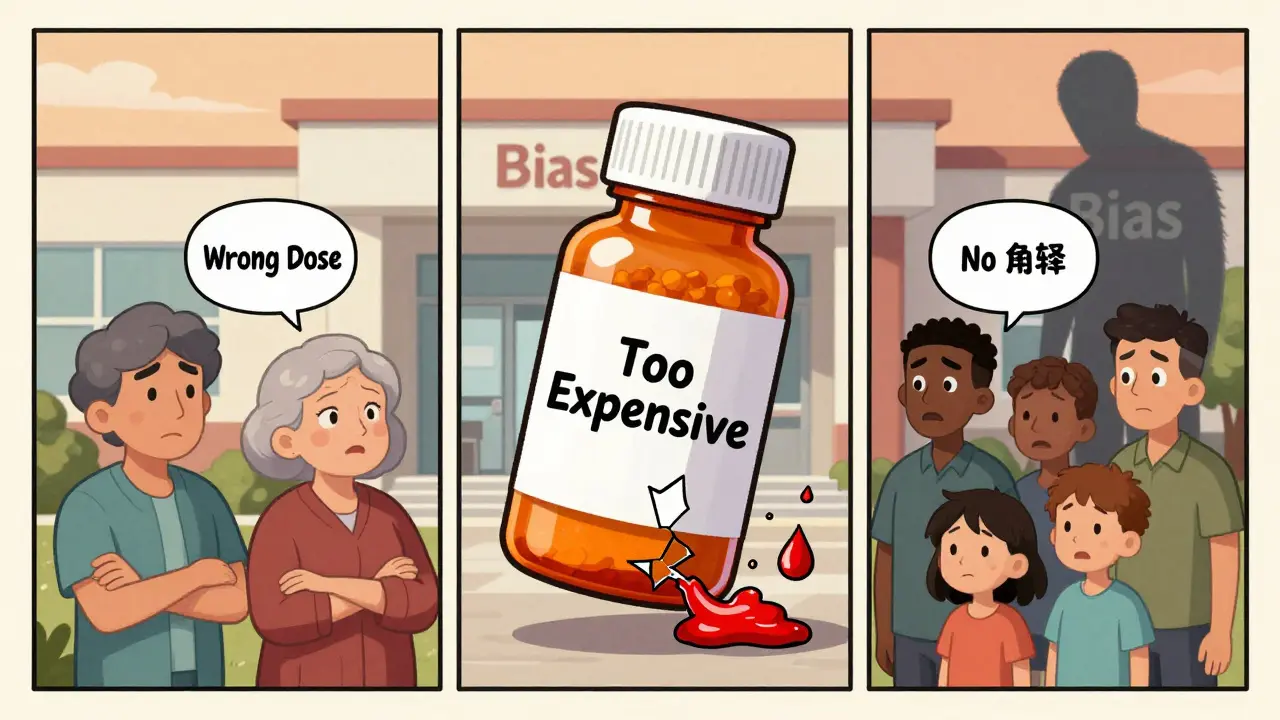
Medication safety research has long focused on broad statistics: how many errors happen, where they occur, and how much they cost. But behind those numbers are real people - people whose voices rarely make it into the data. A 2025 study across five NHS hospitals found that patients from certain racial and ethnic groups were far less likely to have their medication errors reported. Black and white patients had higher reporting rates, while Asian, Hispanic, and other minority groups showed significantly lower numbers. That doesn’t mean they had fewer errors. It means their concerns were ignored, misunderstood, or dismissed. Language barriers play a huge role. A patient who doesn’t speak English may not understand how to describe side effects. They may not know they’re allowed to question a doctor’s instructions. In one documented case, a Spanish-speaking elder in California received the wrong dose of blood pressure medication because the hospital interpreter was unavailable, and the nurse relied on a family member who didn’t know medical terms. The error went unreported because no one asked the right questions. Cultural mistrust adds another layer. Many Black and Indigenous patients have been failed by the medical system for generations. A 2024 study of public health students in Georgia found that clinicians often made assumptions about pain tolerance, adherence, or health literacy based on race. These biases lead to under-treatment, miscommunication, and ultimately, unsafe outcomes. When patients feel unheard, they stop speaking up - even when something goes wrong.The Clinical Trial Gap
New medications are tested in clinical trials before they reach the public. But who gets to be in those trials? Not everyone. From 2014 to 2021, Black participants made up only about one-third of the population share for the diseases they were most affected by. For example, Black Americans have the highest rates of high blood pressure and kidney disease, yet they were severely underrepresented in trials for drugs meant to treat those conditions. The consequences are dangerous. If a drug hasn’t been tested on your body type, your metabolism, or your genetic background, you don’t know if it’s safe for you. The FDA approved a new heart failure drug in 2023 that worked well in white patients but showed mixed results in Black patients - data that wasn’t collected because too few Black participants were enrolled. The same happened with COVID-19 vaccines. Even though Black and Latino communities were hit hardest, their representation in trials still lagged behind their share of the population. This isn’t just about fairness. It’s about safety. Without diverse data, doctors can’t predict side effects, dosing needs, or drug interactions accurately for everyone. And when patients don’t trust the science behind a drug, they’re more likely to skip doses, avoid treatment, or turn to unregulated alternatives - all of which increase risk.Who Can’t Afford Safe Medications?
Even when safe drugs exist, access is unequal. In 2022, nearly 19% of Hispanic Americans and 11.5% of Black Americans were uninsured. That’s compared to just 7.4% of white Americans. High out-of-pocket costs mean many can’t fill prescriptions, especially for newer, brand-name medications. A patient with diabetes might choose between insulin and rent. Someone with chronic pain might buy over-the-counter pills that interact dangerously with their other meds. These choices aren’t made lightly. They’re forced by systems that don’t prioritize affordability as part of safety. The WHO estimates that medication errors cost $42 billion globally each year - but that number doesn’t include the hidden costs of people skipping doses, delaying care, or dying because they couldn’t afford the right drug.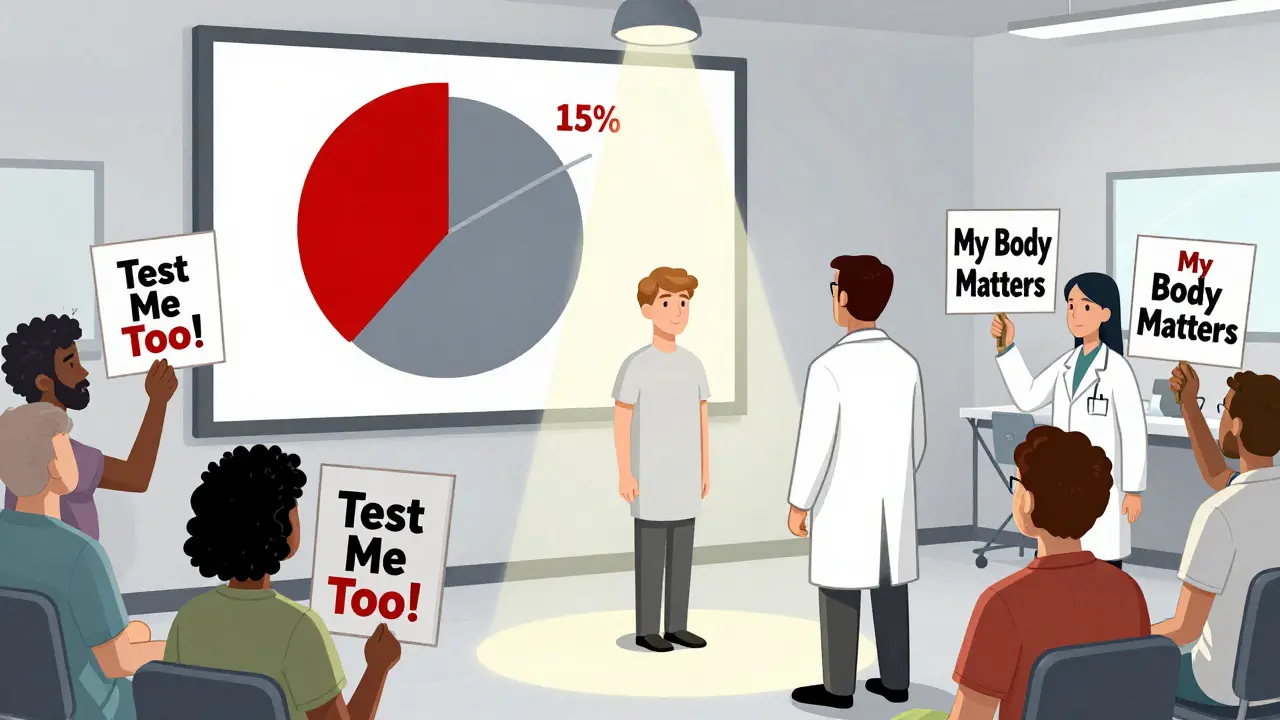
How Bias Shows Up in Prescribing
Doctors don’t set out to harm patients. But unconscious bias creeps in. A 2024 study in JAMA Network Open found three main drivers of unsafe prescribing for marginalized groups: limited access to care, implicit bias in decision-making, and reliance on non-prescription alternatives. For example, Black patients are less likely to be prescribed opioids for pain, even when they report the same levels of pain as white patients. But they’re also more likely to be prescribed higher-risk antipsychotics for behavioral issues - not because they’re more aggressive, but because clinicians assume they’re noncompliant or “difficult.” In rural areas, elderly patients on multiple medications are often given new prescriptions without proper review. Pharmacists may not have time to check for interactions. Electronic alerts get ignored. The result? A 78-year-old Native American woman in Arizona ended up in the ER after her new antidepressant clashed with her blood pressure pill - a combo that should have been flagged by her EHR. But the system didn’t flag it because the algorithm was trained mostly on data from younger, white patients.What’s Being Done - and What’s Missing
There are efforts to fix this. The World Health Organization’s Medication Without Harm initiative, launched in 2017, includes equity as a core goal. The Joint Commission now lists improving health equity as a formal patient safety goal. Some hospitals are training staff in cultural competency. Others are hiring bilingual patient advocates. But progress is slow. A 2024 survey by the American Hospital Association found that only 32% of U.S. hospitals have formal programs to address medication safety disparities - even though 78% say it’s a priority. That gap between recognition and action is dangerous. Technology can help - but only if it’s designed right. In 2024, the Office of the National Coordinator for Health Information Technology launched a $15 million project to build AI tools that detect medication safety disparities in electronic records. These tools could flag when a certain group is being prescribed higher-risk drugs, or when patients are missing follow-ups. But if the AI is trained on biased data, it will just repeat the same mistakes.
What Needs to Change
Real progress requires more than training or tech. It needs structural change.- Collect better data. Every medication safety report must include race, language, income, and insurance status - not as checkboxes, but as critical variables. Without this, we can’t see the patterns.
- Fix clinical trials. Regulators should require diverse enrollment targets for new drugs. If a drug targets a condition that affects Black people at twice the rate of white people, the trial should reflect that.
- Invest in language access. Hospitals need real-time professional interpreters - not apps or family members. This isn’t a luxury. It’s a safety requirement.
- Engage communities. Patient advocacy groups, faith leaders, and local organizers know what’s happening on the ground. They need seats at the table when safety protocols are designed.
- Hold systems accountable. Hospitals should be rated on equity outcomes, not just error rates. If a hospital has high medication error rates among Latino patients, that should trigger an audit - not a memo.
The Bottom Line
Medication safety isn’t just about pills and prescriptions. It’s about power, trust, and who gets to be heard. When we ignore disparities in research, we don’t just miss data - we miss lives. The same drugs that save one person can harm another, not because of biology, but because of bias, poverty, and broken systems. The tools to fix this exist. What’s missing is the will. Until healthcare systems treat equity as a core safety issue - not an add-on - the same people will keep getting left behind. And that’s not just unfair. It’s deadly.Why are medication errors under-reported in minority communities?
Medication errors are under-reported in minority communities due to language barriers, cultural mistrust of the healthcare system, lack of health literacy, and fear of being dismissed by providers. Many patients don’t know how to report issues, or believe their concerns won’t be taken seriously. Studies show that implicit bias among clinicians also leads to less engagement with patients from marginalized groups, reducing the likelihood that errors will be identified or documented.
How does lack of diversity in clinical trials affect medication safety?
When clinical trials don’t include enough participants from diverse racial, ethnic, or socioeconomic backgrounds, drugs may not be tested for how they work in different bodies. This can lead to unsafe dosing, unexpected side effects, or ineffective treatments for underrepresented groups. For example, some heart and kidney medications have different effects in Black patients, but because they weren’t included in trials, doctors lack clear guidance on safe use.
Can AI help reduce medication safety disparities?
AI has potential - but only if it’s built with equitable data. Algorithms trained on biased historical records can reinforce existing disparities, like flagging Black patients as higher risk for non-adherence based on past under-treatment. New initiatives, like the $15 million federal project launched in 2024, aim to develop AI tools that detect patterns of unequal prescribing or missed follow-ups. But these tools must be audited for bias and tested across diverse populations before being used in clinics.
What role do insurance and cost play in medication safety?
High drug costs force patients to skip doses, split pills, or avoid prescriptions entirely. In 2022, nearly 19% of Hispanic Americans and 11.5% of Black Americans were uninsured - compared to 7.4% of white Americans. When people can’t afford their meds, they’re more likely to use unsafe alternatives, overdose on OTC drugs, or delay care until it’s an emergency. Affordability isn’t a social issue - it’s a patient safety issue.
What can hospitals do right now to improve medication safety equity?
Hospitals can start by collecting demographic data in every medication error report, hiring professional interpreters, training staff in cultural humility, and partnering with community organizations to understand local needs. They should also review prescribing patterns by race and income to spot disparities. Simple steps like using standardized checklists for high-risk medications and offering medication counseling in multiple languages can make a big difference.
This is so important. I’ve seen it firsthand-my mom, a Black woman in her 70s, got prescribed a drug that made her dizzy for weeks. No one asked if she understood the instructions. No interpreter. Just a paper with tiny print and a shrug. She didn’t speak up because she didn’t want to seem ‘difficult’ 😔
It is imperative that systemic inequities in pharmaceutical research be formally codified as regulatory violations. The current paradigm is not merely suboptimal-it is ethically indefensible.
From India, I’ve seen this too. Elders skip meds because they’re too expensive. Doctors assume they won’t follow instructions. But we’re not lazy-we’re broke. 🙏💊
People just don’t want to admit they’re racist. It’s always ‘systemic’ when it’s just people being awful.
why do we even care about this? like, i get it, but isnt the point of medicine to fix people? not make them feel good about their identity?
One must consider the epistemological framework underpinning contemporary medical research. The very notion of ‘health disparities’ presupposes a normative standard of health that is itself culturally constructed and historically contingent. To pathologize differential outcomes without interrogating the ontological foundations of ‘safety’ is to reify the very structures one claims to dismantle. Moreover, the implicit assumption that diversity in clinical trials guarantees equitable outcomes ignores the role of socioeconomic determinants, which remain unaddressed by any algorithmic or regulatory intervention. In other words, you can’t fix a broken system by adding more data points to a broken model.
Interesting how everyone blames bias but never mentions that minority patients are statistically more likely to present with advanced disease, have comorbidities, or refuse follow-up care. The data doesn’t lie-just the narrative.
Look, America’s healthcare system is a mess because we let the government and corporations run it. Real safety comes from personal responsibility. If you can’t afford your meds, don’t take them. Work harder. Get insurance. Stop expecting the system to coddle you. This isn’t a rights issue-it’s a life choice issue.
The algorithmic bias in EHRs is a well-documented phenomenon in clinical informatics literature. Studies by Obermeyer et al. (2019) and others demonstrate that risk prediction tools trained on historical utilization data systematically under-allocate care to Black patients due to proxy variables like cost-of-care being mistaken for need. The fix isn’t just more data-it’s recalibrating the utility function.
lol the FDA and WHO are just pawns for Big Pharma. They don’t want you to know that the real reason minorities get worse care is because the drugs are designed to fail for them. Why? So they can sell you more meds later. 🤡💊👁️
You think this is new? Nah. This has been going on since the Tuskegee experiments. People keep talking about ‘systemic change’ like it’s some big mystery. It’s not. It’s money. White folks get better care because they vote, they donate, they lobby. Poor folks? They’re invisible. So yeah, fix the system? Fine. But first, stop pretending this is about ‘bias’ instead of power. We need to take away the power from the people who profit off this mess.