
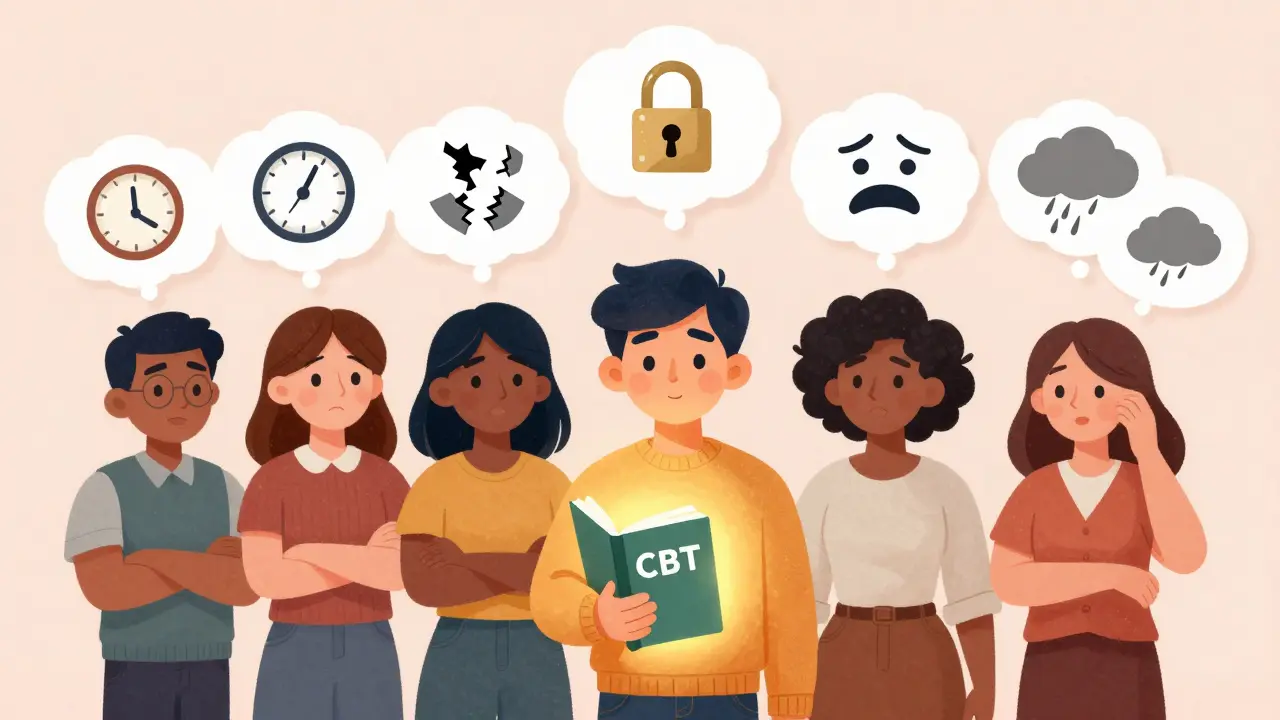
When your heart races for no reason, you can’t stop thinking about what might go wrong, or you avoid social situations just to feel safe - you’re not weak, broken, or overreacting. You might be dealing with an anxiety disorder. These aren’t just "bad days" or stress. They’re real, measurable conditions that affect nearly 1 in 5 adults in the U.S. every year. And the good news? We know exactly how to treat them - and it works.
What Are the Main Types of Anxiety Disorders?
Anxiety isn’t one thing. It shows up in different ways, and each type has its own pattern. The DSM-5, the official guide doctors use to diagnose mental health conditions, recognizes seven main types.Generalized Anxiety Disorder (GAD) is when worry becomes a constant background noise. People with GAD obsess over everyday things - work, bills, health, even minor mistakes. This isn’t occasional stress. It’s persistent, out of proportion, and lasts at least six months. About 3.1% of U.S. adults live with GAD, and 89% report trouble concentrating because their minds are stuck in a loop of "what if?"
Panic Disorder hits like a lightning strike. You feel sudden, intense fear - chest pain, dizziness, shaking, shortness of breath - and you’re convinced you’re having a heart attack or losing control. These panic attacks come without warning. After one, people often live in fear of the next one. About 2.7% of adults experience this, and 95% report feeling like death is near during an attack.
Social Anxiety Disorder turns everyday interactions into minefields. Speaking up in meetings, eating in public, even making small talk can trigger overwhelming fear of being judged or humiliated. It’s not just shyness. It’s terror. About 7.1% of U.S. adults avoid social situations because of it - sometimes for years.
Specific Phobias are intense fears of specific things: heights, spiders, flying, needles. The fear is irrational and disproportionate. If you’re terrified of elevators and take the stairs for 20 floors just to avoid one, you might have a phobia. It’s the most common type - affecting 8.7% of adults - and often starts in childhood.
Obsessive-Compulsive Disorder (OCD) is different now than it used to be. It’s no longer classified under anxiety disorders in the DSM-5, but it still shares the same core: intrusive thoughts (obsessions) and repetitive behaviors (compulsions) meant to calm the anxiety. Cleaning hands 20 times a day? Checking the lock 10 times before bed? That’s OCD. It affects 1.2% of adults.
Separation Anxiety Disorder isn’t just for kids. Adults can feel extreme distress when separated from loved ones - even if they’re safe. This can mean constant texting, refusing to travel, or panicking when a partner leaves the room. About 4.1% of U.S. adults have it.
Selective Mutism mostly affects children. They speak normally at home but freeze up and can’t speak in school or with strangers. It’s not defiance - it’s fear. Around 1% of school-aged kids experience it.
What Do Anxiety Symptoms Actually Look Like?
Symptoms aren’t just "feeling nervous." They’re physical, mental, and emotional - and they’re consistent across disorders.Physically, your body goes into fight-or-flight mode even when there’s no danger. You might have:
- Heart rate spikes to 110-140 beats per minute during panic attacks
- Sweating (reported by 92% of panic disorder patients)
- Trembling or shaking (87%)
- Shortness of breath (83%)
- Dizziness or lightheadedness (76%)
- Nausea or stomach upset (68%)
Cognitively, your brain gets stuck in overdrive:
- Racing thoughts (82%)
- Catastrophic thinking - "If I make one mistake, I’ll lose everything" (76%)
- Rumination - replaying past events or future fears over and over (91%)
- Difficulty concentrating (89% in GAD)
Emotionally, it’s exhausting:
- Feeling like something terrible is about to happen (95% during panic attacks)
- Constant dread, even when nothing’s wrong (100% in GAD)
- Fear of losing control or going crazy (88%)
These aren’t "symptoms" you can just "snap out of." They’re biological responses that hijack your nervous system. And they’re measurable - not imagined.
What Treatments Actually Work?
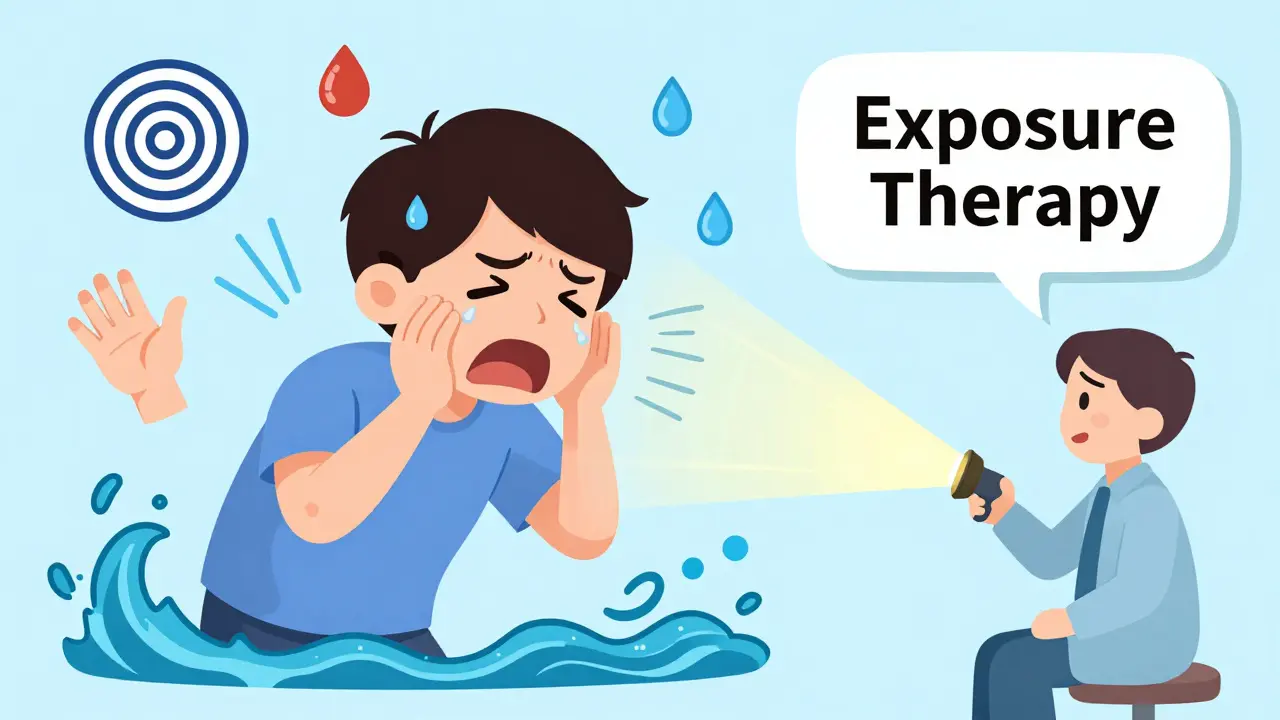
There’s no magic pill, but there are two proven paths: therapy and medication. And they work best together.Cognitive Behavioral Therapy (CBT) is the gold standard. It’s not just talking. It’s training your brain to think differently. In CBT, you learn to spot distorted thoughts - like "Everyone thinks I’m awkward" - and replace them with evidence-based ones. You also face fears gradually, in a controlled way. This is called exposure therapy. For social anxiety or phobias, it’s 60-80% effective when done right. A typical course is 12-20 weekly sessions. Most people start feeling better by session 12.
CBT isn’t just for in-person therapy. FDA-cleared apps like nOCD and Wysa offer structured CBT programs. Studies show they reduce symptoms by 35-45% in just eight weeks with 20-30 minutes of daily use.
Medication helps reset brain chemistry. First-line options are SSRIs - like sertraline (Zoloft) and fluoxetine (Prozac). They don’t work instantly. It takes 6-12 weeks. But once they kick in, 40-60% of people see major improvement. SNRIs like venlafaxine (Effexor) are similar in effectiveness.
Benzodiazepines - like Xanax or Klonopin - give quick relief. But they’re risky. Long-term use leads to dependence in 15-30% of people. They can also cause memory problems and drowsiness. Doctors now avoid prescribing them for long-term anxiety.
A new option, zuranolone (Zurzuvae), was approved in August 2023 for postpartum anxiety. In trials, 54% of patients went into remission within two weeks - a breakthrough for a condition that used to be ignored.
Why Do So Many People Still Struggle?
Even with proven treatments, most people don’t get better. Why?A 2022 VA survey of 12,500 patients found only 37% achieved remission after six months. The biggest barriers?
- 68% couldn’t find a therapist who specializes in anxiety
- 42% dropped out because the therapy felt too hard - especially exposure
- 76% waited 6-8 weeks just to get an appointment
- 72% hit insurance limits - only 10 sessions covered, but they need 16
Medication side effects also turn people off. Some report emotional numbness, weight gain, or loss of libido. One Reddit user switched from an SSRI to buspirone and said it helped without dulling his emotions.
But those who stick with it? They see results. In TherapyTribe reviews, 87% said CBT tools helped them manage panic attacks immediately. 82% said their therapist actually understood the physical symptoms - something many say doctors miss.
What’s New in Anxiety Treatment?
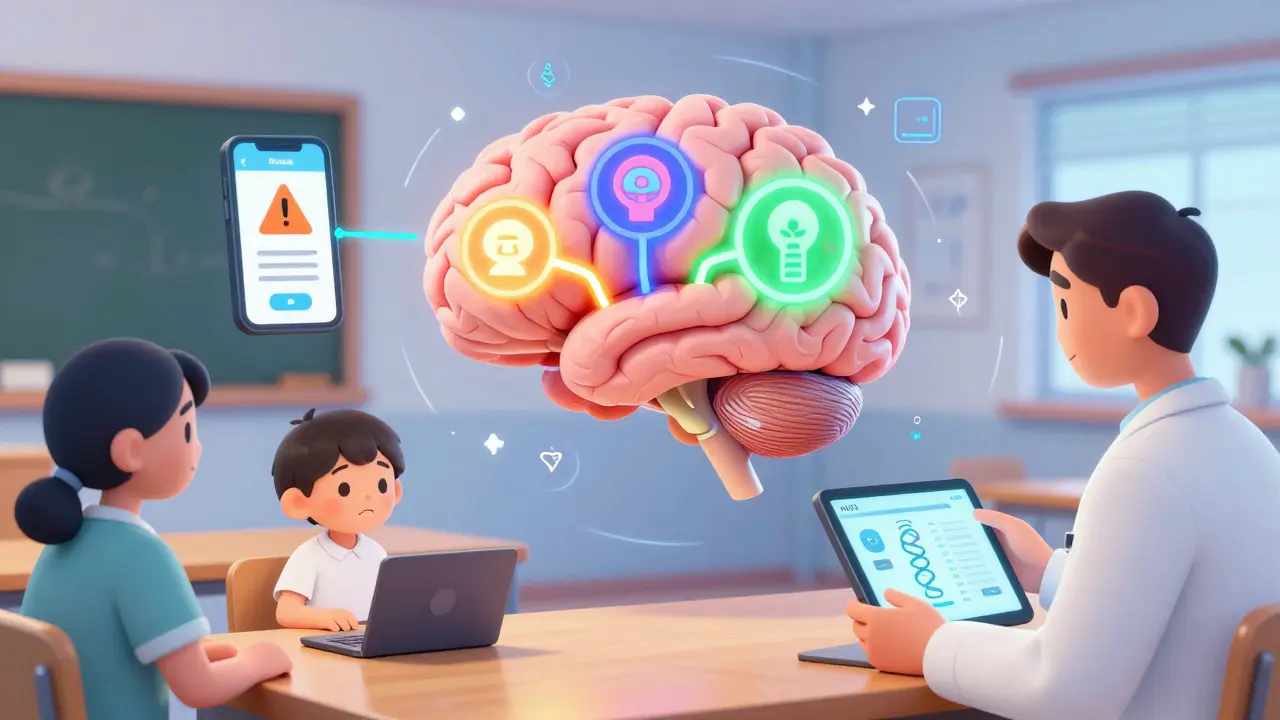
The field is moving fast.In 2023, researchers identified three biological "anxiety biotypes" using brain scans. These predict who will respond to CBT vs. medication - meaning treatment could soon be personalized, not trial-and-error.
Ketamine-assisted therapy is showing promise for treatment-resistant anxiety. In 2022 trials, 65% of patients had rapid relief - within hours. It’s not FDA-approved yet, but clinics are offering it under research protocols.
AI is also stepping in. Stanford researchers built an algorithm that predicts panic attacks 24 hours in advance with 87% accuracy, based on voice patterns and heart rate variability. Imagine getting a warning on your phone: "Your anxiety is spiking. Try this breathing exercise."
Acceptance and Commitment Therapy (ACT) is now officially a first-line treatment, alongside CBT. Instead of fighting thoughts, ACT teaches you to notice them without getting swept away. It’s especially helpful for people who’ve tried CBT and felt like they were "failing" at controlling their mind.
And the future? Dr. Kerry Ressler predicts genetic testing will guide medication choices within five years - cutting down the guesswork and side effects by half.
What Can You Do Right Now?
You don’t need to wait for a therapist or a prescription to start helping yourself.- Practice diaphragmatic breathing: Inhale for 4 seconds, hold for 2, exhale for 6. Do this for 2 minutes, 3 times a day. It lowers your heart rate and calms your nervous system.
- Write down your anxious thoughts. Then ask: "Is this based on facts or fear?" This is the first step of CBT.
- Use free, evidence-based apps like nOCD or Woebot. They guide you through real CBT exercises.
- Find a support group. ADAA hosts over 300 weekly online groups. You’re not alone.
- If you’re on medication, don’t quit cold turkey. Talk to your doctor. Side effects often fade after 2-4 weeks.
Anxiety disorders aren’t a life sentence. They’re a medical condition - and like diabetes or hypertension, they respond to treatment. The path isn’t always easy. But it’s clear. And it works.
Can anxiety disorders go away on their own?
Rarely. While some people may experience periods of reduced symptoms, anxiety disorders typically persist without treatment. Left untreated, they often worsen over time or lead to other problems like depression, substance use, or avoidance of work, relationships, or daily activities. Evidence-based treatments like CBT and medication are proven to reduce symptoms significantly - and many people achieve long-term remission.
Is CBT better than medication for anxiety?
Neither is universally "better." CBT teaches skills that last long after therapy ends, with lower relapse rates. Medication works faster and helps when symptoms are too severe to engage in therapy. The strongest results come from combining both. A 2023 NAMI survey found 58% of people improved with therapy + medication, compared to 42% with medication alone and 38% with therapy alone.
How long does it take for SSRIs to work?
SSRIs typically take 6 to 12 weeks to reach full effect. Some people notice small improvements in sleep or energy after 2-4 weeks, but the major reduction in anxiety often comes later. It’s important not to give up too soon. If there’s no change after 12 weeks, your doctor may adjust the dose or switch medications.
Can children have anxiety disorders?
Yes. Half of all anxiety disorders begin by age 11. Children can have GAD, separation anxiety, social anxiety, or phobias. Symptoms may look different - like refusing to go to school, frequent stomachaches, or clinging to parents. Early treatment with CBT adapted for kids is highly effective and can prevent lifelong struggles.
Why do I feel physical symptoms if it’s "just anxiety"?
Anxiety isn’t "just in your head." It’s a full-body response. When your brain perceives danger - even if it’s not real - it triggers the fight-or-flight system. This releases adrenaline, increases heart rate, tightens muscles, and shuts down digestion. That’s why you get shaky hands, nausea, chest tightness, or dizziness. These are real physiological reactions, not signs of weakness or illness.
Are anxiety disorders genetic?
Yes, genetics play a role. If a close family member has an anxiety disorder, your risk is 2-6 times higher. But genes aren’t destiny. Environment, trauma, stress, and lifestyle also matter. Research shows that even with a genetic predisposition, early intervention with CBT can reduce the likelihood of developing a full disorder.
What should I do if my therapist doesn’t understand my symptoms?
You deserve a therapist who gets it. If you feel dismissed or misunderstood, it’s okay to switch. Look for specialists in anxiety disorders - not general therapists. Check directories from ADAA or Psychology Today and filter for "anxiety," "CBT," or "exposure therapy." Many therapists offer free 15-minute consultations. Ask them: "What’s your experience treating panic disorder?" or "How do you approach exposure therapy?"
The data here is statistically robust, but the framing is dangerously reductive. You're conflating neurobiological phenomenology with behavioral pathology without addressing the sociopolitical scaffolding that produces anxiety as a structural symptom. The DSM-5 is a diagnostic artifact, not a biological truth. We're pathologizing adaptive responses to late-stage capitalism-chronic insecurity, algorithmic alienation, the erosion of communal safety nets. CBT? It’s just cognitive appeasement for a system that won’t fix the root causes. You can reframe your thoughts all you want, but if your rent doubles next month and your employer monitors your keystrokes, no amount of diaphragmatic breathing will save you.
Bro. I had a panic attack in a Target parking lot because I forgot my reusable bag. I thought I was dying. Turned out I just needed to stop being a perfectionist and breathe. CBT saved my life. No, really. I did the exposure thing-went to the grocery store alone for 5 minutes, then 10, then 20. Now I shop without sweating bullets. If you’re still stuck, you’re not broken-you’re just not doing the work. Stop waiting for a magic pill. Do the reps. Your brain’s a muscle. Train it.
ANXIETY ISN’T A WEAKNESS-IT’S A SIGNAL. Your body is screaming that something’s off. And you know what? It’s right. The world is collapsing. Climate chaos. Economic precarity. Loneliness epidemic. We’re not broken-we’re awake. The system wants you medicated and quiet. But here’s the truth: healing isn’t about fixing yourself to fit the machine. It’s about rebuilding your life so you don’t need to survive-it’s about thriving. Start small. Walk outside. Talk to a stranger. Say no. Set boundaries. You’re not broken. You’re becoming.
Interesting breakdown, but let’s not ignore the global context. In India, anxiety is often dismissed as ‘overthinking’ or ‘lack of discipline.’ But I’ve seen it-my cousin couldn’t leave the house for two years after her parents divorced. No therapy, no meds, just shame. And here in the US, you’ve got access to nOCD apps and SSRIs, yet 76% still wait 6–8 weeks for a slot? That’s not a healthcare gap-that’s a moral failure. We need community-based peer networks, not just individual solutions. Maybe if we treated mental health like we treat a broken leg-with urgency and collective care-we wouldn’t be here.
I’ve been on sertraline for 14 weeks. The emotional numbness was brutal at first. Felt like I was watching my life through fogged glass. But slowly-really slowly-I started feeling like me again. Not ‘fixed,’ not ‘cured,’ but… present. I still have bad days. But now I know how to ride them. The breathing exercises? They’re not magic, but they’re real. And I’m grateful for that.
It is imperative to acknowledge the methodological rigor underpinning the empirical data presented herein. The longitudinal efficacy of CBT, corroborated by randomized controlled trials with effect sizes ranging from d = 0.72 to d = 1.05, establishes it as a first-line intervention. Furthermore, the pharmacokinetic profiles of SSRIs demonstrate statistically significant reductions in amygdala hyperactivity, as evidenced by fMRI studies. It is therefore both scientifically and ethically responsible to advocate for evidence-based protocols over anecdotal or pseudoscientific alternatives. The burden of proof lies with those who reject established clinical consensus.
Let’s be real: the pharmaceutical industry paid off the DSM committee to turn normal human stress into a disorder. You think your panic attack is real? It’s a marketing campaign. They sell you meds so you’ll keep paying for therapy so they can keep selling you meds. Benzodiazepines? They’re just legal heroin with a prescription label. Wake up. The real cure? Get off the grid. Move to the woods. Stop scrolling. Stop consuming. Stop believing the lie that you need a doctor to fix your soul.
Typo in the first paragraph: "1 in 5 adults"-should be "one in five" per APA style. Also, you say "OCD is no longer classified under anxiety disorders"-technically correct, but you omit that it’s now under "Obsessive-Compulsive and Related Disorders," which is still a DSM-5 chapter adjacent to anxiety. Minor, but if you’re citing DSM-5, precision matters. And zuranolone? Approved for postpartum depression, not anxiety. You’re conflating indications. This isn’t just sloppy-it’s dangerous when misinformation spreads under the guise of "evidence-based."
Hey, if you’re reading this and you’re struggling-you’re not alone. I’ve been there. I used to think I had to be "fixed" to be worthy. Turns out, I just needed to be heard. Therapy didn’t make me perfect. It made me human. And if you’re scared to start, that’s okay. Start with one breath. One text to a friend. One step. You don’t have to do it all today. Just show up. I believe in you. 🙌
They want you to think anxiety is a medical issue so you don’t question why your life sucks. It’s not your brain-it’s your country. The military-industrial complex needs anxious, distracted workers who won’t organize. They give you SSRIs so you’ll keep showing up to your soul-crushing job. CBT? That’s just training you to like your chains. Wake up. The real treatment is revolution. Or at least, moving to Canada.
Actually, the DSM-5-TR (not DSM-5) was published in 2022, and zuranolone was approved for postpartum depression-not anxiety-by the FDA on August 17, 2023, under the brand name Zurzuvae, and it’s a neuroactive steroid GABA-A receptor positive allosteric modulator, not an SSRI. Also, the 87% accuracy claim for the Stanford algorithm? That’s from a preprint, not peer-reviewed. And you said "1 in 5 adults"-but the NIMH cites 19.1%, so rounding is misleading. And please, stop saying "just anxiety." It’s not "just" anything. It’s a clinical syndrome with diagnostic criteria. Precision matters.
OMG I just found nOCD last week and it’s a GAME CHANGER 😭 I’ve been doing the ERP modules and I actually laughed today for the first time in months. Like… I’m not fixed, but I’m not drowning anymore. Also, if you’re on meds and feeling numb? Talk to your doc. I switched from Lexapro to buspirone and my emotions came back. No more zombie mode 🙏 #anxietywarrior
Cbt works. I did it. Took time. Not easy. But worth it.