
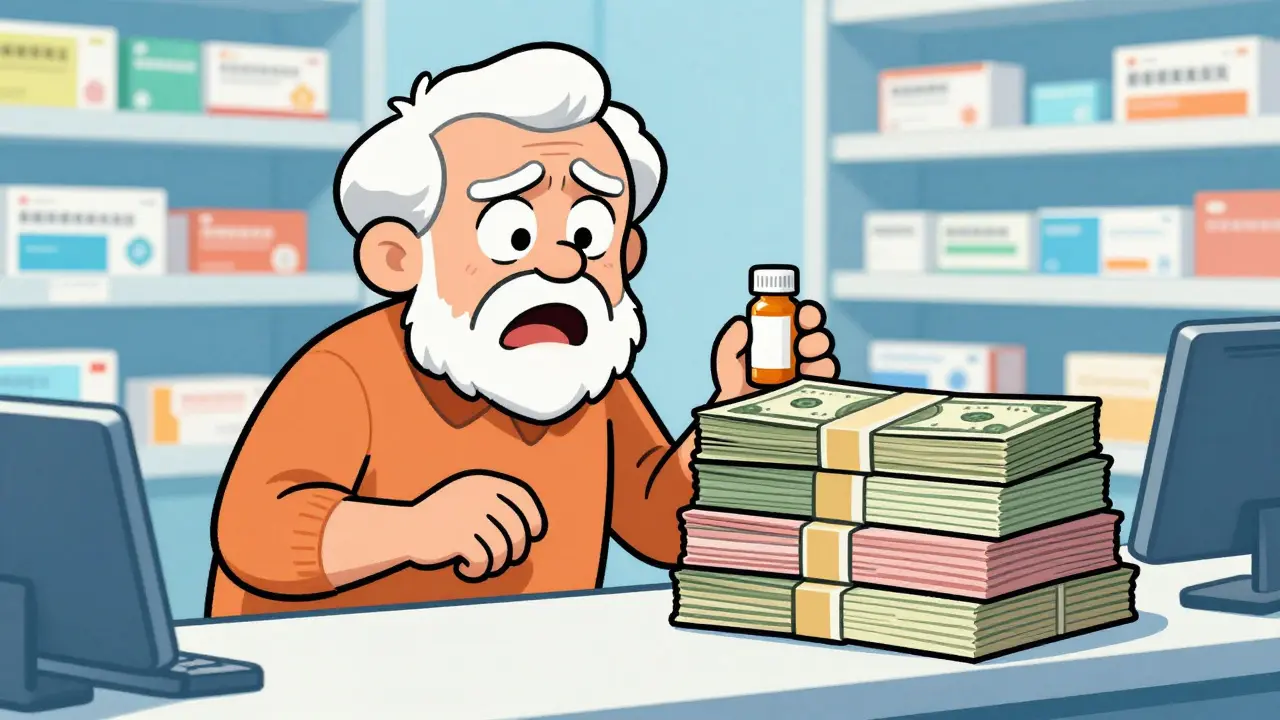
You walk into the pharmacy to pick up a prescription for a generic blood pressure medication. You expect to pay five dollars. Instead, the register reads $87. You hand over your insurance card, confused, thinking the system will catch you. This scenario isn't rare anymore. While you might assume insurance companies buy medicine in bulk to keep costs low, the path from a warehouse to your pocket is full of detours.
Bulk buying and tendering are strategic tools used by insurance companies and health systems to lower the price of generic medications through volume commitments. In theory, this should mean cheaper drugs for everyone. In practice, the savings often stay in the middle layer. To understand why your bill looks the way it does, we need to look past the sticker price and examine the machinery of pharmaceutical procurement in the modern healthcare landscape.
The Mechanics of Pharmaceutical Bulk Purchasing
At its simplest, bulk buying means buying a lot of something to get a discount. For healthcare plans, this involves aggregating the prescriptions of thousands of members. When a massive health plan tells a manufacturer, "We will guarantee the purchase of 5 million units of metoprolol next year," that manufacturer has to compete hard to win that business. This leverage allows insurers to negotiate prices significantly below the Average Wholesale Price (AWP).
This system wasn't always standard. The real engine for this market shifted in 1984 with the Hatch-Waxman Act is a federal law that established the modern pathway for generic drug approval in the United States. Before this act, brand-name drug patents lingered without much competition. Afterward, the floodgates opened for generic versions. By 2024, reports from the Association for Accessible Medicines showed that generics accounted for more than 90% of all prescriptions dispensed, yet they represented less than 20% of total drug spending. That math suggests huge efficiency gains.
However, the purchasing power doesn't sit solely with the insurance carrier. Most large plans outsource this heavy lifting to intermediaries known as Pharmacy Benefit Managers (PBMs). These organizations manage the formulary-the list of approved drugs-and handle the actual contracting with pharmacies and drug makers. Their job is to maximize pharmaceutical rebates, which are essentially kickbacks from drug makers to the PBM in exchange for placing a drug on the preferred list.
Tendering and Competitive Bidding Processes
Beyond simple volume buys, many health systems use a process called tendering. Think of this as a formal auction. The insurer issues a Request for Proposal (RFP) specifying exactly what they need, usually defined by therapeutic class rather than brand name. Manufacturers bid to supply the product. The winner signs a contract, typically lasting one to three years.
The stakes in tendering are incredibly high. A study published in the JAMA Network Open by Qato et al. highlighted that even small shifts in the winning bid can impact overall spend by hundreds of millions annually. Because there is intense competition among generic manufacturers who operate on thin margins, the winner is almost always the company offering the absolute lowest price per unit. In some cases, manufacturers accept prices so low that profitability disappears, leading to supply chain fragility.
We have seen instances where tendering went wrong. Consider the situation around 2020 involving albuterol sulfate inhalation solution. Prices were driven down by aggressive bulk purchasing agreements until they dropped below production costs. The result was a shortage at 87% of surveyed hospitals. This illustrates a core tension: the drive to minimize unit cost via tendering can inadvertently destabilize the manufacturing supply base. In 2025 and beyond, regulators have started scrutinizing these contracts to ensure essential medicines remain available.

The Hidden Role of Pharmacy Benefit Managers
If bulk buying saves money, why do patient bills rise? The answer lies in the opacity of the PBM model. PBMs negotiate the price they pay to the manufacturer (the acquisition cost), but they also decide what the patient pays (copay) and what the pharmacy gets reimbursed.
A major issue here is a practice known as "spread pricing." In this scenario, the PBM charges the insurance plan $10 for a drug but only pays the pharmacy $6, keeping the $4 difference as profit. According to expert analysis from Harvard Medical School, including insights from Dr. Ateev Mehrotra, this creates a conflict of interest. If a PBM makes money on the spread, they have less incentive to push for the absolute lowest prices for the consumer at the counter.
Data from 2024 indicated that nearly 78% of Medicare Part D plans placed generic drugs on higher cost-sharing tiers, effectively forcing seniors to pay more even when a cheaper alternative existed. This contradicts the goal of bulk buying. The insurer captures the negotiated discount in their own balance sheet to offset premium costs, while the member feels the pain of high point-of-sale pricing. Transparency laws, such as California's Senate Bill 17, attempted to force PBMs to disclose these spreads, creating a shift toward more open contracting in certain states.
Formulary Management and Tiered Pricing
To control costs further, insurers utilize tiered formularies. Imagine the drug list is divided into layers. Tier 1 contains preferred generics with a low copay, say $10. Tier 3 might contain non-preferred brands with a $50 copay. When a tender agreement expires, or a new competitor enters the market, the PBM updates the formulary to move the cheapest option to the bottom tier.
This process is highly dynamic. The maximum allowable cost (MAC) list defines the upper limit of reimbursement for a generic drug. If a pharmacy charges above the MAC, they eat the difference; if they charge below, they still get the MAC amount. However, MAC lists are frequently updated, causing friction. Independent pharmacies reported in 2023 that reduced margins on generic drugs were forcing them to close or refuse certain insurances because the reimbursement didn't cover their operating costs.
Despite the complexity, there are winners. The Veterans Health Administration (VHA), which manages a closed-gate healthcare system, negotiates prices that are approximately 24% lower than commercial Medicare Part D prices. They bypass the complex rebate games and focus purely on unit price. For the average private employer, accessing those same rates requires sophisticated tendering teams or partnerships with transparent providers.

The Rise of Direct-to-Consumer Models
Frustration with the traditional opaque system birthed a new market trend starting around 2022. Companies like Mark Cuban's Cost Plus Drug Company began advertising a flat fee structure: drug cost plus a fixed markup. There are no rebates, no PBMs, and no mystery. Users in late 2023 and early 2024 reported saving significant money by ignoring their insurance cards entirely for common generics.
A review by GoodRx users noted that ignoring insurance to use coupons or direct pricing could save the average person $32 a month on three generic medications. One Reddit user recounted paying $87 out-of-pocket with insurance versus $4.99 with cash payment through a transparent pharmacy. This behavior signals a breaking point. Even though insurance covers the vast majority of prescriptions, cash payments for generics hit nearly 97% of those transactions when people found better rates outside the network.
As we approach mid-2026, these direct-to-consumer options are becoming viable alternatives for those with high-deductible health plans. The FDA's Generic Drug User Fee Amendments (GDUFA III), implemented in 2023, helped streamline approvals, meaning more competitors enter the market faster. More competition theoretically lowers tendering prices. But without transparency, the benefits of that competition rarely reach the patient directly.
Strategies for Better Outcomes
For health plan sponsors, the solution involves moving away from spread-pricing incentives toward fee-for-service transparency. Some forward-thinking self-funded employers have switched to transparent PBM partners who reveal the actual acquisition cost. For individuals, the strategy is verification. Always check the "cash price" or look for coupon programs before swiping your insurance card. It sounds counterintuitive, but sometimes the negotiated rate doesn't beat the street price.
The future of bulk buying relies on balancing volume discounts with supply stability. The National Community Pharmacists Association warns that extreme price squeezing leads to shortages. As manufacturing consolidates-currently only three manufacturers produce 80% of generics in certain classes-tendering becomes harder. If there is only one bidder, bulk buying loses its leverage. Regulators are beginning to track these concentration risks to ensure that the pursuit of savings doesn't compromise access to life-saving therapies.
you really think this changes anything though when the PBM keeps the rebates they are literally gaming the system while people bleed cash at the counter its designed to fail us so why pretend otherwise honestly it makes me sick seeing how much profit is hidden under those spreads nobody cares about your blood pressure they care about their Q3 earnings report
i remember my mom crying over her copays because they said the generic was cheaper but then she had to pay more at checkout it just breaks my heart knowing how hard she works for her medication we always thought insurance meant protection from prices rising but instead it feels like another bill waiting around every corner i try to call the pharmacy manager to ask why this happens but they never seem to know either it is scary when life depends on a formulary tier decision made by someone else who does not know you personally i just hope things get better soon because nobody deserves to choose between food and medicine anymore we need more voices speaking up about this mess before more families fall through the cracks it seems like a broken machine that keeps eating up our savings without ever giving back value to us poor people are left holding the bag and that really hurts my feelings thinking about it
that is absolutely heartbreaking but you are right it feels personal sometimes like they targeted us specifically to take advantage of our worst moments and leave us hanging on the edge of a cliff financially
ignorance is bliss apparently but reading this should tell you everything is rigged against the little guy stop asking for sympathy and start demanding transparency in the contracts everyone signs
we should all try to work together to find solutions rather than blaming everyone involved in this complex system there might be some good coming from these regulations if we look past the frustration for now
the spread pricing model fundamentally alters the reimbursement equation which creates perverse incentives for utilization management strategies within the managed care environment itself
like philosophy says value is subjective yet here we monetize survival itself turning health into a commodity traded on exchanges like stocks where the human element is completely erased by cold calculations
just check your cash price before using insurance card it often saves money and avoids the hidden fees that get buried in the fine print
prices vary wildly by location and plan type so comparing options locally helps a lot
actually the post ignores how manufacturers raise prices before tendering starts so the discount is fake anyway
good luck finding relief from this system soon