
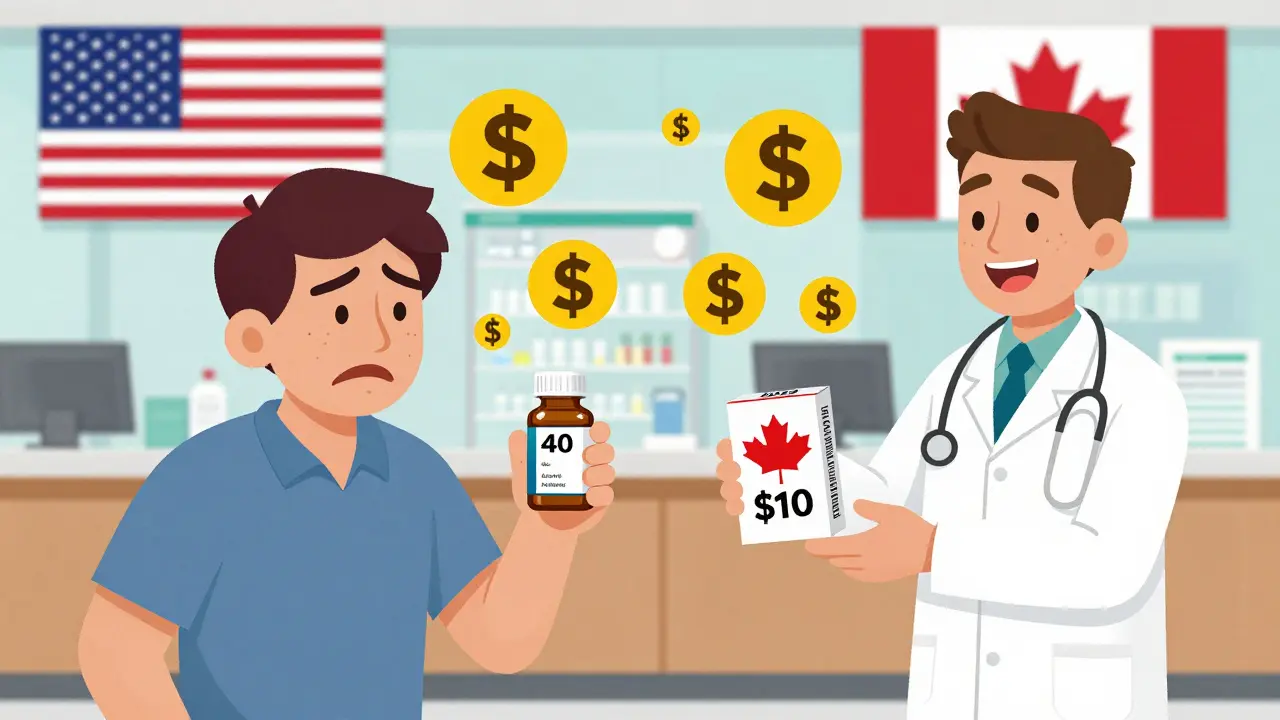
For many Americans, the cost of prescription drugs is a constant stress. A bottle of generic atorvastatin might cost $40 at your local pharmacy, but the same pills from a Canadian pharmacy could be under $10. That kind of savings isn’t a rumor-it’s real. And it’s why more people are looking overseas for cheaper generics. But here’s the twist: buying medicines abroad isn’t as simple as ordering online. There are real savings, yes, but also real risks. Let’s cut through the noise and show you exactly what you’re dealing with.
Why Are U.S. Drug Prices So High?
The U.S. pays more for drugs than almost any other country. Not just brand-name pills, but generics too. Or so it seems. In reality, the story is more complicated. The 2022 ASPE/HHS report found that U.S. prices for brand-name drugs were 422% higher than in other OECD countries. But here’s the surprise: U.S. unbranded generics were actually cheaper-67% of the average price in those same countries. So why do people think everything is more expensive?
The answer lies in how prices are calculated. In countries like Germany, Canada, and the UK, governments negotiate prices directly. They set limits. In the U.S., pharmacy benefit managers (PBMs) negotiate behind closed doors. Rebates and discounts aren’t reflected in the sticker price you see at the pharmacy. That’s why your out-of-pocket cost might be $40, even though the net price the pharmacy paid was much lower. Meanwhile, countries with strict price controls keep generic prices low, even if they use fewer generics overall. The U.S. uses generics in 90% of prescriptions, but still pays more per pill than most of the world.
Where Are the Real Deals?
If you’re looking to save money, not every country is equal. Canada is the most common destination for Americans, and for good reason. Canada’s Patented Medicine Prices Review Board reported in 2023 that generic drugs cost 32% less than U.S. retail prices. The UK’s NHS found their generic prices were 47% lower. Sweden, thanks to its transparent pricing system, has the lowest generic prices in Europe-44% below the European average. Finland and Australia also offer strong savings.
But not all international sources are safe. A 2024 study in Frontiers in Public Health found that for 53.8% of the 26 common generic drugs analyzed, South Korea’s prices were significantly lower than in the U.S. But for 30.8%, they were higher. India and China are often cited as low-cost sources, but they’re also the top origin of counterfeit drugs seized by the FDA. In 2023, 89% of counterfeit medicines intercepted at U.S. mail hubs came from those two countries.
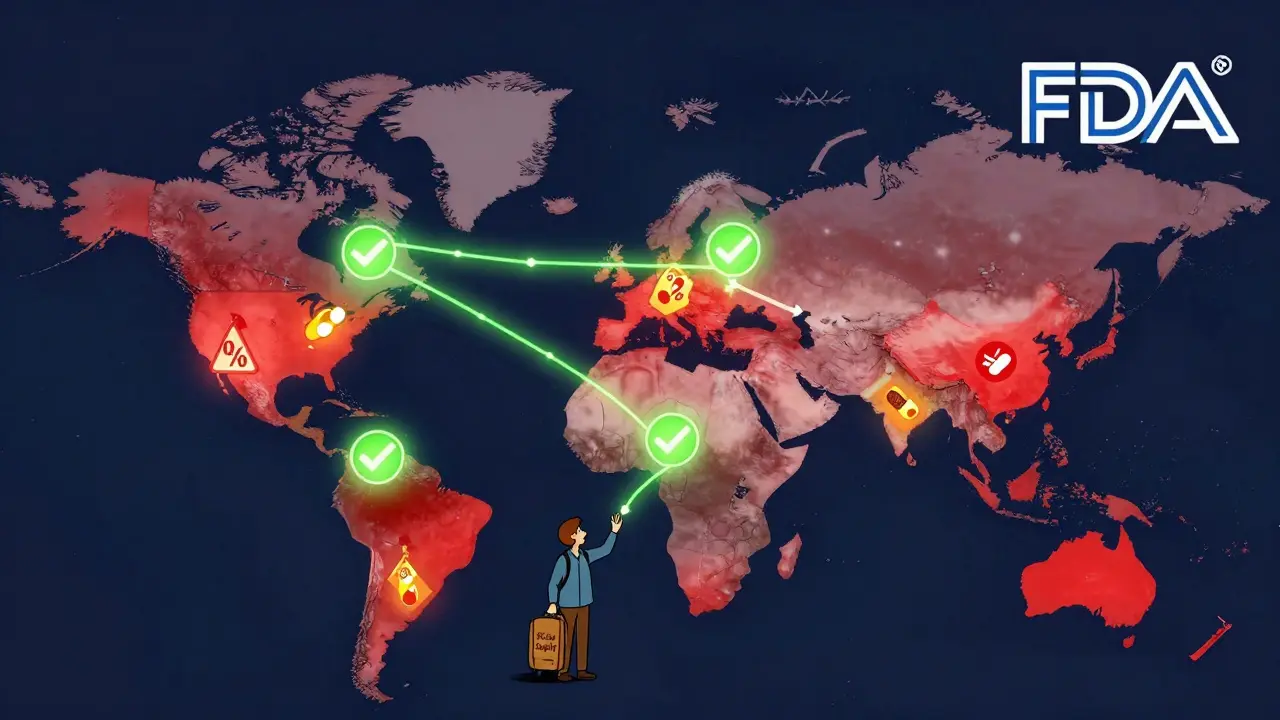
The safest options are pharmacies in countries with strong regulatory systems: Canada, the UK, Australia, and some EU nations. These countries require the same quality controls the FDA does-bioequivalence testing, manufacturing inspections, and batch tracking. And many are legally allowed to ship to U.S. customers under personal importation rules.
The FDA’s Rules: What’s Legal and What’s Not
The FDA doesn’t technically allow importing prescription drugs. But here’s the loophole: they exercise “enforcement discretion.” That means if you’re bringing in a 90-day supply for personal use, and it’s not a controlled substance or an unapproved drug, they usually don’t stop you. The agency has issued over 140 warning letters to websites selling unapproved drugs since 2022-but they rarely intercept individual packages.
There’s a catch. The drug must be for your own use. No reselling. No bulk orders. And it can’t be on the FDA’s banned list (like certain cancer drugs or insulin from unapproved sources). You also need a valid prescription. Without it, even a legal drug from a legal country can be seized at customs.
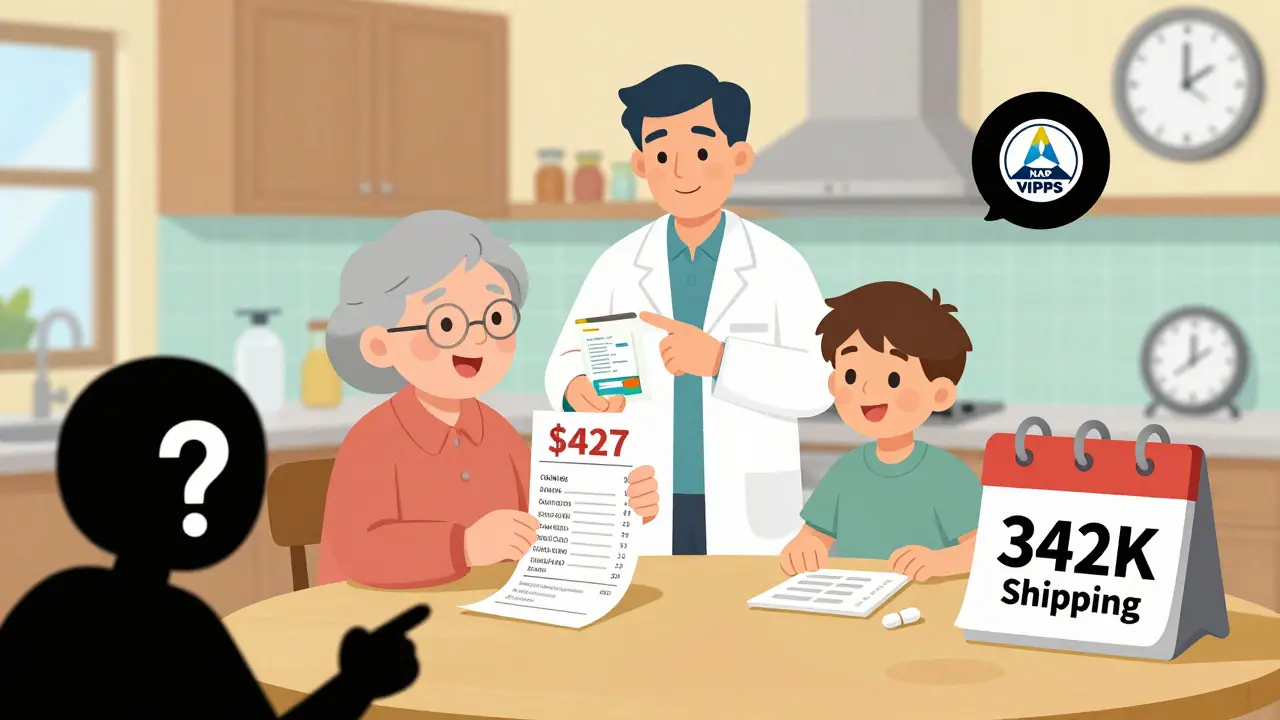
Some states are pushing back. Florida’s Canadian Drug Importation Program, launched in January 2024, has already processed over 12,000 prescriptions with average savings of $427 per script. Vermont, Colorado, Maine, and Maryland have similar programs. These aren’t loopholes-they’re state-run systems that vet foreign pharmacies and handle customs clearance. If you live in one of these states, you have a safer, legal path.
Quality and Safety: The Hidden Risks
Just because a drug is cheaper doesn’t mean it’s safe. The FDA’s 2022 inspection data showed that 12.3% of foreign manufacturing facilities received “Official Action Indicated” ratings-meaning serious violations. That’s more than double the rate for U.S. plants. Why? Many overseas factories cut corners on cleanliness, documentation, or testing. Temperature control is another silent killer. The International Air Transport Association found that 20-25% of temperature-sensitive drugs (like insulin, epinephrine, or some antibiotics) experience excursions during international shipping. That means they were exposed to heat or cold, which can reduce potency by up to 30%.
Reddit threads are full of stories. One user, “MedSaver87,” saved $1,200 a year on generic atorvastatin from a Canadian pharmacy and had no issues. Another, “AnxiousPatient,” bought generic sertraline from an Indian site and ended up in the ER because the pills didn’t work. The tablets were uneven, some crumbled, and the active ingredient was inconsistent. No one was checking.
The FDA’s 2023 consumer survey found that 32% of Americans who tried buying abroad had problems: 18% had shipments seized, 9% received counterfeit drugs, and 5% missed doses because of delays. Language barriers made things worse-27% couldn’t read the instructions on packaging. And 41% said they had no access to a pharmacist to answer questions.
How to Do It Safely
If you’re serious about saving money, don’t just Google “cheap generics.” Here’s how to do it right:
- Start with a valid prescription from your U.S. doctor. Make sure it’s for the exact drug and dosage you need.
- Only use pharmacies accredited by the National Association of Boards of Pharmacy (NABP). Look for the VIPPS seal. As of July 2024, only 63 international pharmacies had this certification.
- Check if your state has an importation program. Florida, Vermont, and Maryland are already running them. These programs handle the legal and shipping side for you.
- Verify the country of origin. Stick to Canada, the UK, Australia, or EU countries with strong regulators. Avoid sites based in China, India, or Nigeria unless they’re verified VIPPS members.
- Don’t order more than a 90-day supply. The FDA’s unofficial limit. Anything more raises red flags.
- Keep your receipt, prescription, and tracking number. You may need them if customs asks.
And always talk to your pharmacist. They can help you compare prices, spot red flags, and even contact the manufacturer to confirm the generic’s identity.
Real Savings, Real Trade-Offs
People who’ve done this report average savings of 58% on generic drugs. Some save over 80%. For medications like metformin, lisinopril, or levothyroxine, the difference can be hundreds of dollars a year. For people on fixed incomes, that’s life-changing.
But the trade-offs are real. Shipping can take 2-4 weeks. Returns are nearly impossible. If the pills are damaged or don’t work, you’re out of luck. And if you’re on a strict schedule-like for heart disease or epilepsy-delayed refills can be dangerous.
There’s also the bigger picture. The pharmaceutical industry argues that U.S. drug spending funds global innovation. Americans pay 67% of the world’s R&D costs, according to PhRMA. If everyone started buying abroad, companies might cut development projects. That’s a valid concern. But for now, the system is broken. People are choosing between their health and their bank account.
What’s Next?
The federal government is watching. The International Prescription Drug Price Transparency Act (H.R. 2347), introduced in March 2024, could create a national system to verify safe international pharmacies. If passed, it could save $12.7 billion over 10 years. But the industry is fighting back. Lawsuits have blocked state programs in Minnesota and elsewhere.
For now, the choice is yours. You can keep paying full price. Or you can take steps to buy smarter. The savings are real. The risks are manageable-if you know where to look.
I got my metformin from a Canadian site for $8 a month. No issues. My diabetes is under control. 🙌
I’ve been doing this for years. Always use VIPPS-certified pharmacies. It’s not risky if you know what you’re doing. Your health is worth the effort.
America is the only country that lets pharma companies rip people off. If you’re buying from Canada you’re not a criminal you’re a smart person. 💪
So basically we’re all supposed to become international drug smugglers now? Cool. I’ll just take my $40 bottle and cry into my oat milk latte.
I work with patients who do this. The savings are real. But the anxiety? Real too. One lady missed her dose for 11 days because of shipping delays. It wasn’t worth it.
U.S. prices are high because we’re stupid. Everyone else figured out price controls. We still think capitalism = fairness. lol
If you’re saving hundreds a year on meds, do it. But please please please use NABP-certified sites. I’ve seen too many people get scammed. You’re not alone. 🙏
This is a gateway to socialist healthcare. Once you start importing drugs, next thing you know the government will be telling you what pills to take. They’re already watching your searches.
FDA doesn’t stop you because they’re in on it. The whole system is rigged. Big Pharma owns the FDA. They want you to think it’s safe so you keep paying $40. 🤫
I used to be scared too. Then I found a Canadian pharmacy with live chat. They answered all my questions. No jargon. Just help. Now I save $300/month. Life changed.
I ordered from Australia. Got my pills. But the label was in Australian English. Had to Google what 'syrup' meant. Took me 20 mins. 😅
You think India is dangerous? You think Canada is safe? The same factories make pills for both. It’s all the same. You’re just paying for the label.
I’m from the Philippines. We get generics from India for pennies. But here’s the thing: the U.S. doesn’t need to import. We need to fix our own system. Stop treating medicine like a luxury.
I tried this last year. Got my lisinopril from Canada. Saved $200. But the box had no instructions. I had to call my pharmacist. She helped me. I’ll never do it again without her.