
Sulfonylurea Safety Calculator
This tool helps you understand which sulfonylurea has the lowest hypoglycemia risk based on your patient's specific characteristics. The American Geriatrics Society and National Kidney Foundation provide clear guidelines for safer sulfonylurea selection.
When you’re managing type 2 diabetes, picking the right medication isn’t just about lowering blood sugar-it’s about avoiding dangerous lows. Sulfonylureas have been around since the 1950s, and they still work: they push your pancreas to release more insulin. But not all sulfonylureas are the same. Some can drop your blood sugar so hard and fast that you end up in the ER. Others? They’re much safer-if you know which ones to pick.
Why Sulfonylureas Still Matter
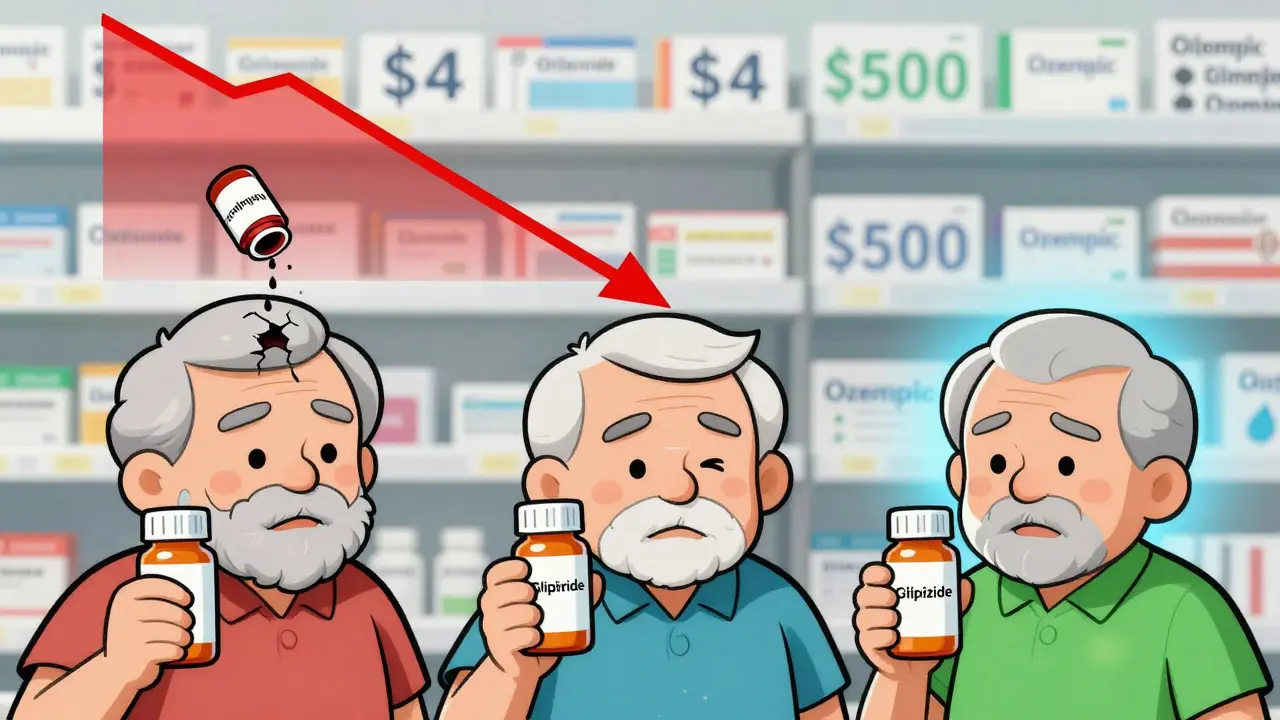
Even with all the new diabetes drugs on the market, sulfonylureas are still prescribed to about 15% of U.S. adults with type 2 diabetes. Why? Price. A month’s supply of generic glipizide or glyburide costs as little as $4. Compare that to GLP-1 drugs like Ozempic, which can run over $500 a month. For people on Medicare, Medicaid, or without insurance, sulfonylureas are often the only affordable option that delivers real HbA1c drops-up to 2% in a few months.But here’s the catch: the risk of severe hypoglycemia isn’t the same across all sulfonylureas. That’s not a minor side effect. Severe hypoglycemia means confusion, seizures, loss of consciousness, or even death. And for older adults, especially those with kidney issues, it’s a real and frequent danger.
Not All Sulfonylureas Are Created Equal
There are three generations of sulfonylureas, but in the U.S., you’ll mostly see four: glyburide, glimepiride, glipizide, and (less commonly) gliclazide. They all work the same way-but their bodies handle them differently, and that makes all the difference.Glyburide (also called glibenclamide) is the worst offender when it comes to hypoglycemia. It’s long-acting, stays in your system for up to 24 hours, and produces active metabolites that keep working even after the original drug is gone. A 2017 study in Diabetes Care found glyburide caused nearly three times more severe low blood sugar episodes than shorter-acting options. The FDA’s adverse event database shows glyburide accounts for nearly 70% of all sulfonylurea-related hypoglycemia reports-even though it’s only prescribed about a third of the time. That’s not a coincidence.
Glimepiride is a middle ground. It’s longer-acting than glipizide but doesn’t have the same metabolite buildup as glyburide. Still, studies show it causes about 7.8 episodes of severe hypoglycemia per 1,000 patient-years-more than double glipizide’s rate.
Glipizide is the safest of the bunch. It’s short-acting, clears from your body in 2 to 4 hours, and doesn’t create lingering active byproducts. A 2019 analysis in the American Journal of Managed Care found glipizide had just 4.2 hypoglycemia episodes per 1,000 patient-years. That’s nearly three times lower than glyburide. Real-world patient stories back this up: on diabetes forums, 72% of people who switched from glyburide to glipizide reported fewer or zero severe lows.
Who Should Avoid Glyburide-And Why
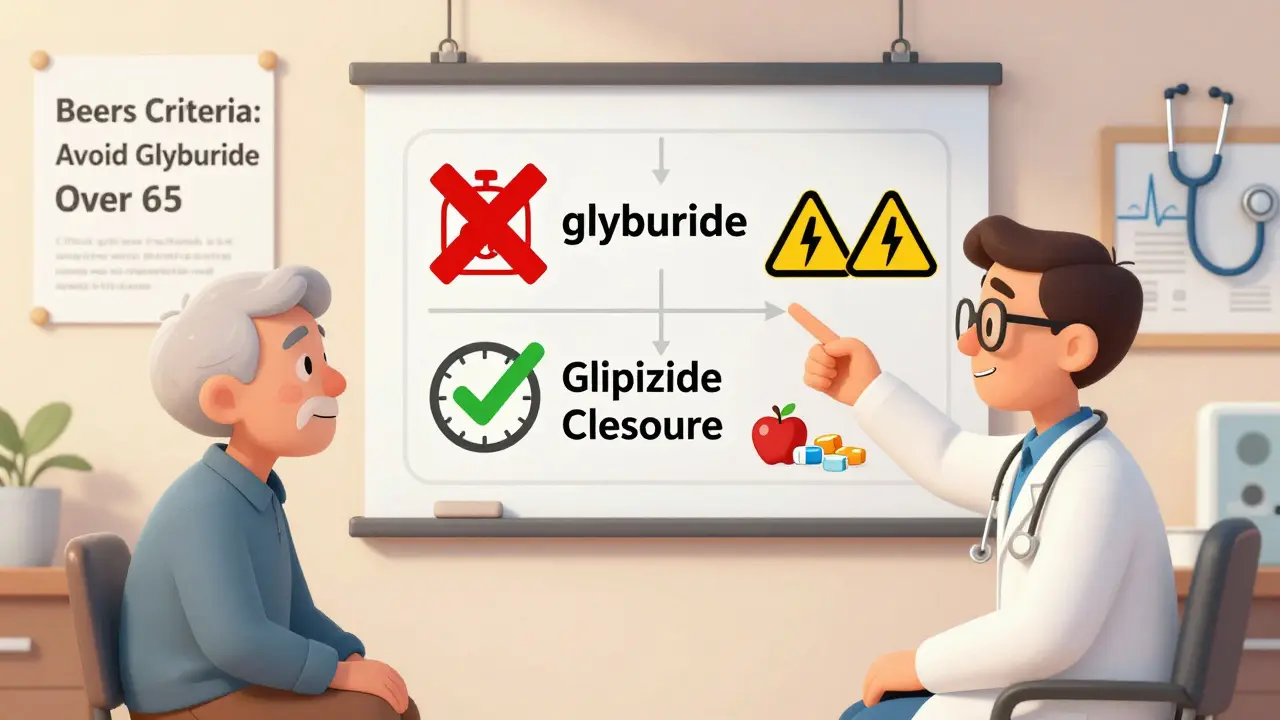
The American Geriatrics Society’s Beers Criteria, updated in 2023, says this clearly: avoid glyburide in adults over 65. It’s not a suggestion. It’s a warning. Why? Because older adults are more likely to skip meals, have kidney decline, or take other medications that interact poorly. Glyburide’s long half-life means it keeps working even when you don’t eat. One Reddit user, age 72, spent three days in the hospital after his kidney function dropped and his glyburide dose wasn’t adjusted. He said his endocrinologist later admitted he shouldn’t have prescribed it.That’s not rare. A 2024 audit of 500,000 Medicare patients found nearly 30% of those over 80 were still on glyburide-even though guidelines have banned it for that group for years. In Europe, the EMA restricts glyburide use in people over 75. In the U.S., it’s still prescribed, often because doctors don’t realize how dangerous it is in older or frail patients.
Glipizide: The Smart Choice for Most
If you need a sulfonylurea, glipizide is the one to reach for. The American Diabetes Association’s 2024 Standards of Care now explicitly recommend glipizide over glyburide or glimepiride for older adults or people with irregular eating patterns. Why? Because it’s predictable. It works fast, clears fast, and doesn’t pile up in your system.Even better: a new extended-release version, Glucotrol XL, came out in 2023. In trials, it cut hypoglycemia risk by 32% compared to the regular pill. That’s because it releases the drug slowly, matching your body’s insulin needs more naturally. It’s not a magic bullet-but it’s the best sulfonylurea option available today.
What About Kidney Problems?
If you have reduced kidney function, your body can’t clear drugs the same way. Glyburide’s metabolites build up in the kidneys, turning a bad drug into a dangerous one. The National Kidney Foundation says: avoid glyburide if your eGFR is below 60. Glipizide? It’s safe until your eGFR drops below 30. That’s a big difference.Glimepiride is also not recommended for moderate to severe kidney disease. So if you have CKD, glipizide is your only viable sulfonylurea option.
How to Use Sulfonylureas Safely
Even the safest sulfonylurea can cause lows if misused. Here’s how to reduce your risk:- Start low. Begin with glipizide 2.5 mg once daily-never 5 mg. Most people don’t need more.
- Titrate slowly. Wait 2-3 weeks before increasing the dose. Your body needs time to adjust.
- Know your triggers. Skipping meals, drinking alcohol, or over-exercising can cause lows. Keep snacks handy.
- Learn the 15-15 rule. If you feel shaky, sweaty, or confused, eat 15g of fast-acting sugar (glucose tabs, juice, candy), wait 15 minutes, check your blood sugar. Repeat if needed.
- Talk to your doctor before hospitalization. In the hospital, your meals are unpredictable. Sulfonylurea doses should be cut by 50% or held entirely. Many patients get lows because their outpatient dose isn’t adjusted.
How Sulfonylureas Compare to Newer Drugs
Let’s be honest: newer drugs like SGLT2 inhibitors (Jardiance, Farxiga) and GLP-1 agonists (Ozempic, Mounjaro) are safer. A 2021 meta-analysis found sulfonylureas cause 2.3 times more hypoglycemia than DPP-4 inhibitors and 3.7 times more than SGLT2 inhibitors. They also help with weight loss and heart protection-things sulfonylureas don’t do.But cost matters. If you’re paying out-of-pocket, glipizide at $4/month beats Ozempic at $500/month. For many people, especially on Medicare, it’s the only realistic choice. That doesn’t mean you should stay on glyburide. It means you should ask for glipizide-and push back if your doctor resists.
What Patients Are Saying
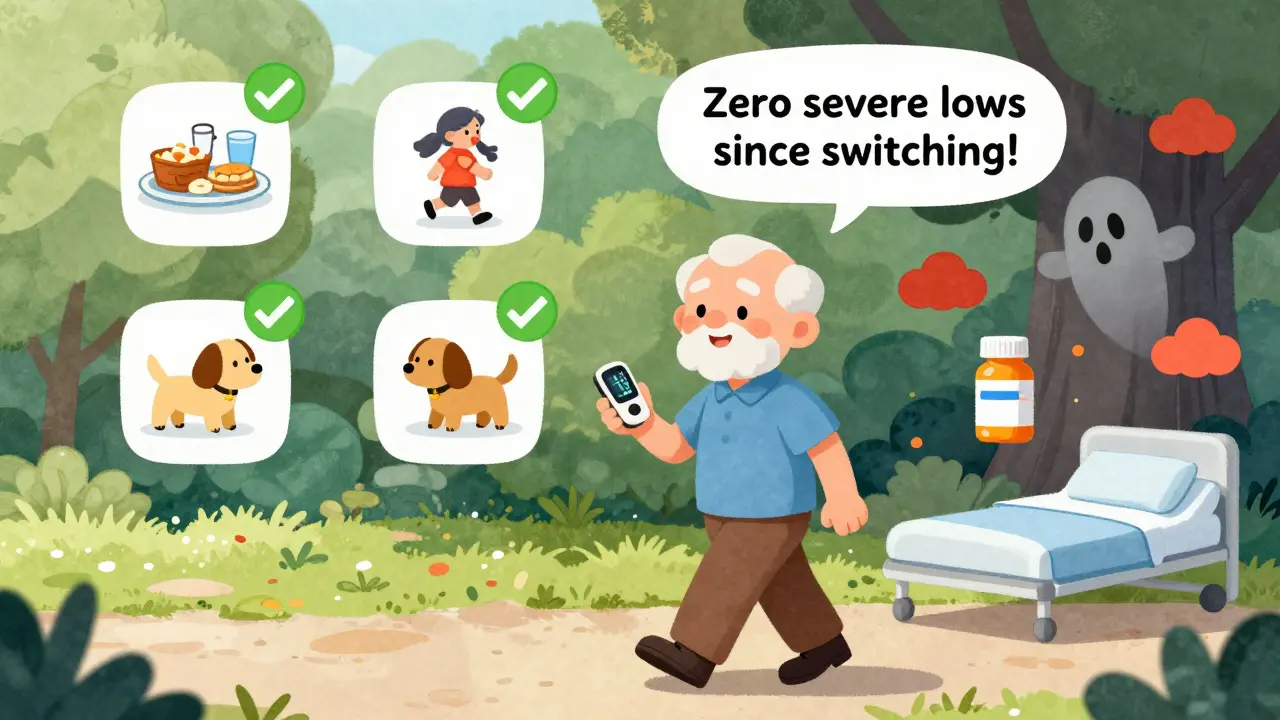
On the American Diabetes Association’s forum, a thread titled “Switching from glyburide to glipizide” had 87 responses. Sixty-three people said they had fewer lows after switching. One wrote: “I was having 2-3 severe lows a month on glyburide. Since switching to glipizide, I’ve had zero.”On Reddit, 60% of people who shared stories about glyburide-related ER visits were over 70. One wrote: “I thought it was just part of aging-until my daughter found out glyburide was the cause.”
Meanwhile, glipizide users report better control without the fear. A 2021 survey found 78% of glipizide users said they had “satisfactory control without severe lows.” Only 42% of glyburide users said the same.
The Bottom Line
Sulfonylureas aren’t going away. But the idea that they’re all the same? That’s outdated-and dangerous.If you’re prescribed a sulfonylurea, ask: Which one? If it’s glyburide, ask why. If you’re over 65, have kidney issues, or skip meals sometimes, you should be on glipizide-or another drug entirely.
Cost shouldn’t be the only factor. A $4 pill that lands you in the hospital costs way more than a $500 one that keeps you safe. Talk to your doctor. Bring this information. Your blood sugar matters-but your safety matters more.
So let me get this straight - we’re still letting people die because Big Pharma doesn’t want to subsidize $4 pills? This isn’t medicine, it’s a moral failure dressed in white coats. Glyburide is a death sentence wrapped in a prescription pad, and doctors who prescribe it to seniors are either negligent or complicit. I’ve seen grandmas in the ER because their ‘affordable’ meds turned them into walking zombies. We need a reckoning, not a risk-benefit analysis.
It is imperative to underscore that the pharmacokinetic profile of glyburide renders it unsuitable for geriatric populations, particularly in the presence of diminished renal clearance. The active metabolites, predominantly 4-trans-hydroxyglyburide and 3-cis-hydroxyglyburide, exhibit prolonged half-lives and accumulate in patients with eGFR below 60 mL/min/1.73m². Glipizide, by contrast, undergoes hepatic metabolism via CYP2C9 with minimal renal excretion, thereby offering a safer pharmacodynamic profile in chronic kidney disease. This is not opinion - it is evidence-based clinical pharmacology.
glipizide = 🚀
glyburide = ☠️
also glimepiride is kinda meh 🤷♂️
my uncle went from glyburide to glipizide and now he’s hiking in the Rockies at 78. no more 3am panic attacks from low blood sugar. also $4/month? that’s cheaper than my coffee subscription. why are we even debating this?
If you’re on a sulfonylurea and you’re over 65 or have kidney issues, please, please talk to your doctor about glipizide. I’ve worked with so many patients who thought their lows were ‘just part of getting older’ - until we switched them. One woman cried because she hadn’t slept through the night in two years from hypoglycemia. After switching? She started gardening again. Glipizide isn’t perfect, but it’s the least dangerous option we have. And if your doctor resists? Bring them this post. Knowledge is power.
Interesting. In India, glyburide is still the default because it’s the cheapest and most available. We don’t have glipizide XL here, and glimepiride is the middle-ground option. But I’ve seen patients on glyburide with CKD - it’s scary. Maybe we need better education for rural doctors. Cost can’t be the only factor when lives are at stake.
The data is clear. Glyburide is statistically correlated with increased mortality in elderly populations. The 2024 Medicare audit cited is corroborated by multiple international registries. The continued off-label use in the U.S. reflects systemic failure in prescriber education and pharmaceutical marketing influence. This is not a clinical decision - it is a public health crisis.
I had a friend who almost died on glyburide. She was 71. She woke up in the hospital after her husband found her on the floor, shaking, drooling. The ER doc said, ‘This is why we don’t give glyburide to seniors.’ But her doctor? He said, ‘It’s fine, she’s fine.’ She didn’t even know she was on a dangerous drug. I’m so angry. Why doesn’t the pharmacy flag this? Why doesn’t the system protect people? I’m not okay.
It’s fascinating how the pharmacodynamic heterogeneity among sulfonylureas is systematically underappreciated in primary care. The differential binding affinity to SUR1 receptors, coupled with variable hepatic clearance kinetics, creates a non-linear risk gradient that is grossly misrepresented in clinical inertia. Glipizide’s rapid dissociation from pancreatic β-cell KATP channels - coupled with negligible renal excretion of metabolites - renders it uniquely suited for dynamic glycemic environments. The fact that this isn’t standard-of-care speaks to the epistemic decay of contemporary medical education.
Glipizide XL is a game changer. I’ve been pushing it on my patients with irregular schedules - shift workers, caregivers, people who skip meals. The slow release matches their eating patterns way better. One guy works nights, used to crash at 3am on regular glipizide. Now he’s stable. No more glucose tabs under his pillow. Also, if you’re on metformin too, glipizide combos work great. Just start low. 2.5mg. Seriously.
I’m so glad someone finally laid this out so clearly. I’ve had patients come to me terrified after a low, thinking they’re ‘doing something wrong.’ But it’s not them - it’s the drug. Switching to glipizide isn’t a compromise, it’s a correction. And for those who say ‘but it’s not as strong’ - it’s strong enough, and safety matters more than HbA1c numbers. Let’s stop making people choose between affordability and survival. We can do better.
Wow. So you’re saying we should just switch everyone to glipizide? What about the people who actually need longer coverage? You’re ignoring individual variation. And why are you acting like glyburide is evil? It’s a tool. Used correctly, it works. Maybe your patients just don’t follow instructions. Or maybe they’re too lazy to eat on time. Not everyone has the luxury of a perfect routine.