
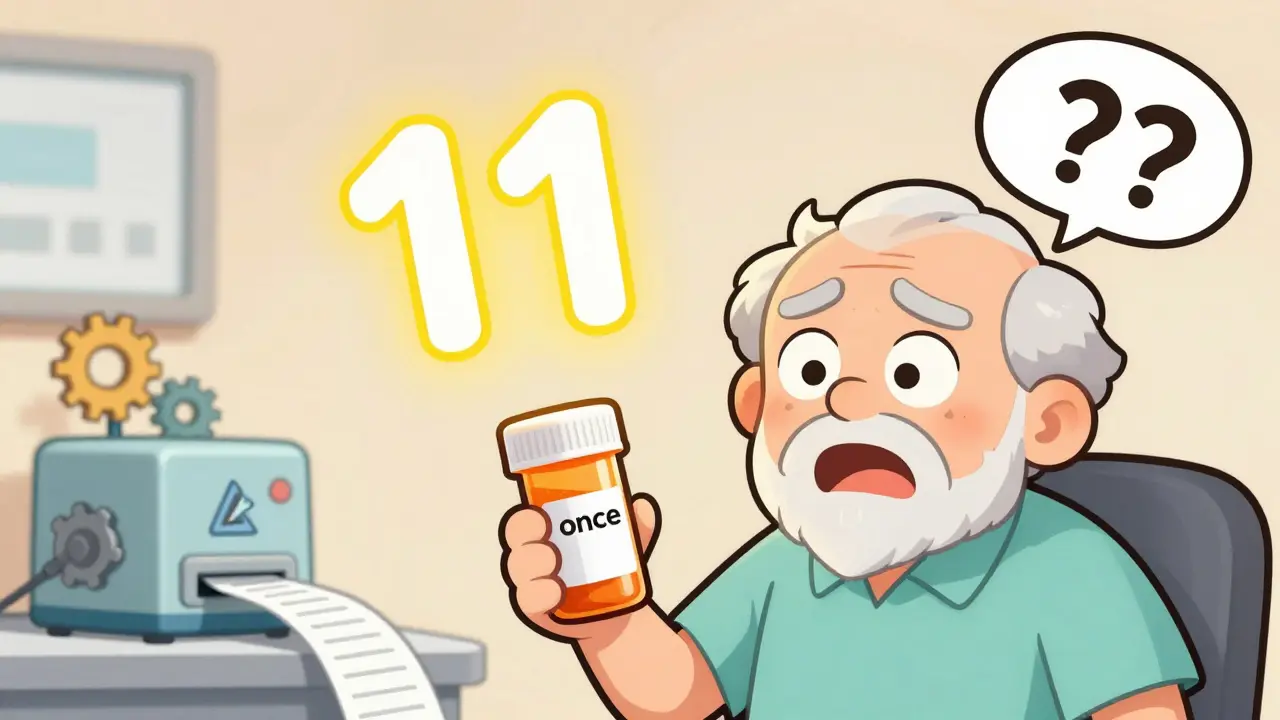
Imagine taking your medicine because the label says once a day - but it actually means eleven times a day. That’s not a hypothetical. It’s happened. And it’s not rare.
In pharmacies across the U.S., prescription labels translated by machines often turn life-saving drugs into dangerous mistakes. A 2010 study in the Bronx found that half of all Spanish-language prescription labels had errors. Some said "take once" when they meant "take eleven." Others told patients to take pills weekly instead of daily. These aren’t typos. They’re life-threatening translation failures.
Why Machine Translation Fails on Prescription Labels
Most pharmacies don’t hire real translators. They use cheap software that grabs English text and runs it through a basic translation engine. These tools don’t understand medical context. They don’t know that "once" in English isn’t the same as "una vez" in Spanish - or that "once" in Spanish means "eleven."
It gets worse. Generic instructions like "take with food" or "avoid alcohol" get butchered. In Latin America, "alcohol" on a label might mean rubbing alcohol. In Spain, it means drinking alcohol. The same word, two different dangers. And since each pharmacy uses different software, the same drug might have three different translations across three different stores.
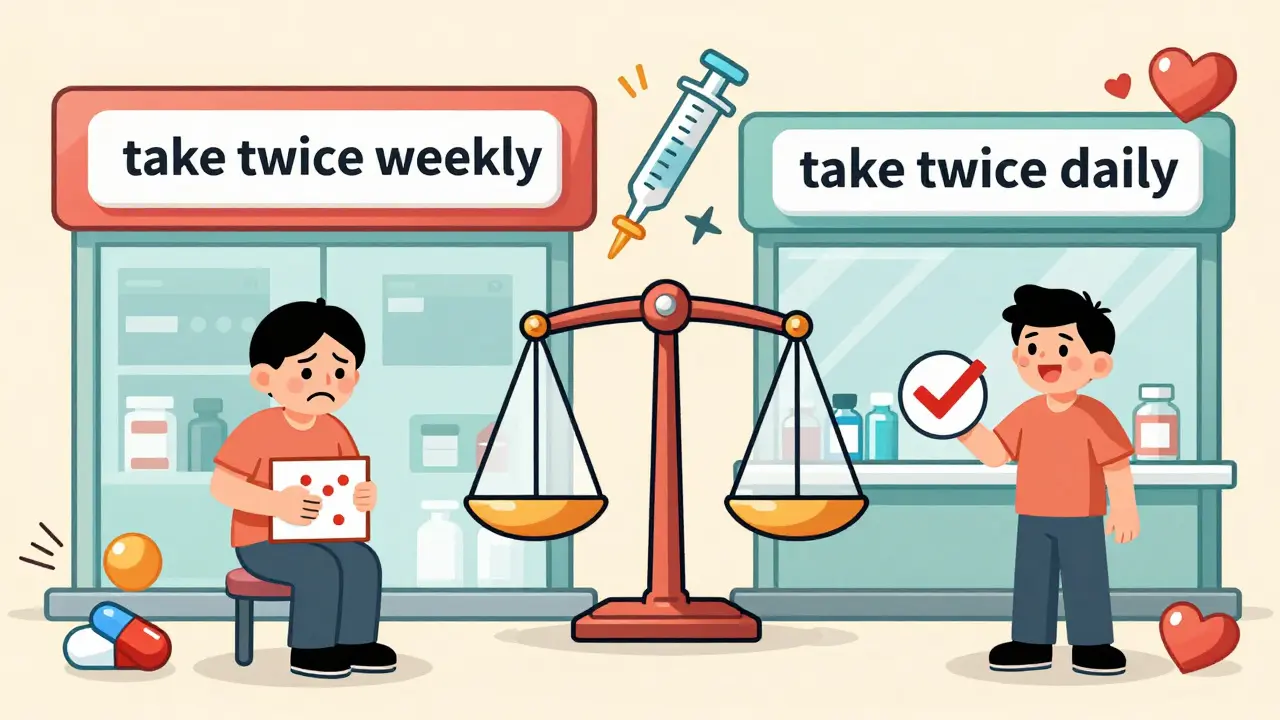
Pharmacy systems often pull translations from third-party databases with no quality control. One chain might say "take two tablets twice daily," another says "take two tablets twice weekly." The difference? One keeps you healthy. The other ruins your kidneys.
Who’s Most at Risk?
Over 25 million Americans have limited English proficiency. That’s 1 in 12 people. Spanish speakers make up 62% of that group - about 15.8 million people. But it’s not just Spanish. Chinese, Vietnamese, Arabic, and other languages are growing fast. Yet only 23% of pharmacies offer translation for languages beyond Spanish.
These aren’t just numbers. These are grandparents trying to manage diabetes. Parents giving medicine to sick kids. Immigrants who’ve never set foot in a U.S. hospital before. They rely on those tiny white labels. When the words are wrong, they don’t know how to question them. They trust the pharmacy.
A 2023 survey found that 63% of LEP patients were confused by their prescription labels. Nearly 3 in 10 admitted they’d taken the wrong dose because of it. That’s not negligence. That’s systemic failure.
Where It’s Getting Better: California and New York
Only two states have laws requiring accurate prescription translations: California and New York.
California’s law, passed in 2016, forces pharmacies to use certified medical translators - not machines - for Spanish, Chinese, Vietnamese, and Korean labels. The results? A 32% drop in medication errors among Spanish-speaking patients. Emergency room visits for drug mistakes fell by 27%.
New York followed with Local Law 30 in 2010, requiring bilingual labels for the city’s most common languages. Both states now require dual verification: a translator checks the label, then a second bilingual staff member confirms it.
These aren’t just rules. They’re safety nets. And they work.
What’s Being Done to Fix This Nationwide
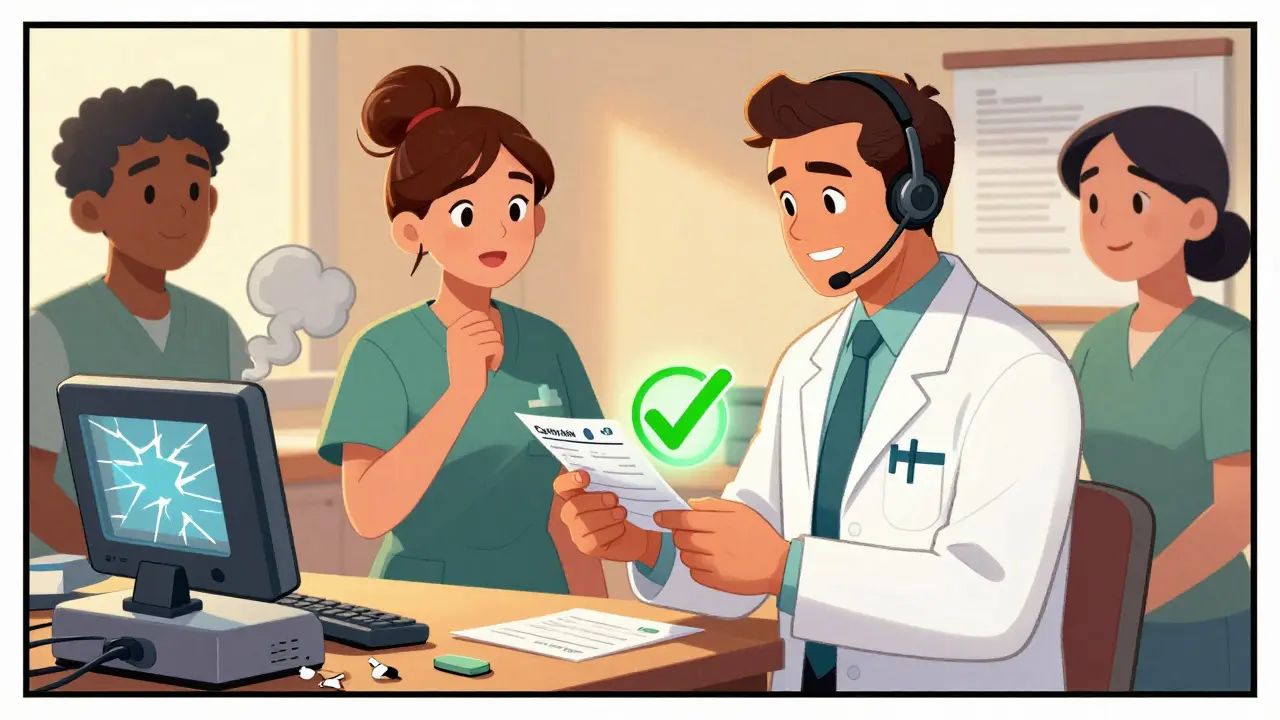
Big pharmacy chains are starting to catch up. Walgreens rolled out MedTranslate AI in late 2023 - an AI system that flags bad translations and routes them to pharmacists for review. CVS launched LanguageBridge in early 2024 with the same model: machine translation, then human check.
The FDA now recommends all prescription labels use plain language and be translated by certified professionals with at least five years of pharmaceutical experience. That’s a big step. But only 39% of pharmacies follow it.
Meanwhile, the federal government is stepping in. In March 2024, the HHS launched a $25 million grant program to help pharmacies - especially in underserved areas - buy translation software and hire bilingual staff. It’s not enough yet. But it’s a start.
How to Protect Yourself (or a Loved One)
If you or someone you care about has limited English proficiency, don’t trust the label alone. Here’s how to stay safe:
- Ask for a live interpreter. Most pharmacies have phone or video interpreter services. Ask for one when you pick up your prescription. You have a legal right to it under Title VI of the Civil Rights Act.
- Compare labels. If you get the same medication from two different pharmacies, bring both labels to a pharmacist and ask: "Do these mean the same thing?"
- Use the Medication Guide. Every prescription comes with a printed guide in English. Ask if there’s a version in your language. If not, ask for a printed translation.
- Call the prescribing doctor. If the label doesn’t make sense, call the doctor’s office. Ask them to explain the instructions in your language.
- Know the red flags. If the label says "once" and you’re not sure - assume it’s wrong. Look for phrases like "take daily," "take twice a day," or "take as directed." If it’s vague or inconsistent, get help.
One patient in Miami told her pharmacist her heart medication label said "once a day." But the Spanish version said "once" - meaning eleven. She didn’t catch it until she called her daughter in Mexico, who recognized the error. That’s the kind of safety net you need.
What You Can Do to Push for Change
Change won’t come from waiting. It comes from speaking up.
- If your pharmacy gives you a bad translation, file a complaint. Most chains have a customer service line. Say: "My prescription label was mistranslated. I need a certified translator to review it."
- Ask your state representative if they support prescription translation laws. California’s model is proven. Push for it in your state.
- Support nonprofits like the National Health Law Program or California Health Advocates. They track these errors and push for policy changes.
- Volunteer with community health groups. Many need bilingual volunteers to help patients understand their meds.
Every time you speak up, you make the system safer for someone else.
The Bottom Line
Prescription labels aren’t just instructions. They’re lifelines. When they’re mistranslated, people die. Not because of bad intentions. But because of cheap shortcuts and ignored laws.
The fix exists. Certified translators. Human verification. Plain language. It’s not expensive. A professional translation adds less than 30 cents per prescription. The cost of a wrong dose? Thousands in ER bills. Or worse - a life lost.
It’s time to stop treating translation as an afterthought. It’s a medical necessity. And you have the right - and the power - to demand it.
This hit me hard. My abuela almost took her blood pressure med 11 times a day because the label said 'once' in Spanish. We caught it just in time. Thank you for shining a light on this. We need more people to speak up.
How is it even possible that a multibillion-dollar industry still outsources critical medical communication to Google Translate? This isn't incompetence-it's negligence dressed up as cost-cutting. The fact that we tolerate this is a moral failure of the highest order.
I’ve worked in community health for 12 years. I’ve seen people collapse because they took too much insulin because the label said 'twice weekly' instead of 'twice daily.' It’s not a glitch-it’s a pattern. And it’s killing people who trusted the system. We need mandatory certification for translators in every pharmacy, full stop. No exceptions. No excuses. Lives are on the line.
The translational asymmetry in pharmaceutical nomenclature is a systemic failure of linguistic interoperability in healthcare delivery ecosystems. The lexical ambiguity of cardinal numerals across linguistic registers-particularly the homonymy between 'once' (11) and 'once' (once)-exacerbates patient safety risks exponentially. Standardization via certified medical interpreters is not merely advisable-it’s a bioethical imperative.
Ugh. Another woke translation crusade. 😒 We got enough problems without turning every pharmacy into a language lab. People should just learn ENGLISH. It's the law here! 🇺🇸 And if you can't read the label, maybe you shouldn't be taking pills at all. #AmericaFirst #StopTheTranslationMadness
OMG I just cried reading this. 💔 My cousin in Texas almost lost her kidney because the label said 'take every other day' but the Spanish version said 'take every day.' She didn't know the difference. She trusted the pharmacy. And now? She's on dialysis. This isn't just about words-it's about trust. We need to fix this NOW. #MedicationSafety #NoMoreMistakes
I think the AI-assisted models like MedTranslate and LanguageBridge are a good start, but they’re still just layers on top of a broken foundation. The real fix is human verification-paired with cultural competency training. Translation isn’t just swapping words. It’s understanding context, dialect, and fear. We need to treat it like the clinical skill it is.
It is indeed a matter of considerable concern that linguistic accessibility within the pharmaceutical domain remains insufficiently prioritized by institutional frameworks. The conflation of machine-generated lexicons with clinically validated instruction sets constitutes a critical vulnerability in patient care pathways. One must advocate, with due diligence, for the institutionalization of certified linguistic professionals within the dispensing process, as the ramifications of miscommunication are not merely administrative-they are existential.
My cousin in India had same problem with diabetes med. Label said 'once' but meant 'twice.' He took it wrong for weeks. Thank you for writing this. We need to spread this info more. Maybe we can make a video in Hindi too? 🙏
David, your comment is dangerous and ignorant. 💔 People don't choose to not speak English. Many are elderly, newly arrived, or disabled. This isn't about 'learning the language'-it's about basic human dignity. If your grandma needed insulin and got the wrong dose because of a bad translation, would you still say 'just learn English'? I hope not.
It’s strange how we treat language like a luxury in healthcare. We’ll spend millions on a new MRI machine but balk at spending 30 cents on a translator. We’re not failing because we lack technology-we’re failing because we lack imagination. What if every label came with a QR code linking to a video of a pharmacist explaining it in your language? Simple. Human. Effective.