
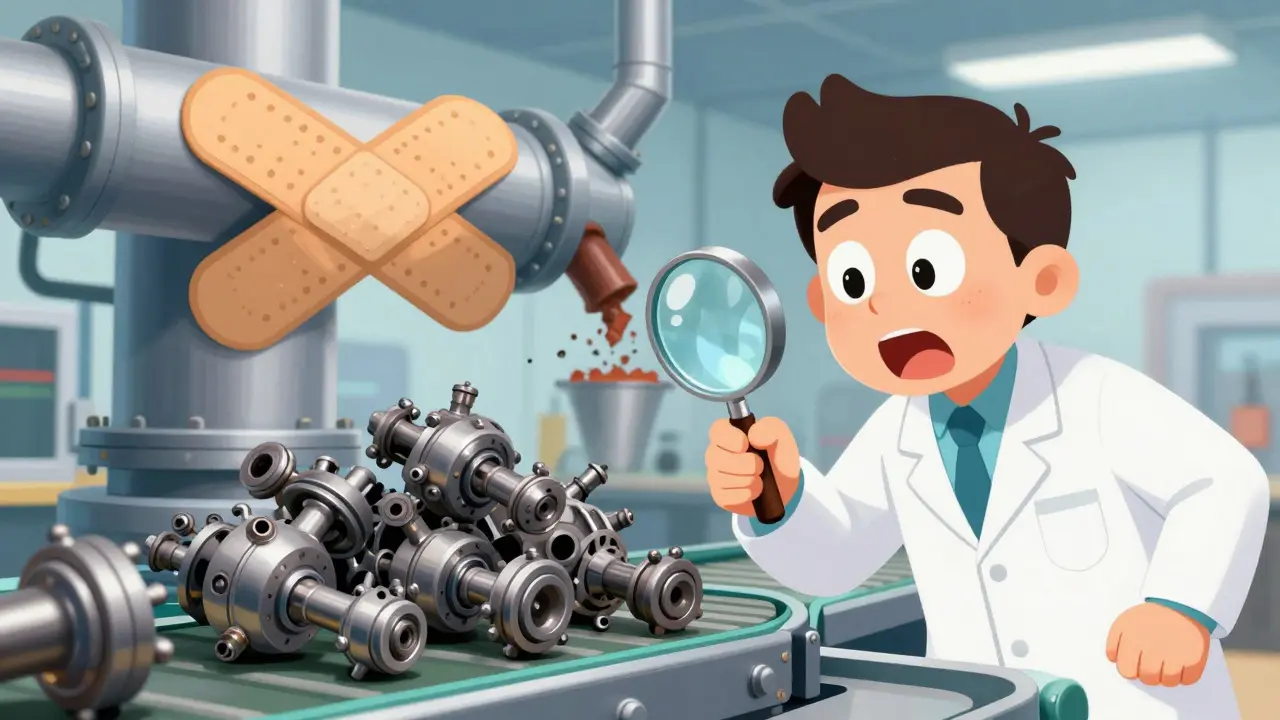
When we talk about corrective actions, we aren't talking about a simple repair. Corrective Action is a structured methodology used to identify the root cause of a manufacturing defect and implement a permanent solution to prevent it from happening again. It is the difference between mopping up a puddle and fixing the pipe that's leaking. For companies in high-stakes industries, this isn't just a good idea-it's often the law. If you're making heart valves or injectable drugs, a mistake isn't just a loss of profit; it's a safety risk.
The Big Three: Correction, Corrective Action, and Preventive Action
One of the biggest hurdles in quality management is that people use these three terms interchangeably, but they are worlds apart. In fact, roughly 68% of quality failures happen because teams confuse a quick fix with a permanent solution. Here is how to tell them apart:
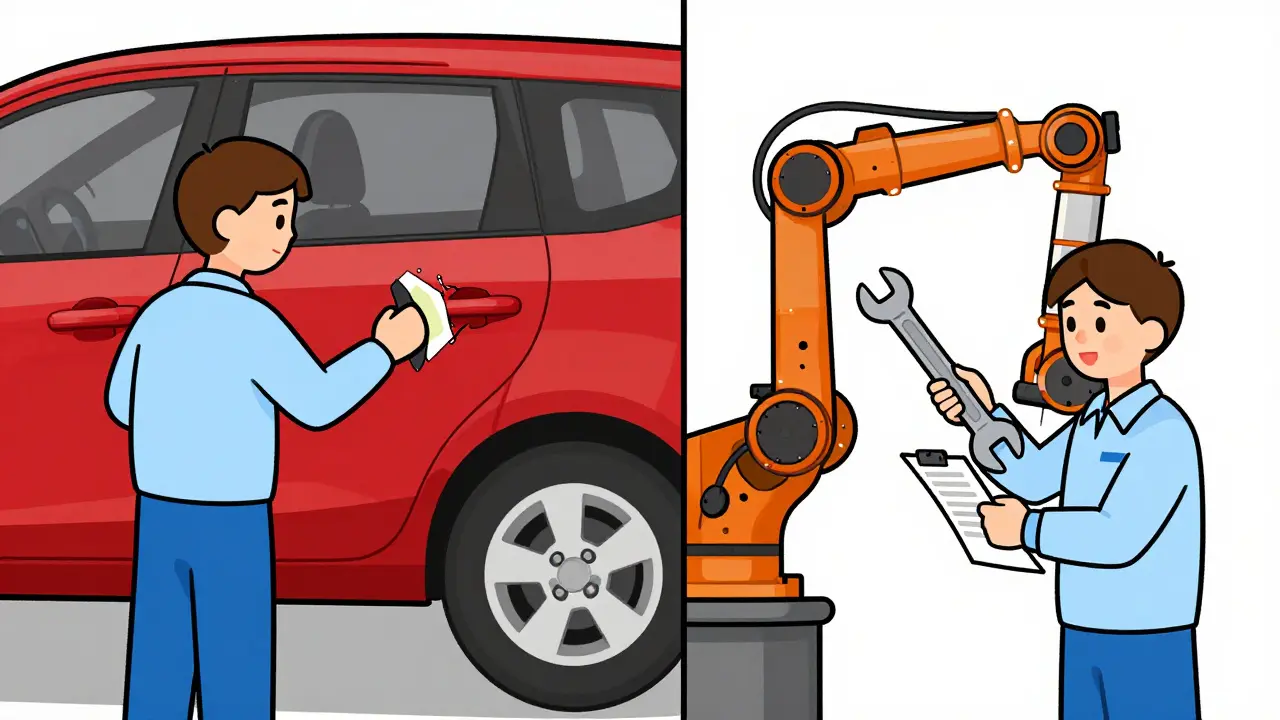
- Correction: This is the "emergency response." You find a scratch on a car door, and you buff it out. You've fixed the part, but you haven't asked why the scratch happened in the first place.
- Corrective Action: You realize the scratch is caused by a loose robotic arm. You recalibrate the arm and update the maintenance schedule. Now, the scratch won't come back.
- Preventive Action: You look at a similar robotic arm on a different line that is working fine and realize it's a newer model. You decide to upgrade all arms to the newer version before they ever start scratching parts.
| Feature | Correction | Corrective Action | Preventive Action |
|---|---|---|---|
| Goal | Fix immediate symptom | Eliminate root cause | Prevent potential failure |
| Timing | Reactive (Immediate) | Reactive (Investigation) | Proactive (Strategic) |
| Documentation | Low | High | Moderate to High |
| Outcome | Short-term fix | Permanent resolution | Risk mitigation |
The CAPA Framework: The Gold Standard for Fixing Problems
In regulated sectors like medical devices and pharma, this process is formalized as CAPA (Corrective and Preventive Action). Whether you are following FDA 21 CFR Part 820 for medical devices or ISO 13485 standards, the goal is the same: a documented trail that proves you found the problem and killed it at the root.
Implementing a CAPA system can be a game-changer. Data shows that companies using these structured systems see an average 37% reduction in quality-related downtime and a 19% drop in operational costs because they stop wasting material on defective parts. However, it isn't a magic wand. It requires a significant time investment-often 8 to 12 hours of dedicated analysis for every major non-conformity.
How to Run a Corrective Action: Step-by-Step
If you're staring at a quality failure, don't just start turning screws. Follow this six-step workflow to ensure the problem stays gone.
- Identification: Spot the issue. This could be a customer complaint, a failed internal test, or a trend in your scrap rates.
- Evaluation: Not every glitch needs a full-blown investigation. Categorize the risk. Is this a minor cosmetic flaw, or does it affect the safety of the end user?
- Root Cause Analysis (RCA): This is the heart of the process. You use tools like the 5 Whys (asking "why" until you hit the bedrock cause) or a Fishbone Diagram (mapping out materials, methods, machines, and people) to find the actual trigger.
- Resolution Planning: Create a Corrective Action Plan (CAP). This must include exactly what will be changed, who is responsible for the change, and a hard deadline.
- Implementation: Execute the plan. This might mean buying new equipment, rewriting a Standard Operating Procedure (SOP), or retraining a whole shift of workers.
- Effectiveness Review: This is where most companies fail. You can't just assume the fix worked. You must verify it-usually by checking if the defect rate drops by at least 50% over the next three production cycles.
Common Pitfalls and Why Most Fixes Fail
The FDA frequently issues warning letters to companies, and a huge chunk of them-around 43% in some years-cite inadequate CAPA implementation. The most common mistake? Addressing the symptom rather than the cause. For example, if a worker is consistently installing a part backward, the "symptom" is the backward part. The "correction" is flipping the part around. But the "root cause" might be that the instruction manual has a confusing diagram. If you don't fix the manual, the worker (or the next person hired) will just keep installing it backward.
Another major hurdle is the "paperwork wall." Quality managers often complain that CAPA systems generate mountains of documentation-sometimes 40 or 50 pages for a single issue. This leads to "compliance theater," where people fill out forms just to satisfy an auditor rather than actually solving the problem. The most successful shops are moving toward digital tracking systems that automate the documentation, cutting the administrative burden by about 41%.

The Future of Quality: AI and Predictive CAPA
We are moving away from the era of "find it and fix it" and toward "predict it and prevent it." New AI-powered tools are now being used for root cause analysis, which can slash investigation times by over 50% by scanning thousands of production data points to find correlations that a human would miss.
Some forward-thinking manufacturers are piloting blockchain-based audit trails to ensure that quality records cannot be tampered with. The ultimate goal is a Predictive CAPA system where the software notices a machine's vibration pattern shifting slightly and triggers a corrective action *before* the first defective part even rolls off the line. This shift could potentially reduce quality-related downtime by nearly half across the industry.
What is the difference between a correction and a corrective action?
A correction is an immediate action to fix a detected problem (like scrapping a bad part), while a corrective action is a long-term solution designed to eliminate the cause of that problem so it doesn't happen again (like fixing the machine that caused the defect).
How do I know if my corrective action actually worked?
You must perform an effectiveness review. This involves monitoring the process over several production cycles to ensure the defect rate has dropped significantly (typically >50%) and that no new problems were introduced by the change.
Do all manufacturing problems require a formal CAPA process?
No. For minor, low-risk deviations that don't affect safety or critical function, a simple correction is often enough. CAPA is usually reserved for critical deviations, systemic issues, or requirements mandated by regulators like the FDA.
What are the best tools for Root Cause Analysis?
The most effective tools are the "5 Whys" for simple to medium problems and the Fishbone (Ishikawa) diagram for complex issues involving multiple variables like manpower, machinery, and materials.
Why does the FDA care so much about CAPA?
In medical device and pharma manufacturing, a failure to implement effective corrective actions can lead to defective products reaching patients, which can cause injury or death. Documented CAPA proves a company is in control of its quality processes.
Next Steps for Your Quality Team
If you're just starting to formalize your process, don't try to boil the ocean. Start by picking your top three most frequent defects and run a full RCA on them. Get a cross-functional team together-include the people who actually run the machines, not just the engineers in the office. Once you've proven that a structured corrective action can permanently kill a recurring problem, the buy-in from the rest of the organization will come naturally.