
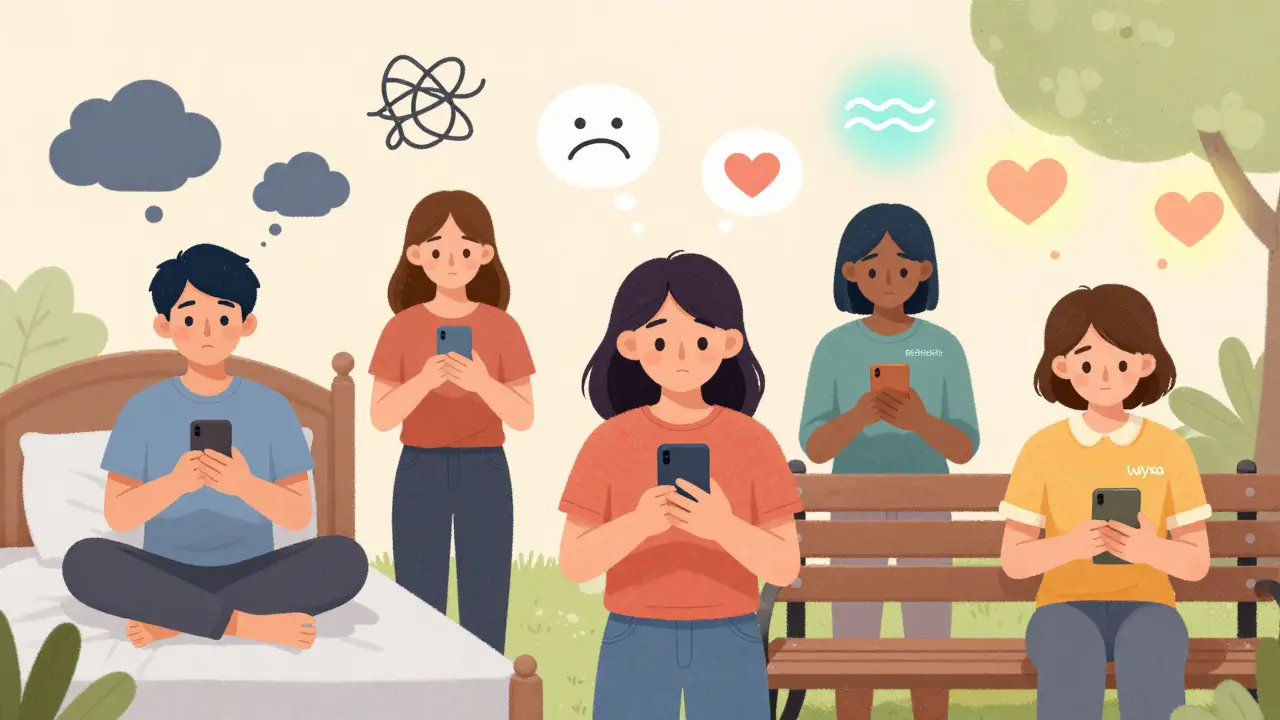
More people are using apps and online therapy than ever before
By 2025, over 10,000 mental health apps are available on smartphones. You can find ones that guide you through breathing exercises, track your mood, or connect you with a licensed therapist in minutes. The global market for these tools hit $7.48 billion in 2024, and it’s growing fast. But here’s the catch: digital mental health isn’t magic. It works for some, falls flat for others, and sometimes puts your private data at risk.
What’s actually in these apps?
Not all mental health apps are the same. Some are simple mindfulness tools like Calm and Headspace-both have over 60 million users. They offer guided meditations, sleep stories, and relaxing sounds. These are great for stress relief, but they’re not therapy. Others, like Wysa and Youper, use AI to simulate cognitive behavioral therapy (CBT). They ask you questions, challenge negative thoughts, and give feedback based on what you type. Wysa has been tested in 14 clinical studies; Youper has seven peer-reviewed papers backing its methods.
Then there are teletherapy platforms like BetterHelp and Talkspace. These connect you to real therapists via text, voice, or video. You get matching based on your needs, and sessions happen on your schedule. But here’s what most people don’t realize: the free version of these apps often locks away the real help. Full access usually costs $60 to $90 per week. Many users start strong, then quit when they hit the paywall.
Why do people stop using them?
Studies show 92% of people download a mental health app at least once. But only about 30% stick with it past three months. Why? It’s not just cost. It’s fatigue. You download five apps during a rough patch. You use one for a week. Then another. Then you stop. The notifications pile up. The prompts feel repetitive. The progress bars don’t move.
Reddit user u/MindfulTechJourney said it plainly: “Downloaded five apps during lockdown. Stuck with Calm for three months. Then stopped because the free version became too limited.” That’s the pattern. Apps are designed to hook you in, not keep you long-term. And when they fail to deliver real change, people feel worse-not better.
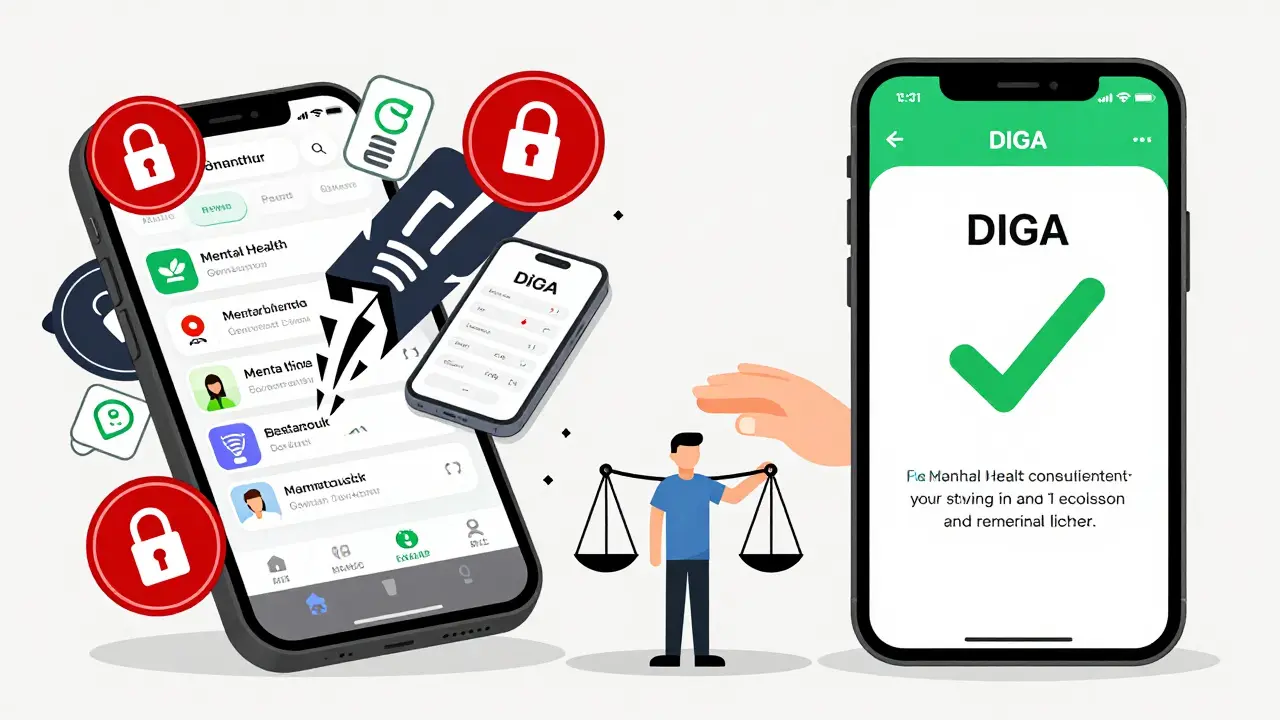
Privacy isn’t just a buzzword-it’s a real risk
When you use a mental health app, you’re sharing your deepest thoughts. Your panic attacks. Your suicidal ideation. Your relationship struggles. Where does that data go?
A 2025 review of 578 apps found that 87% had serious privacy flaws. Some sell your data to advertisers. Others store it unencrypted. A few even share your mood logs with third-party analytics companies. One app was found sending user journal entries to Facebook’s ad network. No consent. No warning.
Even apps that claim to be “HIPAA-compliant” aren’t always safe. HIPAA only applies if the app is connected to a doctor or insurance provider. Most consumer apps aren’t. That means your data has no legal protection. If the company gets hacked-or decides to sell your information-you have no recourse.
Germany’s model: regulated, reimbursed, real
Not all countries treat mental health apps like apps for games or fitness. In Germany, there’s a system called DiGA-Digitale Gesundheitsanwendungen. These are digital health apps that have passed strict clinical testing. They’re reviewed by government agencies, proven effective in trials, and can be prescribed by doctors. And here’s the kicker: they’re covered by public health insurance.
As of March 2024, 42% of all DiGA approvals were for mental health conditions. Nearly a quarter focused specifically on depression. That’s not marketing. That’s medicine. These apps aren’t trying to sell you a subscription. They’re trying to heal you.
Compare that to the U.S., where most apps are sold like subscription services. No oversight. No proof of effectiveness. Just a flashy website and a lot of testimonials.
Hybrid care is the future
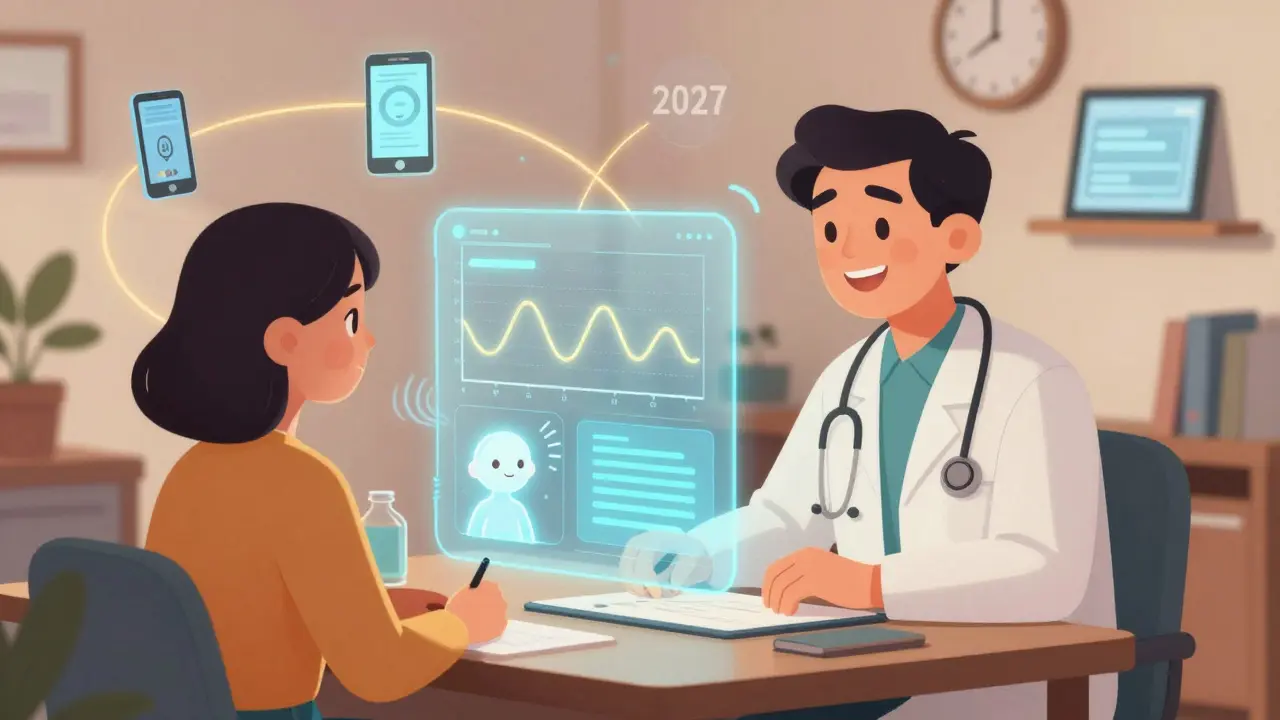
The most promising approach isn’t app-only or therapist-only. It’s both. Hybrid models combine self-guided digital tools with scheduled sessions with a real clinician. One study found these hybrid programs had a 43% higher completion rate than apps alone or in-person therapy alone.
Why? Because humans need connection. AI can guide you through a CBT exercise, but it can’t hold space for your grief. An app can remind you to breathe, but it can’t notice when you’re about to break down mid-session. The best digital tools act as extensions of care-not replacements.
By 2027, experts predict 65% of mental health apps will have direct referral pathways to licensed professionals. That’s a good sign. It means the industry is starting to see itself as part of a larger system, not a standalone fix.
Who should use these tools?
Not everyone needs an app. If you’re in crisis-having frequent panic attacks, thinking about suicide, or unable to get out of bed-you need a professional. Apps won’t save you in those moments.
But if you’re managing mild anxiety, tracking mood swings, or trying to build better habits, a well-chosen app can help. The key is matching the tool to your need:
- For stress and sleep: Calm, Headspace
- For CBT-style support: Wysa, Youper
- For therapy with a human: BetterHelp, Talkspace (if you can afford it)
- For workplace support: Look for employer-sponsored programs with clinical oversight
What to watch out for
Here’s how to avoid getting burned:
- Check if the app is clinically validated. Look for published studies, not just user reviews.
- Read the privacy policy. If it’s vague or doesn’t mention data sharing, walk away.
- Don’t trust download numbers. An app with 10 million downloads can still be useless-or dangerous.
- Ask your doctor. They might know of a regulated app that’s actually covered by insurance.
- Start with free trials. Many apps offer 7-14 days. Use that time to test usability, not just features.
It’s not about replacing therapy-it’s about expanding access
Digital mental health tools aren’t the solution to America’s therapist shortage. But they can help fill the gaps. For people in rural areas, for those who can’t take time off work, for teens who won’t talk to a counselor in person-these tools offer a lifeline.
The problem isn’t the technology. It’s the lack of regulation, the rush to profit, and the false promise that an app can fix what takes time, trust, and human connection to heal.
Use these tools wisely. Know their limits. Protect your data. And if you need more than an app can give, don’t hesitate to reach out. You’re not weak for needing help. You’re human.
Are mental health apps really effective?
Some are, but most aren’t. Apps like Wysa and Youper have clinical studies backing their methods, especially for mild anxiety and depression. But many apps are just guided meditations or mood trackers with no proven therapeutic value. Look for apps that cite peer-reviewed research-not just user ratings.
Can teletherapy replace in-person therapy?
For many people, yes-especially for ongoing support, mild to moderate conditions, or when in-person care isn’t available. But teletherapy isn’t ideal for severe mental health crises, psychosis, or when you need hands-on interventions. The connection matters. If you feel disconnected from your therapist online, it’s okay to switch back to in-person.
Are mental health apps covered by insurance?
In the U.S., almost never-unless they’re part of an employer-sponsored program or prescribed through a doctor. In Germany, certain apps (DiGA) are covered by public health insurance. In the U.S., some insurers are starting to cover teletherapy platforms like BetterHelp, but only under specific plans. Always check with your provider before subscribing.
How do I know if an app is safe for my data?
Look for clear privacy policies that say your data won’t be sold or shared. Avoid apps that ask for unnecessary permissions like location or contacts. Check if the app is HIPAA-compliant-but only if it’s linked to a licensed provider. If the policy is hard to find or written in legal jargon, skip it. Your mental health data is private for a reason.
Why do so many mental health apps fail?
Most are designed for quick engagement, not long-term healing. They rely on notifications and gamification instead of real therapeutic progress. Without ongoing clinical support, users get bored, overwhelmed, or feel like the app doesn’t understand them. Also, many lack updates or customer support. It’s like buying a car with no maintenance plan.
What’s the future of digital mental health?
The future is integration. Apps that link to your doctor, share data securely with your therapist, and adapt based on real clinical feedback. We’ll see more AI tools that flag when someone needs urgent help, and fewer apps that just track your mood. Regulation will tighten, and only apps with proven results will survive. The goal isn’t to replace humans-it’s to support them better.
Oh wow, another article pretending apps are therapy. Let me guess-next you’ll tell me my Fitbit can diagnose my depression? 🤡 In the US, we turn everything into a subscription service. In Germany, they actually regulate it. Shocking, I know. Maybe if we stopped letting VC-funded startups sell our trauma as a SaaS product, we’d have real healthcare.
I downloaded seven mental health apps last year. Six of them asked for my location, my contacts, and my birthdate. One sent my journal entries to an ad network. I deleted them all. If you're not HIPAA-compliant and you're collecting emotional data, you're not helping-you're harvesting.
Why are we even talking about this? Most people use these apps for 3 days then forget they exist. It’s like buying a gym membership and using it once. The problem isn’t the apps-it’s that we expect tech to fix laziness. Go see a real person. It’s not that hard.
The DiGA system in Germany is just state paternalism dressed as innovation. Why should bureaucrats decide what’s therapeutic? Also, most clinical studies on these apps are funded by the companies themselves. Correlation ≠ causation. And you didn’t even mention China’s mental health apps that track political dissent. But sure, let’s worship German regulation.
I’m so glad someone finally said this! I’ve been screaming into the void about this for years!!! People think an app can replace human connection??? NO!!! And privacy?!!! You’re literally handing over your darkest thoughts to corporations that don’t even know what HIPAA means!!! I’ve read the TOS of 14 apps-12 of them have clauses that say they can sell your data to ‘third-party partners’-which, by the way, includes advertisers, data brokers, and, I’m not kidding, one was a dating app!!! Please, please, please, if you’re using an app, check the privacy policy, check the research, and if it’s vague, delete it!!!
I tried Youper for a month. It kept asking me if I was feeling ‘low’ after I said I was tired. It didn’t understand context. I told it I’d been working 12-hour shifts. It replied with ‘Try a gratitude journal!’ Like, wow. Thanks. I’m not depressed-I’m exhausted. AI doesn’t get burnout.
Oh sweetie. You really think a 14-day free trial is going to help someone who’s been crying in the shower for 3 months? 😭 You’re not ‘managing anxiety’-you’re avoiding real help. And don’t even get me started on ‘HIPAA-compliant’ apps that aren’t connected to providers. That’s like calling a plastic spoon a surgical scalpel. If you need this much help, go see a professional. Your data isn’t worth the risk.
The hybrid model is the only sustainable path forward. Digital tools can reduce barriers-geographic, financial, stigma-related-but they must be integrated into a care ecosystem. An app that detects escalating distress and auto-refers to a licensed clinician? That’s innovation. An app that sells your journal to Meta? That’s exploitation. We need standards, not startups. Regulation isn’t the enemy-negligence is.