
Every day, over 90% of prescriptions filled in the U.S. are for generic drugs. They’re cheaper, widely available, and just as effective as their brand-name counterparts - at least on paper. But what happens after the FDA approves them? How do we know they stay safe when millions of people start taking them - including seniors with multiple conditions, pregnant women, or kids with rare allergies?
The truth is, no drug is fully understood until it’s out in the real world. Clinical trials for generics involve only 24 to 36 healthy adults. That’s not enough to catch rare side effects, interactions with other meds, or problems caused by tiny differences in inactive ingredients. That’s where the FDA’s post-approval safety system kicks in - a quiet but powerful machine working behind the scenes to protect public health.
How the FDA Monitors Generics After Approval
The FDA doesn’t just approve generics and walk away. Once a generic drug hits the market, it enters a continuous monitoring cycle managed by the Center for Drug Evaluation and Research (CDER), specifically the Office of Generic Drugs (OGD). This team doesn’t wait for complaints. They actively scan for trouble using multiple systems, each designed to catch different kinds of risks.
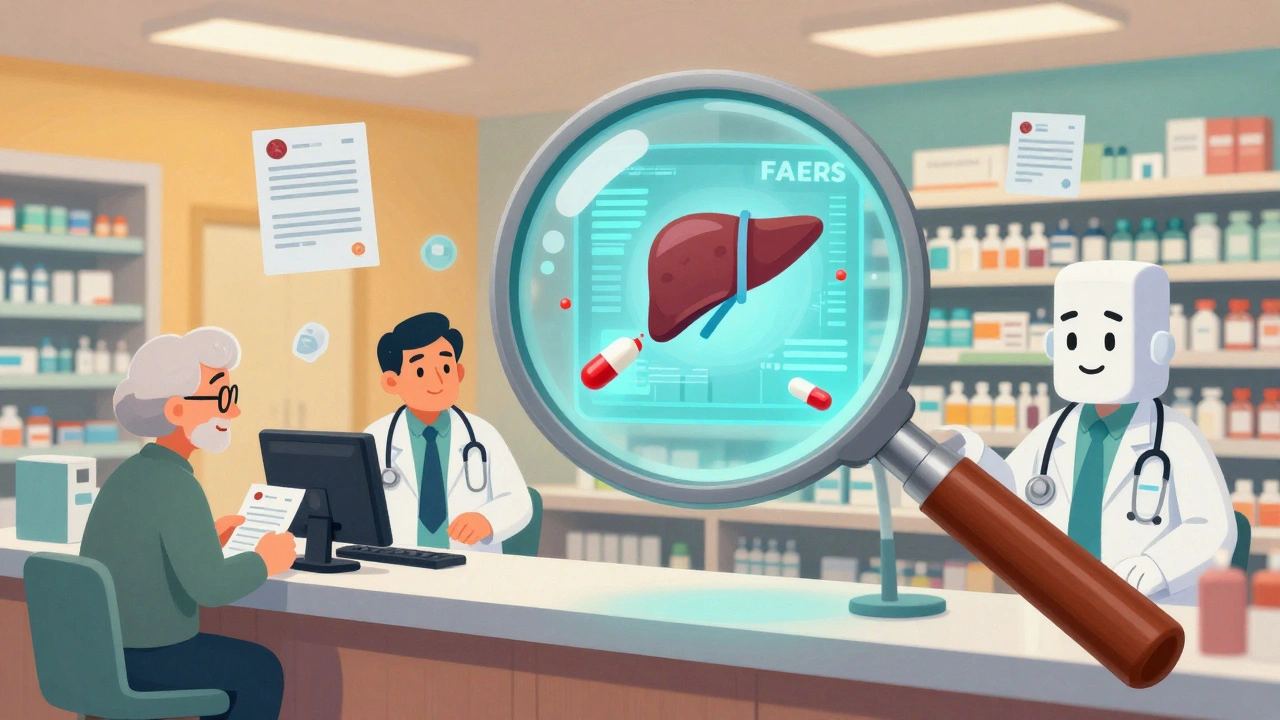
The main tool is the FDA Adverse Event Reporting System (FAERS). Every year, over 2 million reports flow into FAERS - from doctors, pharmacists, patients, and drugmakers. These aren’t just random complaints. Each report is reviewed by teams of epidemiologists, pharmacologists, and clinicians who look for patterns. If ten people in different states report the same unusual headache after taking a generic blood pressure pill, that’s a signal. If 50 people report liver problems after switching to a new generic version of a cholesterol drug, the FDA digs deeper.
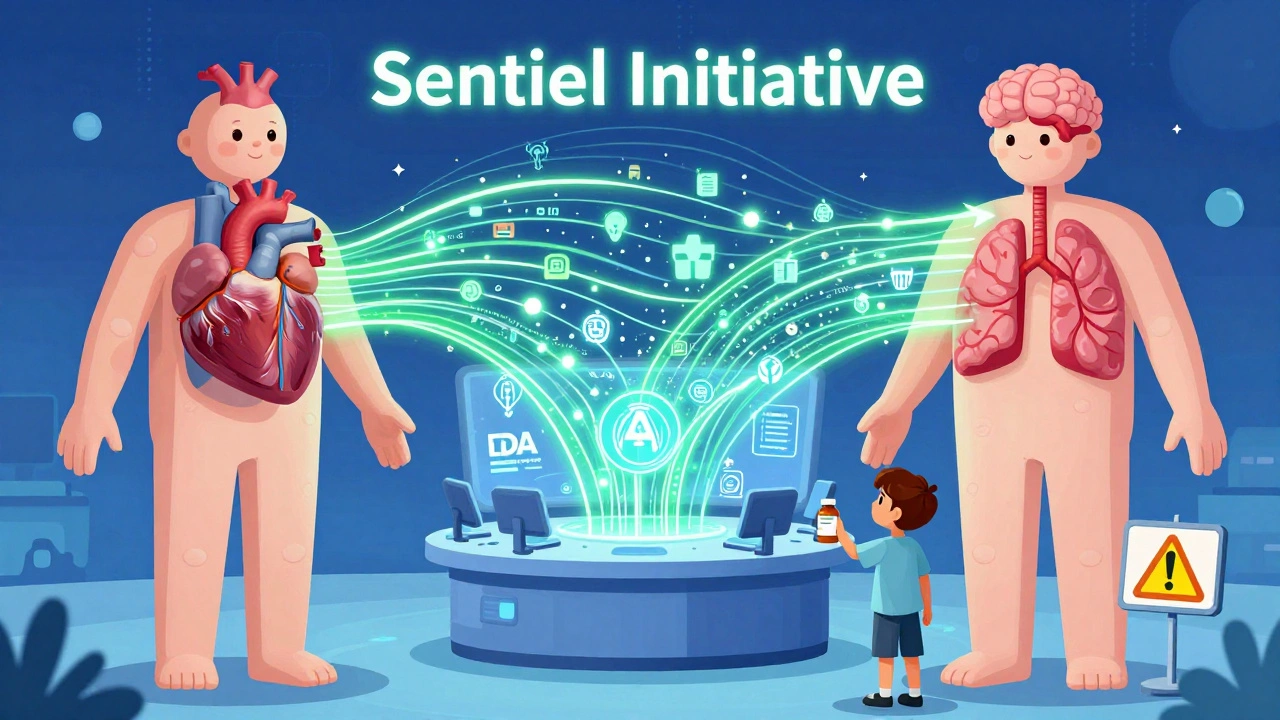
They don’t just rely on reports, though. The Sentinel Initiative - launched in 2008 and expanded under the 21st Century Cures Act - gives the FDA real-time access to electronic health records from over 100 million patients. This lets them spot trends without waiting for someone to file a report. For example, if a generic version of a diabetes drug suddenly shows a spike in low-blood-sugar events among elderly patients in Medicare databases, Sentinel flags it within weeks.
Manufacturing Oversight: It’s Not Just About the Active Ingredient
Generics must be bioequivalent to the brand-name drug - meaning they deliver the same amount of active ingredient into the bloodstream at the same rate. But what about the other ingredients? The fillers, dyes, preservatives, and coatings? These are called excipients. They don’t treat the disease, but they can cause problems.
A patient might be allergic to a dye used in the brand-name drug but not realize the generic uses a different dye. Or a generic version might use a slower-dissolving binder that changes how fast the drug enters the body - critical for drugs with a narrow therapeutic index, like warfarin or levothyroxine.
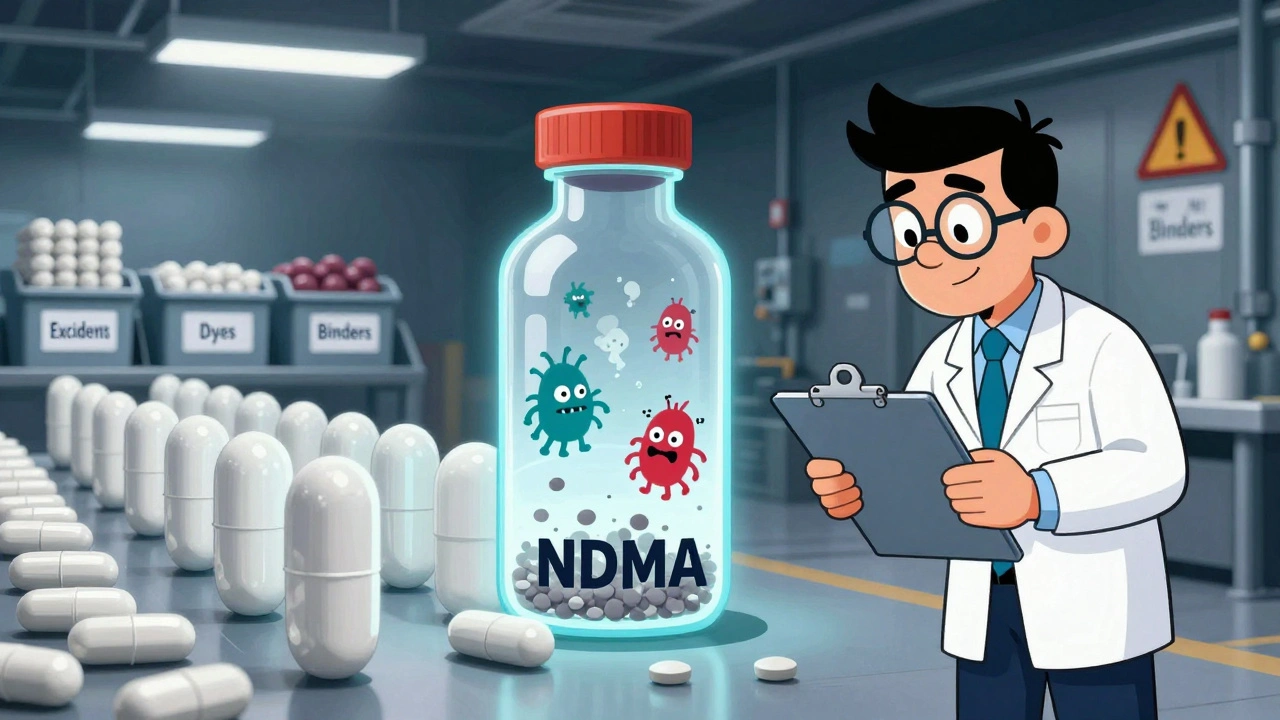
The Office of Pharmaceutical Quality (OPQ) handles this. They inspect factories - about 1,200 in the U.S. and 600 overseas each year. These inspections are often unannounced. Inspectors check how raw materials are stored, how batches are mixed, and whether quality control labs are accurately testing for impurities. Even a tiny amount of a toxic byproduct - like N-nitrosodimethylamine (NDMA), found in some recalled blood pressure meds - can trigger a recall.
OPQ and OGD work together. If OPQ finds a new impurity during an inspection, they alert OGD. Then OGD reviews whether that impurity could harm patients, using published studies, computer models, and animal data. If the risk is too high, the FDA can demand the manufacturer fix the formula or pull the drug.
Why Generic Drug Safety Is Harder to Monitor
Brand-name drugs go through years of testing with thousands of patients. Generics don’t. That’s the whole point - they’re cheaper because they don’t repeat expensive trials. But that creates a blind spot.
Studies suggest only 1% to 10% of adverse reactions are ever reported to the FDA. A patient might feel dizzy after switching generics and assume it’s just aging. A doctor might not connect it to the drug at all. That’s why the FDA doesn’t wait for reports - they use data mining to find hidden signals.
One big challenge is “allowable differences.” The FDA allows small variations in how a generic drug behaves in the body - as long as it’s within 80% to 125% of the brand’s absorption rate. For most drugs, that’s fine. But for drugs like epilepsy medications or blood thinners, even a small shift can cause seizures or dangerous clots. The FDA has special protocols for these, but detecting these issues still takes time.
Complex generics - like inhalers, injectables, or topical creams - are even trickier. A generic inhaler might have the same active ingredient, but if the propellant or nozzle design is slightly off, the dose delivered to the lungs can be wrong. The FDA is still refining how to monitor these products, and experts say this remains a gap.
What Happens When Something Goes Wrong?
The FDA doesn’t sit on findings. When a safety signal is confirmed, they take action. That might mean:
- Updating the drug’s label to warn about a new side effect
- Issuing a “Dear Healthcare Provider” letter to alert doctors
- Requiring the manufacturer to run a new study
- Ordering a voluntary recall
- In rare cases, pulling the drug off the market entirely
In 2022, the FDA issued over 200 safety communications related to generic drugs. Most were label updates. A few led to recalls. One major recall involved a generic version of a heart medication because of an impurity that could increase cancer risk over time.
These actions aren’t just reactive. The FDA now runs bi-weekly screenings of adverse event data for high-risk generics - especially those used by older adults or in chronic conditions. They’re also working with pharmacies to track which generic brands patients are getting, so they can link outcomes to specific manufacturers.
Who Pays for All This?
The FDA doesn’t fund this system with taxpayer money alone. Since 2012, the Generic Drug User Fee Amendments (GDUFA) have required generic drugmakers to pay fees to support review and monitoring. In 2022, these fees brought in $65.7 million annually. That money pays for staff, data systems, inspections, and research.
GDUFA III, which started in October 2022, increased funding and added new requirements for monitoring complex generics. It also pushed the FDA to improve how it shares safety data with the public. Today, the FDA publishes over 150 guidance documents on generic drug safety - more than ever before.
What You Can Do
You don’t have to wait for the FDA to find a problem. If you notice a new side effect after switching to a generic - especially if it’s different from what you experienced with the brand-name version - report it. Use MedWatch, the FDA’s online reporting system. Even if you’re not sure it’s the drug, report it. The more data they get, the faster they spot trends.
Also, keep track of which generic brand you’re getting. If your pharmacist switches brands and you feel different, ask why. Write down the name on the bottle. If you notice a pattern, share it with your doctor.
And remember: generics are safe. The vast majority work perfectly. But safety isn’t a one-time approval. It’s an ongoing process - and you’re part of it.
What’s Next for Generic Drug Safety?
The FDA’s goal is to cover 100 million patients through the Sentinel Initiative by 2025. They’re also developing AI tools to predict which generics are most likely to have safety issues based on manufacturing history, impurity profiles, and patient demographics.
As more complex generics enter the market - like biosimilars and extended-release formulations - the system will need to adapt. But the core approach remains the same: watch, analyze, act. Fast.
The system isn’t perfect. Underreporting is still a problem. Some manufacturers struggle to meet new impurity standards. And monitoring complex drugs is still evolving. But compared to the 1990s - when safety gaps led to major recalls - today’s system is far more proactive, data-driven, and transparent.
For the millions of Americans who rely on generics to manage chronic conditions, that’s not just good policy. It’s life-saving.
So the FDA watches. Great. Meanwhile my grandma got seizures after switching generics. They don't care until someone dies. Welcome to American healthcare where profit > people.
They call it monitoring. I call it a funeral parade with paperwork.
This is actually really reassuring 😊 I had no idea how much work goes into this! Thank you for explaining it so clearly - it makes me feel safer knowing there are teams checking all the time 💪❤️
The system is not perfect it is not flawless it is not divine but it is the best we have in a world where capitalism has turned medicine into a commodity and yet somehow we still have oversight
Imagine if this was left to private insurers
You think this is transparency Try looking up who owns the labs that test these generics. Half are in China. Half are owned by the same pharma giants that make the brand names. This is a circus. They let the fox guard the henhouse and call it 'regulation'.
They're lying to you. And you're applauding.
generic drugs r just brand name drugs but cheaper and made in places where they dont care if the pills have rat poop in em
the fda is just a front for big pharma
they dont care about you
they care about profit
and your kid with allergies is just collateral
It's comforting to know someone's watching. Not perfect, but better than nothing. I used to worry every time my pharmacist switched brands. Now I at least know there's a system trying to catch the bad ones.
Small comfort, but it helps. 🤝
The diligence exhibited by the FDA in monitoring post-market safety of generic pharmaceuticals is commendable. The integration of real-time data analytics through the Sentinel Initiative represents a paradigm shift in pharmacovigilance. One must acknowledge the structural constraints imposed by global manufacturing networks, yet the framework remains robust. Thank you for elucidating this critical public health mechanism with such clarity and precision.
You people act like this is some noble public service. Let me tell you something - the FDA gets paid by the same companies they're supposed to be watching. That's not oversight. That's a bribe with a badge. And you? You're just happy they didn't kill your grandma yet. Pathetic.