

When a doctor writes a prescription, it shouldn’t take hours for the pharmacy to get it. Yet until recently, that’s exactly what happened. Paper scripts got lost. Phone calls got busy. Pharmacists couldn’t see what other meds a patient was taking. And patients? They ended up with dangerous drug interactions, missed doses, or no refills at all. Today, EHR integration is changing all that - quietly, behind the scenes, saving lives one prescription at a time.
What EHR Integration Actually Does for Pharmacies and Providers
EHR integration means your doctor’s electronic health record talks directly to your pharmacy’s system. No more faxes. No more phone tag. When a provider writes a script, it goes straight into the pharmacy’s software. But it doesn’t stop there. The pharmacy can send back updates - like when a patient picks up their meds, if they’re having side effects, or if a drug needs to be switched because of cost or allergy. This two-way flow is called bidirectional integration.
Before this became common, pharmacists were working in the dark. They’d fill a script for warfarin, but had no idea the patient was also on amiodarone - a combo that can cause dangerous heart rhythms. With EHR integration, the pharmacist sees the full list of medications, recent lab results, and even notes from the last clinic visit. That’s how they catch problems before they become emergencies.
How It Works: Standards, APIs, and Real-World Tech
This isn’t magic. It’s built on strict technical rules. The main standard for sending prescriptions is NCPDP SCRIPT 2017071 - a format everyone in the U.S. pharmacy system agrees on. But that’s just the start. For deeper communication - like sharing lab values, allergies, or care plans - systems use HL7 FHIR Release 4. Think of FHIR as the language that lets different EHRs (like Epic, Cerner, or Meditech) and pharmacy systems (like PioneerRx or QS/1) understand each other.
Behind the scenes, APIs handle the actual data transfer. These need secure authentication (OAuth 2.0), encrypted connections (TLS 1.2+), and strict audit logs to meet HIPAA rules. The 21st Century Cures Act made this mandatory: if a system blocks data sharing, it’s illegal. That’s why big players like Surescripts now process over 22 billion transactions a year - from e-prescribing to prior authorizations.
One of the biggest breakthroughs came from the Pharmacist eCare Plan (PeCP), a FHIR-based format developed by the National Council for Prescription Drug Programs. It lets pharmacists send structured care notes - like “Patient needs blood pressure check every 2 weeks” - directly into the provider’s EHR. Providers see it right in their workflow. No extra logins. No searching.
Real Results: Numbers That Matter
The proof isn’t in the tech - it’s in the outcomes.
- A 2022 study found medication adherence improved by 23% when pharmacists had EHR access.
- At a pilot site in East Tennessee, hospitals saw a 31% drop in readmissions because pharmacists caught drug issues early.
- Each patient saved an average of $1,250 a year through better medication management.
- Pharmacists identified 4.2 medication problems per visit with EHR access - compared to just 1.7 without.
- Prescription processing time dropped from 15.2 minutes to 5.6 minutes.
- Medication errors fell by 48% thanks to automated alerts for interactions or dosing mistakes.
These aren’t hypotheticals. They come from real studies - like the University of Tennessee’s 2021-2022 proof-of-concept with EnlivenHealth®, which tracked 1,847 care interventions across 12 pharmacies. Providers accepted 92% of the pharmacist’s recommendations.
Why Most Pharmacies Still Don’t Have It
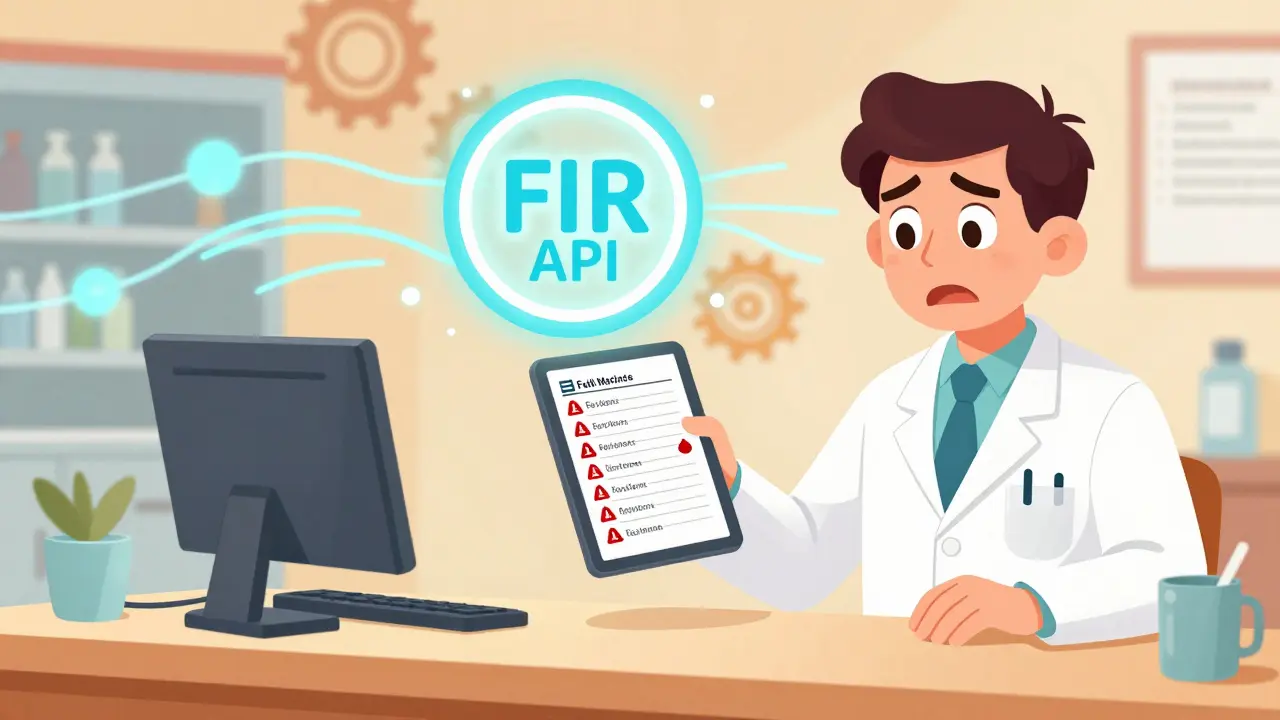
Despite the benefits, only 15-20% of U.S. pharmacies have full bidirectional EHR integration. Why? Three big reasons: cost, time, and money.
For an independent pharmacy, setting this up can cost $15,000 to $50,000 upfront - plus $5,000-$15,000 a year to maintain. That’s a huge chunk of profit for a small business. And it’s not just the software. Staff need training. Workflows change. One pharmacist in Wisconsin spent seven months and $18,500 just to connect to Epic. The system worked - but the stress nearly broke them.
Then there’s the time issue. Pharmacists average 2.1 minutes per patient interaction. Even if they have EHR access, they rarely have time to look at it. A 2021 Ohio State survey found 68% of pharmacists say they’re too busy to review patient data during visits.
And reimbursement? Still broken. Only 19 states pay pharmacists for using EHRs to manage medications. In 48 states, pharmacists can prescribe - but they can’t get paid for the extra work that comes with it. As Dr. Lucinda Maine of the American Association of Colleges of Pharmacy put it: “Without sustainable payment models, EHR integration will remain a luxury.”
Who’s Doing It Right
Health systems and big chains? They’re ahead. About 89% of hospital-affiliated pharmacies have full integration. CVS, Walgreens, and Kaiser Permanente use AI tools to scan integrated data and flag high-risk patients - catching 37% more potential problems than before.
Some tech vendors are making it easier. Surescripts offers plug-and-play connections to over 97% of U.S. pharmacies. SmartClinix and DocStation give independent pharmacies EMR tools with built-in EHR links - starting at $199/month. But even these require work. Data mapping between systems is messy. One pharmacy had to spend 32 hours just fixing how their system labeled “hypertension” versus how Epic labeled it.
And the interoperability gap is real. There are 120+ EHR systems and 50+ pharmacy systems in the U.S. - and not all of them speak the same language. A 2023 ONC report found 73% of health exchanges struggled to map pharmacy data into medical records.
The Future: What’s Coming Next
The push is accelerating. CMS now requires Medicare Part D plans to integrate medication therapy management by 2025. California’s SB 1115 mandates EHR integration for MTM by 2026. The Office of the National Coordinator for Health IT set a goal: 50% of community pharmacies must have bidirectional integration by 2027.
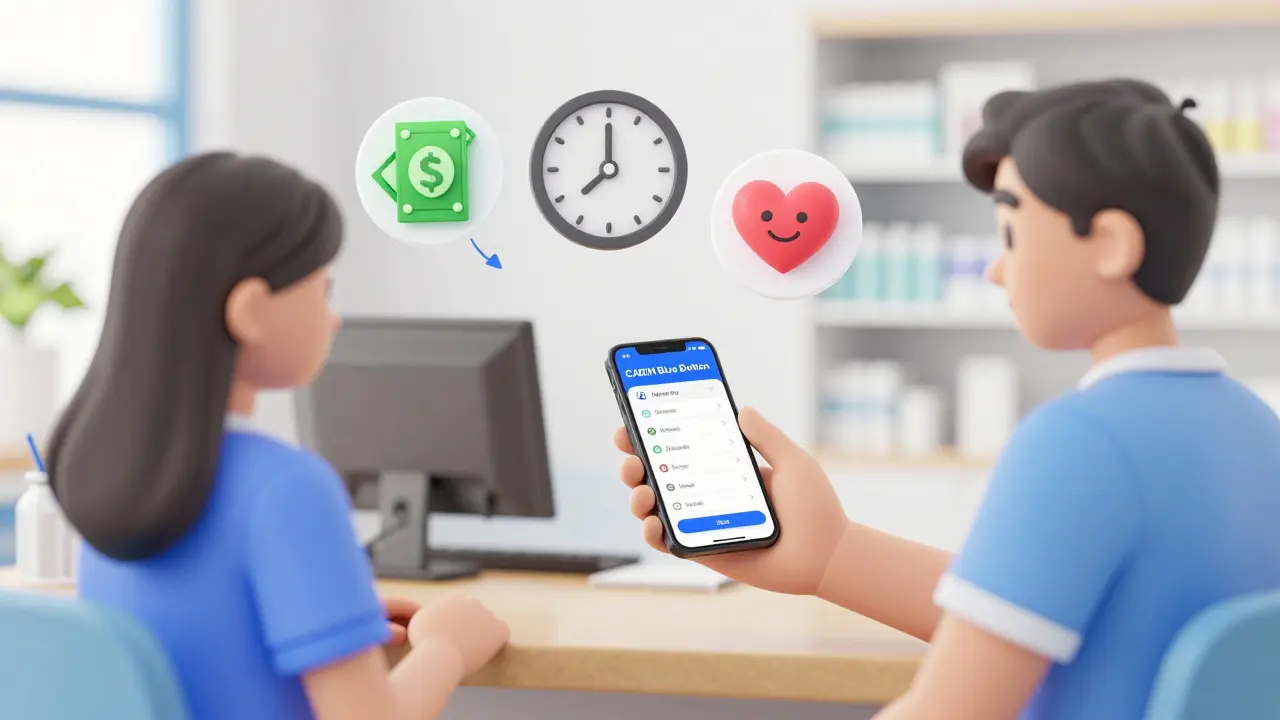
PeCP Version 2.0 is coming in late 2024, with smarter clinical decision support. And CARIN Blue Button 2.0, launched in January 2024, lets patients share their own data - from their payer portal - directly to their pharmacy. Imagine a patient downloading their full med list from their insurance app and sending it to their pharmacist before their appointment. That’s the future.
AI is the next frontier. Pilot programs at CVS and Walgreens are using machine learning to predict which patients are at risk for non-adherence or adverse events - based on EHR data, refill patterns, and lab trends. Early results show a 37% increase in accurate intervention targeting.
What This Means for You
If you’re a patient, this means fewer phone calls to refill prescriptions. Fewer trips to the ER because of a bad drug combo. More help from your pharmacist - who now sees your whole picture, not just the pill bottle.
If you’re a provider, it means less guesswork. You get real-time updates from the pharmacy. You know if your patient took their insulin. If they’re having dizziness from a new blood pressure med. If they can’t afford their statin and need a cheaper option.
If you’re a pharmacist? You’re no longer just the person who hands out pills. You’re part of the care team. With EHR access, you’re the first to spot a problem - and the one who can fix it before it escalates.
The technology exists. The data proves it works. The only thing holding it back is money, time, and outdated payment models. But the momentum is real. And in five years, not having EHR integration won’t be an option - it’ll be unthinkable.
What is the difference between e-prescribing and EHR integration?
e-Prescribing is just one part of EHR integration. It’s when a doctor sends a prescription electronically to a pharmacy - one-way. EHR integration is two-way: the pharmacy can send data back - like medication adherence, side effects, or care recommendations - directly into the provider’s electronic health record. It’s not just about sending scripts; it’s about sharing the full clinical picture.
Can small independent pharmacies afford EHR integration?
It’s tough. Upfront costs range from $15,000 to $50,000, with $5,000-$15,000 in annual maintenance. Many can’t afford it without grants or vendor partnerships. Some use platforms like SmartClinix or DocStation that bundle integration into their EMR software, starting around $199/month. But even then, hidden costs - like staff training and data mapping - add up. Without reimbursement for pharmacist services, it’s hard to justify the investment.
Do patients need to consent for their data to be shared?
Yes. Under HIPAA, patient consent is required for sharing protected health information between providers and pharmacies - unless the exchange is for treatment purposes. Most integrated systems use implied consent: if a patient receives care from both the provider and pharmacy, data sharing for treatment is assumed. But patients can opt out. Some states require explicit written consent. Always check local regulations.
What’s the biggest barrier to widespread adoption?
The biggest barrier isn’t technology - it’s payment. Only 19 states reimburse pharmacists for using EHRs to manage medications. Without being paid for the time and expertise they add, most independent pharmacies can’t justify the cost. Even with proven results - like 31% fewer hospital readmissions - if no one pays for the service, adoption stalls.
How does EHR integration reduce medication errors?
It automates safety checks. With full access to a patient’s EHR, pharmacy systems can instantly flag drug interactions, duplicate therapies, incorrect dosages, or allergies. For example, if a patient is on warfarin and a new provider prescribes trimethoprim-sulfamethoxazole, the system alerts the pharmacist before the script is filled. These alerts cut medication errors by up to 48%, according to UpToDate’s 2023 case studies.
Is EHR integration required by law?
Not directly - but indirect mandates are forcing it. The 21st Century Cures Act bans information blocking, making it illegal to prevent data sharing. CMS requires Medicare Part D plans to integrate medication therapy management by 2025. California mandates EHR integration for MTM by 2026. So while it’s not a direct requirement for every pharmacy, failing to integrate means losing access to Medicare reimbursements and state funding - making it a de facto requirement.
I used to work at a small pharmacy and let me tell you, the first time we got EHR integration, I cried. Not because it was easy - it wasn’t - but because I finally stopped guessing if my patient was taking their blood pressure med or just hoarding it. One less midnight panic call from a scared grandma? Worth every dollar.
EHR integration? More like EHR *illusion*. We're just replacing paper with APIs and calling it progress. The real issue? Systemic underfunding of clinical pharmacists. You can have the fanciest FHIR endpoint, but if the pharmacist is drowning in 120 scripts/hr with zero time to review, it's just digital noise. 🤷♂️
The 48% reduction in medication errors is the most compelling stat here. That's not tech - that's lives. And it's not even controversial. The real tragedy is how long it took to get here. We knew this was possible in 2010. We just didn't care enough to pay for it.
lol why are we still using HL7? 2025 and we're still patching together 1990s standards. Real solution? Just make everyone use one EHR. Problem solved. Also why do we even need pharmacies? AI can dose better than humans anyway.
You think this is about tech? Nah. This is about control. Hospitals and insurers want to own the data so they can ration care. Pharmacists seeing the full picture? That’s dangerous for their profit margins. They’ll keep blocking integration until the law forces them - and even then, they’ll make it painful.
I'm a pharmacist and I've been begging for this for 8 years. The fact that we still have to call doctors for clarifications in 2025 is criminal. I don't care if it costs 50k - if your pharmacy isn't integrated, you're not just behind, you're negligent. And yes I'm aggressive about this because people die when we're left in the dark
they're lying about the 31% drop in readmissions. i read a reddit post once that said all health tech stats are made up by vendors. also who even trusts big pharma anymore? maybe this is just a way to track us. i heard the feds are using ehr data to flag people who take too many meds. #conspiracy
This is why I love healthcare tech when it actually helps people 🌟 I remember my grandma’s pharmacist calling her doctor because she was on 7 meds that all clashed - and the doc changed them right away. That’s the future. Not robots. Just humans with better tools. 🙏
The structural barriers - particularly reimbursement - are the true bottleneck. Technology is the low-hanging fruit. Sustainable payment models for clinical pharmacist services are the non-negotiable foundation. Without them, integration becomes a compliance checkbox rather than a care transformation. The data proves efficacy; the policy must catch up.
I’ve spent the last 14 months trying to get my clinic’s EHR to talk to the local pharmacy - and I’m not even talking about the tech. I’m talking about the bureaucracy: the 37 forms, the 12 vendor calls, the 5 different passwords, the 3 IT departments who each blame each other, the fact that Epic doesn’t recognize ‘hypertension’ as ‘HTN’ even though it’s the same damn thing - and then you realize: this isn’t broken. This was designed this way. On purpose. To keep us fragmented. To keep us powerless. To keep us paying for the same care over and over again. And we keep applauding the ‘innovation’.
This is the future and we need to get behind it. Every pharmacist should be treated like a care coordinator. If we invest in them, we save money, lives, and sanity. Let’s stop calling it a cost - it’s an investment. Let’s make it happen.
you guys are acting like this is new but it's not. we had this in 2015 in canada. they just called it 'digital pharmacy network' and it worked fine. why is america still stuck in 2003? because nobody wants to fix the broken system. just slap on a new app and call it innovation. smh
This entire system is a facade. The 21st Century Cures Act is a marketing gimmick. Real interoperability requires dismantling vendor monopolies. Epic and Cerner are digital feudal lords. They profit from fragmentation. And the FDA? They regulate pills, not data. Until we treat health data as a public utility - not a proprietary asset - this will remain theater.