
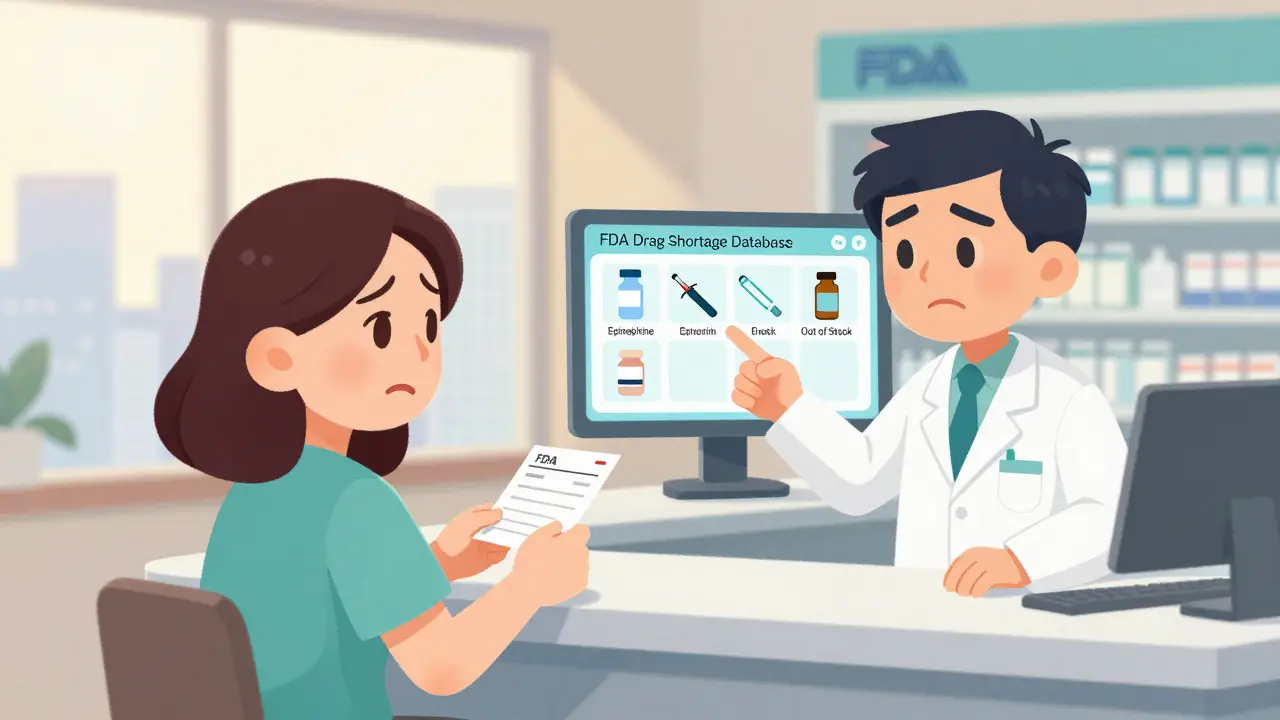
When a life-saving medication runs out, it’s not just an inconvenience-it’s a crisis. Imagine needing insulin, antibiotics, or heart medication, and your pharmacy says it’s out of stock with no clear timeline for restock. This isn’t rare. In 2024, there were over 290 active drug shortages in the U.S., mostly affecting generic injectables like saline, epinephrine, and chemotherapy drugs. The FDA drug shortage database is the most reliable place to find out what’s actually available-and what’s not.
What the FDA Drug Shortage Database Actually Shows
The FDA’s official drug shortage database isn’t just a list. It’s a real-time, government-mandated record of medications where demand exceeds supply across the entire country. Every drug listed here has been verified by the FDA’s Center for Drug Evaluation and Research (CDER). Unlike private sites, the FDA only includes shortages that are truly national in scope-not local stockouts or temporary delays. Each entry gives you critical details: the generic name, the manufacturer, the exact National Drug Code (NDC), why the shortage is happening, and how long it’s expected to last. About 68% of shortages are due to manufacturing problems-contamination, equipment failure, or quality control issues. Only 7% are due to raw material shortages. Knowing the reason helps you understand if other drugs from the same maker might also be affected. The database is updated every single day. New shortages are added as soon as manufacturers report them. Resolved shortages are removed within 24 hours of confirmation. As of mid-2024, the database tracked around 300 active shortages at any given time. That number changes daily.How to Use the FDA Drug Shortage Database
You don’t need special training to use it. Here’s how to find what you’re looking for:- Go to www.accessdata.fda.gov/scripts/drugshortages/default.cfm. This is the official site.
- Use the search bar to type in the generic name of the drug-like "levothyroxine" or "vancomycin"-not the brand name.
- Check the results. If the drug appears, you’ll see its manufacturer, NDC, and shortage status: "Current," "Resolved," or "Discontinued."
- Click on the drug to see the full details. Pay attention to the "Reason for Shortage" field. Codes like "Manufacturing" or "Quality" tell you what’s broken.
- Look for the "Estimated Duration." This is the FDA’s best guess, but it’s not always accurate. Only about 79% of these estimates are right, especially for shortages not reported directly through the manufacturer portal.
Pro tip: Always check the NDC. A drug might be in short supply in one form but not another. For example, a 500mg tablet might be unavailable, but the 250mg version is fine. The FDA database lists NDCs for every single formulation, so you can be precise.
Use the Mobile App for Real-Time Alerts
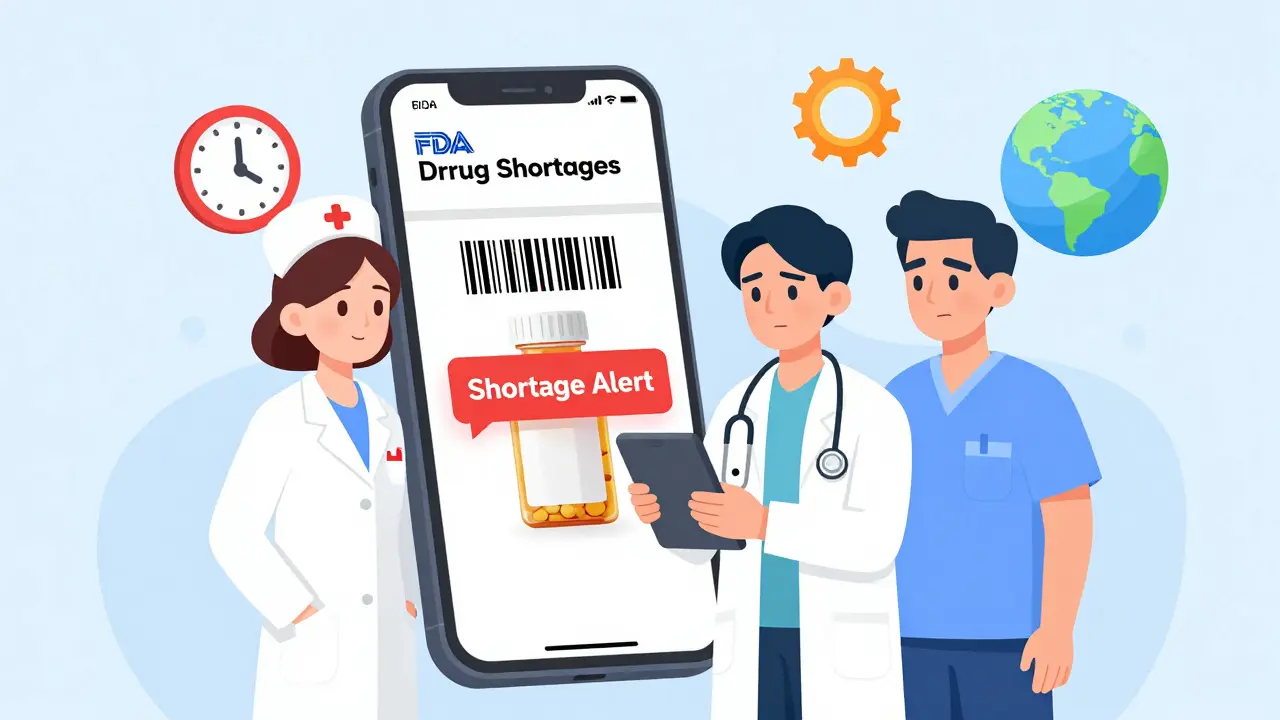
The FDA’s free mobile app-available on iOS and Android-is the best way to stay ahead of shortages. It’s downloaded over 150,000 times and used daily by pharmacists, nurses, and doctors. The app lets you:- Search by drug name, active ingredient, or therapeutic class (like "antibiotics" or "insulin").
- Get push notifications when a drug you’re tracking goes into shortage or is resolved.
- Report a suspected shortage directly through the app. If you notice a drug is missing from your pharmacy and it’s not listed on the FDA site, you can file a report. The FDA reviews these daily.
- Scan NDC barcodes on medication bottles to instantly check availability.
No registration is needed to search. But if you want to report shortages or save favorite drugs, you’ll need to verify your email. It takes less than a minute.
Why the FDA Database Is Better Than Other Tools
You might see other sites like ASHP’s Drug Shortages Resource. It’s popular-and for good reason. ASHP lists more drugs (about 15-20% more) because it includes regional and temporary issues. But here’s the difference:- FDA: Only lists nationwide shortages. Verified. Official. Legal. Includes NDCs for every product. Mandatory manufacturer reporting.
- ASHP: Includes local issues. Offers clinical alternatives, dosing tips, and management strategies. Updated weekly. Easier to read.
Most healthcare professionals use both. They check the FDA database first to confirm if a shortage is real and official. Then they go to ASHP to figure out what to prescribe instead.
Why does this matter? Because if you’re relying on ASHP alone, you might think a drug is in short supply when it’s just a local stockout. Or worse-you might miss a national shortage entirely if you only look at the FDA site without cross-checking.
What the FDA Database Doesn’t Tell You
The FDA database is powerful, but it’s not perfect. Here are the blind spots:- 7-10 day delay: Manufacturers don’t always report shortages immediately. In 2024, 63% of shortages appeared on ASHP’s site before they were listed on the FDA’s.
- Estimates are often wrong: The "estimated duration" field is only accurate about 79% of the time. Some shortages last months longer than predicted.
- No regional data: If you’re in rural Kansas and the drug is out everywhere, the database won’t tell you that. It only says "national shortage."
- No info on compounded alternatives: Pharmacies sometimes make their own versions of a drug when the commercial version runs out. The FDA doesn’t track these, even though they’re used in 22% of shortage cases.
- No predictive warnings: The database shows you what’s broken, not what’s about to break. Analysts say it’s reactive, not proactive.
That’s why you need to combine it with other tools. If you’re a pharmacist, check ASHP daily. If you’re a patient, call your pharmacy and ask: "Is this drug on the FDA shortage list?"
How to Report a Shortage You Can’t Find
If you’ve checked the FDA site and the drug you’re looking for isn’t listed-but your pharmacy says it’s completely gone-report it. The FDA relies on these reports to catch gaps. To report:- Use the FDA app (easiest).
- Or email [email protected] with: drug name, manufacturer, NDC, where you’re seeing the shortage, and how long it’s been out.
The FDA responds to all reports. If your report matches others, they’ll investigate and add it to the database within 2-5 business days.
What to Do When a Drug Is in Shortage
If you find your medication is on the list:- Don’t panic. Shortages don’t mean the drug is gone forever.
- Call your pharmacy and ask if they have any stock from a different manufacturer. Sometimes, the same drug from another company is still available.
- Ask your doctor about alternatives. Many drugs have therapeutic equivalents-different brands or formulations that work the same way.
- Check if your drug has an "extended use date." Some medications are safe to use past their printed expiration date during shortages. Search the FDA’s "List of Extended Use Dates" separately.
- Sign up for FDA’s email alerts. They send updates every Tuesday and Friday.
Never stop taking a medication without talking to your provider. If you’re on a critical drug like insulin or anticoagulants, your doctor can help you switch safely.
Who Uses This Database-and Why
- Hospitals: 98% use it daily to manage inventory and plan for alternative therapies. - Pharmacists: 82% say the NDC info is the most valuable part. It tells them exactly which bottle is affected. - Patients: Only 12% know it exists. But if you’re on a life-sustaining drug, knowing how to check this database can prevent a medical emergency. - Manufacturers: They’re legally required to report shortages under FDASIA. Fines for late reporting can hit $10,000 per day.The database isn’t perfect-but it’s the only official source with legal weight. No private company can match its authority.
What’s Coming Next
The FDA is working on big upgrades:- AI predictions: Testing begins in late 2024 to forecast shortages before they happen.
- Barcode scanning in the app: Soon, you’ll be able to scan your pill bottle and instantly know if it’s affected.
- Integration with pharmacy distributors: By early 2025, the FDA will link with wholesale distributor data to track where shortages are happening geographically.
These changes could turn the database from a reactive tool into a proactive shield against drug shortages.
Is the FDA drug shortage database free to use?
Yes, the FDA drug shortage database is completely free to access. You don’t need to register to search, and the mobile app is free on both iOS and Android. There are no subscriptions, paywalls, or hidden fees.
How often is the FDA drug shortage database updated?
The database is updated daily. New shortages are added as soon as manufacturers report them, and resolved shortages are removed within 24 hours of confirmation. The FDA’s Drug Shortages Staff verifies every update.
What’s the difference between "resolved" and "available"?
"Resolved" means the manufacturer has restored supply to meet national demand. But that doesn’t always mean the drug is back on every pharmacy shelf. Distribution can take weeks. Always check with your pharmacy-even if the FDA says a shortage is resolved.
Can I trust the estimated duration of a shortage?
Use it as a rough guide, not a promise. The FDA’s estimated duration is accurate about 79% of the time for shortages reported directly by manufacturers. For others, it’s often wrong. Some shortages last months longer than predicted. Always check back weekly.
Why does my drug show as in shortage on ASHP but not on the FDA site?
ASHP includes regional or temporary shortages that don’t meet the FDA’s national threshold. The FDA only lists shortages that affect the entire country. If your drug isn’t on the FDA list, it may be a local stockout-not a true shortage. Still, it’s worth reporting to your pharmacy.
How do I report a drug shortage to the FDA?
Use the FDA Drug Shortages mobile app to report directly, or email [email protected]. Include the drug’s generic name, manufacturer, NDC, where you’re seeing the shortage, and how long it’s been out. The FDA reviews all reports and adds verified shortages to the database within 2-5 business days.
Are there alternatives if my drug is on the shortage list?
Yes. The FDA database doesn’t list alternatives, but ASHP does. Talk to your doctor or pharmacist. Many drugs have therapeutic equivalents-different brands or formulations that work the same way. For example, if one insulin brand is short, another might be available. Never switch without professional guidance.
Let’s be real-the FDA database is just a glorified spreadsheet with a government seal on it. Manufacturers report late, estimates are guesswork, and the whole system runs on goodwill and bureaucratic inertia. We’re treating a structural failure of pharmaceutical supply chains like it’s a glitch you can refresh. The real crisis isn’t the shortage-it’s that we’ve normalized waiting for a federal website to tell us when we might get our insulin again. This isn’t healthcare. It’s a spectator sport.
OMG I JUST GOT OFF THE PHONE WITH MY PHARMACY AND THEY SAID MY ANTIBIOTIC IS ‘UNAVAILABLE’ BUT THE FDA SITE SAYS ‘RESOLVED’?? I’M NOT A DOCTOR BUT I’M SUPPOSED TO BELIEVE A 79% ACCURACY RATE ON A LIFE-OR-DEATH DRUG?? THIS IS A SCAM. I’M CALLING MY REP. THEY’RE HIDING SOMETHING.
For anyone new to this: the NDC number on your pill bottle is your secret weapon. If your pharmacy says it’s out, ask them to check the NDC on the FDA site-not just the drug name. I’ve seen cases where the 10mg tablet was gone but the 5mg was fine, and you could just take two. Also, the app’s barcode scanner? Life-changing. Scanned my insulin and it flagged a shortage I didn’t even know about. No registration needed to search-just use it.
Ah yes, the FDA-where bureaucracy meets compassion. You wait 7 days for them to notice your drug is gone, then they give you a ‘estimated duration’ that’s more fiction than forecast. Meanwhile, in India, we just make our own generics in back-alley labs and call it ‘innovation.’ At least we don’t need a government portal to survive. The real shortage? Leadership. The rest is just paperwork.
Biggest myth: ‘ASHP has more drugs so it’s better.’ Nah. ASHP includes local stockouts-like that one pharmacy in Boise that ran out because their delivery truck broke down. The FDA database tells you if the whole country’s screwed. That’s the difference between ‘my pharmacy is out’ and ‘your life is at risk because no one can make this drug.’ Use both. But trust the FDA first.
It’s funny how we treat drug shortages like a surprise. We knew this was coming. The supply chain’s been brittle since 2020. The FDA’s database doesn’t fix anything-it just documents the collapse. We’re not fixing the problem. We’re just making better spreadsheets while people suffer.
Why do people still use ASHP when the FDA has the official data with NDCs and manufacturer details and mandatory reporting? You’re literally choosing a blog post over a legal document. It’s like using Yelp to check if your plane’s airworthiness certificate is valid. The FDA isn’t perfect but it’s the only thing with teeth. Stop overcomplicating it.
I’ve been using the app for a year now. Set up alerts for my dad’s heart meds. Got a notification last month when one went into shortage. Called the pharmacy, found another manufacturer, switched without issue. Didn’t make a big deal out of it. Just did what needed doing. The system’s flawed but the tool works if you use it right.
wait so u can just scan the barcode on ur pill bottle and it tells u if its shortage?? that sounds like magic. i tried it and it worked but i thought i did something wrong. also why does the site say ‘resolved’ but my pharmacy still has nothing??
Don’t wait for the FDA to save you. Know your meds. Know your NDC. Know your pharmacist. If you’re on a critical drug, have a backup plan. Talk to your doctor now-not when you’re out. Be proactive. Your life doesn’t run on government update cycles.
While the FDA database serves as a critical public resource, its utility is contingent upon timely manufacturer reporting and public awareness. In many developing regions, access to such digital infrastructure remains limited. The global implications of drug shortages are often underreported, and while the U.S. system is among the most transparent, it is not a model universally replicable. A more integrated international reporting framework may be the next necessary evolution.