
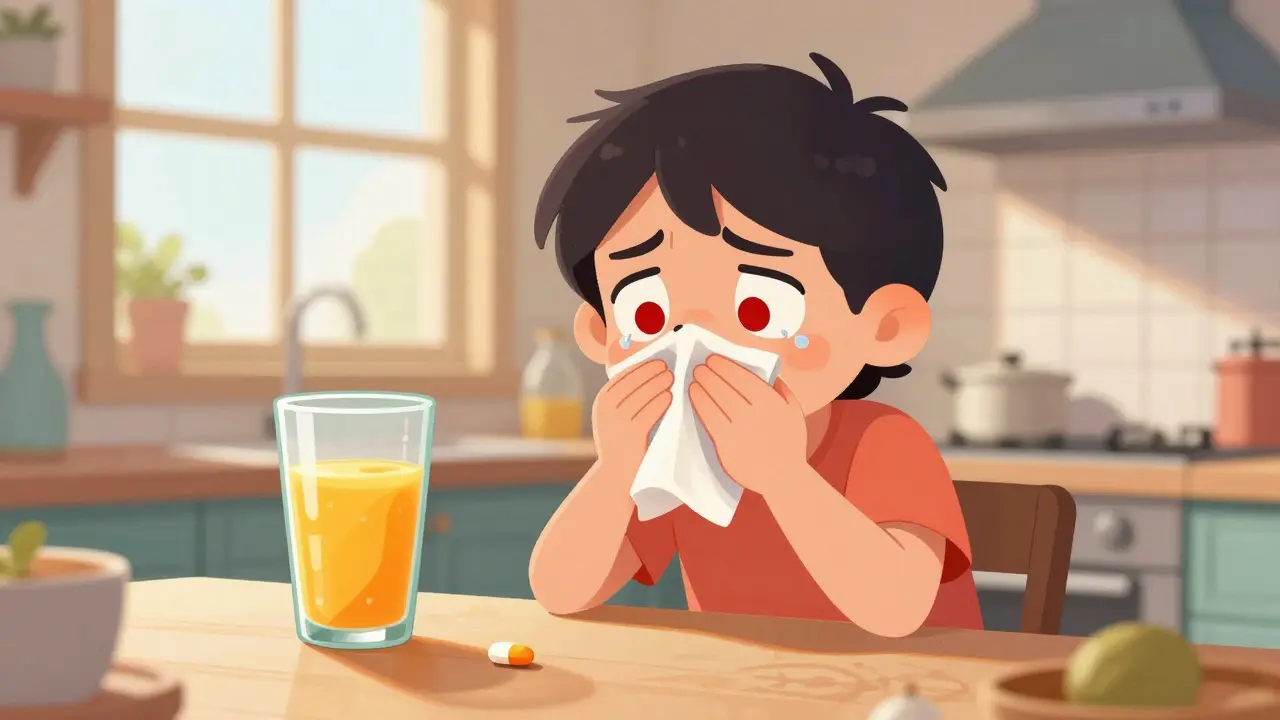
Fexofenadine Absorption Estimator
Check Your Medication Efficiency
Estimated Effective Dose
The Science of the "Blockade"
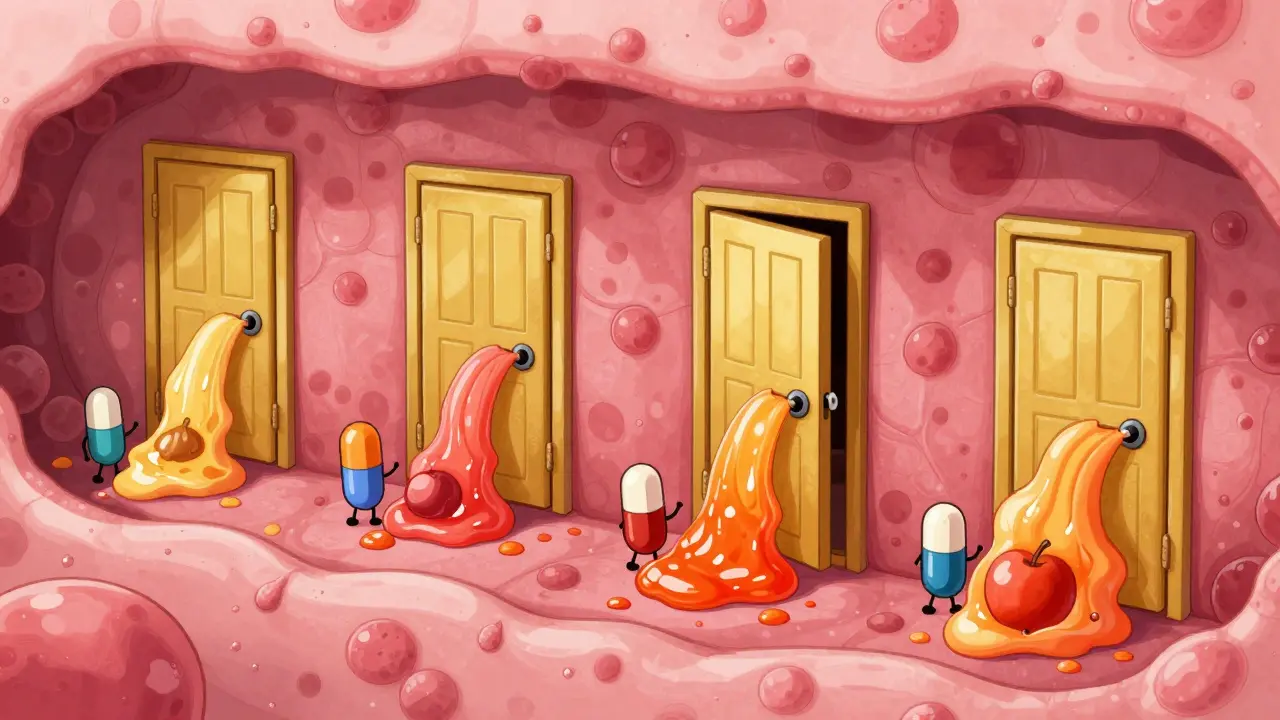
To understand why your morning juice ruins your allergy relief, we have to look at how fexofenadine enters your bloodstream. Most drugs are absorbed through simple diffusion, but fexofenadine needs a set of "doors" to get into your system. These doors are called OATPs (Organic Anion-Transporting Polypeptides). Specifically, transporters like OATP1A2 and OATP2B1 act as the primary gateways in your intestinal wall. Here is the problem: certain fruit juices contain bioactive compounds-like naringin in grapefruit or hesperidin in oranges-that act like gum in these locks. When you drink these juices, the compounds bind to the OATPs, effectively shutting the doors. Because the drug can't get through the "door," it stays in your gut and eventually leaves your body without ever entering your blood. This is fundamentally different from other drug interactions that involve the liver's CYP3A4 enzymes; this is a direct blockage of absorption in the gut.Which Juices Cause the Most Trouble?
Not all juices are created equal when it comes to blocking your meds. While many fruits contain some level of these inhibitors, three specific types have shown a clinically significant impact on how much fexofenadine you actually absorb. Research has shown that the more juice you drink, the worse the effect becomes, but even a single glass can be enough to notice a difference.| Juice Type | Estimated Absorption Drop (High Volume) | Key Inhibitor Compound |
|---|---|---|
| Apple Juice | ~77% Reduction | Various polyphenols |
| Orange Juice | ~72% Reduction | Hesperidin |
| Grapefruit Juice | ~67% Reduction | Naringin / Bergamottin |
The Real-World Effect on Your Allergies
If your drug absorption drops by 70%, you are essentially taking a third of the dose you think you are. For some people, that might still provide a little relief. For others, it's the difference between a clear head and a sneezing fit. This is why many users on community forums, like r/Allergy, report that their Allegra (the common brand name for fexofenadine) suddenly stopped working when they changed their breakfast habits to include juice. It's also worth noting that this isn't just about juice. Eating the whole fruit can sometimes have a similar effect, as those same polyphenols are present in the flesh of the fruit. However, juice is more concentrated, making the interaction much more potent. If you've noticed your allergy meds failing during the peak of spring, check your glass before you blame the pollen.How to Time Your Dose for Maximum Relief
You don't have to give up your morning orange juice forever; you just need to change the timing. The "blockade" effect on your OATP transporters doesn't last all day, but it does last long enough to interfere with a dose taken at the same time. The general rule of thumb is to create a window of separation.- The "Before" Window: Avoid drinking fruit juice for at least 4 hours before you plan to take your fexofenadine.
- The "After" Window: Wait 1 to 2 hours after taking your pill before you reach for the juice.
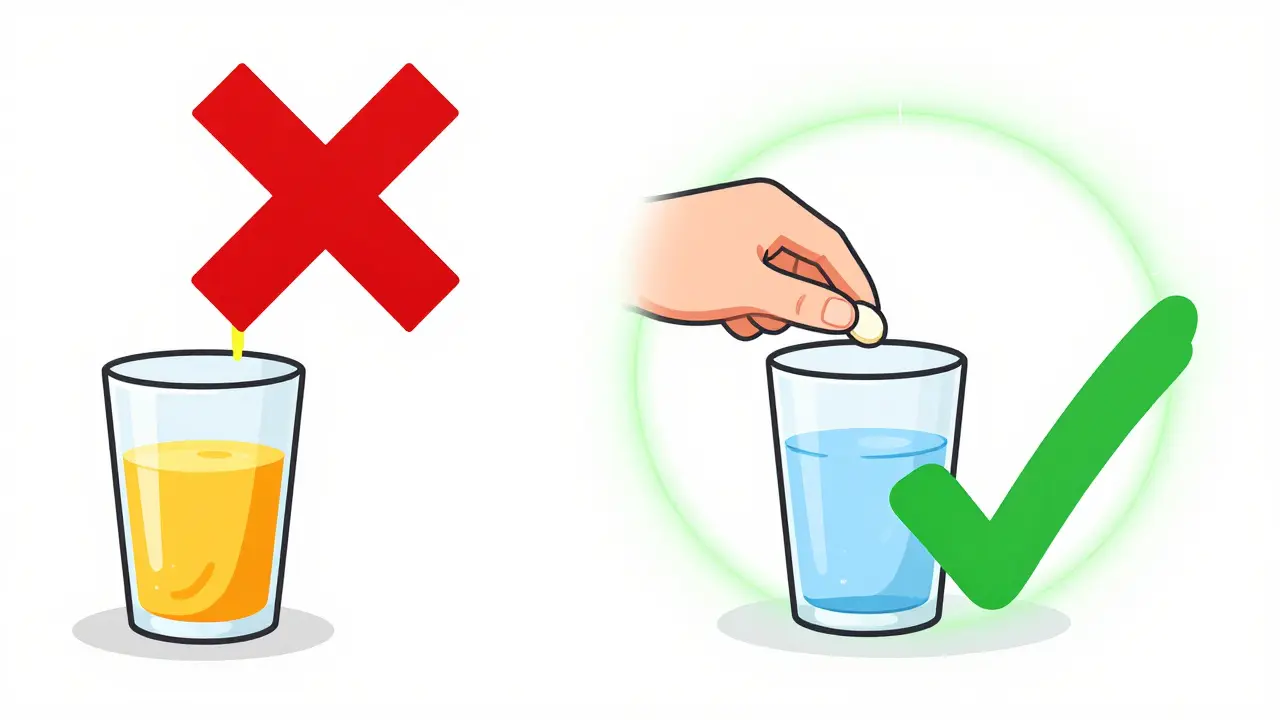
- The Gold Standard: Always take your medication with a full glass of plain water. Water does not interfere with the OATP transporters and ensures the drug can move freely into your system.
Common Pitfalls and Confusions
When people start avoiding "fruit juice," they often get confused about what actually counts. For example, many people ask if tomato juice is an issue. While a tomato is botanically a fruit, tomato juice does not significantly inhibit the OATP transporters. You can generally enjoy your V8 without worrying about your allergy meds. Another hidden culprit is green tea. Similar to certain fruit juices, some components in green tea can inhibit OATPs, potentially reducing the amount of fexofenadine that reaches your blood. If you're a dedicated green tea drinker, treat it the same way you treat orange juice: keep a few hours of distance between your tea and your pill. Finally, be careful with antacids. While they don't block the "doors" like juice does, some antacids containing aluminum or magnesium can further interfere with how fexofenadine is absorbed, adding another layer of inefficiency to your treatment.Will a small amount of juice still block my medicine?
Yes, it can. While drinking 1.2 liters of juice causes the most dramatic drop in absorption, studies show that even a standard 8-ounce glass can reduce the drug's presence in your blood by 23% to 45%. If you are sensitive to your allergy symptoms, even a small amount can make the drug feel less effective.
Can I take fexofenadine with apple juice?
It is highly recommended that you avoid apple juice. In fact, some research suggests apple juice is one of the most potent inhibitors of fexofenadine absorption, potentially reducing it by up to 77%.
Do I need to worry about whole fruits, or just the juice?
Whole fruits contain the same compounds that inhibit absorption. While juice is more concentrated, eating a large amount of grapefruit or oranges around the time you take your medication can still reduce its efficacy.
Is this the same as the "grapefruit effect" for other drugs?
No. The famous grapefruit effect for most drugs involves the CYP3A4 enzyme in the liver, which usually *increases* the amount of drug in your blood (potentially causing toxicity). With fexofenadine, the juice *decreases* the amount of drug in your blood by blocking absorption in the gut.
What should I do if I already took my pill with juice?
Do not take a second dose to "make up" for the lost absorption, as this could lead to an overdose. Instead, monitor your symptoms. If your allergies are uncontrolled, simply adjust your timing for the next dose, ensuring you use water and maintain the 4-hour pre-dose gap from juices.
Wow, imagine actually believing that a glass of juice is the only reason your meds aren't working and not the general incompetence of the pharma industry. Truly a groundbreaking revelation for those who can't read a basic drug insert.