

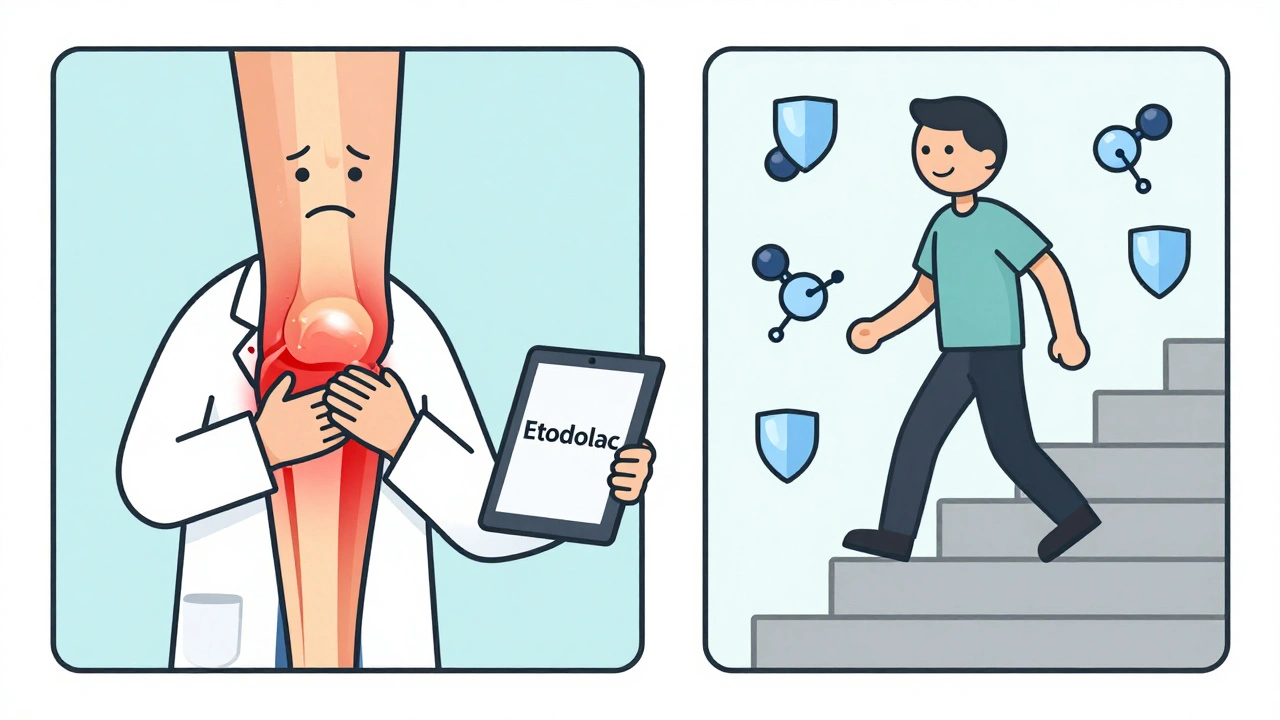
When you have rheumatoid arthritis, even simple movements like opening a jar or walking up stairs can feel like a battle. The joint pain, stiffness, and swelling don’t just fade with rest. That’s where etodolac comes in - a nonsteroidal anti-inflammatory drug (NSAID) that helps cut through the inflammation and give you back some control over your day.
What is etodolac and how does it work?
Etodolac is a prescription NSAID, first approved by the FDA in 1989. It’s not a cure for rheumatoid arthritis, but it’s one of the tools doctors use to manage symptoms. Unlike some other NSAIDs, etodolac targets the COX-2 enzyme more selectively, which means it reduces inflammation and pain while potentially causing less stomach irritation than older NSAIDs like ibuprofen or naproxen.
Inside your body, rheumatoid arthritis triggers an immune response that makes your joints swell and hurt. This inflammation is fueled by chemicals called prostaglandins. Etodolac blocks the enzymes that make these prostaglandins, lowering inflammation and easing pain. Studies show it can reduce joint tenderness and morning stiffness within a few days of starting treatment, with full effects often seen after one to two weeks.
How is etodolac used for rheumatoid arthritis?
Most adults take etodolac in tablet form, usually once or twice a day. The typical starting dose for rheumatoid arthritis is 300 mg two or three times daily, or 400 mg twice daily. Your doctor might adjust this based on your response and tolerance. Some people do well on lower doses, like 200 mg twice a day, especially if they’re older or have other health conditions.
It’s important to take etodolac with food or milk. Skipping this step can increase your risk of stomach upset - a common side effect of NSAIDs. Don’t crush or chew the tablets unless your doctor says it’s okay. Extended-release versions exist too, and those should never be broken open.
Etodolac is often used alongside disease-modifying antirheumatic drugs (DMARDs) like methotrexate. While DMARDs slow the disease’s progression, etodolac handles the day-to-day pain. Think of it like this: DMARDs are the long-term strategy; etodolac is the relief you need today.
How does etodolac compare to other NSAIDs for RA?
There are many NSAIDs on the market, but not all are equally suited for rheumatoid arthritis. Here’s how etodolac stacks up against the most common ones:
| Medication | Dosage Frequency | Typical RA Dose | Stomach Risk | Cardiovascular Risk |
|---|---|---|---|---|
| Etodolac | 1-2 times daily | 300-400 mg daily | Moderate | Low to moderate |
| Ibuprofen | 3-4 times daily | 800 mg three times daily | High | Moderate |
| Naproxen | 2 times daily | 500 mg twice daily | High | Moderate |
| Celecoxib (Celebrex) | 1-2 times daily | 200 mg daily | Low | Higher |
| Diclofenac | 2-3 times daily | 50 mg three times daily | High | High |
Etodolac strikes a balance. It’s not as gentle on the stomach as celecoxib, but it carries a lower cardiovascular risk than diclofenac or high-dose naproxen. For people who can’t tolerate ibuprofen because of stomach issues, etodolac is often a solid alternative.
What are the side effects and risks?
Like all NSAIDs, etodolac isn’t risk-free. The most common side effects include upset stomach, nausea, dizziness, and mild swelling in the hands or feet. These often fade as your body adjusts.
Bigger concerns involve long-term use. Taking etodolac for months or years can increase the risk of stomach ulcers, kidney problems, or high blood pressure. People over 65, those with a history of ulcers, or those taking blood thinners like warfarin need extra monitoring.
There’s also a small but real risk of heart attack or stroke, especially if you already have heart disease or smoke. The FDA warns that NSAIDs - including etodolac - should be used at the lowest effective dose for the shortest time possible. If you’re on etodolac for more than a few months, your doctor should check your kidney function and blood pressure regularly.
Who should avoid etodolac?
Not everyone can take etodolac safely. You should avoid it if you:
- Have had an allergic reaction to aspirin or other NSAIDs (like hives, swelling, or asthma attacks)
- Are in your third trimester of pregnancy
- Have active stomach ulcers or bleeding
- Have severe kidney or liver disease
- Are taking other NSAIDs or corticosteroids like prednisone
If you’re on blood pressure medication, diuretics, or SSRIs like sertraline, etodolac can interact. Always tell your doctor about every pill, supplement, or herbal product you take.
What happens if etodolac doesn’t work?
Some people find that etodolac helps enough to get through the day. Others notice only partial relief. If your pain and stiffness haven’t improved after 4-6 weeks, your doctor might switch you to another NSAID or add a DMARD. In more advanced cases, biologics like adalimumab or upadacitinib may be needed.
There’s no one-size-fits-all solution for RA pain. Etodolac works well for many, but it’s just one piece of the puzzle. Physical therapy, weight management, and heat/cold therapy can make a real difference when combined with medication.
How long can you take etodolac?
Short-term use - a few weeks to manage a flare - is generally safe. Long-term use requires careful oversight. Some people take etodolac daily for years, especially if they can’t tolerate other drugs. But the longer you take it, the more important it is to get regular blood tests and check-ins with your doctor.
There’s no set time limit, but most experts recommend reviewing your treatment plan every 3-6 months. Ask yourself: Is the pain better? Are you having fewer side effects? Is there a safer option now? If the answer to any of these is no, it’s time to rethink your approach.
Real-life experience: What patients say
One 58-year-old woman with RA for 12 years tried ibuprofen, then naproxen. Both gave her heartburn she couldn’t ignore. Her doctor switched her to etodolac 400 mg twice a day. Within 10 days, her morning stiffness dropped from 90 minutes to under 30. She still gets occasional flares, but now she can cook dinner without needing a break halfway through.
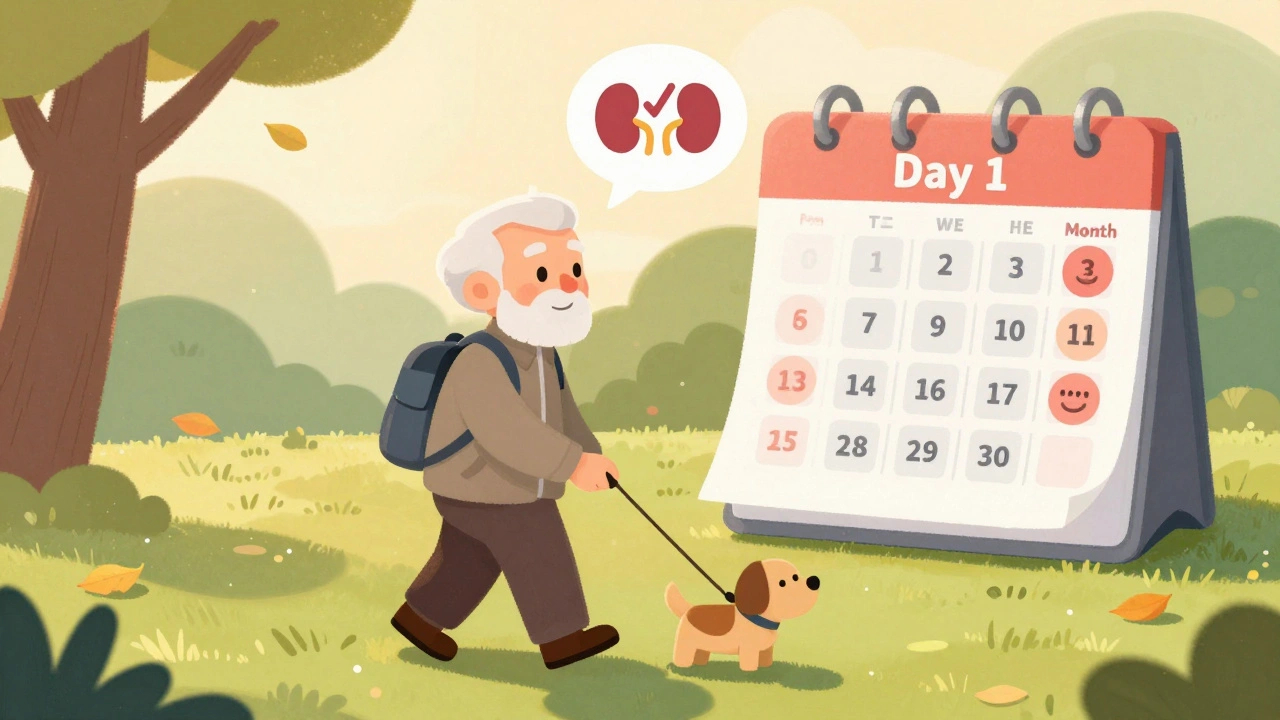
Another patient, a 71-year-old man with kidney disease, couldn’t take any NSAID except a low dose of etodolac. His nephrologist monitors his creatinine levels every three months. So far, he’s been stable. He says, “It’s not magic, but it lets me walk my dog every morning. That’s everything.”
These aren’t outliers. They’re common stories. Etodolac doesn’t fix rheumatoid arthritis, but for many, it gives back something just as valuable: the ability to live.
Can I take etodolac with other arthritis medications?
Yes, but only under medical supervision. Etodolac is often combined with DMARDs like methotrexate or biologics like Humira. Never combine it with other NSAIDs like ibuprofen or aspirin - this increases side effects without added benefit. Always tell your doctor about every medication you’re taking, including over-the-counter pills and supplements.
How long does it take for etodolac to start working?
You may feel some pain relief within a few hours after the first dose, but it usually takes 1-2 weeks of regular use to notice a significant drop in joint swelling and stiffness. Don’t stop taking it if you don’t feel better right away - it’s not an instant fix.
Is etodolac addictive?
No, etodolac is not addictive. Unlike opioids, it doesn’t affect the brain’s reward system. However, your body can get used to it, and stopping suddenly might cause your arthritis pain to return quickly. Always taper off under your doctor’s guidance.
Can I drink alcohol while taking etodolac?
It’s best to avoid alcohol. Mixing alcohol with etodolac increases your risk of stomach bleeding and liver damage. Even one or two drinks a day can be risky if you’re on this medication long-term. If you do drink, keep it to a minimum and talk to your doctor about your habits.
What should I do if I miss a dose?
If you miss a dose, take it as soon as you remember. But if it’s almost time for your next dose, skip the missed one and go back to your regular schedule. Never double up on doses to make up for a missed one - that raises your risk of side effects.
Are there natural alternatives to etodolac for RA pain?
Some people find relief with omega-3 fatty acids (from fish oil), turmeric, or acupuncture. These may help reduce inflammation slightly, but they’re not strong enough to replace etodolac for moderate to severe RA pain. They can work as add-ons, not substitutes. Always discuss supplements with your doctor - some can interfere with your meds.
Next steps if you’re on etodolac
If you’re currently taking etodolac for rheumatoid arthritis, here’s what to do next:
- Keep a pain and symptom journal - note when you feel better or worse, and any side effects.
- Ask your doctor for a blood test every 6 months to check kidney and liver function.
- Review your dosage annually - your needs may change as your arthritis progresses.
- Don’t stop or change your dose without talking to your doctor.
- Consider adding non-drug therapies: physical therapy, low-impact exercise, or heat packs.
Etodolac isn’t perfect, but for many with rheumatoid arthritis, it’s the difference between being stuck on the couch and being able to get up and move. It’s not the end of your treatment plan - it’s one important step in a longer journey.
Etodolac has been a game-changer for my mom’s RA. She was on ibuprofen for years until the stomach issues got bad. Switching to etodolac cut her morning stiffness in half and she’s finally cooking again. No more relying on takeout because she can’t open jars.
Let’s be real-etodolac isn’t magic. It’s just another NSAID with a fancy name. Everyone acts like it’s the holy grail, but if you’re not on a DMARD, you’re just masking symptoms. And don’t get me started on the ‘low cardiovascular risk’ claim-FDA warnings exist for a reason.
Anyone who thinks etodolac is safer than naproxen is misinformed. The COX-2 selectivity myth was debunked in 2016. Studies show no meaningful difference in GI risk between etodolac and ibuprofen at standard doses. Stop marketing it as ‘gentler.’ It’s not.
For those managing RA long-term, consistency matters. Etodolac works best when taken regularly, not just during flares. Pair it with movement-even gentle stretching-and you’ll notice more than just pain relief. Your joints thank you. 😊
I’ve been on etodolac for three years. My kidney function is stable. My blood pressure is normal. I take it with food. I get blood work every six months. It’s not complicated. Just follow your doctor’s advice and you’ll be fine.
My husband tried etodolac after naproxen gave him ulcers. It worked for him, but he still has bad days. I just wish more people talked about the emotional side-the frustration when meds don’t fix everything. It’s not just about pain. It’s about dignity.
I used to think NSAIDs were all the same until I tried etodolac. My stomach didn’t revolt like it did with ibuprofen. I’m not saying it’s perfect-still get dizziness sometimes-but it’s the best balance I’ve found. I take it with a banana and call it a day.
Over in the UK, etodolac isn’t first-line here. We tend to go with naproxen or celecoxib first. But for folks who can’t tolerate those, etodolac is a solid fallback. NHS guidelines say the same thing-lowest dose, shortest time.
Let’s be honest-etodolac is the ‘chill’ NSAID of the pharma world. COX-2 selective? More like COX-2 lite. 😎 Still, it’s better than diclofenac, which is basically a cardio grenade. I’ve seen patients crash on that one. Etodolac? More like a slow burn. Not perfect, but not a disaster either. #RAlife
Of course etodolac works. It’s a drug. What’s surprising is that people act like it’s a revelation. We’ve had NSAIDs since the 70s. This is just a rebrand with a slightly better GI profile. Stop pretending it’s groundbreaking.