
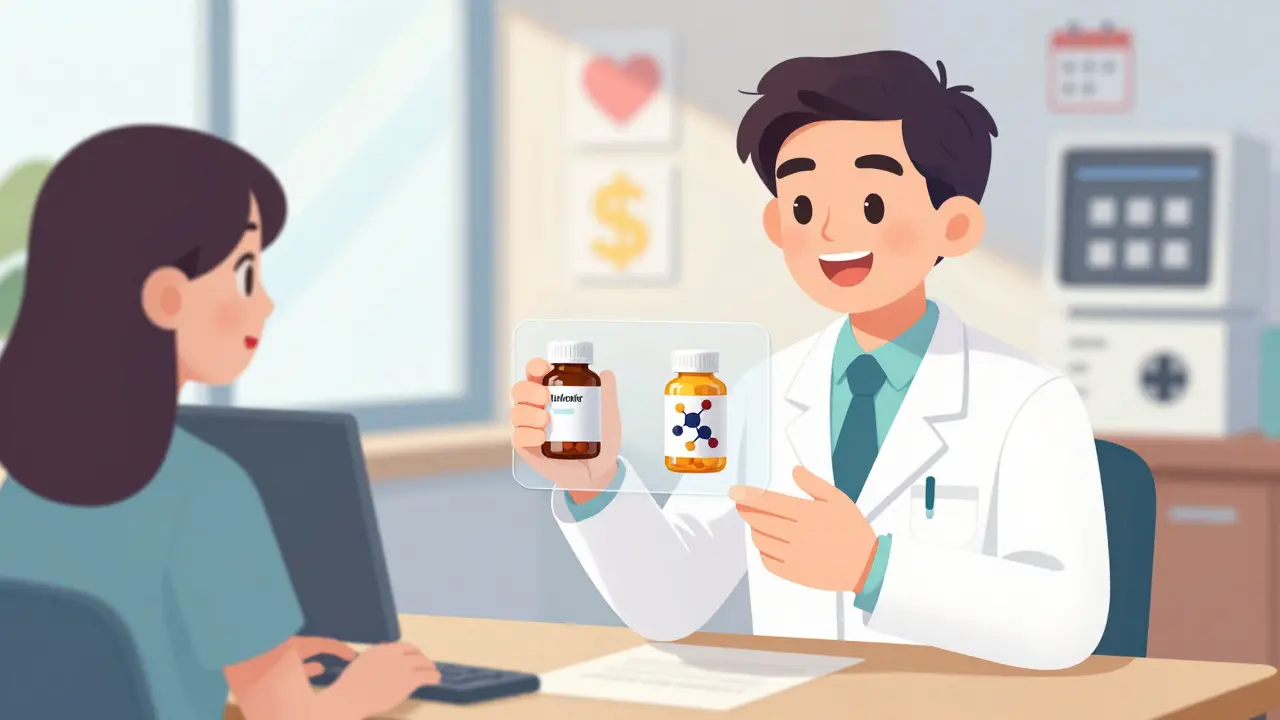
When employees skip their blood pressure meds because they’re too expensive, or stop taking their diabetes pills after a few months, it’s not just a personal health issue - it’s a workplace problem. Missed doses lead to more ER visits, more sick days, and lower productivity. And the solution isn’t always a new drug. Often, it’s the one already sitting on the shelf: the generic medication.
Why Generics Matter in the Workplace
Generic drugs aren’t cheap knockoffs. They’re the exact same medicine as the brand-name version, with the same active ingredient, dosage, and effectiveness. The FDA requires them to be bioequivalent - meaning they work in the body the same way, within 80% to 125% of the brand’s absorption rate. But they cost 80% less on average. In the U.S., generics make up 90% of all prescriptions filled - but only 22% of total drug spending. That’s billions in savings, if used correctly. Yet, nearly half of patients don’t take their meds as prescribed. Why? Fear. Misinformation. Cost. And often, no one’s there to explain it to them. That’s where pharmacists come in.The Pharmacist’s Unique Role
Pharmacists are the only healthcare professionals trained to understand every pill in the bottle - from how it works, to how much it costs, to whether there’s a cheaper version that does the same thing. In workplace wellness programs, they’re no longer just the people handing out prescriptions. They’re clinical advisors, cost navigators, and patient educators rolled into one. Think about it: an employee with high blood pressure gets a script for a brand-name drug that costs $150 a month. The pharmacist checks the formulary, finds the generic equivalent for $12, and sits down with the employee. They explain: "This is the same medicine. Your doctor prescribed it because it works. This version is just cheaper. I take it myself. My dad’s on it too. It’s safe. It’s effective. Let me show you the data." That conversation changes everything. Studies show 78% of employees feel more confident about generics after talking to a pharmacist. And when they take their meds, hospitalizations drop. Absenteeism drops. Productivity rises.How Pharmacists Actually Do It
It’s not just talking. It’s systems. Tools. Training. Pharmacists use the FDA’s Orange Book to verify which generics are therapeutically equivalent to brand drugs. They check MAC (Maximum Allowable Cost) lists to know exactly what the plan will pay. They use integrated pharmacy software that flags when a brand-name drug can be swapped for a generic - legally and safely. In many workplaces, pharmacists are embedded in on-site clinics or offer telehealth consultations through the employer’s health plan. They run Medication Therapy Management (MTM) sessions - 20- to 30-minute reviews where they look at every drug an employee takes, spot interactions, eliminate duplicates, and switch out expensive meds for generics where appropriate. One program in a large manufacturing company in Ohio cut prescription costs by 27% in 18 months just by having pharmacists proactively review employee prescriptions. They didn’t change a single doctor’s order. They just made sure the right generic was being used - and that the employee understood why.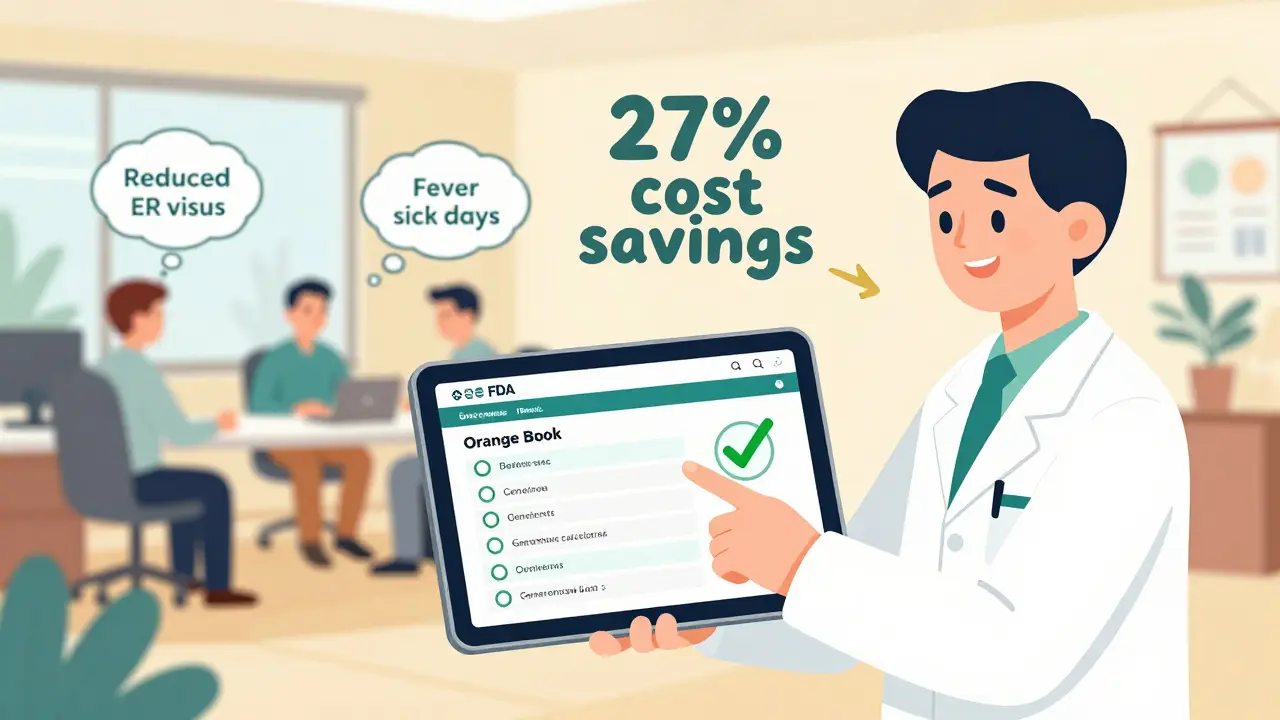
Why Employers Are Listening
Employers aren’t doing this out of kindness. They’re doing it because it saves money - and improves outcomes. Pharmacy Benefit Managers (PBMs) report that pharmacist-led programs reduce drug costs by 20-30%. And here’s the kicker: they also boost adherence by 15-20% compared to programs without pharmacist involvement. That’s not a small number. The CDC says better adherence could prevent 125,000 deaths a year and save $300 billion in healthcare costs. Employers are catching on. Since 2020, adoption of pharmacist-led wellness initiatives has jumped 37%. Large companies (5,000+ employees) now have pharmacist services in 68% of their wellness programs. Walmart’s Health Centers, which include pharmacists as part of primary care teams for employer clients, saw a 23% drop in prescription costs among participants in just one quarter. And it’s not just about pills. It’s about productivity. A diabetic employee who takes their metformin regularly doesn’t miss work because of fatigue or complications. An employee with high cholesterol who takes their generic statin avoids a heart attack. That’s not just healthcare savings - that’s payroll savings.Barriers - And How to Overcome Them
It’s not all smooth sailing. Some pharmacists face legal roadblocks. In 49 states, they can substitute a generic for a brand-name drug - but only if the prescriber allows it. In some places, they need a signed form from the doctor before swapping. That delays things. It defeats the purpose. Patients still worry. "Is it really the same?" "Was it made in a dirty factory?" "Will it make me sick?" Pharmacists tackle this with honesty and data. They show patients the FDA’s requirements: generics must match brand drugs in strength, purity, stability, and how fast they’re absorbed. They point out that many brand-name drugs are actually made by the same company that makes the generic - just under a different label. They share stories: "I give my 80-year-old mom the same generic blood thinner I take. It’s the same thing." And they use tools like McKesson’s OneStop Generics to find the lowest-cost, highest-quality options fast.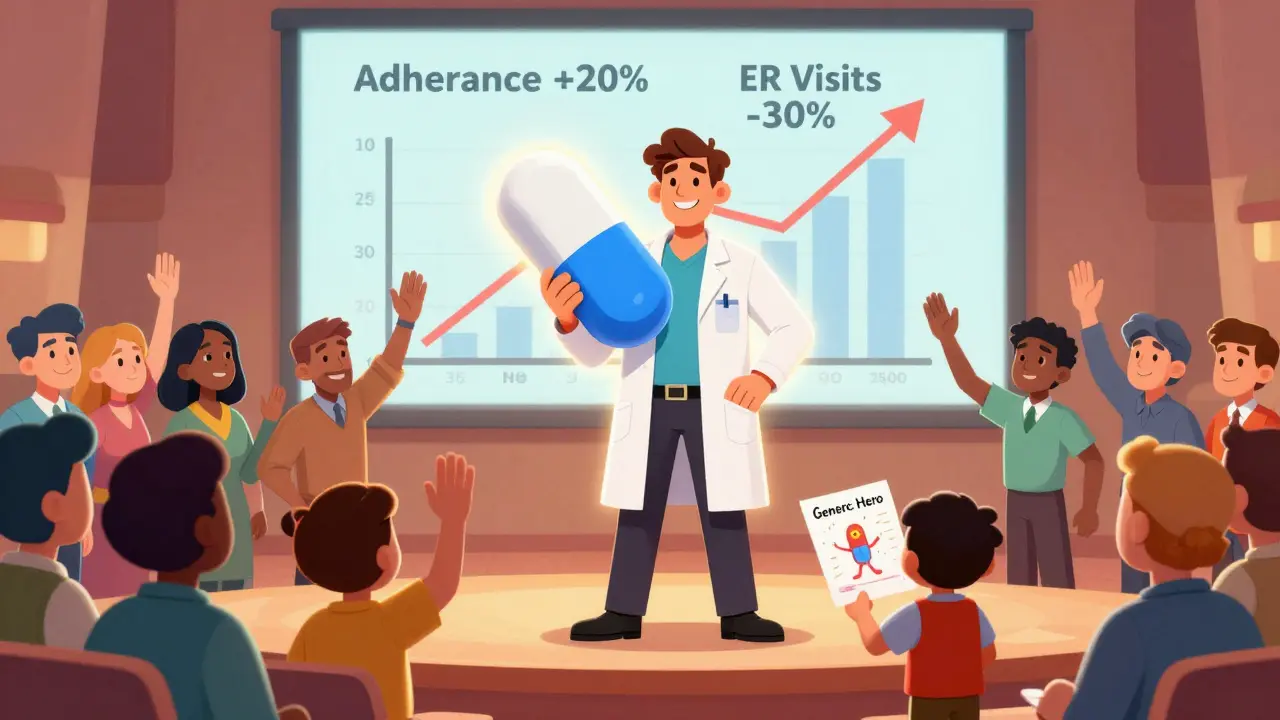
What’s Next?
The future is clear. By 2027, the American Pharmacists Association predicts 85% of large employer wellness programs will include pharmacist-led medication optimization. Why? Because the ROI is undeniable. For every $1 spent on pharmacist services, employers save $7.20 in medical costs. New laws like the 2024 PBM Transparency Act are pushing for clearer pricing - which means pharmacists will have even more power to steer patients toward the best, cheapest, most effective options. And as more employers realize that health isn’t just about gym memberships and mindfulness apps - it’s about making sure people can actually afford to take their medicine - pharmacists will move from the back room to the front line of workplace wellness.What Employees Should Know
If your employer offers a wellness program with pharmacist access - use it. Don’t assume your prescription is the only option. Ask: "Is there a generic?" "Is there a cheaper version?" "Can we review all my meds together?" You’re not being cheap. You’re being smart. And if your pharmacist suggests a switch - listen. They’re not trying to cut corners. They’re trying to keep you healthy - without breaking your budget.What Employers Should Do
If you’re offering a wellness program and you’re not including pharmacists, you’re leaving money - and health - on the table. Start by partnering with your PBM to add MTM services. Hire or contract with clinical pharmacists. Train your HR team to promote these services like they would a fitness challenge. Track results: adherence rates, cost per prescription, ER visits for chronic conditions. Don’t wait for a crisis. Prevent it.Are generic medications really as effective as brand-name drugs?
Yes. The FDA requires generic drugs to have the same active ingredient, strength, dosage form, and route of administration as the brand-name version. They must also be bioequivalent - meaning they’re absorbed in the body at the same rate and to the same extent, within a 80%-125% range. Generics go through the same strict manufacturing inspections. The only differences are inactive ingredients (like fillers or dyes) and price.
Can pharmacists switch my prescription to a generic without my doctor’s approval?
In 49 states, pharmacists can substitute a generic for a brand-name drug if it’s listed as therapeutically equivalent in the FDA’s Orange Book - unless the doctor specifically writes "dispense as written" or "no substitution." Some states require the pharmacist to notify the patient or document the swap, but they don’t need a new prescription. However, if the switch involves a different drug (like swapping one blood pressure med for another), that’s called therapeutic interchange and usually requires the prescriber’s approval.
Why do some people still prefer brand-name drugs?
Many people believe brand-name drugs work better because of marketing, or because they’ve had a bad experience with a generic in the past - sometimes due to different inactive ingredients causing minor side effects like stomach upset. Others are simply used to the brand’s shape, color, or packaging. Pharmacists help by explaining that the active ingredient is identical and that generics are held to the same quality standards. Some patients also feel more comfortable with "authorized generics," which are made by the same company as the brand but sold under a generic label at a lower price.
How do workplace pharmacists know which generics to recommend?
They use the FDA’s Orange Book to confirm therapeutic equivalence. They check their employer’s formulary and the PBM’s Maximum Allowable Cost (MAC) lists to find the lowest-cost generic that’s covered. They also use pharmacy software that flags substitution opportunities. Many work directly with PBMs like CVS Caremark or OptumRX to access real-time pricing and clinical guidelines. Their decisions are based on clinical evidence, not cost alone - but cost is a major factor when effectiveness is equal.
Is it safe to switch from a brand-name drug to a generic for chronic conditions like diabetes or high blood pressure?
Absolutely. Thousands of studies confirm that switching to generics for chronic conditions doesn’t reduce effectiveness or increase risk. In fact, because generics are cheaper, patients are more likely to fill the prescription and take it consistently - which improves outcomes. A 2023 study in the Journal of the American Pharmacists Association found that patients with hypertension who switched to generics had better blood pressure control over time than those who stayed on brand-name drugs, simply because they were more likely to stay on therapy.
Workplace wellness isn’t about yoga mats and fruit bowls. It’s about making sure people can afford to stay healthy. And pharmacists - with their clinical training, their access to data, and their trusted voice - are the missing link in that equation.
Pharmacists are the real MVPs of healthcare. I never thought about how much of a difference they make until my mom switched to a generic statin and her bill dropped from $200 to $15. She’s been taking it for three years now and her numbers are better than ever.
Generics are just brand name drugs with the label peeled off and a sticker slapped on saying cheap. The FDA doesn’t regulate the fillers and the manufacturing plants in India and China are barely inspected. You think your blood pressure med is safe but it’s probably just talc and wishful thinking
Actually Nader, that’s not accurate. The FDA requires generics to meet the same strict standards as brand-name drugs - including active ingredient purity, dissolution rates, and stability testing. The manufacturing facilities for generics are inspected just as often, and many are the exact same plants that make the brand versions. The only difference is the price tag and the color of the pill.
I’ve worked in pharmacy for 18 years. I’ve seen patients go from skipping meds to managing chronic conditions because generics made it affordable. It’s not magic. It’s science.
And yes, some people have minor reactions to inactive ingredients - like dyes or fillers - but that’s rare, and pharmacists can swap to a different generic if needed. It’s not a conspiracy. It’s pharmacology.
The real issue is misinformation. People hear ‘generic’ and think ‘inferior.’ But if you look at the data, adherence rates jump 20% when cost drops. And better adherence means fewer hospitalizations. That’s not opinion. That’s peer-reviewed evidence.
Also, many brand-name drugs are made by the same companies that make the generics. The only difference is marketing. You’re paying for the logo, not the chemistry.
And if you’re worried about quality control, check the FDA’s website. They publish inspection reports. You’ll find more violations in brand-name facilities than in generic ones, because the generics are under more scrutiny to prove equivalence.
It’s not about trust. It’s about data. And the data says generics work.
Stop believing the pharma ads. Start reading the science.
And if you’re still skeptical - ask your pharmacist. They’re the ones who actually know what’s in the bottle.
Imagine if we treated food like we treat meds - if every time you bought oatmeal you had to pay $150 for the brand name version because it had a fancy logo and a celebrity endorsement, while the store brand was chemically identical but cost $3. Would you call it fraud? Would you say the store brand was unsafe? Would you insist your doctor prescribe the expensive version just because it had a nicer package? Of course not. We do this with meds because we’ve been conditioned to equate price with quality. But it’s a lie. A very profitable lie. And pharmacists are the ones breaking the spell.
They’re not just dispensing pills. They’re dismantling decades of corporate propaganda with a clipboard and a calm voice. They say, ‘This blue pill and that purple pill have the same active ingredient. One costs $12. The other costs $150. Which one do you want to take every day for the next 20 years?’ And suddenly, the choice isn’t about loyalty. It’s about survival.
It’s not just healthcare. It’s economic justice wrapped in a pharmacy counter.
Cost savings are nice but let’s be real. Most people don’t even take their meds. Generics won’t fix that. The real problem is poor health literacy and lack of accountability. This whole thing feels like a bandaid on a hemorrhage.
There’s a quiet revolution happening in community pharmacies and no one’s talking about it. Pharmacists aren’t just filling scripts - they’re doing clinical triage, catching drug interactions, and helping patients navigate insurance labyrinths. One guy I know in Nebraska spends his lunch break calling patients who haven’t picked up their meds in 30 days. He doesn’t get paid extra. He does it because he remembers what it was like when his brother couldn’t afford insulin.
It’s not about profit. It’s about presence. And that’s something no algorithm or AI can replicate.
When you walk into a pharmacy and the person behind the counter knows your name, your dog’s name, and the fact that you hate grapefruit juice with your blood pressure med - that’s not service. That’s care.
And that’s why these programs work. Not because of the math. But because of the humanity.
This is the kind of stuff that actually changes lives. Not yoga mats. Not step challenges. Actual medicine access. I’ve seen it firsthand - a coworker switched from a $200/month brand to a $10 generic and stopped missing work. Her kids stopped worrying. Her husband stopped crying. That’s the ROI. Not in dollars. In dignity.
Employers, if you’re not investing in pharmacists, you’re just paying more for broken people.
Generics are the unsung heroes of public health. I grew up in a rural town where the nearest pharmacy was 40 miles away. My grandma took a generic for her arthritis because the brand was out of reach. She lived to 94. No hospital stays. No complications. Just a little white pill and a lot of patience.
It’s not about where it’s made. It’s about what’s inside. And the science doesn’t lie.
There’s a philosophical layer here too. We treat medicine as a commodity, but health is a right. Generics force us to confront that tension. If a life-saving drug is priced beyond reach, is it still medicine? Or is it a luxury? Pharmacists, by bridging cost and care, are quietly redefining what healthcare means in a capitalist society.
They’re not just dispensing pills. They’re dispensing justice.
Wait - so you’re saying I should trust a pill made in a factory I’ve never heard of - with ingredients I can’t pronounce - to keep me alive - when I could just pay more and feel safe - because brand names have logos and commercials and doctors say they’re better - and what if something goes wrong - WHO DO I SUE -
My uncle in Mumbai takes the same generic blood pressure pill as my cousin in Texas. Same batch number. Same manufacturer. Different labels. Same result. Cost difference? 90%. It’s not magic. It’s globalization. And it’s working.
EVERYTHING IS A CONSPIRACY. Generics are made in Chinese labs that use rat blood as filler. The FDA is owned by Big Pharma. They want you to take cheap pills so they can sell you more expensive cancer drugs later. Also I read on Reddit that generic Adderall gave someone seizures. Also I heard the moon landing was fake. Also my cat is a government spy.
Pharmacists play a vital role in medication adherence and cost containment. Their integration into workplace wellness programs is evidence-based and cost-effective. Further policy support is recommended.