
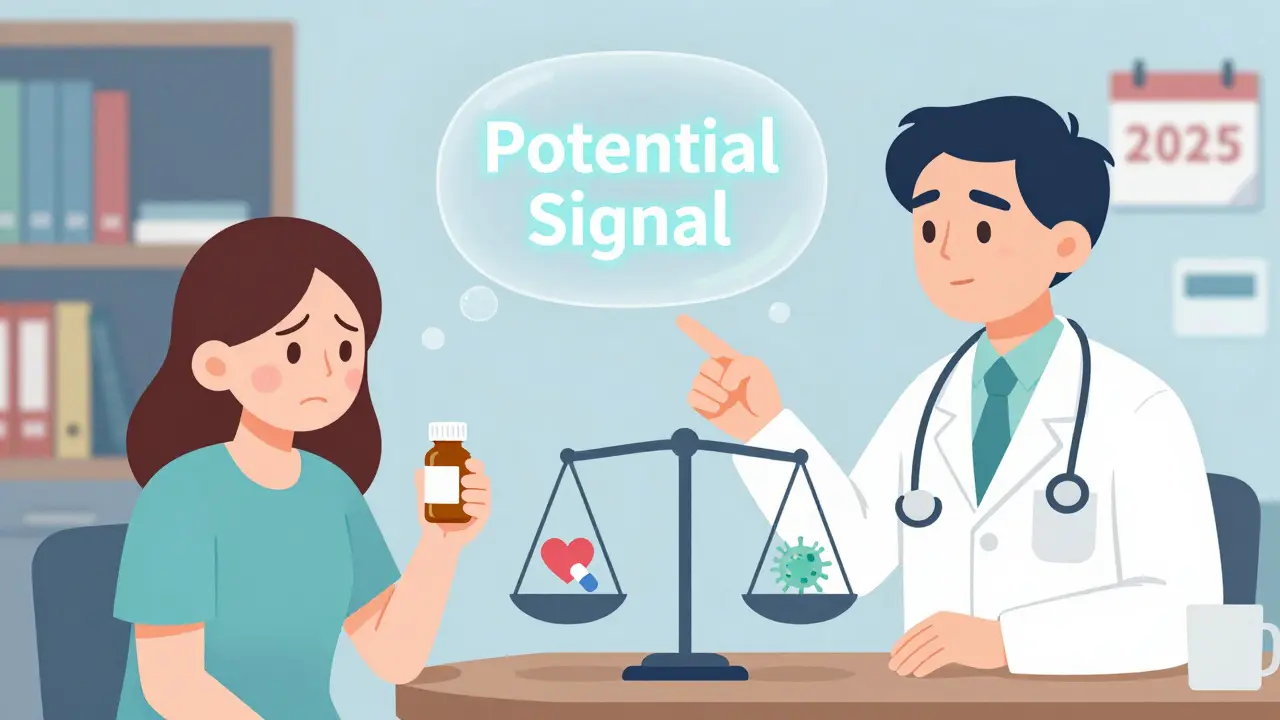
When you see an FDA safety alert about your medication, it’s easy to panic. A headline like "FDA investigates link between Drug X and heart issues" sounds alarming. But here’s the truth: not every alert means the drug is dangerous. Most are early warnings - signals, not verdicts. Understanding the difference between a potential risk and a confirmed danger can keep you from stopping a life-saving drug unnecessarily.
What the FDA Actually Means by "Potential Signal"
The FDA doesn’t wait for proof before acting. It watches for patterns. If 50 people taking Drug A report a rare type of liver injury in a single quarter - and only 2 people on other drugs did - that’s a potential signal. It doesn’t mean Drug A caused it. It means the FDA needs to look closer.These signals come from the FDA Adverse Event Reporting System (FAERS), which collects over 1.2 million reports a year from doctors, patients, and drug makers. But here’s the catch: most of these reports are incomplete. A patient might say, "I took Drug A and got dizzy." But they didn’t mention they also started a new blood pressure pill, or that they had a cold, or that they skipped sleep for three nights. The FDA can’t know what caused the symptom just from a single report.
That’s why the FDA says clearly in every public alert: "This does not mean FDA has determined that the drug has the risk." They’re not telling you to stop. They’re telling you: "We’re watching. We’re investigating. Stay tuned."
What Makes a Risk "Serious"?
The FDA only flags risks that are serious - meaning they could kill you, land you in the hospital, cause permanent damage, or require emergency care. A rash? Usually not serious. A stroke? Yes. A mild headache? No. A seizure? Yes.But here’s where people get tripped up: a serious risk doesn’t mean it’s common. Fournier’s gangrene, a rare but deadly infection of the genitals, is a known risk with SGLT2 inhibitors for diabetes. The FDA reported it in 2022: 0.2 cases per 1,000 patient-years. That’s 2 in 10,000 people over five years. For comparison, the risk of dying in a car crash in the U.S. is about 1 in 100 over a lifetime. The benefit? These drugs lower blood sugar, reduce heart failure risk, and help people lose weight. For someone with type 2 diabetes, that benefit often outweighs the tiny chance of a rare infection.
Benefit Isn’t Just About Survival - It’s About Quality of Life
When you’re on a drug for depression, high blood pressure, or arthritis, you’re not just trying to stay alive. You’re trying to function. To sleep. To work. To play with your kids. The FDA considers this.Take SSRIs for depression. In 2023, the FDA issued a communication about possible risks during pregnancy. The alert didn’t say "don’t take these." It said: "We’ve seen a small increase in certain complications. But untreated depression carries its own risks - preterm birth, low birth weight, even suicide." So the recommendation? Talk to your doctor. Don’t stop cold turkey. The benefit of managing depression often outweighs the small, uncertain risk.
That’s why experts like Dr. Janet Woodcock, former head of the FDA’s drug center, say risk-benefit isn’t math. It’s judgment. It’s asking: "How bad is the disease? What happens if I don’t treat it? Are there other options?"
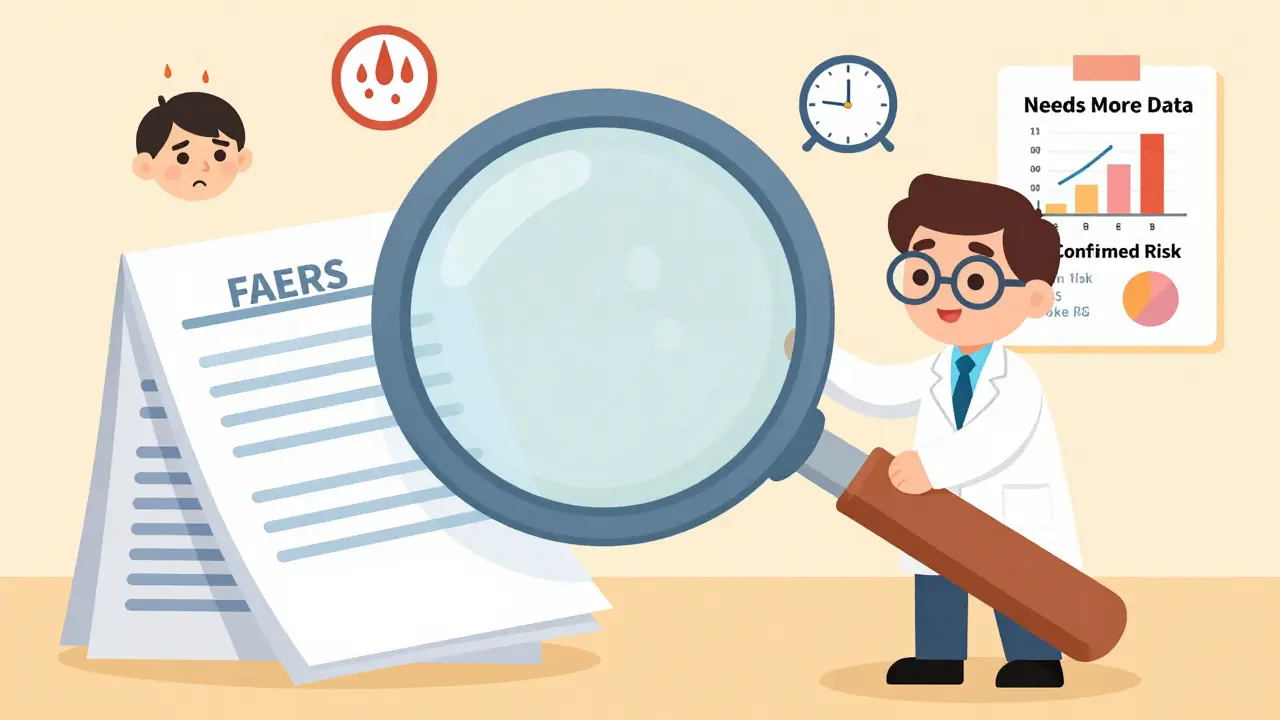
How to Read an FDA Drug Safety Communication
Not all alerts are created equal. Here’s how to decode them:- Look for the word "potential signal" - that means it’s early. The FDA hasn’t confirmed anything. Don’t panic. Don’t stop your meds.
- Check if they mention "confirmed risk" - that’s different. If they say "this drug causes X," then it’s backed by stronger evidence. Label changes usually follow.
- Find the numbers - the best alerts give you risk estimates. "1 in 1,000" is more useful than "some patients experienced." If they don’t give numbers, ask your doctor for context.
- See if they mention alternatives - if the drug has no real substitutes, the benefit is likely high. If there are 5 other drugs that work just as well, the risk may tip the scale.
- Look for who it affects - is the risk only in elderly patients? People with kidney disease? Not everyone is at equal risk.
Example: In 2022, the FDA flagged a risk of a rare muscle condition with statins in older adults. But they also said: "The risk is less than 0.1% per year, and the benefit of preventing heart attacks in high-risk patients is clear." The result? No warning to stop. Just a note for doctors to monitor.
Why So Many Alerts? Isn’t This Just Scaring People?
Yes, some alerts feel overblown. In 2021, the FDA flagged menstrual changes after COVID-19 vaccines. Thousands of women called their doctors. Later, the FDA admitted: the data was too noisy. Menstrual cycles change all the time - from stress, sleep, weight, even the flu. The signal wasn’t real.But here’s the flip side: if the FDA waited for absolute proof before speaking up, people could die. The Vioxx scandal in the early 2000s - where heart risks were ignored for years - led to over 100,000 heart attacks and strokes. That’s why the FDA now scans FAERS every two weeks. They’d rather raise a false alarm than miss a real one.
Still, the system has flaws. A 2022 study found that 68% of doctors felt FDA alerts lacked context. Many didn’t know how often the risk actually happened. That’s why the FDA’s 2024-2026 plan includes adding clear numbers to all future alerts - like "this risk occurs in 1 out of 5,000 patients per year." That’s progress.
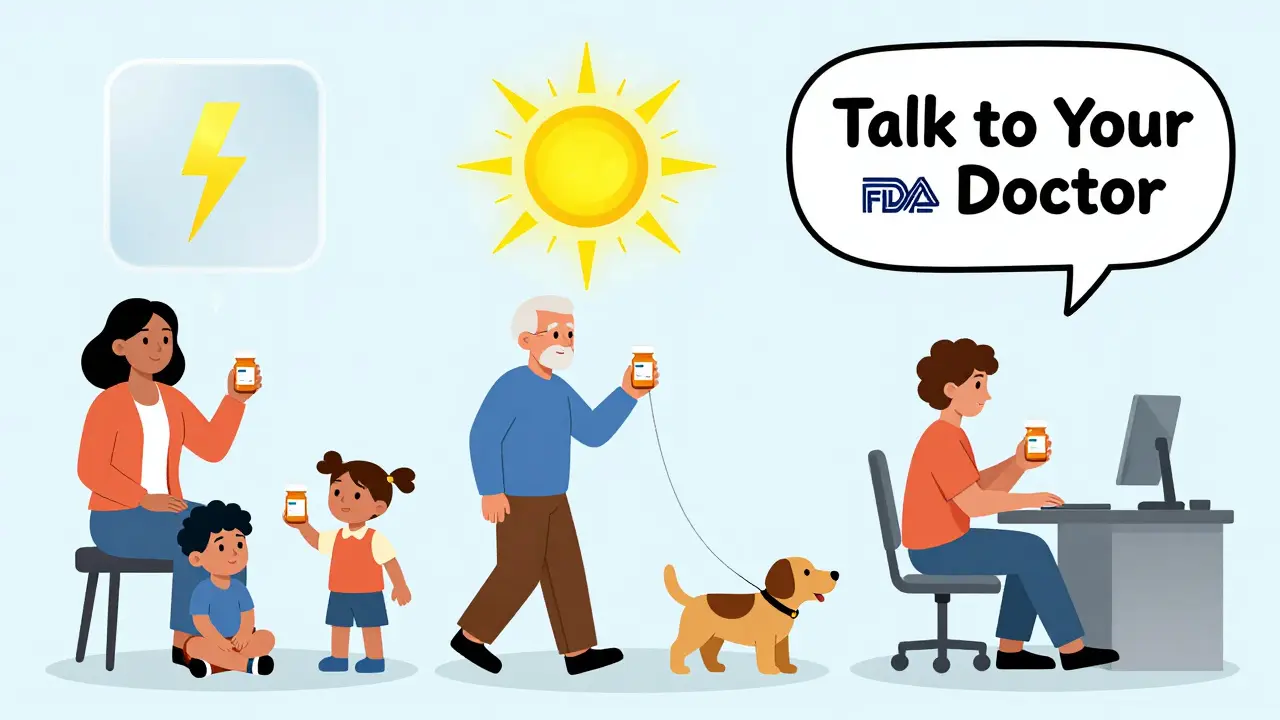
What Should You Do When You See an Alert?
Don’t act alone. Don’t Google it. Don’t stop your pill. Do this:- Find the official FDA Drug Safety Communication on fda.gov - not a news headline.
- Read the "Key Points" section - it’s usually at the top.
- Ask your doctor: "Is this a potential signal or a confirmed risk? What’s the actual risk number? Does it apply to me? Are there better options?"
- If you’re on a high-risk drug (like antipsychotics, blood thinners, or cancer meds), keep a list of side effects you’ve had. Bring it to your next visit.
- Report side effects yourself through MedWatch. Your report helps the FDA spot patterns.
One patient told me: "I stopped my blood pressure med after an alert. I ended up in the ER with a stroke. My doctor said the risk of the drug was 1 in 10,000. The risk of not taking it? 1 in 5."
When Should You Consider Stopping?
Only if your doctor says so. But here are three red flags that might mean it’s time to reconsider:- You’re having a serious side effect - like chest pain, severe rash, or confusion - and it started after you began the drug.
- You have a better alternative, and your condition is mild. For example, if you have mild arthritis and a new drug works just as well with fewer stomach risks.
- You’re in a high-risk group and the risk is confirmed and significant - like a woman with liver disease taking a drug known to cause liver failure.
But if you’re on a drug for cancer, heart failure, or epilepsy - and it’s working - the risk of stopping is often far greater than the risk of continuing.
What’s Changing in 2025?
The FDA is finally getting better at communication. By late 2025, all new safety alerts will include:- Clear risk numbers - "This occurs in X per 1,000 people per year."
- Comparison to baseline risk - "This is similar to the risk from untreated diabetes."
- Visual tools - simple charts showing benefit vs. risk for different patient types.
They’re also starting to ask patients directly: "What risks are you willing to accept?" That’s huge. It means the FDA is moving away from one-size-fits-all advice.
For now, treat every alert like a weather warning - not a tornado siren. It’s telling you to pay attention, not to run for cover. The right call isn’t always to stop the drug. Sometimes, it’s to understand it better - and talk to your doctor before you do anything.
Ugh, another FDA warning that’s just noise. I stopped my statin after one of these alerts and my cholesterol’s still fine. They’re just scared of lawsuits, not actual science. Stop scaring people with "potential signals" - if it’s not proven, shut up.
The FDA’s system is a fascinating example of precautionary epistemology in action - a delicate dance between statistical noise and public health imperatives. We live in an age where correlation is mistaken for causation, and the absence of evidence is conflated with evidence of absence. The FAERS database, though messy, is a living archive of human experience with pharmaceuticals, and while individual reports are riddled with confounders, the aggregate signal, when interpreted with humility and methodological rigor, reveals patterns that can’t be ignored. The real tragedy isn’t the alerts - it’s that most patients lack the tools to parse them. We need more transparency, not less, and yes, even the 0.2 cases per 1,000 patient-years matter, because medicine isn’t just about population averages - it’s about the one person who becomes that statistic.
My mom got the SGLT2 alert and panicked - thought she’d get some weird gangrene thing. I sat her down, showed her the actual numbers, and she cried. Not from fear - from relief. She’s been on it for three years and her HbA1c dropped from 8.2 to 6.1. She’s hiking again. The risk is real, but tiny. The benefit? Her life back. Doctors need to do more than hand out pamphlets - they need to sit with people and explain what "1 in 5,000" actually means. Not everyone’s a statistic.
Don’t stop your meds. Talk to your doc. That’s it.
i read this and thought abt my aunt who stopped her antidepressant after a news headline… she ended up in the hospital. the fda alerts r so hard to understand but this post actually helped. thank you. i’m gonna print this out for my mom. ps: i think the part abt menstrual changes after the vaccine was kinda messed up but i get why they put it out. we need better communication. 🤔
Oh wow, a 12-page essay on why you shouldn’t panic about your meds? Groundbreaking. 🙄 Let me guess - you’re the person who still takes birth control despite the blood clot warnings? Yeah, I’m sure your "benefit outweighs risk" logic works for everyone. Except the woman who had a stroke at 32 because she trusted the FDA’s "potential signal" nonsense. You’re not a doctor. Stop being so smug. 💅
As someone from India where access to specialists is limited, this article is a lifeline. In rural clinics, patients stop life-saving drugs because of WhatsApp rumors. The FDA’s approach - even with its flaws - is one of the most responsible systems in the world. The key is education. We need community health workers trained to interpret these alerts, not just translate headlines. And yes, reporting side effects via MedWatch? I’ve done it twice. My report on a rash from a generic antihypertensive helped flag a batch issue. Small actions matter.
Of course the FDA’s being cautious - they’re scared of the Chinese government suing them over a drug that might’ve caused a cough. Meanwhile, real Americans are dying because they believe this crap. I’ve seen it: my cousin’s dad died of a heart attack because he listened to some "potential signal" and quit his blood thinner. This isn’t science - it’s woke bureaucracy. We need less talking and more trusting the people who actually know what they’re doing: doctors. And maybe stop giving the FDA a platform to scare the public with their 2025 "charts" - we don’t need pretty graphs to know when to take a pill.