

Every year, millions of people take prescription drugs, over-the-counter medicines, and medical devices without issue. But for some, things go wrong. A rash appears after a new antibiotic. A heart rhythm gets out of sync after a blood pressure pill. A joint swells after using a new pain patch. These aren’t always rare side effects listed in the pamphlet-they’re adverse drug events, and they matter. The FDA needs to know about them. That’s where MedWatch comes in.
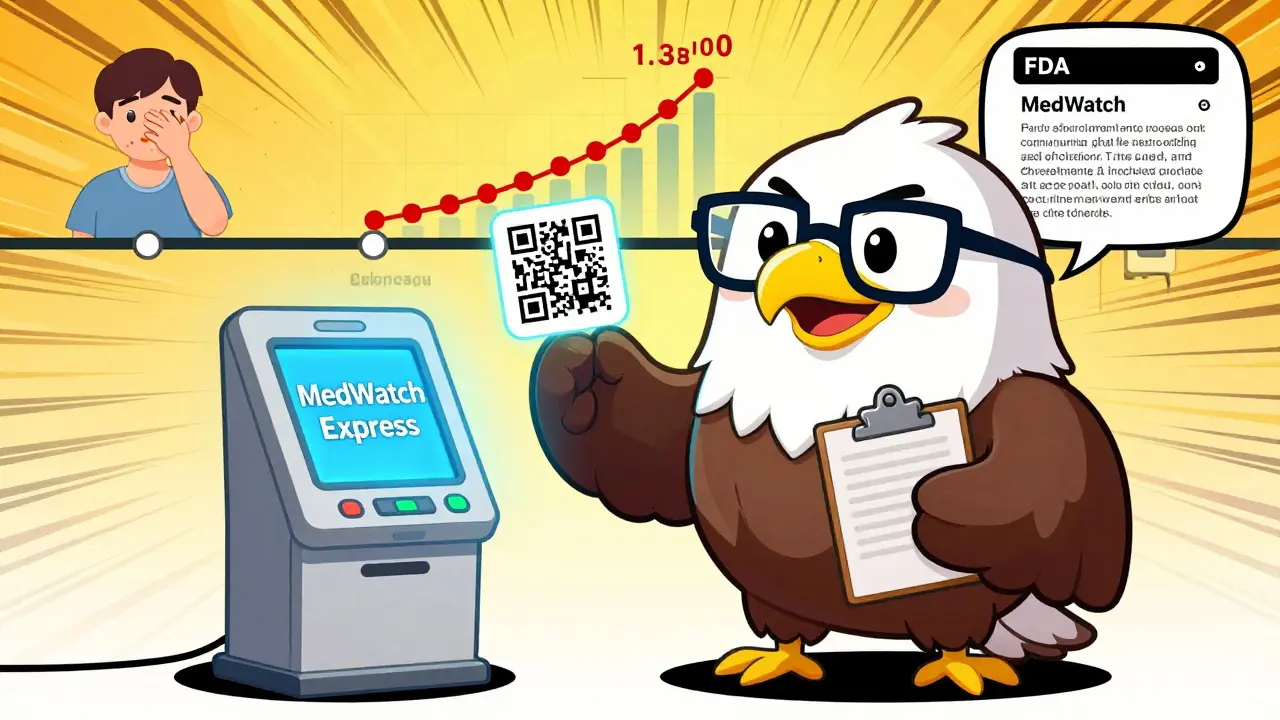
MedWatch isn’t just a form you fill out. It’s the U.S. Food and Drug Administration’s main system for tracking safety problems with medical products after they’re on the market. Clinical trials can’t catch everything. Real people using real drugs in real life reveal risks that labs never saw. In 2023, the FDA received over 1.3 million reports through MedWatch. That’s how they find out when a drug might need a stronger warning, a boxed warning, or even a recall.
Who Can Report to MedWatch?
You don’t need to be a doctor. You don’t need special training. If you’re a patient, a caregiver, a nurse, a pharmacist, or a doctor-you can report. The FDA encourages everyone to speak up.
There are two main types of reporters:
- Healthcare professionals (doctors, nurses, pharmacists) use FDA Form 3500. This form has 45 fields and asks for detailed clinical info-like lab results, timing of symptoms, and other medications.
- Consumers and patients use the simpler FDA Form 3500B. It has 30 fields and skips the technical jargon. You just need to describe what happened, what drug you took, and when.
Manufacturers, importers, and hospitals have to report serious events by law. But if you’re not one of them, your report is still vital. Voluntary reports make up the majority of submissions-and they’re often the first clue that something’s wrong.
What Counts as an Adverse Event?
You don’t need to be sure the drug caused the problem. You just need to suspect it. The FDA defines an adverse event as any unintended, unfavorable medical occurrence that happens after taking a medicine or using a device-even if you’re not certain it’s related.
Examples include:
- Severe nausea after starting a new antidepressant
- Unexplained bruising while on blood thinners
- Swelling in the legs after using a new diabetes drug
- A skin rash that spreads after taking an OTC pain reliever
- Worsening anxiety after starting a new allergy medication
Even if the event seems minor, report it. The FDA looks at patterns. One report might not mean much. But 50 similar reports? That’s a signal.
How to Submit a Report
You have three easy ways to report:
- Online (fastest and most common): Go to FDA.gov/MedWatch. Click "Voluntary Reporting." Fill out the form. You’ll need:
- Patient info (age, sex, weight-no full Social Security number needed)
- Name of the drug (brand or generic)
- Exact description of the event (what happened, when, how bad)
- Your contact info (so they can follow up if needed)
The whole thing takes 15-20 minutes. You can save your progress and come back later.
- By phone: Call 1-800-FDA-1088. A representative will ask you the same questions and file the report for you. Calls are answered within 30 seconds 95% of the time.
- By mail: Download Form 3500 or 3500B from the FDA website, fill it out, and mail it to:
FDA MedWatch
5600 Fishers Lane
Rockville, MD 20852-9787
Most people choose online. It’s faster, you get an automatic confirmation email, and the FDA says 95% of reports now come in electronically.
What Details Matter Most?
Don’t just say, “The drug made me sick.” Be specific. The more detail you give, the more useful your report is.
Here’s what to include:
- Drug name-exact brand or generic, dose, how often taken
- Start and stop dates-when did you begin? When did you stop? Did symptoms improve after stopping?
- Event timeline-how long after taking the drug did the problem start? Hours? Days? Weeks?
- Symptoms-describe them like a doctor would: “dizziness when standing,” “chest tightness lasting 10 minutes,” “blurred vision in left eye only”
- Medical history-any other conditions? Other drugs or supplements you take?
- Outcome-did you go to the ER? Get hospitalized? Recover on your own?
Don’t worry if you don’t have lab results or doctor’s notes. Just write what you know. If you’re unsure about something, write “unknown.”
What About Vaccines or Animal Drugs?
Don’t report vaccines to MedWatch. They go to a separate system called VAERS (Vaccine Adverse Event Reporting System). Same with animal medications-that’s handled by the FDA’s Center for Veterinary Medicine.
Also, don’t report cosmetics or dietary supplements to MedWatch unless they’re marketed as drugs. Most supplements fall under a different tracking system.
Why Your Report Matters
MedWatch isn’t just paperwork. It saves lives.
In 2021, MedWatch data led to 47% of all drug safety label changes. One example: reports of a rare but deadly infection called Fournier’s gangrene in people taking SGLT2 inhibitors (a class of diabetes drugs) led to a black box warning-the strongest safety alert the FDA can issue.
But here’s the problem: experts estimate only 1% to 10% of actual adverse events get reported. Why? Time. Many doctors say they don’t have enough time to fill out the forms. Patients don’t know the system exists. A 2021 FDA survey found only 28% of consumers even knew about MedWatch.
That’s why your report counts. If you’re a patient and you had a bad reaction, your voice helps protect others. If you’re a provider, your report helps the FDA spot trends before they become public health crises.
What’s New in 2026?
The FDA is making improvements. In 2023, they launched a pilot program called MedWatch Express, a mobile app used in 15 major hospitals. Doctors using it report a 65% reduction in time spent filing forms.
They’ve also added new fields to Form 3500B for cannabis-derived products-because reports of side effects from CBD and THC have jumped 327% since 2020.
By January 2025, all healthcare facilities will be required to report electronically. And in 2024, the FDA started putting QR codes on prescription bags at 30 major pharmacy chains. Scan the code, and you’re taken straight to the MedWatch form.
Common Mistakes to Avoid
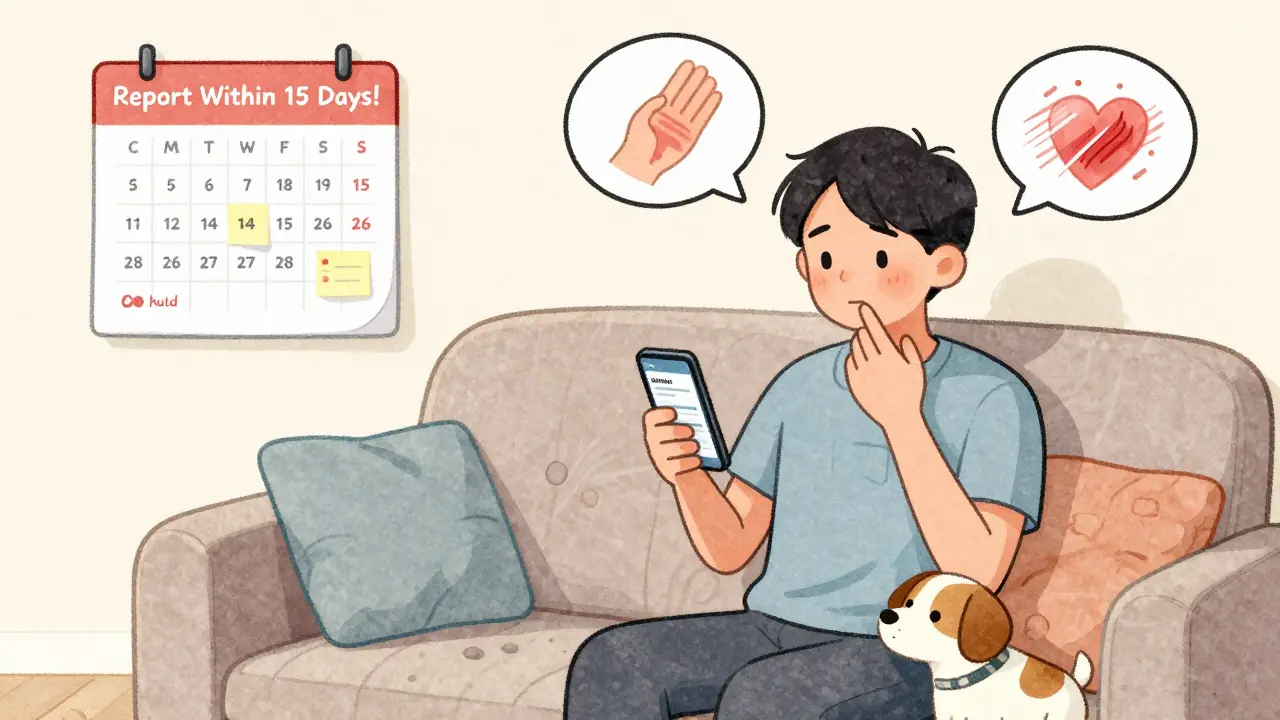
- Waiting too long-report within 15 days if you can. The sooner, the better.
- Using vague language-don’t say “I felt bad.” Say “I had chest pain that started 2 hours after taking the pill and lasted 20 minutes.”
- Not reporting mild events-if it happened more than once, or if it scared you, report it.
- Thinking someone else will report it-if you’re the one who experienced it, you’re the best person to report.
Need Help?
The FDA offers free training through MedWatch Learn, a series of 12 online modules for healthcare providers. Over 42,000 people have taken them since 2022.
If you’re confused about what to report, call 1-800-FDA-1088. No judgment. No pressure. Just help.
And if you’re a healthcare provider using an electronic health record system like Epic or Cerner, check if your system has a built-in MedWatch reporting tool. Some hospitals have integrated forms that auto-fill parts of the report from your patient notes-cutting reporting time from 25 minutes to under 10.
MedWatch works because people speak up. Not because of laws or mandates-but because someone noticed something wrong and decided to act. Your report could be the one that changes a drug label, warns millions, or even saves a life.
Can I report an adverse event if I’m not a U.S. resident?
Yes. You don’t need to be a U.S. citizen or resident to report. If you took an FDA-approved drug in the U.S., or if you’re a healthcare provider who prescribed it to someone in the U.S., you can submit a report. The FDA accepts reports from anywhere in the world.
Will my report be kept confidential?
Yes. The FDA protects your identity. You’re asked to provide contact information so they can follow up if needed, but your name and personal details are never made public. Reports are de-identified before being added to the public FAERS database.
How long does it take to hear back after submitting a report?
You’ll get an automated email confirmation within minutes of submitting online. The FDA doesn’t typically respond to individual reports unless they need more information. But your report is logged into their system and reviewed by safety analysts. It may take weeks or months before the FDA takes action based on your report-but that doesn’t mean it didn’t matter.
Can I report an adverse event from a drug I took years ago?
Yes. Even if the reaction happened months or years ago, report it. The FDA looks at long-term patterns. A delayed reaction that happened in 2021 might be part of a trend noticed in 2025. It’s never too late to report.
Do I need a doctor’s note to report?
No. You don’t need any medical documentation to file a report. The FDA accepts patient-reported events based on personal experience. If you believe a drug caused a problem, your word is enough to start the review process.
What if I’m not sure if it was the drug or something else?
Report it anyway. The FDA’s job is to figure out causality-not yours. If you suspect a link, even if it’s unclear, your report helps build the evidence. Many safety signals start with a single unclear report that later connects with others.
Can I report side effects from over-the-counter (OTC) drugs?
Yes. MedWatch covers all FDA-regulated products, including OTC medicines like ibuprofen, antacids, cold remedies, and sleep aids. In fact, about 5% of all MedWatch reports come from OTC drugs. Don’t assume they’re safe just because you don’t need a prescription.
I reported a rash from a new antibiotic last year. Took me 12 minutes online. Got an email confirmation right away. Didn’t think it mattered. Turns out, two other people had the same reaction. FDA added a warning. Just saying something helps.
Why does America need yet another form? In India, we just call the doctor. If the drug kills you, it’s pulled. No forms. No bureaucracy. Why do you make everything so complicated?
OMG i just learned about medwatch today and i feel so dumb for never reporting my weird dizziness after that new blood pressure med… i thought it was just stress. but now i’m gonna do it. seriously, if you’ve had something weird happen after a med, just report it. no judgment. just click the link. it’s literally 15 minutes. you could save someone’s life. 🙏
So let me get this straight… we’re supposed to trust the FDA to fix problems… but they only get 1% of reports? And the system’s still manual for most people? Meanwhile, my smart fridge can order milk before I run out. This is 2026. Can we please get an app that auto-fills from my pharmacy records?
I’m a nurse and I’ve been telling patients for years to report side effects. But most don’t know where to start. This guide is actually the clearest thing I’ve seen. I’m printing it out and handing it to every new patient. If you’re reading this and you’ve ever felt off after a med-do it. You’re not being dramatic. You’re being brave.
I took a new sleep aid last month and woke up with my face swollen. I thought it was allergies. Turns out it was the melatonin. I reported it. Two weeks later, I saw a news alert: three others had the same reaction. That’s when I realized-my panic attack in the bathroom? It wasn’t just me. It mattered. Don’t ignore your body. Report it.
i report all my side effects. even the small ones. because someone else might have it worse. and if no one speaks up, nothing changes.
I appreciate the clarity of this guide. As a healthcare worker, I’ve seen patients hesitate to report because they fear being dismissed. The fact that the FDA accepts patient-reported events without documentation is crucial. Thank you for emphasizing that your experience matters-even without a lab report.
Let’s be real-this whole system is theater. The FDA doesn’t act on reports until a drug has killed 50 people and made the news. MedWatch is just a box they check so they look responsible. Meanwhile, Big Pharma pays lobbyists to delay warnings for years. Your report? It’s a drop in a bucket filled with corporate silence.
I’m glad someone finally made this easy to understand. Too many people think reporting is only for doctors. But if you’re the one living with the side effect, you’re the expert. I’ve been telling my elderly mom to report every weird symptom since her first statin. She didn’t believe me until she saw her report was part of a pattern. Now she’s the one reminding me.
MedWatch isn’t bureaucracy-it’s poetry in motion. Each report is a whisper in a storm of silence. A single line describing dizziness, a skipped heartbeat, a rash blooming like ink on skin… these are the unsung verses of medical truth. The system doesn’t scream-it listens. And sometimes, in the quiet between data points, it hears a cry that saves a thousand lives. You are the poet. Write your stanza.
The 3500B form is underutilized. Patients don’t know it exists. Clinicians default to 3500. But 3500B is designed for laypeople-simple, intuitive, no jargon. We need to push this harder in pharmacies and EHR pop-ups.
This is why America’s healthcare system is broken. We spend billions on apps and forms but can’t fix the core issue: drug companies hide side effects until lawsuits force their hand. MedWatch is a Band-Aid on a hemorrhage. And now they’re adding QR codes? Cute. Fix the damn system.