
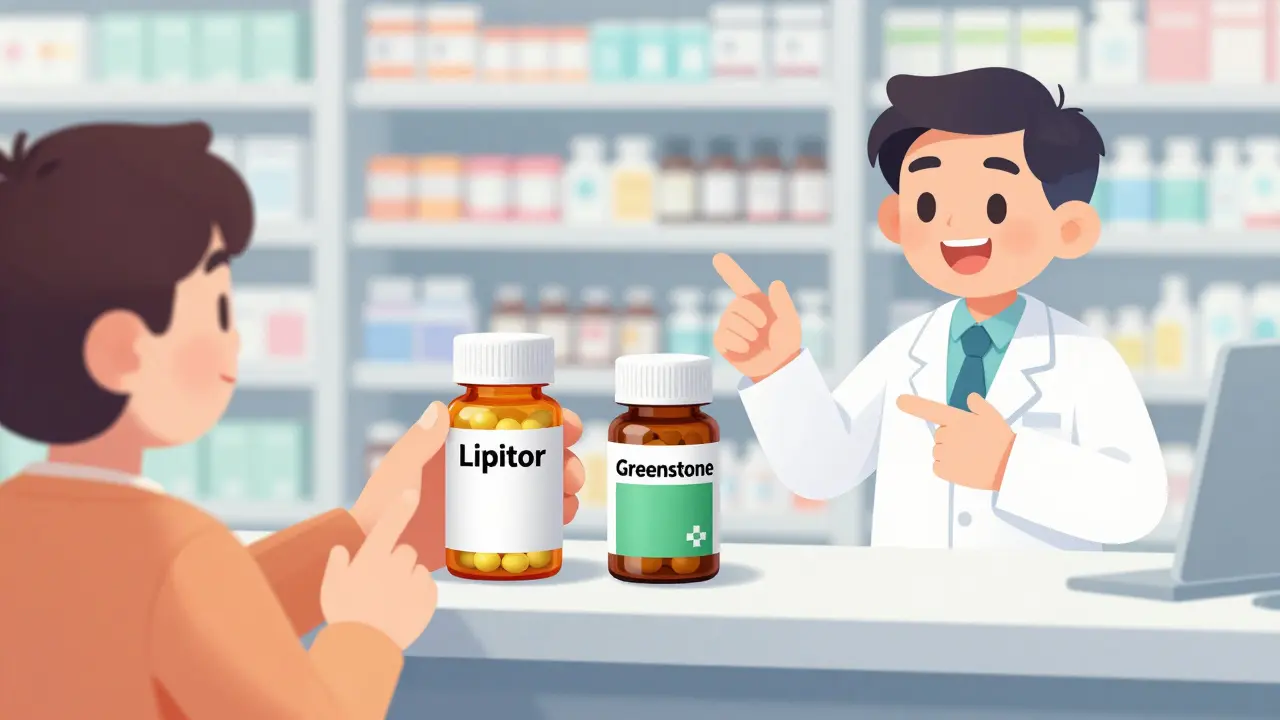
When you pick up a prescription, you might see a different name on the bottle than what your doctor wrote. That’s not a mistake. It could be an authorized generic-and it’s not the same as the generic you’ve probably used before. Many people don’t realize there’s a difference, and that confusion can cost you money or even affect how well your medicine works.
What Exactly Is an Authorized Generic?
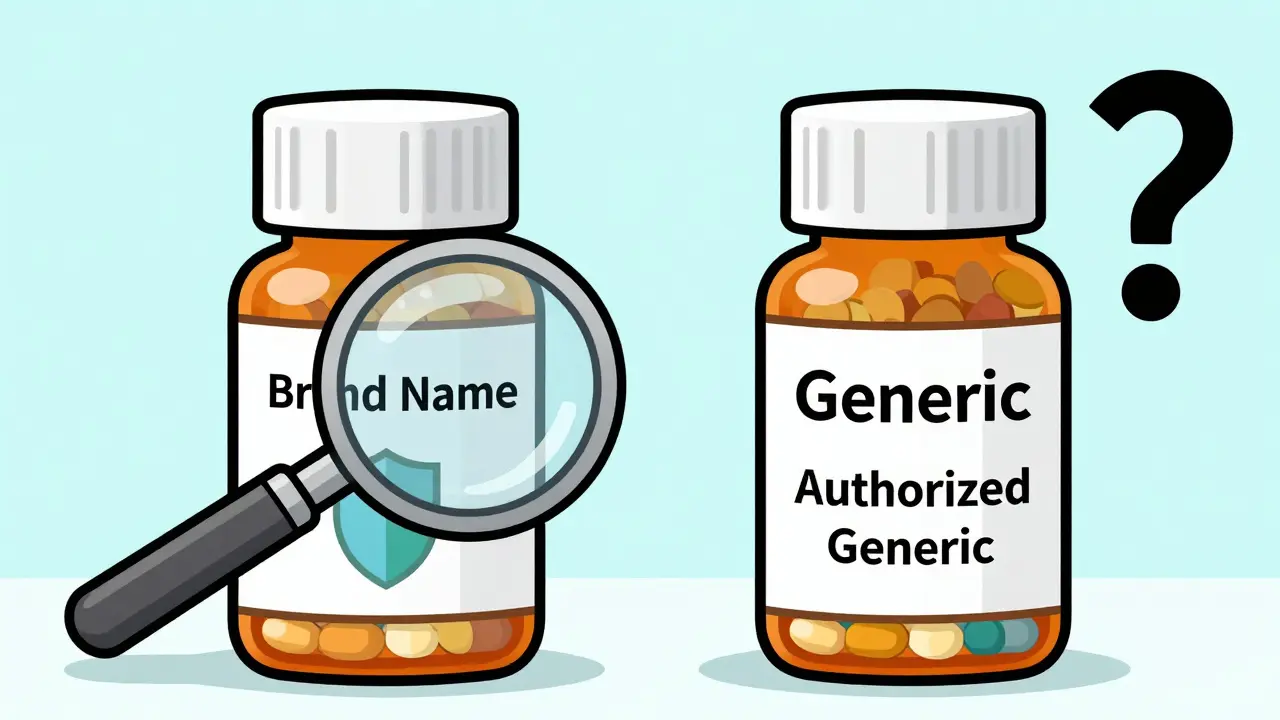
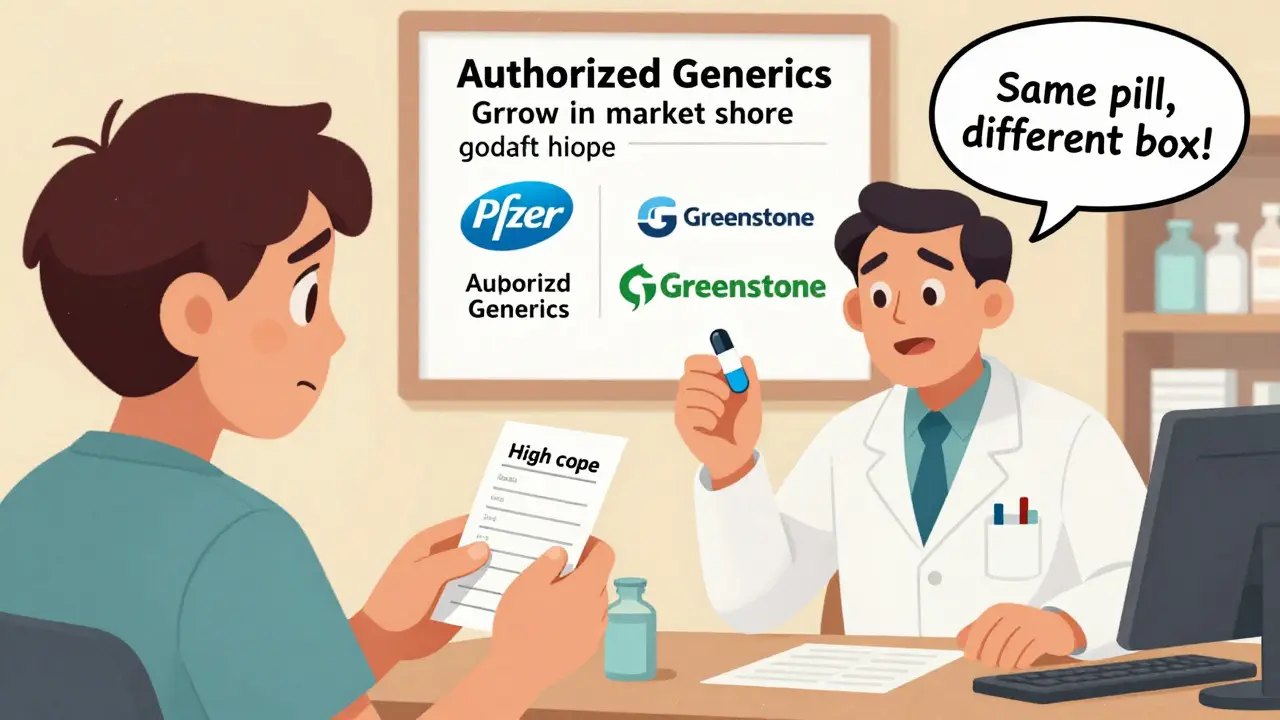
An authorized generic is the exact same drug as the brand-name version, but sold without the brand name on the label. The FDA defines it clearly: it’s a brand-name drug that’s been re-labeled and sold under a different name, with no changes to the active ingredient, dosage, manufacturing process, or quality. The only differences are the packaging, color, or markings on the pill. It’s not a copy. It’s the original product, just repackaged.Here’s how it works: the same company that made the brand-name drug-say, Pfizer for Lipitor-can decide to sell the exact same pills under a different label, often through a subsidiary like Greenstone LLC. Because it’s the same product made on the same生产线, it doesn’t need a separate FDA approval. It uses the original New Drug Application (NDA) that the brand-name drug already had. That means no extra testing. No bioequivalence studies. Just the same pills, different box.
As of September 2023, there were 1,872 authorized generic products available in the U.S., covering 467 different active ingredients. That’s not a small niche. It’s a major part of the market.
How Traditional Generics Are Different
Traditional generics are what most people think of when they hear "generic." These are copies of brand-name drugs made by other companies. They must contain the same active ingredient, strength, dosage form, and route of administration. But here’s the catch: they can have different inactive ingredients. That means fillers, dyes, or binders might be different. And that matters.Before a traditional generic can hit the market, the manufacturer must submit an Abbreviated New Drug Application (ANDA) to the FDA. This requires proving bioequivalence-meaning the drug gets into your bloodstream at the same rate and amount as the brand-name version. It’s not easy. It takes time, money, and often legal battles over patents.
And here’s the real difference: traditional generics are listed in the FDA’s Orange Book, which doctors and pharmacists use to check therapeutic equivalence. Authorized generics? They’re not in there. Because they’re not separate drugs. They’re the original brand product under a different label. So if you’re looking up whether a generic is equivalent, you won’t find the authorized one listed.
Why the Difference Matters
You might wonder: if both are cheaper than the brand, why does it matter? Because for some people, the inactive ingredients make a big difference.Take someone with a gluten sensitivity, a dye allergy, or a rare metabolic condition. A traditional generic might use a different filler that triggers a reaction-even if the active ingredient is identical. That’s not a flaw in the generic. It’s just how they’re made. But with an authorized generic, there’s zero risk. It’s the exact same formula. Same manufacturer. Same batch, sometimes even the same pills.
One 2022 survey found that 67% of independent pharmacists had patients specifically ask for authorized generics because they’d had bad reactions to traditional generics. Patients report fewer side effects, better tolerance, and more confidence in the medication. That’s not just preference-it’s clinical reality.
Price and Market Impact
Authorized generics are usually priced close to traditional generics, often 15-30% cheaper than the brand-name version. But here’s where it gets tricky: insurance companies don’t always treat them the same way. Some pharmacy benefit managers (PBMs) still classify authorized generics as "brand" drugs because they’re made by the original company. That means higher copays for you-even though the drug is chemically identical.That’s why it’s important to check your receipt. If your copay is higher than expected for a "generic," ask your pharmacist: "Is this an authorized generic?" If it is, you might be able to appeal the pricing or switch to a different pharmacy.
Market data shows that 65% of the top 50 brand-name drugs launched an authorized generic within six months of patent expiration. That’s not coincidence. It’s strategy. Brand companies use authorized generics to undercut the first traditional generic applicant, who’s supposed to get 180 days of exclusivity under the Hatch-Waxman Act. If the brand launches its own generic at the same time, it can wipe out that exclusivity window and reduce competition. Critics say this delays cheaper options. Supporters say it gives patients immediate access to affordable versions.
How to Spot an Authorized Generic
You won’t find them on the shelf labeled "authorized generic." The term isn’t used on packaging. So how do you know?- Check the manufacturer name on the bottle. If it’s the same company as the brand (e.g., Pfizer for Lipitor), it’s likely an authorized generic.
- Look for a company like Greenstone, Prasco, or Patriot on the label. These are the three biggest distributors of authorized generics.
- Ask your pharmacist. They can check the FDA’s List of Authorized Generic Drugs, updated monthly.
- Compare the pill’s appearance to the brand version. If it looks identical-same shape, color, markings-it’s probably the same product.
A GoodRx survey found that 78% of patients couldn’t tell the difference between authorized and traditional generics just by looking at the bottle. That’s why pharmacist guidance matters.
What Pharmacists and Providers Need to Know
For healthcare workers, the biggest challenge is documentation. Electronic health records often don’t distinguish between authorized and traditional generics. That can cause problems during medication reconciliation-especially after a hospital stay.Pharmacists should be trained to recognize authorized generics and explain them to patients. If someone has had issues with a traditional generic before, offering the authorized version can be a game-changer. And because authorized generics aren’t in the Orange Book, pharmacists can’t rely on automated substitution rules. Sometimes, the prescription must be written specifically for the authorized version.
The FDA requires NDA holders to notify them within 30 days of launching an authorized generic. That’s a small but important step toward transparency. And as of 2023, the agency is under congressional mandate to study the long-term effects of authorized generics on drug competition-findings due by December 2024.
What’s Next?
Authorized generics aren’t going away. In fact, they’re growing. Evaluate Pharma predicts they’ll make up 15.3% of the U.S. generic drug market by 2027, up from 12.7% in 2022. That’s because more drugs are becoming complex-biologics, specialty injectables, and controlled substances where formulation consistency is critical. For those drugs, traditional generics are harder to make. Authorized generics offer a reliable path to affordability.But awareness is still low. Patients, providers, and even insurers need to catch up. Knowing the difference isn’t just about saving money. It’s about making sure your medicine works exactly as intended.
Are authorized generics as safe as brand-name drugs?
Yes. Authorized generics are identical to the brand-name drug in every way-active ingredient, dosage, manufacturing, and quality. The only difference is the label and packaging. The FDA considers them therapeutically equivalent and safe for use. Many patients who switched from traditional generics to authorized generics report fewer side effects because the inactive ingredients match the original brand.
Can I ask my pharmacist for an authorized generic?
Absolutely. You have the right to request it, especially if you’ve had issues with traditional generics. Some pharmacies may need to order it separately since it’s not always stocked. Ask: "Is there an authorized generic version of this medication?" If yes, they can usually get it for you within a day or two.
Why isn’t my insurance covering authorized generics like other generics?
Some pharmacy benefit managers (PBMs) classify authorized generics as brand-name drugs because they’re made by the original manufacturer. This can lead to higher copays. You can appeal this decision by providing documentation from the FDA or your pharmacist. You may also switch to a different pharmacy that treats authorized generics as true generics.
Do authorized generics show up in the FDA’s Orange Book?
No. Authorized generics are not listed in the FDA’s Orange Book because they’re marketed under the brand’s original New Drug Application (NDA), not a separate Abbreviated New Drug Application (ANDA). The Orange Book only includes traditional generics that have been independently approved. To verify an authorized generic, check the FDA’s dedicated List of Authorized Generic Drugs, updated monthly.
Are authorized generics always cheaper than brand-name drugs?
Generally, yes-but not always. Authorized generics are typically priced 15-30% lower than the brand-name version. However, if your insurance treats them as brand drugs, your out-of-pocket cost might not be lower. Always compare prices at your pharmacy and ask if a traditional generic is available and cheaper.