
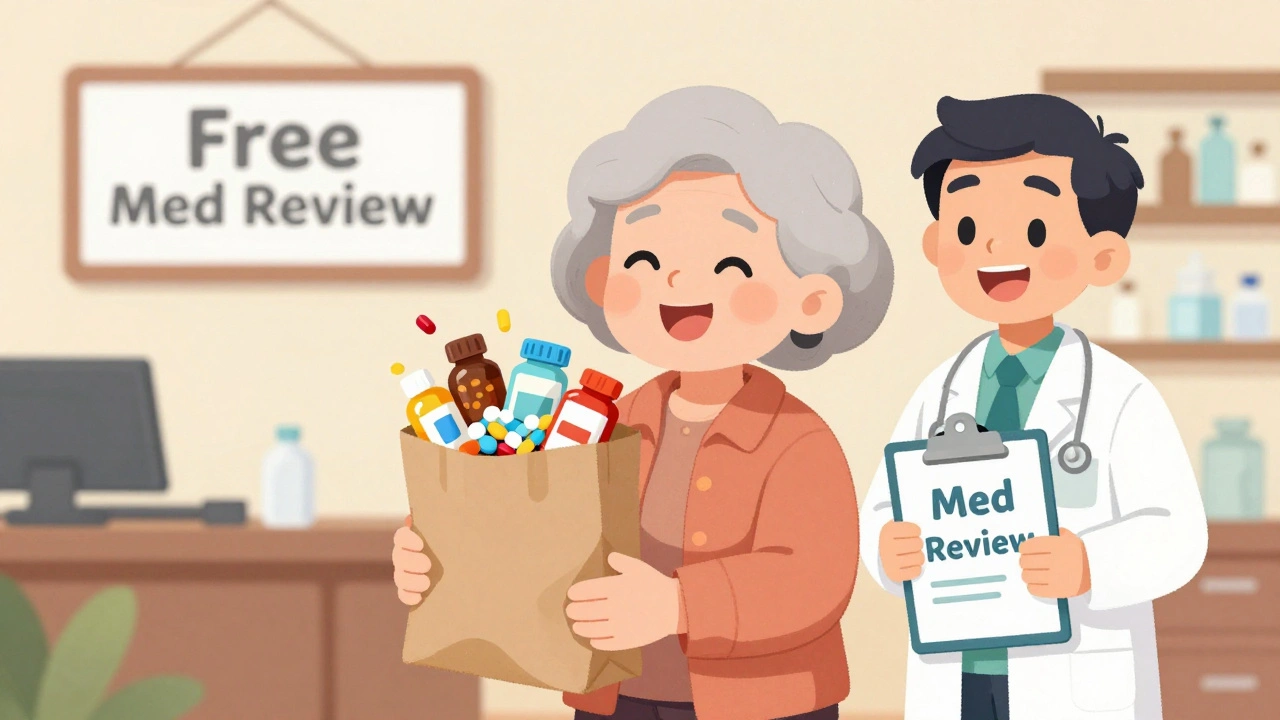
Many people over 65 take five or more medications every day. Some of those pills might not even be helping anymore - but they’re still costing you money. A 72-year-old woman in Ohio was taking a $120-a-month sleep aid she didn’t need, plus two supplements her cardiologist said were redundant. After a simple conversation with her doctor, she stopped all three. Her annual medication bill dropped by $840. That’s not rare. It’s happening more often than you think.
What Is Deprescribing - And Why It Matters
Deprescribing isn’t just quitting meds. It’s a careful, step-by-step process of stopping drugs that no longer do more good than harm. It’s especially important for older adults, where 41% take five or more prescriptions, according to a 2019 JAMA study. These aren’t just pills - they’re risks. One in three hospital stays for seniors is tied to bad reactions to medications. And the cost? The U.S. spends over $30 billion a year on preventable hospital visits caused by unnecessary drugs. But here’s the good news: when done right, deprescribing saves money and improves safety. Kaiser Permanente cut inappropriate medication use by 35% in its older patients and saved $1.2 million in a single year. Patients didn’t get sicker. They got healthier - and paid less.Your Medication List: The First Step
Before you even walk into your doctor’s office, get your meds in order. Take a brown bag - literally - and put everything inside: prescriptions, over-the-counter painkillers, vitamins, herbal supplements, even eye drops. Most people forget at least two things. One study found patients bring an average of 2.3 unnecessary medications to their appointments. Write down:- What each pill is for
- How much you pay per month
- How often you take it
- Why your doctor originally prescribed it
Ask These Five Questions
Don’t let your appointment fly by. Come prepared with questions. These aren’t optional. They’re essential:- Why am I taking this? Is it still treating something active, or was it for a short-term issue that’s long over?
- What are the risks? Can this cause dizziness, falls, memory problems, or stomach bleeding? Many common meds - like certain sleep aids or antacids - increase fall risk in seniors.
- Is this still helping? For example, statins for cholesterol are great early on. But if you’re 80 with limited life expectancy, the benefit shrinks - while side effects stay the same.
- Can I stop or reduce this? Not all meds need to be stopped cold turkey. Many can be tapered slowly.
- Who do I call if something changes? Get a plan before you stop anything.
The Tools Doctors Use
Your doctor isn’t guessing. They’re using proven tools. One is the Beers Criteria - a list of 53 medications that are risky for older adults. If you’re on any of them, it’s worth asking: Is this still needed? Another is the Medication Appropriateness Index (MAI). It scores each drug across 10 factors: Is the dose right? Is there a better alternative? Is it causing side effects? It takes about 7 minutes per pill - but it’s worth it. And there’s AI now. Tools like MedStopper are used in over 120 hospitals. They scan your meds and flag ones that are likely unnecessary - with 89% accuracy. Your doctor might not use it yet, but it’s coming fast.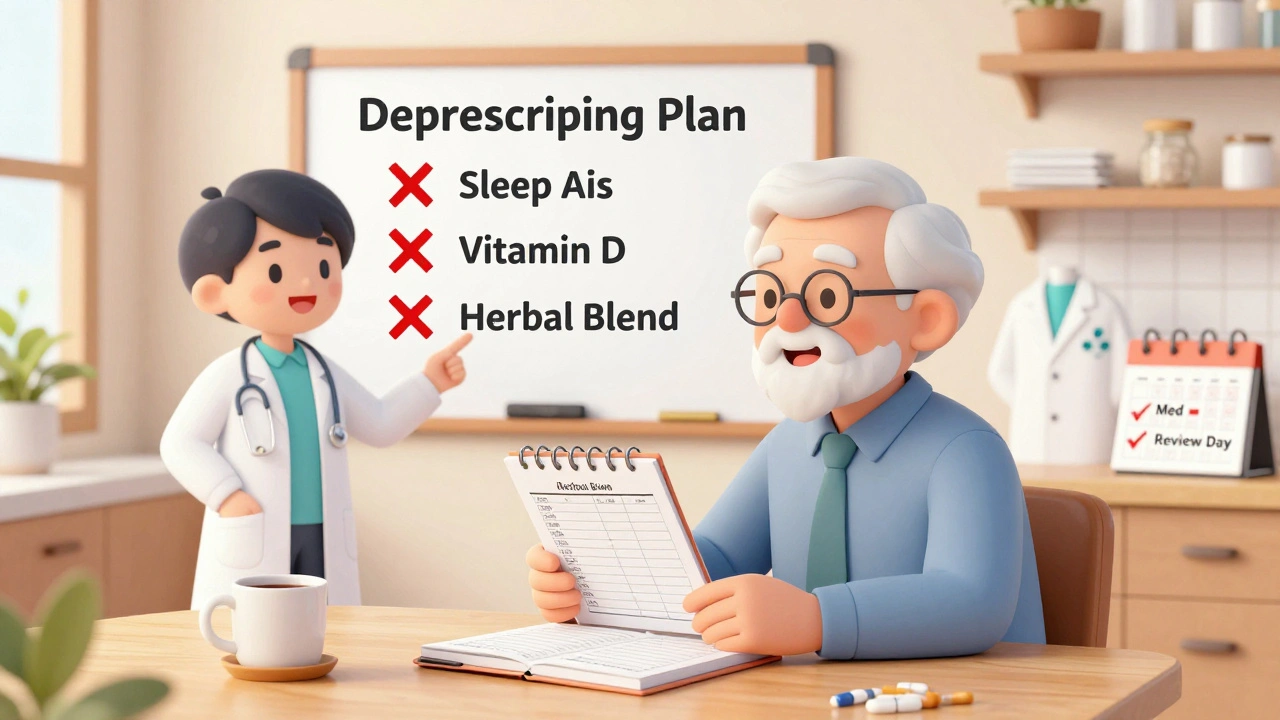
How Deprescribing Actually Works
You don’t just stop a pill and hope for the best. That’s dangerous. Deprescribing is slow. It’s planned. It’s monitored. For example:- A proton pump inhibitor (PPI) for heartburn? If you’ve been on it for years, you might be able to stop. One study showed patients saved $420 a year - and had fewer lung infections.
- An antihypertensive for high blood pressure? Stopping too fast can cause rebound spikes. Your doctor will lower the dose over weeks, then check your blood pressure regularly.
- A sleep aid like zolpidem? These can cause confusion and falls. Tapering over 4-8 weeks reduces withdrawal symptoms.
Pharmacists Are Your Secret Weapon
Your pharmacist knows more about your meds than your doctor sometimes. Under Medicare Part D, most pharmacies offer free medication therapy management. That’s a one-on-one review with a pharmacist - no appointment needed. They can:- Spot duplicate prescriptions
- Find cheaper generics
- Identify interactions you didn’t know about
- Recommend stopping meds that aren’t helping
What Happens If You Don’t Do This?
Skipping deprescribing isn’t harmless. It’s expensive - and risky. - A 2022 survey found 18% of people who stopped meds on their own ended up in the ER - costing an average of $1,200. - The Lown Institute says 4.9 million older Americans take inappropriate meds every year. That’s $13.6 billion in direct drug costs - plus $16.4 billion in hospital visits. - Medicare spends $15,700 on average per medication-related hospitalization. You’re not just saving money on pills. You’re avoiding a trip to the hospital.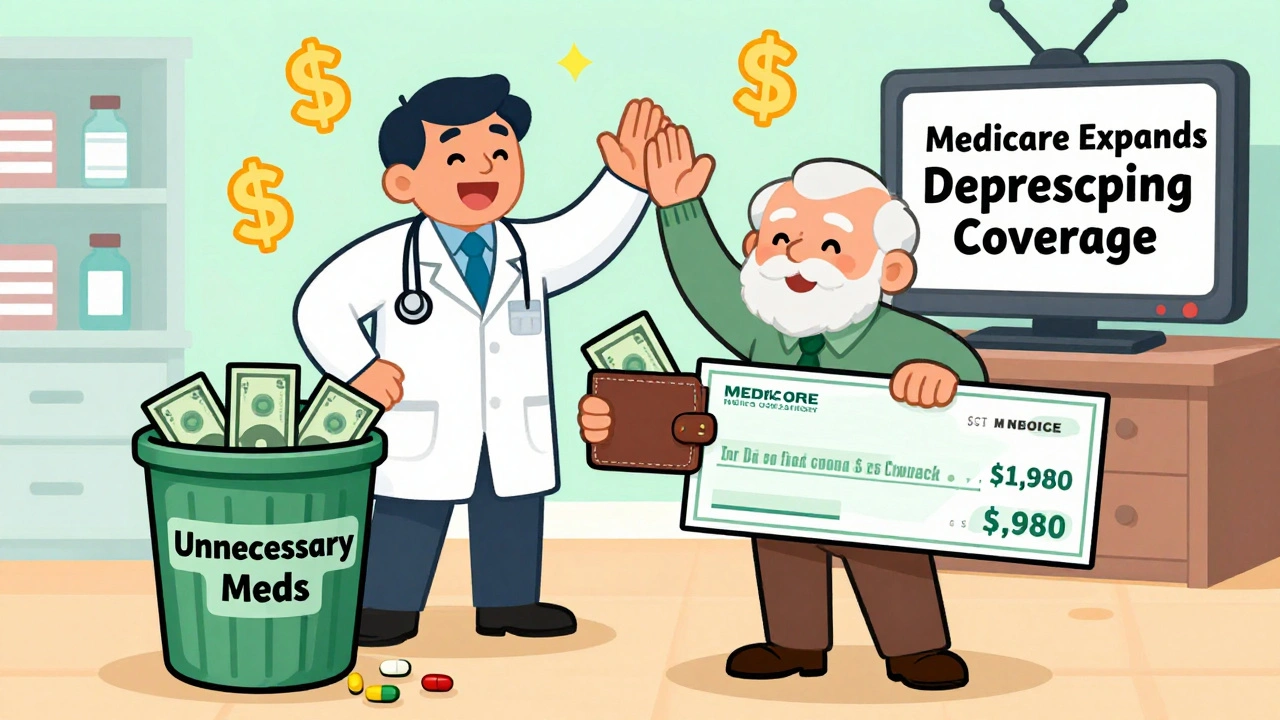
When Deprescribing Isn’t Right
Not every med can or should be stopped. Some drugs do double duty. For example, a blood pressure pill might also help with migraines. Stopping it could make headaches worse. Or a low-dose aspirin might prevent heart attacks - even if your cholesterol is fine. That’s why you need a doctor’s guidance. Don’t assume. Ask. “Is this med helping with more than one thing?” If yes, they’ll weigh the risks.Real Savings, Real Stories
A man in Florida stopped a $75-a-month herbal remedy after his pharmacist said it had no proven benefit. He saved $900 a year. A woman in Minnesota cut her monthly bill from $310 to $120 by switching three brand-name drugs to generics - and stopping two that were outdated. One Reddit user, ‘SeniorSaver87’, stopped a $90/month vitamin D supplement and a $75/month herbal blend. Annual savings: $1,980. These aren’t outliers. They’re examples of what happens when people take control - with their doctor’s help.What’s Changing Now
The system is catching up. Since 2023, the Inflation Reduction Act capped insulin at $35/month. It also expanded coverage for comprehensive medication reviews under Medicare. Medicare Advantage plans now rate doctors on medication safety. That means doctors are being rewarded for deprescribing - not just prescribing. By 2024, 72% of big health systems had formal deprescribing programs. In 2018, it was just 28%. This isn’t a trend. It’s a shift.Your Next Steps
1. Collect your meds. Grab a bag. Include everything. 2. Write down costs. Know what you’re paying monthly. 3. Call your pharmacist. Ask for a free medication review. 4. Book a doctor’s appointment. Say: “I’d like to review my meds to see what I can safely stop.” 5. Start slow. One med at a time. Monitor how you feel. 6. Follow up. Schedule a check-in in 4-6 weeks. You don’t need to be an expert. You just need to ask. Your body, your wallet, and your future self will thank you.Can I stop my meds on my own if they’re expensive?
No. Stopping medications without medical supervision can be dangerous. Some drugs cause serious rebound effects - like sudden spikes in blood pressure or seizures. Others, like antidepressants or steroids, require slow tapering. If you can’t afford a med, talk to your doctor or pharmacist. They can help you switch to a cheaper option or create a safe stopping plan.
Does deprescribing mean I’m getting worse care?
No. It’s the opposite. Taking fewer unnecessary drugs means less risk of side effects, fewer hospital visits, and better quality of life. Doctors who practice deprescribing are focused on what’s truly helping you - not just adding more pills. The American Geriatrics Society calls it one of the top five recommendations for safe care in older adults.
What if my doctor says no to stopping a med?
Ask why. Request evidence: “Is there a study showing this still helps someone my age?” If you’re not satisfied, ask for a referral to a geriatrician or a pharmacist specializing in medication reviews. You have the right to understand every prescription you take. Don’t accept “because we’ve always done it” as an answer.
Are supplements always unnecessary?
Not always - but many are. For example, vitamin D or B12 supplements are helpful if you’re deficient. But if your blood tests show normal levels, taking extra is just wasting money. A 2022 study found 60% of seniors take supplements their doctor didn’t recommend. Always ask: “Is there a test to confirm I need this?”
How long does it take to see savings from deprescribing?
You can see savings the same month you stop a med. For example, if you stop a $60/month pill, you save $60 right away. Over time, avoiding a single hospitalization - which can cost $15,000 - is where the biggest savings happen. Most people see financial and health improvements within 2-3 months of starting deprescribing.
Does Medicare cover deprescribing services?
Yes. Medicare Part D covers free medication therapy management with your pharmacist. Medicare also pays for annual wellness visits where you can review your meds with your doctor. The Inflation Reduction Act expanded these services. You don’t pay extra - just bring your list and ask.
What if I feel worse after stopping a med?
Contact your doctor immediately. Some symptoms - like increased anxiety, insomnia, or dizziness - can mean you stopped too fast. Others might be unrelated. Your doctor should have given you a plan for what to watch for and who to call. Keep a journal of how you feel each day after stopping a med. That helps them decide if it’s a reaction or something else.
OMG YES. My mom did this last year and saved over $1,200 just by ditching three supplements she’d been taking since 2010. She felt WAY better too-less dizziness, more energy. Pharmacist caught it first. Don’t wait-go grab that brown bag today!! 💪💊
Deprescribing… such a beautifully Orwellian term for ‘stop prescribing junk.’ It’s not medicine-it’s corporate inertia dressed in white coats. We’ve turned elders into pharmacological landfill sites. The Beers Criteria? A noble start-but it’s still just a checklist. What we need is a cultural reckoning: why do we equate more pills with better care? Why is ‘doing something’ always preferred over ‘doing nothing’? The system doesn’t want you well-it wants you subscribed.
And yet… I’m still taking my statin. Hypocrite? Maybe. But I’m also terrified. So I write this, and then I reread it. And I feel guilty. And I take my pill anyway.
Everyone’s so obsessed with saving money but nobody talks about the real risk-withdrawal symptoms. I stopped a benzo cold turkey because I read a Reddit post and now I’m in therapy. Don’t be an idiot. Talk to a pro.
THIS. My grandma started this process and now she’s dancing at family reunions again. No more foggy brain, no more $80/month pills she didn’t need. She even started gardening again. Small changes. Big wins. You got this!
ive been takin a buncha stuff for years… never thought to ask. kinda scared to now. what if they say ‘oh u dont need any of it’ and then i just… die? lol. jk. kinda. thanks for the nudge.
While the anecdotal savings are compelling, the underlying methodology is dangerously reductionist. The MAI and Beers Criteria are heuristic tools-not diagnostic gold standards. To suggest that a patient can safely deprescribe based on a pharmacist’s review alone, without longitudinal clinical correlation, is a gross oversimplification of polypharmacy management. Furthermore, conflating cost savings with clinical efficacy is a classic fallacy of economic reductionism. One must consider pharmacokinetic individuality, comorbidities, and the placebo effect of continued regimen adherence. This article reads like a wellness blog masquerading as medical advice.
I love how this breaks it down-but I’d add one more thing: keep a journal. Write down how you feel each day after stopping a med. I did this with my dad’s blood pressure med-he thought he felt ‘fine,’ but the journal showed he was getting dizzy around 3 p.m. Turns out the dose was too high. We lowered it, saved $40/month, and he stopped falling in the shower. Small details matter. Also-ask your pharmacist about mail-order generics. I saved $200/month just switching to CVS’s $4 list.
And if your doctor says no? Say ‘I’d like a second opinion from a geriatric pharmacist.’ Most will respect that. You’re not being difficult-you’re being smart.
Why are we letting foreigners and bureaucrats dictate how Americans take care of their bodies? This deprescribing nonsense is just another way for the government to cut costs at the expense of real health. Back in my day, you took your pills because your doctor said so-and you didn’t question it. Now everyone wants to play armchair pharmacist. You think your pharmacist knows more than a medical doctor? Please. Stick to the plan. Your body didn’t come with a ‘review this later’ button.