
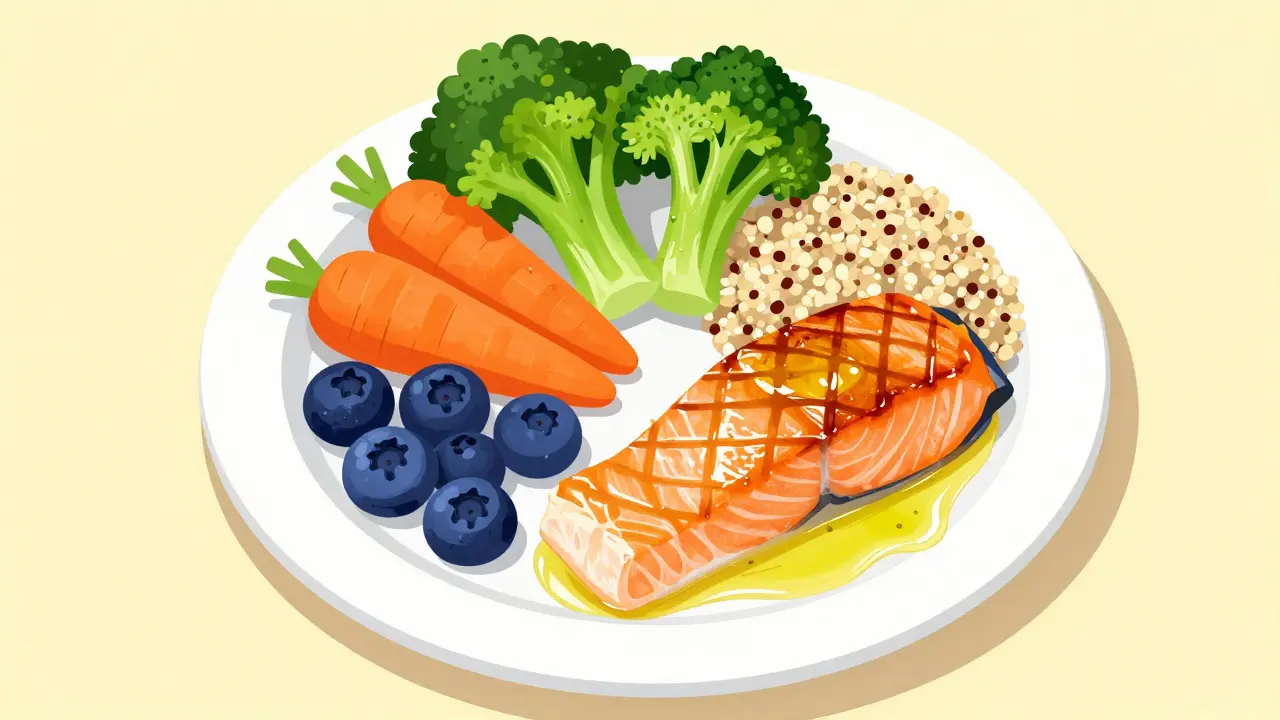
Over 1 billion people worldwide have fatty liver disease, but what you eat can reverse it. Research shows that a Mediterranean diet can cut liver fat by up to 40% in just a year. This isn't a fad diet-it's a science-backed eating pattern proven to improve liver health without medication.
What Makes a Diet Liver-Healthy?
Mediterranean diet is the gold standard for liver health, as confirmed by the American Association for the Study of Liver Diseases (AASLD) in their 2023 guidelines. This pattern focuses on whole foods, healthy fats, and plant-based ingredients. Specifically, it requires 40-50% of daily calories from complex carbohydrates rich in dietary fiber, with simple carbs limited to under 10% of total energy intake. Fat intake should be under 30% of calories, with monounsaturated fats making up 40% of that total. Protein should be 15-20% of daily calories.
Unlike commercial "liver detox" products, this approach targets the root causes of liver damage. A 2022 systematic review in the Journal of Hepatology found dietary changes alone can reduce liver fat by 25-40% and improve liver enzymes by 20-30% within 6-12 months. The key is consistency-small daily choices add up.
Top Foods for Liver Health
Fill half your plate with colorful fruits and vegetables. Aim for three servings of vegetables and two servings of fruit daily. Blueberries and grapes contain anthocyanins, which reduce liver inflammation by 25% in clinical trials. Cruciferous vegetables like broccoli and Brussels sprouts have indole-3-carbinol, shown to lower liver fat by 18% in six months.
- Whole grains: Oats, quinoa, and brown rice provide soluble fiber that helps remove excess liver fat. The Harvard Healthy Eating Plate recommends one-quarter of your plate be whole grains.
- Lean proteins: Fish like salmon (rich in omega-3s), tofu, and beans support liver repair. Aim for 3 ounces (deck-of-cards size) per meal, as recommended by Baylor College of Medicine.
- Healthy fats: Extra virgin olive oil (use 2 tablespoons daily), walnuts (30g/day), and avocados lower LDL cholesterol and reduce liver inflammation.
The American Liver Foundation notes that eating "different colored foods" ensures diverse phytonutrients. Purple foods (berries), green foods (spinach), and orange foods (carrots) each offer unique liver-protective compounds.
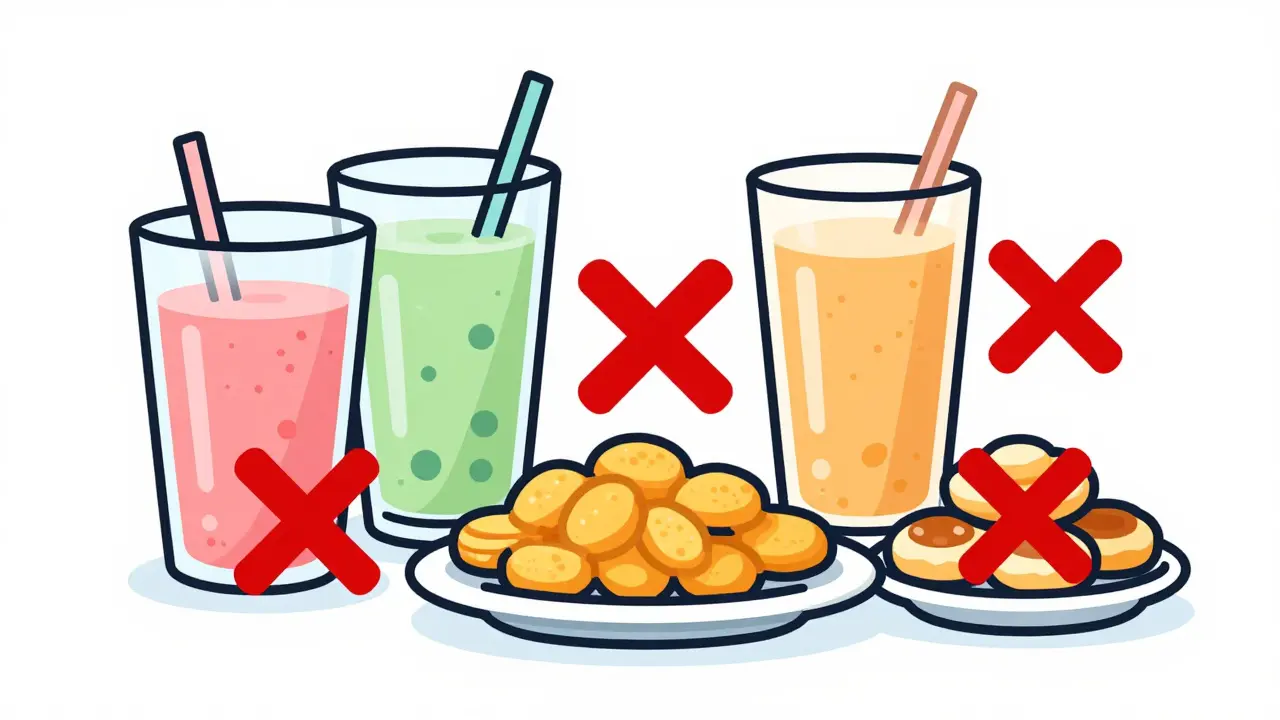
Foods to Avoid
These items directly worsen liver damage and should be eliminated:
- Sugary drinks: Soda, sweet tea, and juice contain 150-200 calories and 30-40g sugar per 12oz serving. A 2023 FDA update to nutrition labels now clearly shows "added sugars" on packaging.
- Trans fats: Found in fried foods, baked goods, and margarine. Check labels for "partially hydrogenated oils"-even small amounts raise liver inflammation.
- Excess sodium: Processed snacks and canned soups often exceed 2,000mg daily limit. High sodium worsens fluid buildup in advanced liver disease.
The American Liver Foundation states there is "zero scientific evidence" supporting detox diets or juice cleanses. These can actually harm the liver by causing nutrient deficiencies.
Real-World Success Stories
John M., a 58-year-old from Ohio with stage 2 fibrosis, shared: "After 9 months on a strict Mediterranean diet plus daily walking, my FibroScan dropped from 12.5 to 6.2 kPa and ALT from 112 to 45 U/L." Reddit's r/FattyLiver community shows 68% of 1,247 surveyed users reported improved energy within 3 months.
But challenges exist-42% cited difficulty avoiding processed foods due to cost (USDA data shows Mediterranean meals average $1.50 more per meal). Sarah K. from HealthUnlocked noted: "Cutting out all sugar triggered severe migraines; my hepatologist adjusted my plan to allow 15g natural sugar daily from berries." Successful users often use strategies like batch cooking on Sundays (mentioned in 27% of Reddit success stories) or frozen vegetables for affordability.
Why Mediterranean Diet Beats Other Diets
A 2021 meta-analysis in Clinical Gastroenterology and Hepatology found the Mediterranean diet reduced liver fat 32% more than low-fat diets and 18% more than ketogenic diets after 12 months. Unlike keto diets-which can increase liver fat in some cases-the Mediterranean approach also cuts heart disease risk by 30% according to the PREDIMED trial.
Dr. Rohit Loomba, Director of NAFLD Research at UC San Diego and lead author of AASLD's 2023 guidelines, states: "The Mediterranean diet is the only dietary pattern with Level 1 evidence for improving histologic endpoints in NAFLD." Meanwhile, the DASH diet (designed for blood pressure) lacks the specific anti-inflammatory components crucial for liver health.
Overcoming Common Challenges
Many struggle with meal prep time and label reading. The Liver Foundation Australia's "Fridge Guide" resource, downloaded 42,000 times in 2023, offers visual portion guides. Key tips from successful users include:
- Use lemon juice or herbs instead of salt for flavor (41% of Reddit success stories)
- Start with one Mediterranean meal daily, then gradually increase (VA Health System 2024 data)
- Buy frozen vegetables-they're just as nutritious and often cheaper
- Check labels for "hidden sugars" like high-fructose corn syrup or maltose
For budget concerns, Kaiser Permanente's 2023 survey shows community cooking programs reduce costs by 35% while maintaining nutritional quality. The VA Health System's free 12-week telehealth nutrition program has an 87% satisfaction rate for patients needing support.
What is the best diet for fatty liver disease?
The Mediterranean diet is the most evidence-backed approach. It focuses on whole foods, healthy fats, and plant-based ingredients. Studies show it reduces liver fat by 25-40% and improves liver enzyme levels by 20-30% within 6-12 months. Unlike fad diets, it's sustainable and also benefits heart health.
Can I eat carbohydrates on a liver-healthy diet?
Yes, but choose complex carbs. The Mediterranean diet recommends 40-50% of daily calories from whole grains, vegetables, and legumes. Avoid simple carbs like white bread, pastries, and sugary snacks. Fiber-rich carbs help remove excess fat from the liver. Mayo Clinic guidelines specify simple carbs should be under 10% of total energy intake.
How much protein should I eat daily for liver health?
Aim for 15-20% of daily calories from lean protein. For most adults, that's about 3 ounces (deck-of-cards size) per meal. Good sources include fish, chicken, tofu, beans, and eggs. The Baylor College of Medicine confirms this protein level supports liver repair without overloading it. In advanced cirrhosis, protein needs may be adjusted-consult a hepatologist.
Is the Mediterranean diet affordable?
Yes, with smart planning. Frozen vegetables, canned beans, and seasonal produce keep costs low. USDA data shows Mediterranean meals average $1.50 more per meal than processed foods, but community cooking programs reduce this gap by 35%. Harvard researchers found that using leftovers, buying in bulk, and skipping meat 2 days a week makes this diet budget-friendly for most families.
How long until I see results?
Many notice improved energy within 3 months. Liver enzyme improvements (like ALT levels) typically show up in 6 months. A 2023 study in Hepatology found 80% of participants with early-stage NAFLD had significant fat reduction within 9 months. Consistency matters more than speed-small daily changes build lasting liver health.
It's fascinating how something as simple as dietary choices can have such profound effects on liver health. The Mediterranean diet isn't just about food-it's a lifestyle shift that aligns with our body's natural processes. I've always believed that nutrition is the foundation of health, and this research really drives that home. The key here is consistency, not perfection. Small daily choices really do add up over time. It's important to remember that everyone's body is different, so personalizing the approach matters. Still, the science is clear: whole foods, healthy fats, and plant-based ingredients are essential. This approach is sustainable long-term, unlike quick fixes that often fail. For instance, replacing refined grains with whole grains like oats or quinoa can significantly reduce liver fat. Adding a handful of nuts or avocado to your meals provides healthy monounsaturated fats that support liver function. Consuming a variety of colorful vegetables ensures a broad spectrum of phytonutrients that combat inflammation. Berries like blueberries and grapes are packed with anthocyanins, which have been shown to reduce liver inflammation by up to 25% in clinical trials. Even simple swaps, like using olive oil instead of butter for cooking, can make a big difference. It's also worth noting that this diet benefits heart health, which is crucial since fatty liver disease often coexists with cardiovascular issues. The real power lies in the cumulative effect of these small changes over time, not in any single miracle food or supplement. Ultimately, this isn't just about the liver-it's about holistic well-being that impacts every aspect of your health.
yo this is so spot on. the mediterranean diet is the gold standard for hepatic health, no doubt. i've been reading up on this and it's all about macro balance-40-50% complex carbs, under 30% fat with mono unsaturated fats. the journal of hepatology study showed 25-40% fat reduction. also, the cruciferous veggies like broc and brussles sprouts have indole-3-carbinol which is like a liver detoxifier. but like, don't overdo it on the nuts, right? walnuts are great but too much can be bad. also, avoid trans fats like the plague. check labels for "partially hydrogenated" even if it says 0g trans fat. they can still sneak in. anyhoo, this is legit science, not just hype.
Small steps like adding veggies to meals make a huge difference for liver health over time.
i really appreciate the focus on small changes because it's true that trying to overhaul everything at once can be overwhelming. i've seen people struggle with that approach and give up. but taking one step at a time like adding more veggies or choosing whole grains instead of refined carbs makes it sustainable. also the liver responds well to gradual improvements so there's no need to rush it. just keep going one day at a time
totally agree! 🌱 the liver is such a resilient organ when you give it the right nutrients. i love how the med diet is all about plant-based foods and healthy fats. also, the omega-3s from fish like salmon are game-changers for reducing inflammation. just make sure to avoid hidden sugars like HFCS in processed foods. check labels for "high-fructose corn syrup" or "maltose" because they sneak in everywhere 😤. but hey, frozen veggies are your friend-super affordable and nutritious 🥦
so true about the frozen veggies! they're just as good as fresh and way cheaper. i've been doing the med diet for a few months and my energy levels are way better. also, using herbs instead of salt for flavor is a great tip. one thing i noticed is that reading labels is super important-there's so much hidden sugar in processed stuff. 🍬 but hey, it's doable with a little effort! 😊
it's not about frozen veggies-it's a government and big pharma conspiracy to keep us sick. they control the labels to hide the truth. it's all a scam. 😡
the science is clear the med diet works but only if you avoid all processed foods including those labeled "healthy" they're lying to you. the real problem is the FDA and USDA not regulating properly. you need to read labels carefully for hidden ingredients. no sugar no trans fats no sodium. period.
Carl, your conspiracy theories are baseless and dangerous! The FDA and USDA regulations are scientifically rigorous and evidence-based. The Mediterranean diet is indeed effective, but it's not a panacea-individualized medical advice is essential. You should consult a hepatologist before making drastic dietary changes. Also, labeling laws are strict; "partially hydrogenated oils" are clearly listed. Your misinformation is harmful.