

Imagine waking up and feeling like the room is spinning, but you don't have a typical headache. Or maybe you have a pounding migraine, but you also feel like you're walking on a boat in the middle of a storm. This disorienting mix of balance issues and head pain is exactly what happens with Vestibular Migraine is a neurological disorder characterized by recurrent episodes of vertigo, dizziness, and imbalance occurring alongside migraine symptoms. It's more than just a "dizzy spell"; it's a complex condition that affects about 1% of the population, and it hits women 3.5 times harder than men. If you've been struggling to figure out why you're suddenly unsteady or sensitive to light and sound, you're not alone-and more importantly, there are concrete ways to get your balance back.
Understanding the Spin: What Exactly Is It?
For a long time, doctors struggled to categorize this condition. It wasn't until the 2013 ICHD-3 criteria that it was officially recognized as its own subtype of migraine. The tricky part is that you don't actually need a headache to have a vestibular migraine attack. You might experience vertigo-that spinning sensation-lasting anywhere from a few seconds to 72 hours. Many people also deal with photophobia (light sensitivity) and phonophobia (sound sensitivity), or a visual aura before the dizziness kicks in.
Under the hood, this happens because of abnormal electrical activity in the brain's cortex and the trigeminovascular system. Essentially, the parts of your brain that handle pain and the parts that handle balance get crossed wires. For some, it's even written in their DNA; mutations in the CACNA1A gene are linked to about 25% of familial cases, making it a hereditary challenge for some families.
Getting the Right Diagnosis
Getting a diagnosis for vestibular migraine can be a frustrating journey. Many people spend over a year bouncing between specialists. The reason is that it mimics other inner-ear problems. For example, about 40% of cases are misdiagnosed as BPPV (Benign Paroxysmal Positional Vertigo) and 25% are mistaken for Ménière's disease. While BPPV is usually fixed with a quick head maneuver in a clinic, a vestibular migraine requires a completely different strategy.
To get an accurate diagnosis, clinicians look for a pattern: at least five moderate-to-severe vestibular episodes, a personal or family history of migraines, and a clear link between the dizziness and migraine features. Because there isn't a single blood test or scan that confirms it, keeping a detailed symptom diary for 6-8 weeks is often the best tool you have to help your doctor see the pattern.
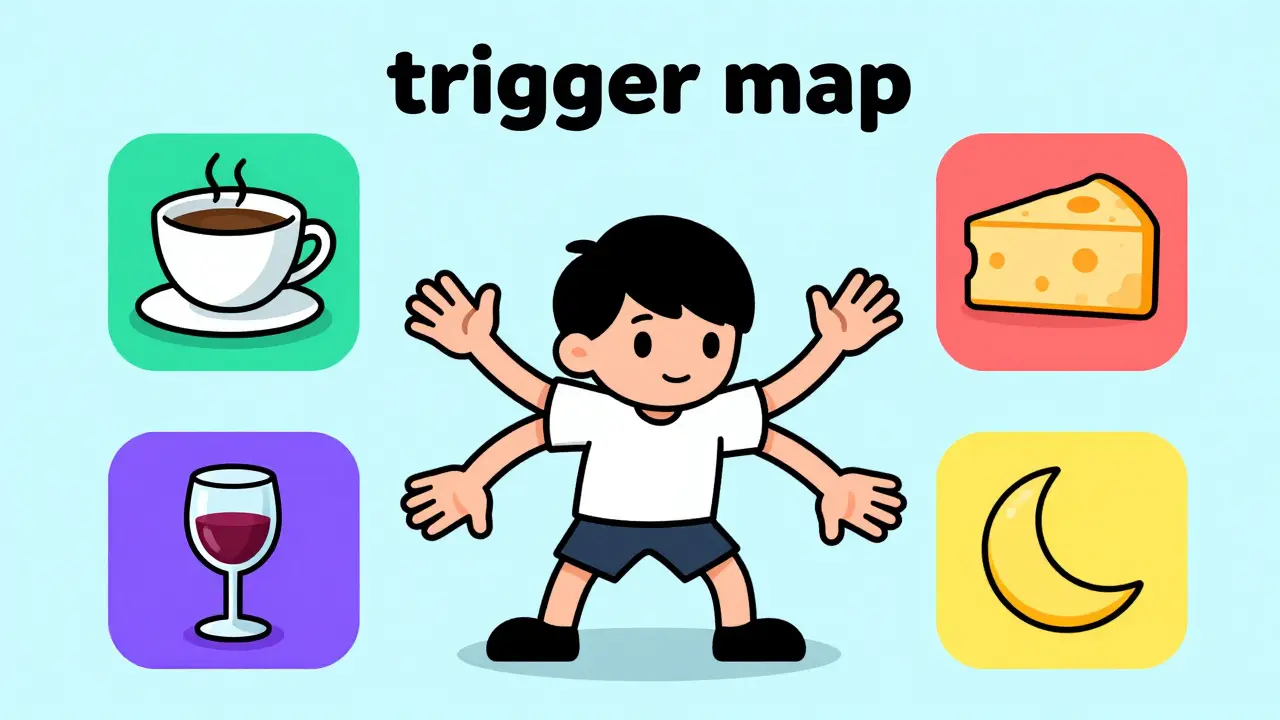
Step 1: Lifestyle Tweaks and Trigger Tracking
Before jumping into heavy medications, the first line of defense is behavioral change. Your brain is "hyperexcitable," meaning it reacts strongly to certain triggers. By identifying and avoiding these, you can significantly lower the number of attacks you have. Common culprits include:
- Dietary Triggers: Caffeine is a huge one-stopping caffeine can reduce attack frequency by 35%. Alcohol, aged cheeses, and processed foods are also frequent triggers.
- Sleep Patterns: Irregular sleep schedules or lack of rest are reported by 76% of patients as a primary trigger.
- Environmental Factors: Stress and sudden weather changes often set off episodes.
Hydration is also key. Drinking about 2 liters of water during an attack can help manage the severity. Pairing these changes with a dark, quiet room during an episode can reduce symptom intensity by about 35%.
Step 2: Stopping an Attack in Its Tracks
When an attack hits, you need to treat two different problems: the pain and the spin. The medications used for a headache won't always stop the vertigo, and vice versa.
For the head pain, Triptans (like sumatriptan) are the gold standard, providing relief for about 58% of patients. If you prefer something over-the-counter, high-dose ibuprofen or naproxen can work, though they are generally less effective for the migraine-specific pain. To handle the nausea and vertigo, medications like prochlorperazine or ondansetron are often used. While benzodiazepines like diazepam can stop the spinning, doctors usually caution against long-term use because they can actually stop your brain from "learning" how to compensate for the balance loss.
| Symptom | Medication Type | Example | Typical Goal |
|---|---|---|---|
| Headache Pain | Triptans | Sumatriptan | Fast pain relief |
| Severe Vertigo | Vestibular Suppressants | Prochlorperazine | Stop the spinning sensation |
| Nausea/Vomiting | Antiemetics | Ondansetron | Control stomach upset |
| Mild Pain | NSAIDs | Naproxen | General inflammation reduction |

Step 3: Long-Term Prevention Strategies
If you're having more than four attacks a month, it's time to look at preventives. Waiting too long can lead to "central sensitization," where your brain becomes permanently more sensitive to pain and dizziness. There are several pharmaceutical paths, and since everyone's chemistry is different, you might need to try two or three before finding the right one.
Beta-blockers like Propranolol are common; about 62% of patients see a 50% reduction in attacks using them. Others find success with tricyclic antidepressants like amitriptyline or antiepileptics like topiramate. If you're looking for a more natural approach, nutraceuticals can help. A combination of magnesium (600mg), riboflavin (400mg), and coenzyme Q10 (300mg) has been shown to reduce attack frequency by 30-40% with very few side effects.
A word of caution on supplements: while butterbur root extract was popular for years, it's generally avoided now due to risks of liver toxicity (hepatotoxicity) flagged by health regulators.
The Power of Vestibular Rehabilitation
Medication handles the chemistry, but Vestibular Rehabilitation Therapy (VRT) handles the mechanics. VRT is a specialized form of physical therapy that teaches your brain to rely on other senses when the inner ear is sending glitchy signals. It's essentially "re-training" your balance.
This isn't a quick fix-it usually takes 8 to 12 supervised sessions followed by daily home exercises. However, the results are impressive. Studies show that VRT can improve dizziness handicap scores by 40%, and some patients report a 50% reduction in overall symptoms after completing their program. It is one of the few treatments that addresses the lingering imbalance you feel even between attacks.

The Future of Balance Management
We are entering an era of more precise medicine. New drugs like atogepant and rimegepant are showing promise in reducing "vertigo days" for patients who didn't respond to older meds. We're also seeing the rise of neuromodulation, such as non-invasive vagus nerve stimulation, which can dampen the overactive nerves causing the dizziness.
Even the way we diagnose is changing. New tests called VEMPs (vestibular-evoked myogenic potentials) are helping doctors distinguish between a migraine and other inner-ear disorders with much higher accuracy, which means fewer people will spend a year wondering why they're dizzy.
Can I have a vestibular migraine without a headache?
Yes. Many people experience "silent migraines" where the primary symptom is vertigo or imbalance rather than head pain. You can still meet the diagnostic criteria if you have a history of migraines and the dizziness episodes fit the required pattern.
Is it permanent?
While it is a chronic condition, it is manageable. With a combination of trigger avoidance, preventive medication, and vestibular rehabilitation, most people can significantly reduce the frequency and severity of their attacks.
How is this different from Ménière's disease?
Ménière's typically involves a triad of vertigo, hearing loss, and tinnitus (ringing in the ears) in one ear. Vestibular migraine is driven by brain excitability and doesn't usually cause permanent hearing loss. Importantly, diuretics that work for Ménière's often don't work for vestibular migraines.
What is the best diet for vestibular migraine?
There is no single "perfect" diet, but a common approach is to eliminate high-tyramine foods (like aged cheeses), limit caffeine and alcohol, and maintain steady blood sugar levels by eating regular meals. Keeping a food diary is the best way to see what specifically triggers you.
Are the preventive medications safe for long-term use?
Most are safe when monitored by a doctor, but they have trade-offs. For example, amitriptyline can cause drowsiness, and topiramate may cause "brain fog" or cognitive slowing. This is why working with a neurologist to find the lowest effective dose is critical.
Next Steps for Recovery
If you suspect you have this condition, your first move should be to book an appointment with a neurologist or an ENT (Ear, Nose, and Throat) specialist. Ideally, you want a team approach-someone who understands the brain and someone who understands the inner ear. Start a daily log today: note what you ate, how you slept, and exactly how the dizziness felt. This data is the most valuable thing you can bring to your first appointment to speed up your diagnosis and get you on the right treatment path.