
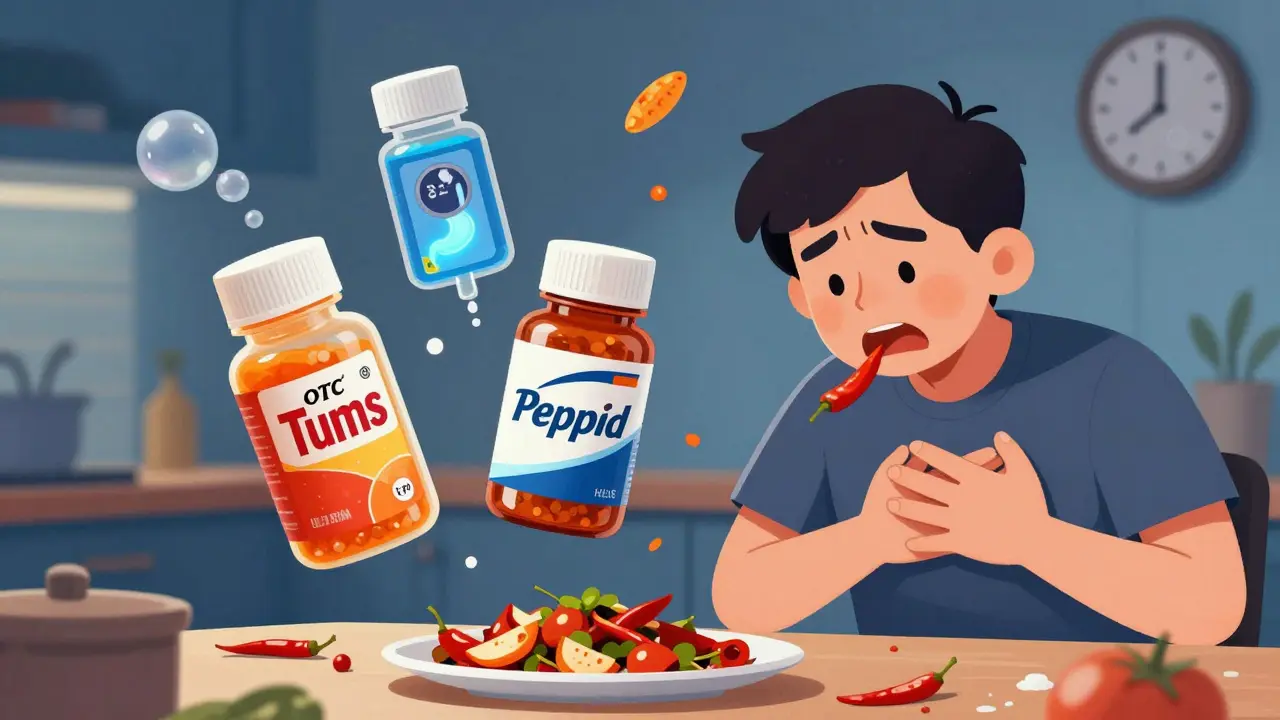
Heartburn hits hard - that burning feeling in your chest, the sour taste in your throat, the sleepless nights. If you’ve ever reached for a bottle of Tums, Pepcid, or Prilosec without a prescription, you’re not alone. About 60 million Americans deal with heartburn at least once a month. For many, OTC meds are the first line of defense. But not all heartburn pills are the same. Antacids, H2 blockers, and PPIs work in completely different ways, and picking the wrong one can mean wasted money, missed relief, or even long-term risks.
How Antacids Give Fast, Short-Term Relief
Antacids are the OG of heartburn remedies. They’ve been around since the 1800s. Think Tums, Rolaids, Milk of Magnesia. These work by neutralizing stomach acid right where it’s burning - like pouring baking soda on a fire. You feel relief fast: often in under a minute. That’s why they’re perfect for sudden, occasional heartburn after a spicy meal or too much coffee.
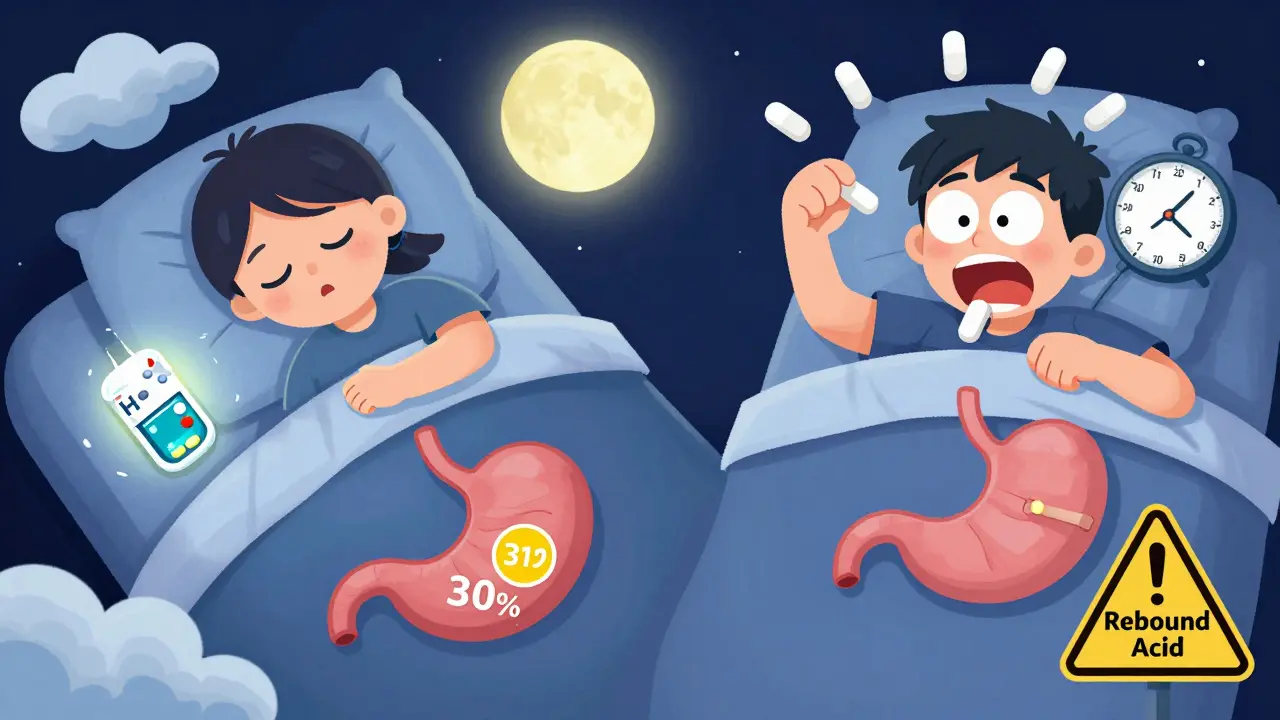
But here’s the catch: their effect lasts only 30 to 60 minutes. If you’re having heartburn twice a week or more, antacids won’t cut it. You’ll be popping tablets all day. And it’s not just inconvenient - too many antacids can cause side effects. Calcium carbonate (found in Tums) can lead to rebound acid production. After the acid gets neutralized, your stomach sometimes overcompensates and makes even more. That’s why 30% of users report worse symptoms a few hours later.
Also, antacids can mess with other meds. If you take blood pressure pills, antibiotics, or thyroid meds, don’t crush a Tums right after. Wait at least two hours. The minerals in antacids bind to those drugs and stop your body from absorbing them. That’s not just a myth - it’s FDA-approved labeling.
H2 Blockers: Slower But Longer Lasting
If antacids are fire extinguishers, H2 blockers are like turning down the gas valve. They don’t neutralize acid - they tell your stomach cells to make less of it. Drugs like famotidine (Pepcid AC), cimetidine (Tagamet HB), and nizatidine (Axid AR) block histamine, a chemical that signals acid production.
They take longer to work - about an hour - but last 8 to 12 hours. That makes them ideal for predictable heartburn. Planning a big dinner? Take one 60 to 90 minutes before you eat. Worried about nighttime heartburn? A dose at bedtime can keep you asleep. Studies show H2 blockers reduce acid by 60-70%, which is enough for most people who get heartburn once or twice a week.
But there’s a downside. After two or three weeks of daily use, your body can start to adapt. The effect fades. That’s why many users say, “It worked great at first, then stopped helping.” A 2021 study in Alimentary Pharmacology & Therapeutics confirmed this tolerance effect. H2 blockers also interact with warfarin and phenytoin, so if you’re on blood thinners or seizure meds, check with a pharmacist before using them.
PPIs: The Heavy Hitters - Powerful, But With Risks
Proton pump inhibitors (PPIs) are the strongest OTC heartburn meds you can buy without a prescription. Omeprazole (Prilosec OTC), esomeprazole (Nexium 24HR), and lansoprazole (Prevacid 24HR) shut down the final step of acid production - the proton pumps in your stomach lining. They block up to 98% of acid, which is why they’re the go-to for people with heartburn two or more days a week.
But they don’t work fast. It takes 24 to 72 hours to reach full effect. If you take a PPI after a heartburn flare-up, you’ll be disappointed. You need to take it daily, first thing in the morning, 30 to 60 minutes before breakfast. That’s when your stomach’s acid pumps are waking up. Take it after eating? It won’t work as well. The enteric coating can even break down if you take it with orange juice - a common mistake.
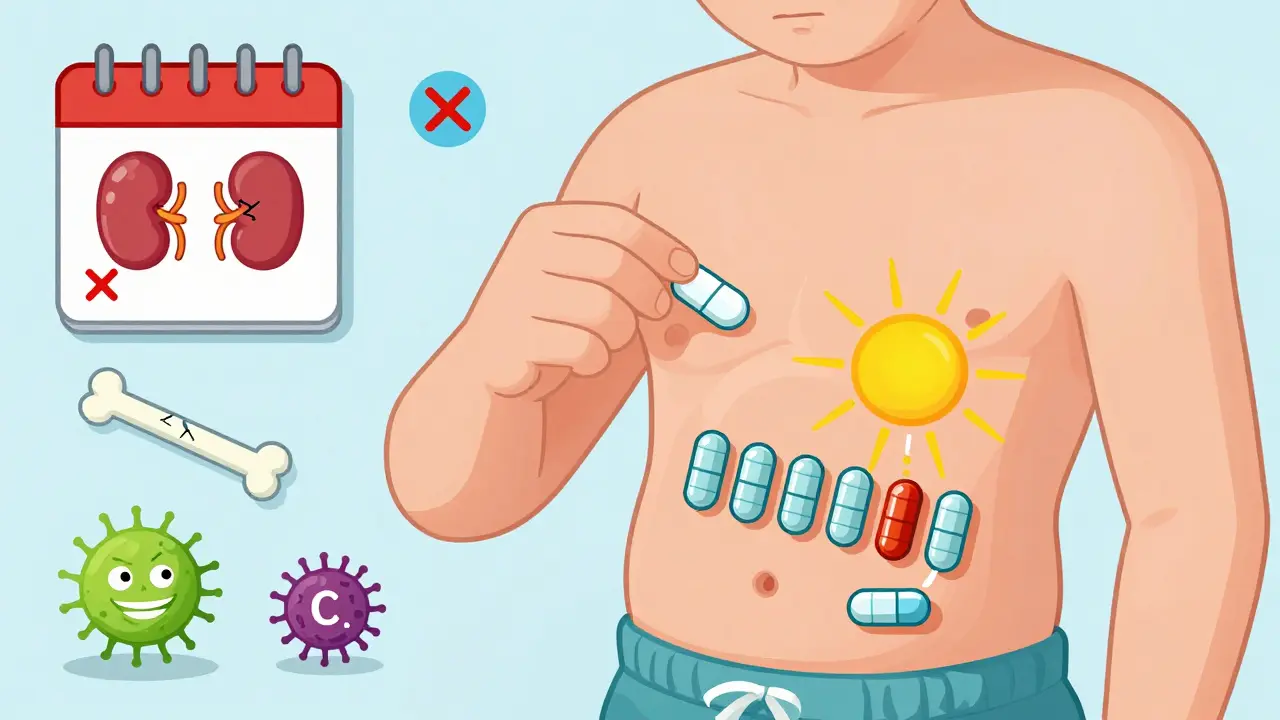
And here’s the big warning: FDA rules say you should only use OTC PPIs for 14 days in a row, no more than once every four months. Why? Long-term use is linked to real risks. A 2023 Johns Hopkins study found a 23% higher chance of chronic kidney disease with daily use over a year. The FDA has also flagged increased risks of hip fractures, low magnesium, vitamin B12 deficiency, and even a rare but serious kidney inflammation called interstitial nephritis. There’s also a 1.7x higher risk of C. diff infection - a nasty gut bug that can cause severe diarrhea.
Still, for people with frequent heartburn, PPIs are life-changing. A 2022 JAMA Internal Medicine study showed they reduced symptoms in 90% of users over 14 days, compared to 65% with H2 blockers. But they’re not for everyone. Don’t use them if you only get heartburn once a week. And never use them as a crutch for poor diet or overeating.
Which One Should You Choose?
It’s not about what’s cheapest or most popular - it’s about what matches your symptoms.
- Less than once a week? Start with an antacid. Chew a Tums when it hits. No need to overthink it.
- Once or twice a week? Try an H2 blocker. Take Pepcid AC 60 minutes before meals you know will trigger it. It’s more cost-effective than PPIs and avoids long-term risks.
- Two or more days a week? Consider a PPI - but only for 14 days. If you still feel burning after two weeks, see a doctor. You might have GERD, a hiatal hernia, or another issue that needs real diagnosis, not just more pills.
And if you’re using more than one type? You’re not alone. A 2023 survey found 68% of frequent heartburn sufferers combine antacids with PPIs - using the PPI for daily control and the antacid for sudden flare-ups. That’s smart. But don’t mix them at the same time. Wait at least an hour between doses.
What Users Actually Say
Real people have real experiences. On Amazon, Tums has a 4.7-star rating from nearly 28,500 reviews. Most praise the speed: “Saved me after tacos.” But many also say, “I’m back on it every day - it doesn’t last.”
Pepcid AC gets 4.5 stars. Users love nighttime relief. But a lot say, “It worked for two weeks, then stopped.” That’s the tolerance effect in action.
Prilosec OTC has 4.3 stars. People who need daily relief swear by it. But 67% of negative reviews say, “It took days to work - I thought it was broken.” They didn’t know it’s not a quick fix.
Reddit users in r/gerd are blunt: “PPIs work, but only if you take them before food, every day, like clockwork.” And they’re right. Timing matters more than the brand.
When to See a Doctor
OTC meds are great for occasional heartburn. But if you’re relying on them too often, it’s a red flag. See a doctor if:
- Your heartburn lasts more than two weeks, even with OTC meds
- You have trouble swallowing or feel food getting stuck
- You’re losing weight without trying
- You’re vomiting blood or your stool looks black and tarry
- You’re using PPIs more than once every four months
These aren’t just “bad heartburn” signs - they could point to Barrett’s esophagus, ulcers, or even esophageal cancer. The FDA estimates 15 million Americans have daily heartburn. Many don’t realize that’s not normal.
Bottom Line: Match the Medicine to the Problem
Heartburn meds aren’t one-size-fits-all. Antacids are your emergency tool. H2 blockers are your preventative tool. PPIs are your intensive care tool - powerful, but only for serious cases and short bursts.
Don’t just grab the biggest bottle on the shelf. Ask yourself: How often does this happen? When does it strike? How long does it last? That’s the real guide. And if you’re unsure, talk to your pharmacist. They’re trained to help you pick the right one - no prescription needed.
I used to pop Tums like candy after tacos until I learned they make your stomach panic and overproduce acid. Now I take Pepcid 45 mins before big meals - life changed. No more midnight burning. Also, never take antacids with my blood pressure med. Wait two hours. Learned that the hard way.
Pharmacists are unsung heroes.
Bro. PPIs are just Big Pharma’s way of keeping you addicted so they can sell you a $2000 endoscopy later. They shut down your stomach like a nuclear reactor. You think you’re fixed? Nah. You’re just waiting for the collapse. I went cold turkey after 3 years. My body screamed for weeks. But now? I eat spicy food like a warrior. No pills. Just discipline.
They don’t tell you this on the bottle.
Antacids = fire extinguisher. H2 blockers = turn down the gas. PPIs = blow up the kitchen. Pick your tool.
Simple.
I’m someone who gets heartburn maybe once a month, but when it hits, it’s brutal. I started with Tums, then moved to Pepcid when it became regular. Never touched PPIs - too scary. I read the side effects and just… couldn’t. My mom had kidney issues from long-term PPI use. I’m not taking that risk. I’d rather chew 3 Tums and wait it out.
Also, timing matters. Took my Pepcid after dinner once. Didn’t work at all. Learned my lesson.
STOP USING PPIs!!! THEY’RE DESIGNED TO MAKE YOU DEPENDENT!!! THE FDA KNOWS THIS!!! THEY’RE IN BED WITH BIG PHARMA!!! THEY’RE HIDING THE FACT THAT PPIs CAUSE OSTEOPOROSIS, DEMENTIA, AND CAN MAKE YOU INFERTILE!!! I SAW A VIDEO ON YOUTUBE WHERE A GUY GOT HIS STOMACH REMOVED BECAUSE OF IT!!!
ALSO, TUMS ARE MADE WITH LIMESTONE - THAT’S JUST GROUND ROCK!!! YOUR BODY ISN’T SUPPOSED TO EAT ROCK!!!
WHY IS NO ONE TALKING ABOUT THIS???
THEY’RE LYING TO YOU!!!
you know what they dont tell you? the whole heartburn thing? its all about the glyphosate in your food. its in the wheat, the corn, the soy - its in your coffee. your stomach is trying to detox and its burning because its fighting the poison. antacids? they just bury the evidence. ppi’s? they’re letting the poison cook your insides. i stopped eating processed food and my heartburn vanished. no pills. just real food. they dont want you to know this.
also - your phone radiation makes it worse. turn off wifi at night.
EVERY SINGLE ONE OF THESE DRUGS IS A LIE. THEY’RE DESIGNED TO MAKE YOU PAY MONTHLY. THEY’RE NOT CURES - THEY’RE SUBSCRIPTIONS.
THEY PUT PPIs IN THE OTC SECTION SO YOU’LL THINK THEY’RE SAFE. THEY’RE NOT. THEY’RE A SLOW POISON WITH A 14-DAY LABEL LIKE IT’S A GIFT CARD.
AND THE FDA? THEY’RE JUST A BRANCH OF MERCK.
I TOOK PPIs FOR 5 YEARS. I GOT A KIDNEY STONE. I’M 38. I’M NOT SUPPOSED TO HAVE KIDNEY STONES.
THEY KNOW. THEY JUST DON’T CARE.
STOP BUYING THEIR LIES.
Love this breakdown. So many people just grab the biggest bottle without knowing how these things work. I used to think PPIs were magic. Now I use H2 blockers for predictable triggers - like pizza night - and just let antacids handle the surprise ones. It’s not glamorous, but it works. And I sleep better. No drama. Just smart choices.
My dad had chronic heartburn for 15 years. He was on PPIs daily. Then he got a stomach infection from C. diff and ended up in the hospital. He didn’t even know it could happen from the meds. Now he only uses antacids and avoids trigger foods. He’s 72 and feels better than he has in decades.
Don’t ignore the long-term stuff. These drugs aren’t candy.
While the article is factually accurate, the casual tone and colloquial phrasing undermine the clinical gravity of the subject matter. The use of phrases such as "blow up the kitchen" and "OG of heartburn remedies" is both linguistically inappropriate and epistemologically reductive. Furthermore, the article fails to cite primary literature from peer-reviewed gastroenterology journals, relying instead on aggregated survey data and anecdotal Reddit commentary. Such practices contribute to medical misinformation among laypersons. A more rigorous approach is warranted.
you know what they dont want you to know? the government put chemicals in our food so we get heartburn so we buy the pills and then they get rich. they control the FDA and the pharma companies. they dont care if you get kidney disease. they just want your money. and they made the ppi bottles look like candy so kids will take them. i saw a video on tiktok where a 12 year old was taking nexium every day. this is evil. america is dying. stop buying the pills. eat organic. or you are part of the problem.
Everyone here is missing the point. You don’t need pills. You need to fix your gut microbiome. I had chronic heartburn for 8 years. Took every pill. Nothing worked. Then I started taking probiotics daily, stopped sugar, and drank apple cider vinegar before meals. Within two weeks - gone. No more meds. No more fear. The science is clear: acid reflux is caused by low stomach acid, not high. The pills make it worse. You’re not supposed to have acid burning - you’re supposed to have digestion. Your body is smart. Stop poisoning it.
Excellent summary. I’m a clinical pharmacist and I see this every day. Patients come in saying, "I’ve been on Prilosec for three years," and I have to explain the risks - kidney, bone, B12, C. diff. Most don’t know. They think because it’s OTC, it’s harmless. It’s not. The key is matching the drug to frequency: occasional = antacid, weekly = H2 blocker, daily = PPI for 14 days max. And always check for interactions. I’ve seen warfarin levels spike because someone took Pepcid with their blood thinner. Always ask your pharmacist. We’re here to help.
PPIs are dangerous. Don’t use them unless you’re dying. H2 blockers are fine. Antacids are fine. But PPIs? They’re for when your esophagus is falling apart. Not for tacos.
And stop eating so much junk. That’s the real problem.
Appreciate this. As someone who’s had heartburn since college, I used to feel ashamed. Like I was weak for needing meds. But reading this - it’s not about weakness. It’s about matching the tool to the problem. I used to take PPIs every day because I thought that’s what I was supposed to do. Now I use Pepcid before parties and Tums for surprise flare-ups. I still eat spicy food. I just know how to handle it. Thank you for the clarity.
Wanted to reply to @6006 - I tried the apple cider vinegar thing. It made my heartburn worse. Like, 10x worse. I think it works for some people, but not everyone. My stomach just hates vinegar. So I stick with Pepcid. Everyone’s body is different. What works for one person might wreck another. No one-size-fits-all.
Also, probiotics? I took them for a month. Felt no difference. But I did feel bloated. So I stopped.