
Why Medication Packing for Air Travel Isn’t Just About Convenience
Imagine landing in Tokyo after a 14-hour flight, exhausted, and realizing your insulin has gone bad because it was packed in checked luggage. Or worse - you’re held up at security because your liquid ADHD medication isn’t in its original bottle. This isn’t a rare scenario. Every year, thousands of travelers face delays, ruined meds, or even medical emergencies because they didn’t pack their drugs correctly. The truth? Air travel isn’t just about getting from point A to point B. It’s a high-stakes environment for medications, where temperature swings, rough handling, and strict security rules can turn a routine trip into a health crisis.
Original Containers Are Non-Negotiable
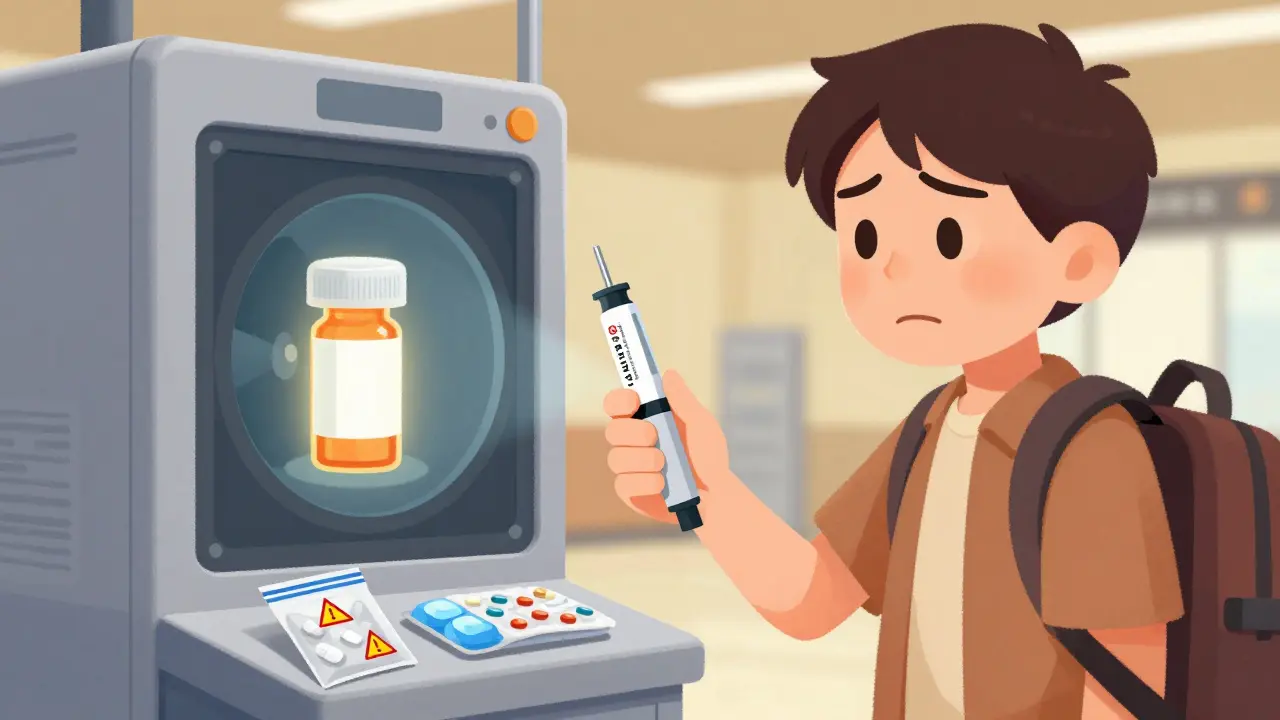
The TSA doesn’t just recommend keeping medications in their original pharmacy bottles - they require it. Your pill bottle must have the prescription label showing your full name, the drug name, dosage, and your doctor’s name. No exceptions. Even if you’ve been taking the same medication for years, transferring pills to a pill organizer or a small ziplock bag will get you flagged at security. One traveler on Reddit shared how their Humira auto-injector was rejected at LAX because they’d moved doses into a travel case. The TSA agent didn’t ask questions - they just confiscated it. That’s not a scare tactic. That’s policy. Why? Because repackaging exposes meds to moisture, light, and contamination. According to pharmacists at the Cleveland Clinic, potency can drop by up to 30% in just 72 hours if meds aren’t stored properly. Original containers aren’t about bureaucracy - they’re about keeping your medicine effective.
Liquids, Gels, and Injectables: What You Can Bring
You’re allowed to bring more than 3.4 ounces of liquid medication in your carry-on - even a full 120 mL bottle of your child’s ADHD syrup. But you have to declare it. At the security checkpoint, tell the agent you’re carrying medically necessary liquids. They might ask to see your prescription label or a doctor’s note, but they can’t deny it if you’ve got proof. The same goes for syringes, insulin pens, and infusion pumps. They must travel with the medication they’re meant to use. Need to dispose of a used needle? Bring a sharps container. The CDC says you can carry these through security as long as they’re sealed and labeled. No plastic bags, no loose needles. If you’re flying with an insulin pump, bring a backup in case it fails. And don’t forget the batteries - pack spares in your carry-on, not checked luggage.
Temperature-Sensitive Meds: The Silent Killer
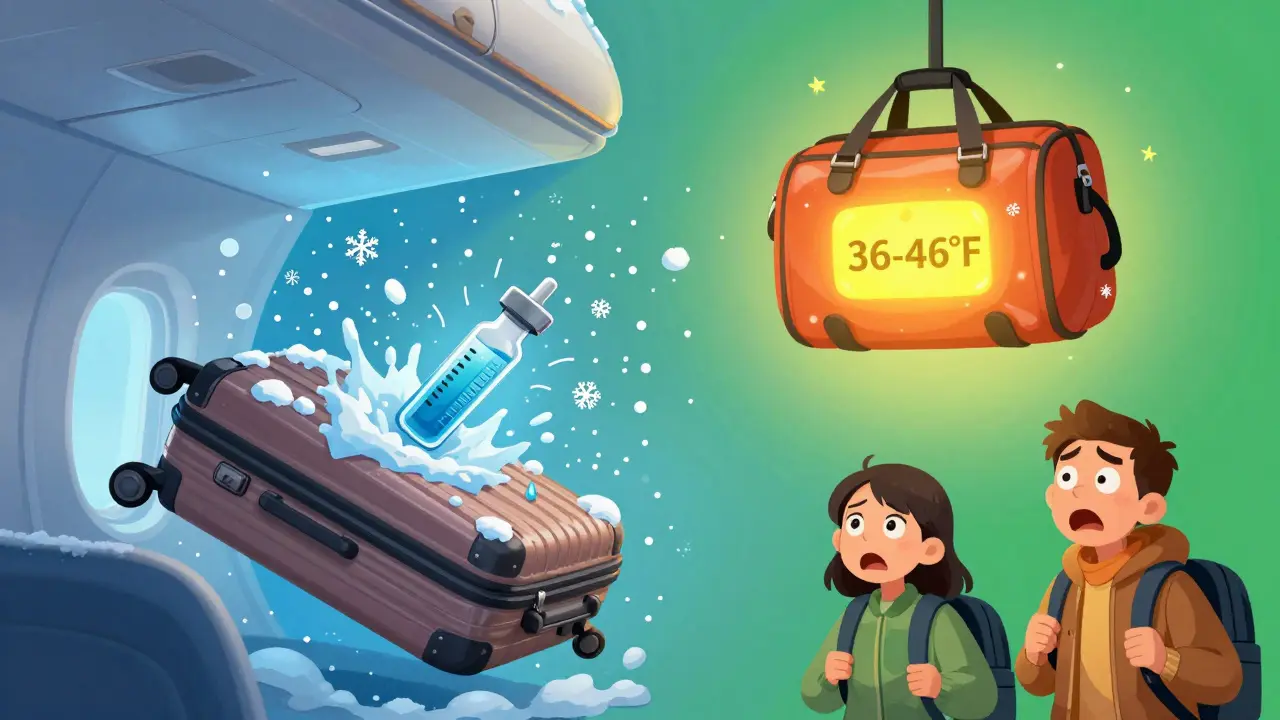
If you’re traveling with biologics - insulin, rheumatoid arthritis drugs like Humira, or multiple sclerosis treatments - you’re dealing with something far more fragile than pills. These medications are made of proteins. When they get too hot or too cold, they break down. The International Society of Travel Medicine says they lose 5% of their potency every hour above 77°F. That’s why packing them in checked baggage is dangerous. Cargo holds can drop to -40°F. Insulin can crystallize. That’s not reversible. You’ll need a TSA-approved insulated cooler with frozen gel packs. The ice packs must be fully frozen when you go through security. If they’re slushy, they’ll be confiscated. Pro tip: Freeze them 24 hours before your flight. A good cooler will keep meds at 36-46°F for 12-18 hours. United Airlines now has in-flight refrigeration units on all 787 Dreamliners, but don’t count on it. Always bring your own. And never, ever leave your meds in the car while you’re at the airport.
International Travel? Check the Rules Before You Go
Not every country treats your meds the same way. Japan limits pseudoephedrine to a 72-hour supply. The UAE requires pre-approval for certain antidepressants. In some countries, even common painkillers like codeine are illegal. The U.S. Department of State says 43 countries have strict rules on medication imports. Before you book your flight, check the embassy website of your destination. If you’re staying more than 30 days, you might need a doctor’s letter translated into the local language. Some countries require this to be notarized. The American Pharmacists Association recommends starting this process at least two weeks ahead. And if you’re flying to the EU, you’re generally allowed a 90-day supply with proper documentation. In Asia? Stick to 30 days unless you get special permission. Don’t assume your U.S. prescription is enough. One traveler got detained in Singapore because their anxiety medication wasn’t on their approved list - even though it was legal in the U.S.
Documentation: The Three Must-Haves
Three things should always be in your carry-on with your meds:
- Your original prescription bottle with the pharmacy label
- A letter from your doctor on official letterhead explaining why you need the medication, how much you need, and that it’s for personal use
- Translated copies of both if you’re going overseas
That letter doesn’t need to be fancy. Just a simple note signed by your doctor saying, “Patient is prescribed [medication] for [condition]. Dosage: [X] per day. Total supply: [Y] days.” Add your contact info and the doctor’s license number. This cuts screening time from 15 minutes to under 2. The TSA’s pilot programs in Chicago and Atlanta show that travelers with proper docs clear security 80% faster. And if you’re flying internationally, the ICAO now recognizes U.S. medical documentation in 187 countries - but only if it’s complete.
Time Zones and Schedules: Don’t Guess
Skipping your dose because you’re confused about the time zone? That’s risky. If you’re crossing five or more time zones, start adjusting your schedule three to five days before you leave. Shift your dose by 15-30 minutes each day. For example, if you take your blood pressure pill at 8 a.m. Boston time and you’re flying to Bangkok (12-hour difference), start taking it at 8:30 a.m. on day one, 9 a.m. on day two, and so on. This keeps your body in rhythm and avoids spikes or drops in medication levels. The American Academy of Sleep Medicine says this is especially critical for insulin, seizure meds, and psychiatric drugs. Don’t wing it. Use a phone app to track your doses across time zones. Set alarms. Write it down. Your body doesn’t care about your flight schedule - it cares about consistency.

What to Do If Security Has Questions
If an agent asks about your meds, stay calm. Don’t argue. Say, “I have my prescription and a doctor’s letter.” Have them ready in a folder or ziplock. Don’t wait for them to ask - proactively tell them you’re carrying medications. Many travelers report better treatment when they’re upfront. If your meds are confiscated, ask for a supervisor. You have rights. The TSA’s 2023 report shows that 78% of medication-related issues were resolved when travelers had proper documentation. If you’re denied, ask for a copy of the incident report. You can file a complaint with the TSA’s Office of Civil Rights. Don’t let fear silence you. Know your rights. Be prepared. And always, always carry a backup.
High-Tech Solutions Are Here - But Don’t Rely on Them
There’s a new digital passport system called MyMediTravel that uses blockchain to store your medication info. Over 127,000 travelers have used it, and 99.2% got through security without delays. It’s great - if you’ve got a smartphone, internet, and battery. But what if your phone dies? What if you’re in a country with no signal? That’s why the old-school method still wins: original bottles, paper letters, and a cool pack. Tech is a bonus, not a replacement. Use the app if it helps, but never skip the physical docs.
Final Checklist: Before You Leave
- Keep all meds in original pharmacy bottles with labels
- Bring a doctor’s letter on official letterhead
- For liquids: declare at security, no size limit if medically necessary
- For temperature-sensitive meds: use a TSA-approved cooler with fully frozen gel packs
- Carry sharps containers for needles - never loose
- Double-check your destination’s medication laws - don’t assume U.S. rules apply
- Adjust your dosing schedule 3-5 days before flying across 5+ time zones
- Never pack meds in checked luggage - especially insulin or biologics
- Bring extra doses - at least 2-3 days beyond your trip
- Keep all meds in your carry-on - always
What Happens If You Forget Something?
If you realize at the airport that you didn’t pack your meds properly - don’t panic. Most major U.S. airports now have pharmacies inside terminals. You can often get a refill or a temporary supply if you show your prescription. Call ahead. Some pharmacies can even call your doctor for authorization. If you’re traveling internationally and you lose your meds, contact your country’s embassy. They can help you find local pharmacies or arrange for a replacement. But this isn’t a backup plan - it’s a last resort. The best move? Pack right the first time.