
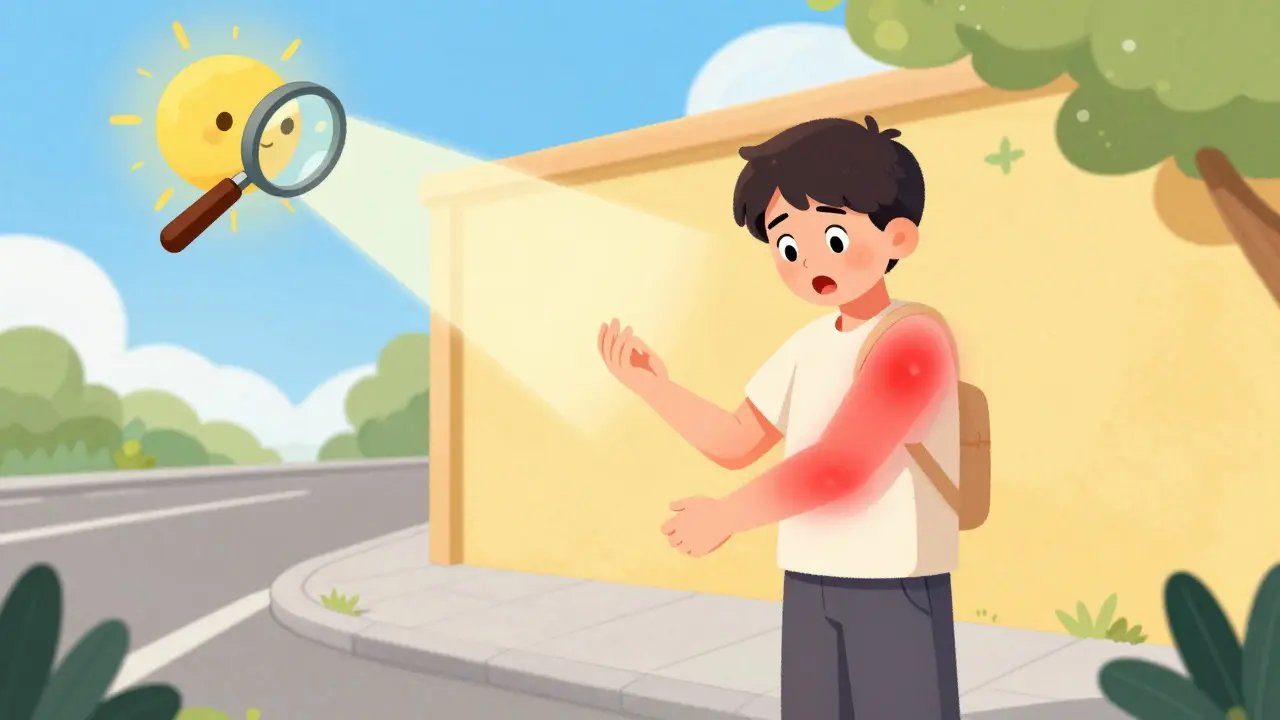
Sun Sensitivity Risk Evaluator
Disclaimer: This tool is for educational purposes and does not replace professional medical advice. Always consult your doctor regarding medication side effects.
Is it Phototoxicity or Photoallergy?
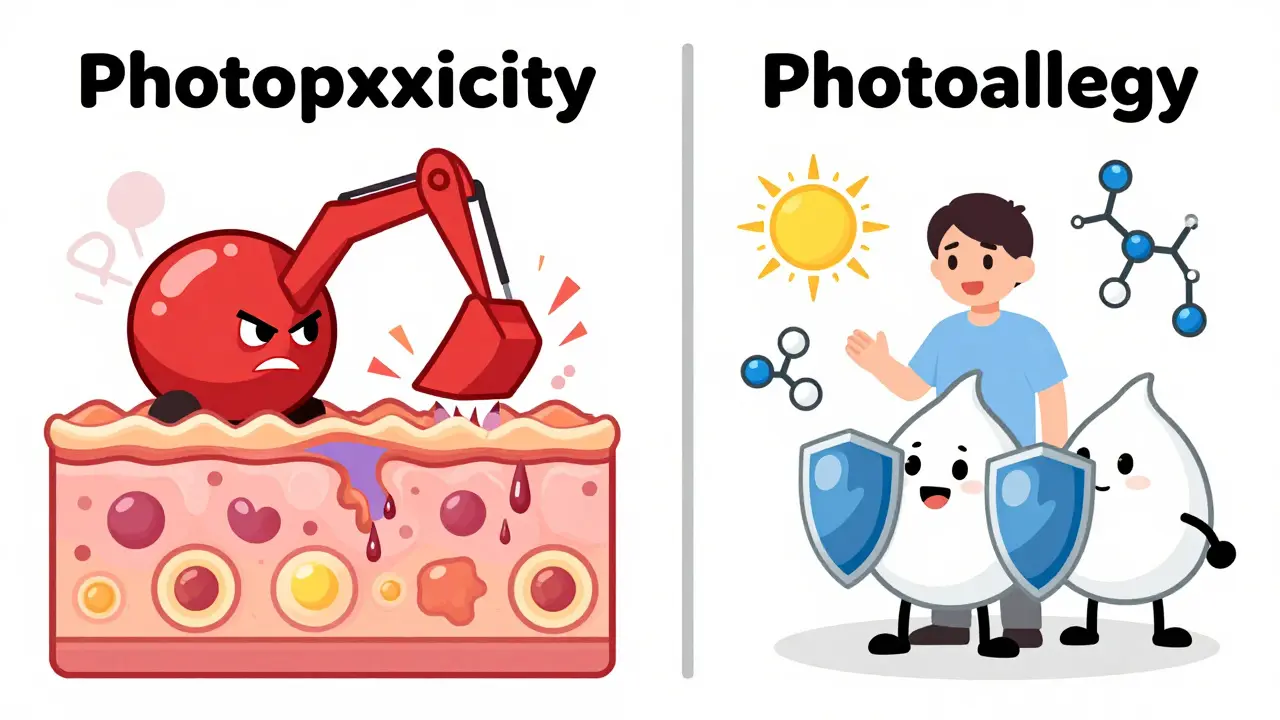
Not all medication-related sun reactions are the same. Most people experience what's called phototoxicity, but a small group deals with photoallergy. Knowing the difference is key because they happen on different timelines and require different levels of caution.Phototoxicity is the most common version, accounting for about 95% of cases. It happens because the drug molecules absorb UV radiation and create reactive oxygen species (ROS). These tiny, unstable molecules tear through your cell membranes like a wrecking ball. You'll usually feel the burn or sting within 30 minutes to two hours of exposure. It looks exactly like an exaggerated sunburn: red, swollen, and sometimes blistering.
Photoallergy is different. It's a delayed immune response-a type IV hypersensitivity. Instead of direct damage, the UV light turns the drug into a "photoantigen." Your immune system then recognizes this as a foreign invader and attacks. This doesn't happen instantly; you'll typically see an itchy, eczematous rash 24 to 72 hours after you've been in the sun. Unlike a sunburn, this rash can actually spread to areas of your body that weren't even exposed to the light.
| Feature | Phototoxicity | Photoallergy |
|---|---|---|
| Onset Time | Immediate (Minutes to Hours) | Delayed (24-72 Hours) |
| Mechanism | Direct cellular damage (ROS) | Immune system response |
| Who is affected? | Anyone with high enough dose | Only sensitized individuals |
| Location | Only sun-exposed skin | Can spread to non-exposed skin |
| Common Triggers | Tetracyclines, NSAIDs | Sulfonamides, Oxybenzone |
Common Medications That Trigger Sun Sensitivity
There are nearly 1,000 medications recognized as potential photosensitizers. You might be surprised to find that some of the most common prescriptions for acne, blood pressure, or pain are on the list.Antibiotics are the biggest culprits, causing about 40% of all cases. Tetracyclines, specifically Doxycycline, are notorious for this. In fact, about 10-20% of people taking doxycycline will experience a reaction. Fluoroquinolones, like ciprofloxacin, also carry this risk.
Cardiovascular drugs are another major group. Amiodarone (often sold as Cordarone) is particularly aggressive. Between 25% and 75% of long-term users develop photosensitivity. In some shocking cases, the FDA has noted that these reactions can persist for up to 20 years after you stop taking the drug.
Then there are NSAIDs (nonsteroidal anti-inflammatory drugs) used for pain and inflammation. Ketoprofen is a common trigger, affecting 1-3% of users. Even some topical creams or cosmetics can cause photoallergic reactions, which is why women tend to experience these reactions at twice the rate of men.
Practical Strategies for Skin Protection
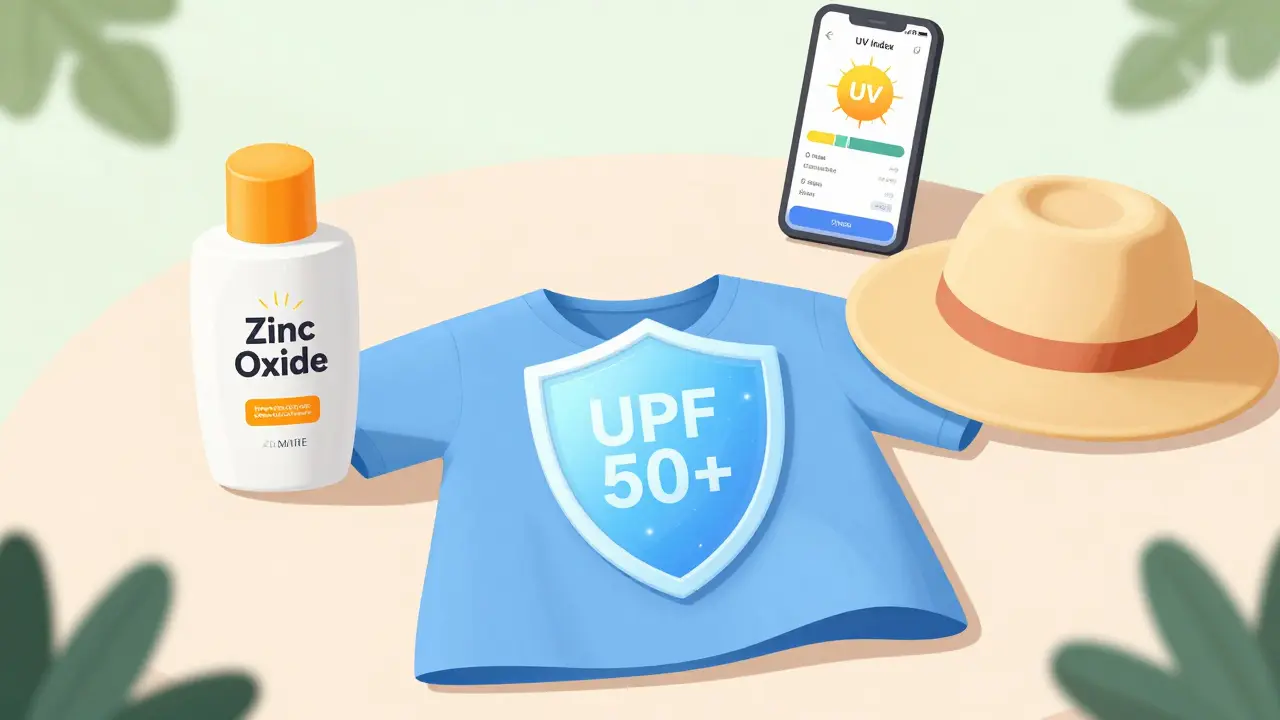
If you are on a photosensitizing medication, standard "apply some sunscreen" advice isn't enough. Many people apply too little or use products that don't block the specific wavelengths (UVA) that trigger these reactions. To actually stay safe, you need a multi-layered approach.First, upgrade your sunscreen. Look for medication photosensitivity protection by choosing broad-spectrum sunscreens with SPF 50+. More importantly, look for physical blockers like Zinc Oxide or Titanium Dioxide. These minerals sit on top of your skin and reflect UV rays away, rather than absorbing them. The FDA recommends a zinc oxide concentration of at least 15% for high-risk patients.
The biggest mistake people make is the "amount" of sunscreen. Most people apply only 25-50% of what they actually need. To get the full SPF rating on the bottle, you need about 2 mg of product per square centimeter of skin. For a full body, that's roughly one ounce of cream. Apply it every two hours, or more often if you're sweating.
But sunscreen is your last line of defense, not your first. Physical barriers are far more reliable. A standard cotton T-shirt only provides 3-20% UV protection. Instead, invest in UPF 50+ clothing. These garments are specifically woven to block 98% of UV radiation. Brands like Coolibar or Solbari are often recommended by dermatologists because they provide consistent coverage without requiring you to slather on cream every two hours.
Finally, use technology to your advantage. The UV Index is a great tool for deciding when to stay indoors. When the UV index is 3 or higher, your risk of a reaction spikes. Using apps like UVLens can help you track real-time exposure and plan your outdoor activities for the early morning or late evening when the sun is less intense.
What to Do When a Reaction Happens
Even with the best precautions, a reaction can happen. If you notice your skin becoming abnormally red, stinging, or breaking out in a rash after sun exposure, the first step is to get out of the light immediately. Move into the shade or go indoors and cool the skin with a damp compress.For mild phototoxic burns, over-the-counter aloe vera or hydrocortisone creams can help soothe inflammation. However, if you see blisters (vesicles) or bullae, or if the rash is spreading to areas that weren't in the sun, you need to call your doctor. This could be a sign of a severe photoallergic reaction that requires prescription steroids to calm the immune system.
Be honest with your healthcare provider about your symptoms. Many cases are misdiagnosed as a simple "bad sunburn" or polymorphic light eruption. If you suspect your medication is the cause, your doctor may suggest a photopatch test to confirm the allergy, or they might adjust your dosage or switch you to a non-photosensitizing alternative.
The Future of Sun Safety
We are moving toward a world where sun protection is personalized. We're seeing the rise of genomic testing-like panels from 23andMe-that can identify if you have specific genetic variants (such as in the MC1R gene) that make you naturally more prone to these reactions.There are also new medical developments. The FDA recently approved Lumitrex, a photoprotective medication designed to reduce the reactive oxygen species that cause phototoxic burns. Researchers are also working on "smart" sunscreens that change color to alert you when the UV intensity is too high or when it's time to reapply. As climate change continues to increase ambient UV levels, these innovations will be critical for millions of people taking chronic medications.
Can I still go outside if my medication causes photosensitivity?
Yes, but you need a strict protection plan. This includes wearing UPF 50+ clothing, applying broad-spectrum SPF 50+ sunscreen with zinc oxide, and avoiding the sun during peak hours (typically 10 AM to 4 PM). Monitoring the UV index and staying in the shade are also essential.
Do I need to worry about photosensitivity after I stop taking the drug?
For most medications, the sensitivity fades shortly after the drug leaves your system. However, some drugs, like amiodarone, can cause photosensitivity that persists for years-potentially up to 20 years-after discontinuation. Always check with your doctor about the half-life and long-term effects of your specific medication.
Will a standard SPF 30 sunscreen protect me?
Probably not enough. Many standard SPF 30 lotions don't provide adequate UVA protection, which is the primary trigger for medication reactions. Experts recommend SPF 50+ and specifically look for "broad-spectrum" labels or physical blockers like zinc oxide and titanium dioxide.
What is the difference between a normal sunburn and a phototoxic reaction?
A phototoxic reaction is essentially a "super-sunburn." It happens much faster and is often more severe than a typical burn, even with very short exposure. It can include intense stinging, edema (swelling), and blistering in areas that wouldn't normally burn that quickly.
How do I know if my medication is causing my skin rash?
If you notice a rash appearing only on sun-exposed areas shortly after starting a new medication, it's a red flag. If the rash is itchy and appears 1-3 days after sun exposure, it might be a photoallergic reaction. Review your medication list and consult a dermatologist for photopatch testing.