
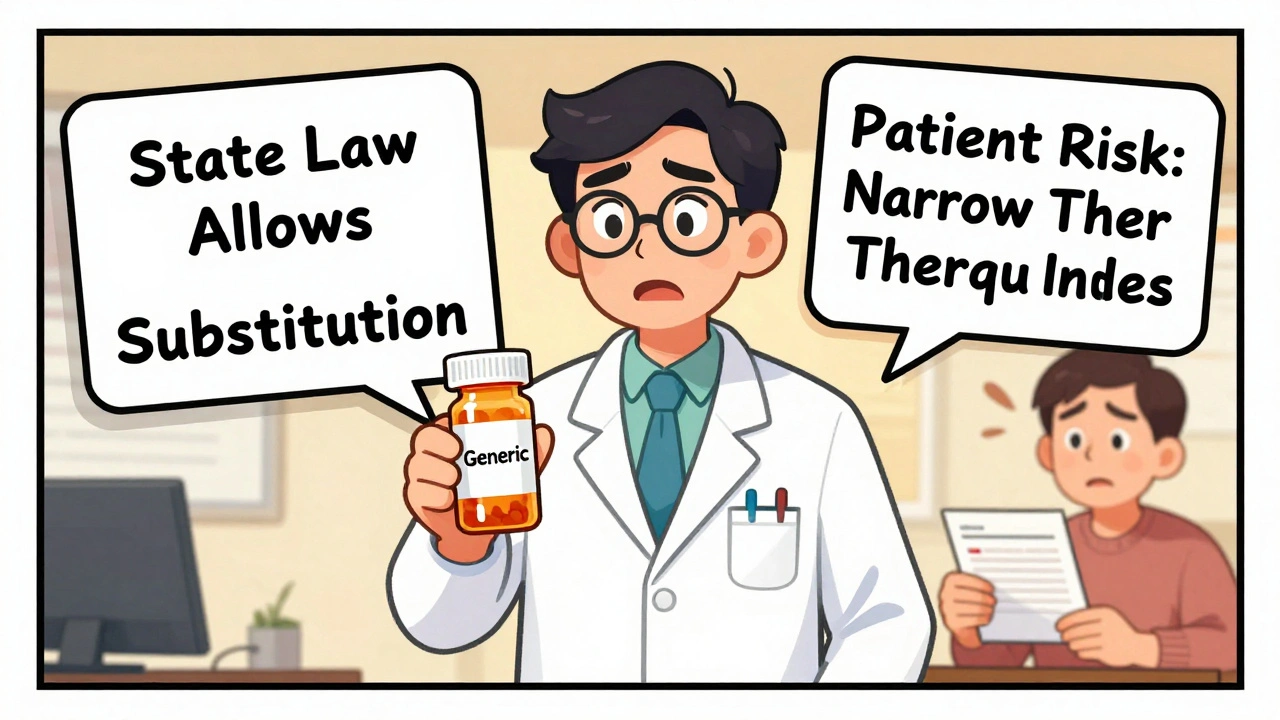
When a pharmacist swaps a brand-name drug for a generic version, it’s not just a cost-saving move-it’s a legal decision with real consequences. In 2025, over 90% of prescriptions in the U.S. are filled with generics, saving patients and the system billions each year. But behind that number is a tangled web of state laws, federal preemption, and patient safety risks that can land pharmacists in court-even if they followed every rule.
Why Generic Substitution Isn’t as Simple as It Looks
The idea behind generic drugs is straightforward: same active ingredient, lower price. But the reality? It’s anything but simple. The 1984 Hatch-Waxman Act made generics possible by letting manufacturers skip expensive clinical trials, as long as they prove their drug is bioequivalent to the brand-name version. That means the generic must deliver the same amount of drug into the bloodstream within an 80-125% range. Sounds fair, right? Not always. For drugs with a narrow therapeutic index-like warfarin, levothyroxine, or seizure medications-tiny differences in absorption can mean the difference between control and crisis. A 2017 study in Epilepsy & Behavior found that 18.3% of patients had therapeutic failure after switching to a generic antiepileptic. One patient might be stable on a brand, then start having seizures after a generic switch. The FDA says it’s bioequivalent. The patient says they’re not the same. And now, who’s liable?The Legal Catch-22: No One Can Be Held Responsible
Here’s where it gets messy. In 2011, the Supreme Court ruled in PLIVA v. Mensing that generic drug makers can’t be sued under state law for failing to update warning labels. Why? Because federal law forces them to use the exact same label as the brand-name drug. They can’t change it, even if new safety data emerges. That created a legal black hole. If a patient is harmed by a generic drug’s side effects, they can’t sue the generic manufacturer. They can’t sue the brand-name maker because they didn’t make the drug they took. And if the pharmacist substituted it, they’re often shielded by state laws-or not, depending on where they practice. This isn’t theoretical. A 2019 case in the Journal of Patient Safety involved a man who suffered permanent brain damage after a generic seizure drug was substituted. The court dismissed the case. No one could be held accountable under existing law.State Laws Vary Wildly-And So Does Your Risk
You can’t talk about pharmacist liability without talking about state laws. There are 50 different rulebooks. In 27 states, pharmacists are required to substitute unless the doctor says no. In 23, it’s optional. Eighteen states require pharmacists to tell patients directly that a substitution happened. Thirty-two let patients refuse the swap. And here’s the kicker: 23 states offer no legal protection for pharmacists who make substitutions. Take Connecticut. No liability protection. No mandatory patient notification. A pharmacist substitutes levothyroxine, the patient gets hypothyroid symptoms, and the pharmacist could be on the hook for malpractice-even though they followed state law. Meanwhile, in California, pharmacists are protected from greater liability than if they’d dispensed the brand. They’re also required to notify patients and get consent for narrow therapeutic index drugs. A 2019 study by the National Community Pharmacists Association found states with strong protections had 32% fewer malpractice claims tied to substitutions. States without them? 27% higher claim rates.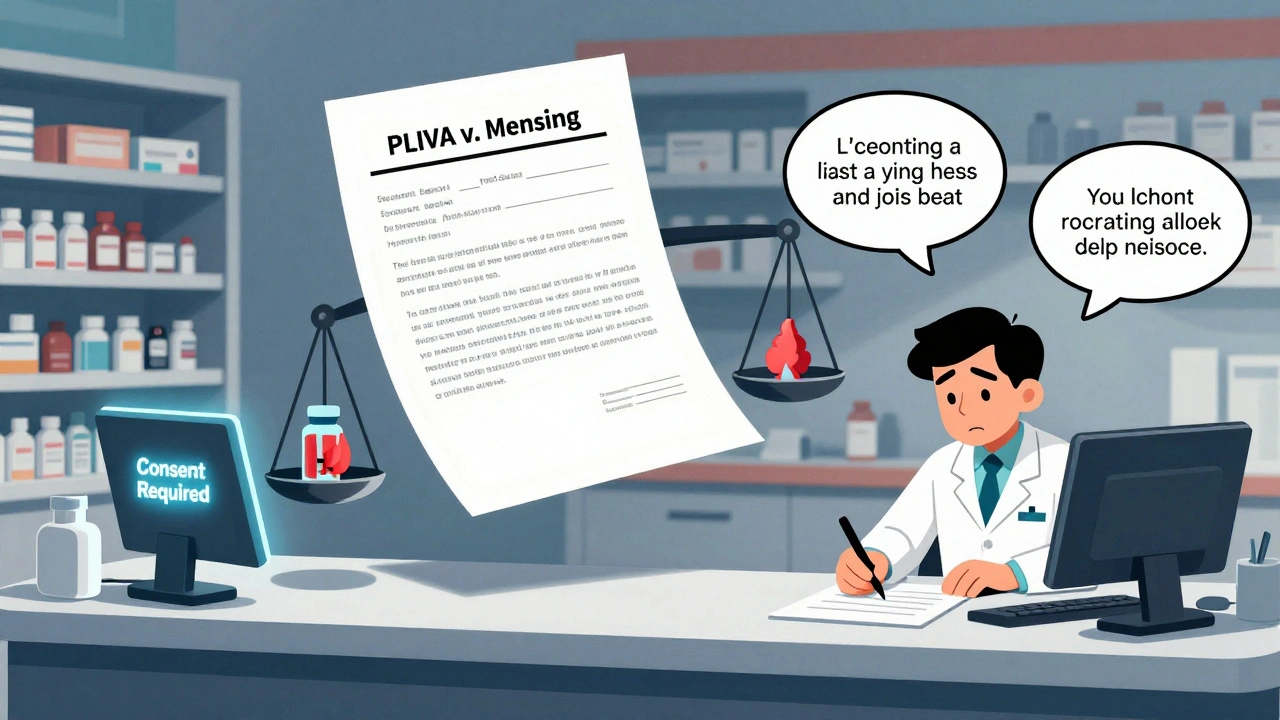
Who’s at Risk-and Who’s Getting Hurt
Patients aren’t always aware they’ve been switched. A 2021 Patient Advocacy Foundation survey found 41% didn’t know their prescription had been changed until they felt worse. On Reddit’s r/pharmacy, a 2022 thread with over 4,000 upvotes told the same story: patient after patient described fatigue, weight gain, or seizures after switching to a generic. One wrote, “I was on Synthroid for 12 years. Switched to generic. My TSH jumped from 2.1 to 8.9. I felt like I was dying.” But it’s not all bad. For drugs like statins or metformin, generics work just fine. GoodRx data shows 82% satisfaction among users taking generics for high-blood pressure or diabetes, with average annual savings of $327.50 per person. The real danger zone? Drugs where blood levels must be exact. That’s why the American Medical Association now recommends explicit patient consent for substitutions involving antiepileptics, thyroid meds, and blood thinners. And pharmacists? A 2022 survey found 74% have refused a substitution-even when allowed-because they’re scared of liability.How to Reduce Your Risk: A Practical 7-Step Plan
You don’t have to guess. There’s a clear path forward. The American Society of Health-System Pharmacists laid out a 7-step protocol in 2022:- Know your state’s rules-Check the National Association of Boards of Pharmacy’s annual compendium. Laws change. Last year, five states updated their notification requirements.
- Use EHR alerts-Set up your electronic system to flag narrow therapeutic index drugs. If the script is for levothyroxine or warfarin, the system should pop up: “Verify substitution consent.”
- Get written consent-Use a simple form. “I understand my medication has been changed from [Brand] to [Generic]. I’ve been told the risks and agree.” Have the patient sign it. Keep a copy.
- Talk to the prescriber-If you’re unsure, call the doctor. Many are unaware of the risks too. A quick conversation can prevent a bad outcome.
- Log every substitution-Record the generic manufacturer, lot number, and date. If something goes wrong, you’ll need that traceability.
- Do an annual liability review-Use the 27-point framework from the Journal of the American Pharmacists Association. It covers everything from documentation to communication protocols.
- Get supplemental insurance-Standard malpractice policies may not cover substitution claims. Look for coverage that specifically includes generic drug liability.

The Bigger Picture: What’s Changing in 2025
The system is cracking under pressure. In 2023, 11 states introduced the Generic Drug Safety Act, which would force brand-name makers to update labels within 30 days of new safety data-and require generics to adopt those changes within 60. The FDA is piloting a labeling change system, but so far, only 12% of requests come from generic manufacturers. The Congressional Budget Office estimates the current liability gap costs the system $4.2 billion a year in avoidable hospitalizations and long-term care. The Institute for Clinical and Economic Review says fixing it could raise generic prices by 7-12%-but prevent 14,000 serious injuries annually. One promising idea? Consensus labeling. Instead of 1,278 manufacturers using 1,278 slightly different labels, a single, updated safety label would be shared across all versions of the drug. It’s being tested in five states under the Interstate Pharmacy Compact. If it works, it could finally close the legal gap without killing cost savings.Bottom Line: Your Responsibility Is Clear
Generic substitution saves money. That’s good. But it’s not a free pass. If you’re a pharmacist, your job isn’t just to fill the script-it’s to know when a substitution could harm someone. You need to know your state’s laws. You need to communicate clearly. You need to document everything. The system isn’t perfect. The law isn’t fair. But your practice can be. Protect your patients. Protect yourself. And don’t assume someone else is handling the risk.Can a pharmacist be sued for substituting a generic drug?
Yes, but only in certain states and under specific conditions. In 23 states, pharmacists have no legal protection from liability if a patient is harmed after a generic substitution. In 27 states, pharmacists are shielded from greater liability than if they’d dispensed the brand-name drug. However, federal law blocks lawsuits against generic manufacturers, so the pharmacist often becomes the only target. Proper documentation, patient consent, and following state laws are critical defenses.
Which drugs are most dangerous to substitute?
Drugs with a narrow therapeutic index are the highest risk because small changes in blood levels can cause serious harm. These include levothyroxine (for thyroid), warfarin (a blood thinner), phenytoin and other antiepileptics, lithium, and cyclosporine. Studies show higher rates of therapeutic failure and adverse events with generic switches in these categories, even when bioequivalence standards are met.
Do I have to tell the patient if I substitute a generic?
It depends on your state. Eighteen states require pharmacists to notify patients directly-beyond just the label. In most of those, the notification must be verbal or written at the time of pickup. In 32 states, patients have the right to refuse substitution, so you must offer them the choice. Always check your state’s pharmacy board rules annually-laws change frequently.
Can I refuse to substitute a generic even if the law allows it?
Yes. Pharmacists have the right-and often the ethical duty-to refuse substitution if they believe it poses a risk to the patient. A 2022 survey found 74% of pharmacists have refused substitutions for narrow therapeutic index drugs like antiepileptics or thyroid meds, even when legally permitted. Document your reasoning and communicate it to the prescriber. This is professional judgment, not defiance.
Is there insurance that covers liability from generic substitution?
Standard pharmacist malpractice policies may not cover substitution-related claims. Many insurers now offer supplemental coverage specifically for generic drug liability. Ask your provider if your policy includes “generic substitution risk.” Premiums have risen 18% since the 2011 PLIVA v. Mensing decision. The cost is worth it-especially if you handle high-risk medications.
What’s the future of generic substitution and liability?
The system is under pressure. New state laws, like California’s SB 452 and New York’s A.7321, aim to create shared liability between brand and generic manufacturers. The FDA is testing a labeling update system that could let generics change warnings faster. The most promising solution is consensus labeling-where all versions of a drug share one updated safety label. Pilot programs are underway in five states. If adopted nationally, it could fix the legal gap without raising prices.
Let’s cut through the noise: this isn’t about liability, it’s about systemic failure. The FDA lets generics ride on bioequivalence thresholds that would get a pharmaceutical rejected in any other industry. 80-125%? That’s not equivalence, that’s a fucking lottery. And now pharmacists are the fall guys because Congress won’t fix the law? Of course they won’t. It’s cheaper to let patients bleed out quietly than to make Big Pharma pay.
Interesting how everyone ignores that most generics are made in India and China now. No one talks about the quality control. I’ve seen patients go from stable to crashing after switching to a generic made in a factory with no FDA inspection. The real problem isn’t the law-it’s the global supply chain collapsing under greed.
U.S. pharmacists are being crucified while Indian manufacturers rake in billions-literally-off this scam! You think your $3 levothyroxine is safe? It’s made in a plant where the quality control guy is paid in chai and prayers! And now you want me to believe the pharmacist is the villain? Nah. The villain is the FDA letting this happen. The villain is the FDA letting this happen. The villain is the FDA letting this happen!!!
People act like this is new but it’s not. I’ve been a nurse for 22 years. Same story with insulin generics. Same story with seizure meds. The system’s broken. The law’s broken. The only thing left is the pharmacist’s conscience. And that’s not enough.
You all miss the real point. This isn’t about drugs. It’s about power. The FDA, the brand-name companies, the generic manufacturers-they’re all playing a game where the patient is the pawn. The pharmacist? The pawn’s pawn. The law doesn’t protect anyone. It just creates plausible deniability for everyone except the guy holding the pill bottle. And yet we still expect him to be the moral compass? That’s not accountability. That’s cruelty dressed up as regulation.
And don’t get me started on ‘consensus labeling.’ That’s corporate speak for ‘we’ll let the brand-name guys write the rules again.’ The same people who fought generic labels in court for decades are now pretending to be the solution? Please. We need liability reform that actually holds someone accountable. Not more paperwork. Not more consent forms. Accountability.
And if you think a 7-step plan fixes this, you’re not seeing the forest for the trees. This is a structural collapse. No checklist can fix a system that rewards profit over person.
So yes, document everything. Yes, get consent. Yes, refuse substitutions. But don’t pretend any of it makes you safe. It just makes you a better scapegoat.
It is profoundly disturbing that pharmacists, as licensed healthcare professionals, are being asked to assume liability for decisions that are legally and ethically outside their purview. The federal preemption doctrine, as established in PLIVA v. Mensing, was a judicial abdication of responsibility, and now state legislatures are complicit by failing to establish clear, uniform standards. This is not merely a regulatory gap-it is a moral failure of the American healthcare architecture.
Just wanted to say I’ve been on generic levothyroxine for 5 years and I’m fine. My TSH is perfect. I saved $400 a year. Not everyone has problems. Maybe the system isn’t broken, just misunderstood.
So you’re telling me some Indian factory made my grandma’s seizure med and now she’s in the hospital? And you want me to blame the pharmacist? Nah. That’s a China problem. We need to ban all foreign generics. Make ‘em in America. Or at least make the FDA inspect every pill. This ain’t 1984 anymore. We ain’t gonna let some foreign lab kill our people for a few bucks.