
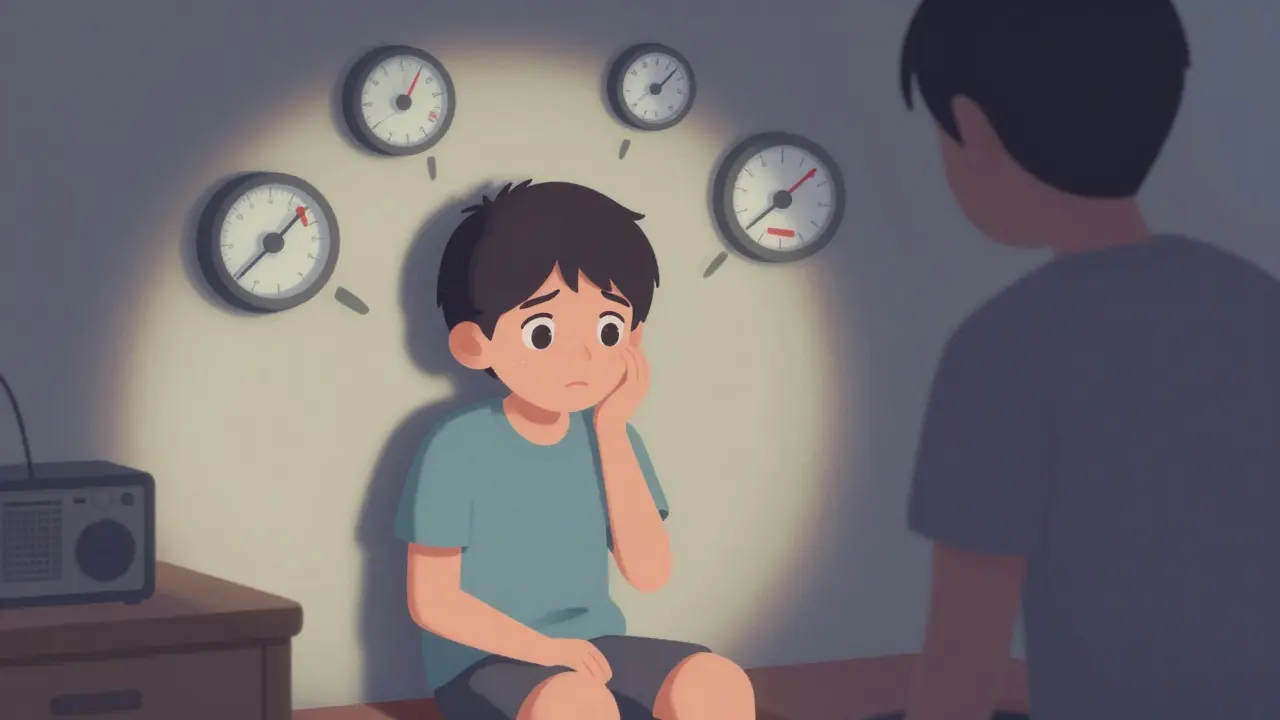
When someone starts acting differently-pulling away from friends, talking strangely, or seeming lost in their own thoughts-it’s easy to brush it off as stress, teenage moodiness, or just being "off." But what if those changes aren’t temporary? What if they’re early signs of something more serious: psychosis?
Psychosis isn’t a diagnosis. It’s a symptom. A break from reality. It can happen in schizophrenia, bipolar disorder, after drug use, or even during extreme stress. The key thing to understand? Psychosis is treatable, especially when caught early. And the window for effective help is narrower than most people realize.
What Does Early Psychosis Actually Look Like?
It doesn’t start with hearing voices or believing you’re the president. That’s the later stage. Early psychosis creeps in quietly. It shows up in small, frustrating changes that pile up over weeks or months.
- A once-top student starts failing classes, not because they’re lazy, but because they can’t focus. Their thoughts feel scrambled, like a radio stuck between stations.
- Someone who used to hang out with friends now spends hours alone in their room. They say they’re "just tired," but it’s more than that-they feel watched, even when no one’s there.
- A person starts making odd statements: "The TV is sending me messages," or "My phone is controlling my thoughts." They don’t seem paranoid-they’re just convinced it’s true.
- Personal hygiene drops. Showering becomes a chore. Clothes get wrinkled. It’s not laziness. It’s a loss of motivation that feels impossible to shake.
- Mood swings go beyond normal. One day they’re laughing for no reason. The next, they’re crying uncontrollably. Irritability spikes. They get angry over small things.
According to the National Alliance on Mental Illness (NAMI), 78% of people experiencing their first psychotic episode show a noticeable drop in school or job performance. Eighty-five percent struggle with concentration. Seventy-one percent withdraw socially. These aren’t rare outliers. They’re common patterns.
What makes early psychosis tricky is that the person often knows something’s wrong. They might say, "I know it doesn’t make sense, but I can’t stop thinking it." That self-awareness fades over time. The longer psychosis goes untreated, the harder it becomes to recover.
The 74-Week Delay That Changes Everything
In the U.S., the average person waits 74 weeks-nearly two years-before getting help after psychosis starts. That’s not because families don’t care. It’s because no one recognizes the signs. Teachers think it’s rebellion. Parents think it’s puberty. Doctors think it’s anxiety.
But here’s the hard truth: every extra month without treatment makes recovery harder. Research shows each additional month of untreated psychosis increases recovery time by 5 to 7%. It lowers the chance of returning to school, work, or normal social life by over 3% per month. That adds up fast.
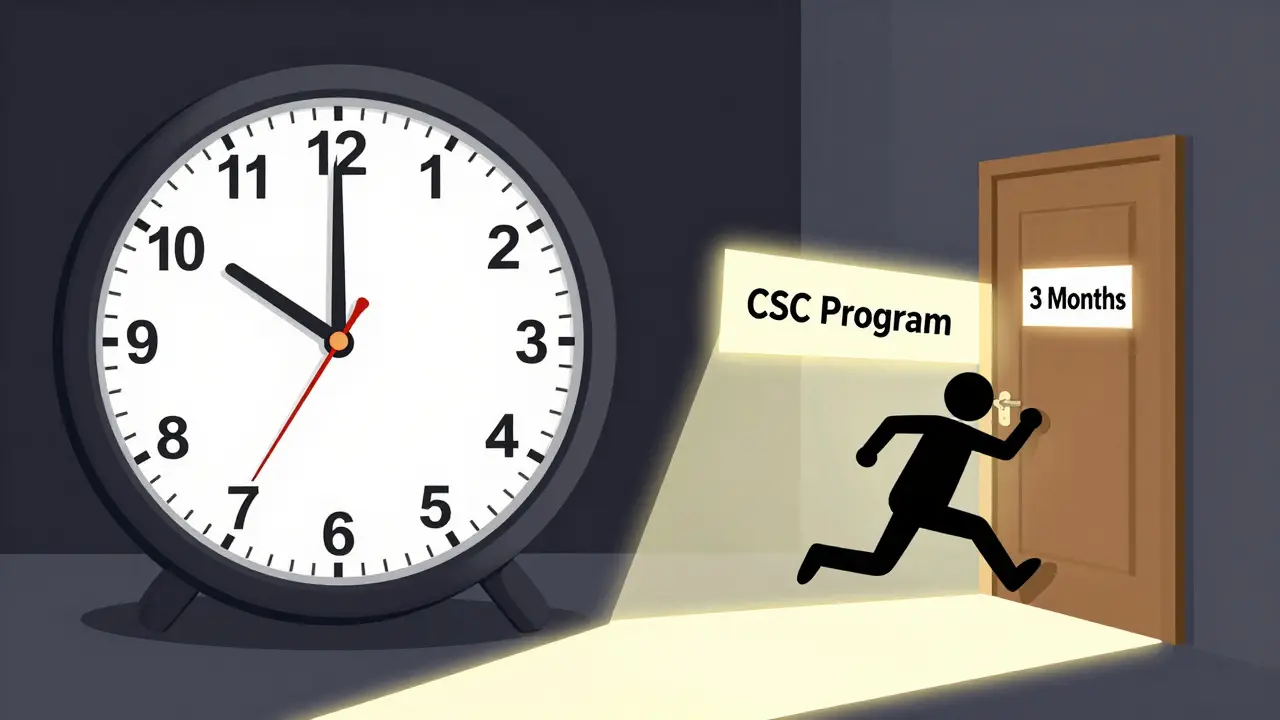
Compare that to someone who gets help within three months. Their odds of holding a job, living independently, and staying symptom-free jump dramatically. That’s why time isn’t just a factor-it’s the most critical one.

Coordinated Specialty Care: The Gold Standard
If psychosis is the problem, Coordinated Specialty Care (CSC) is the solution. It’s not just therapy. It’s not just medication. It’s a full-team approach designed specifically for first-time psychosis.
CSC programs bring together four key specialists under one roof:
- A case manager who visits the person at home, helps with daily needs, and connects them to services. They’re not just an admin-they’re a lifeline.
- A therapist trained in Cognitive Behavioral Therapy for psychosis (CBTp). This isn’t talk therapy. It’s structured, practical, and focused on helping the person understand what’s real and what’s not, without judgment.
- A psychiatrist who prescribes medication at low doses, slowly. Second-generation antipsychotics are the go-to, but they start at 25-50% of normal adult doses. The goal isn’t to numb the person. It’s to reduce distress while keeping them engaged in life.
- An employment or education specialist who helps the person return to school or work. Eighty percent of CSC participants are back in school or employed within three months.
Family involvement is mandatory. Parents, siblings, or caregivers get 12 to 20 weekly 90-minute sessions to learn how to respond, what to expect, and how to support without pushing. Studies show this cuts hospitalizations by 45% and boosts long-term stability.
The RAISE study, led by the National Institute of Mental Health, proved it works. People in CSC programs had 58% better symptom improvement and 42% better daily functioning after two years than those getting standard care. Treatment retention? 35% higher.
Why Most People Still Don’t Get It
There are 347 certified CSC programs in the U.S. today. They serve about 28,500 people a year. Sounds like progress? It is. But here’s the gap: only 42% of people experiencing first-episode psychosis get into CSC within the first two years. That means more than half are left to navigate the system alone.
Why? Access. Cost. Stigma. Rural areas have only 28% of the CSC programs available in cities. Insurance doesn’t always cover it. Families don’t know where to turn.
Screening tools like the 16-item Prodromal Questionnaire (PQ-16) exist. A score of 8 or higher means urgent assessment is needed. Schools in Oregon’s EASA program started using it-and cut the average delay from 112 weeks to just 26 weeks. That’s a game-changer.
But most doctors still don’t screen for it. Most teachers aren’t trained to recognize it. Most families don’t know what to look for.
What You Can Do Right Now
If you notice these signs in someone you care about:
- Don’t wait. Don’t hope it passes. Don’t assume it’s just a phase.
- Start with their primary care doctor. Ask: "Could this be early psychosis?"
- Find a CSC program. The Substance Abuse and Mental Health Services Administration (SAMHSA) has a public directory. Search "Coordinated Specialty Care near me."
- Call the National Alliance on Mental Illness (NAMI) helpline. They’ll guide you to local resources.
There’s no shame in asking for help. The sooner you act, the more of their future you save.
The Future Is Here-But Only If We Act
The science is clear: early intervention works. The tools exist. The funding is growing. By 2025, Medicaid will be required to cover CSC in every state. The 2023 launch of EPINET-a national quality-tracking network-is already showing 63% of participants achieve remission within a year.
But the biggest barrier isn’t money. It’s awareness. It’s silence. It’s pretending these early signs aren’t important.
Psychosis isn’t a life sentence. It’s a detour. And with the right help, most people don’t just recover-they rebuild. Better. Stronger. Happier.
The question isn’t whether you can afford to act. It’s whether you can afford not to.
Can psychosis go away on its own without treatment?
No. While some symptoms may lessen temporarily, untreated psychosis almost always worsens over time. The brain changes that occur during prolonged untreated episodes make recovery harder, longer, and less complete. Early treatment is the only way to prevent long-term disability.
Is psychosis the same as schizophrenia?
No. Psychosis is a symptom. Schizophrenia is one of several disorders that can include psychosis. Others include bipolar disorder, severe depression with psychotic features, and substance-induced psychosis. Not everyone who has psychosis will develop schizophrenia.
Are antipsychotic medications dangerous?
When used correctly in CSC programs, second-generation antipsychotics are safe and effective. They’re started at low doses and carefully adjusted. Side effects like weight gain or drowsiness are monitored and managed. The risks of untreated psychosis-job loss, homelessness, hospitalization-are far greater than the risks of properly managed medication.
Can teens and young adults recover fully from psychosis?
Yes. With early intervention through Coordinated Specialty Care, up to 60% of young people return to school, work, and independent living. Many go on to graduate, start careers, and build families. Recovery doesn’t mean never having symptoms again-it means regaining control of life.
How do I find a Coordinated Specialty Care program near me?
Visit the Substance Abuse and Mental Health Services Administration (SAMHSA) website and use their treatment locator tool. Search for "early psychosis" or "CSC." You can also call NAMI’s helpline at 1-800-950-NAMI. They’ll connect you to local programs-even if none are listed in your county, they can help you find the nearest one.
Man, this post hit different. I grew up in Delhi watching my cousin slowly vanish-stopped talking, started mumbling about "the wires in the walls," stopped eating with the family. We thought it was stress from exams. Turns out? Early psychosis. No one knew what to do. No one even knew the words. If we’d had CSC back then, he’d be working at a tech startup now, not stuck in a government rehab center that treats him like a ghost. The stats here? Real. The delay? Criminal. We need to stop calling it "weird behavior" and start calling it a medical emergency.
So much truth here. I work in high school counseling, and I’ve seen this pattern over and over: the quiet kid who stops turning in homework, starts wearing the same hoodie for three weeks, says "I hear the clock ticking backwards" like it’s normal. We panic, call parents, get brushed off with "he’s just going through a phase." But what if we treated it like a broken bone? Early = easy fix. Late = surgery. Why are we waiting for the fracture to spread before we act?
Look, I get that mental health is trendy now, but this is just woke nonsense wrapped in medical jargon. Psychosis? People used to just deal with it. You think every kid who talks weird is mentally ill? My brother used to say the TV was talking to him when he was 16. He’s now a Marine Corps sergeant. He didn’t need a case manager-he needed discipline. Stop infantilizing kids. This "CSC" stuff is just another taxpayer-funded bureaucracy.
I’m crying 😭 this is so important. I lost my brother to untreated psychosis. He was 21. We waited "until he got worse" because we were scared. Don’t wait. Please. Call NAMI. Call the doctor. Say the words. It’s not overreacting-it’s saving a life. 🤍
What’s wild is how much of this mirrors what we see in neurodivergent teens-especially those with autism or ADHD. The withdrawal, the hygiene drop, the odd statements? Those can be part of sensory overload or executive dysfunction. But we don’t panic about them. Why do we panic when it’s psychosis? Maybe it’s not about the symptoms… it’s about the stigma. The word "psychosis" itself triggers fear. What if we called it "neurological flux"? Would we act faster?
Let’s be real: CSC is just a fancy name for a government-funded social work program that replaces family. The "case manager visiting the home"? That’s surveillance with a paycheck. The "employment specialist"? They’re just glorified job coaches. And don’t get me started on the 12-20 weekly family sessions-sounds like a cult indoctrination retreat. Meanwhile, the real solution? Parental accountability. Teach kids resilience. Stop treating them like fragile glass figurines. This isn’t medicine-it’s social engineering.
Just to clarify a common misconception: the 74-week delay is not universal. In states with robust public health infrastructure (e.g., Oregon, Massachusetts, Maryland), the median delay is under 14 weeks. The gap isn’t ignorance-it’s systemic underfunding. CSC programs require Medicaid expansion, trained clinicians, and school partnerships. We’re not failing because we’re cruel-we’re failing because we haven’t allocated the resources. The data is clear: every $1 invested in CSC saves $7 in future hospitalizations and lost productivity. This isn’t charity. It’s economic logic.
Psychosis? It’s a Western disease. In India, we don’t have this "early psychosis" nonsense. Our kids face real problems-poverty, caste, exams, corruption. If someone hears voices, we take them to a temple. Or we tell them to drink more chai and stop watching Netflix. This whole CSC model is imported from America because you’ve lost your cultural roots. We don’t need therapists-we need discipline, religion, and hard work. Your weakness is your diagnosis.
There’s a quiet revolution happening here. We’ve been taught to fear psychosis like a demon-but what if it’s not a breakdown… but a breakthrough? A mind trying to rewire itself under unbearable pressure? The brain doesn’t just "go crazy." It’s responding. CSC doesn’t just treat-it listens. It doesn’t silence the voice-it helps the person find their own voice again. And that’s not medicine. That’s dignity. 🙏