
Sodium Effectiveness Calculator
How much sodium are you eating? This calculator shows how your salt intake affects your blood pressure medication effectiveness and how much you might reduce your pressure with sodium reduction.
Your Current Sodium Intake
Enter your sodium sources above to see how much your medication effectiveness is reduced and potential blood pressure reduction.
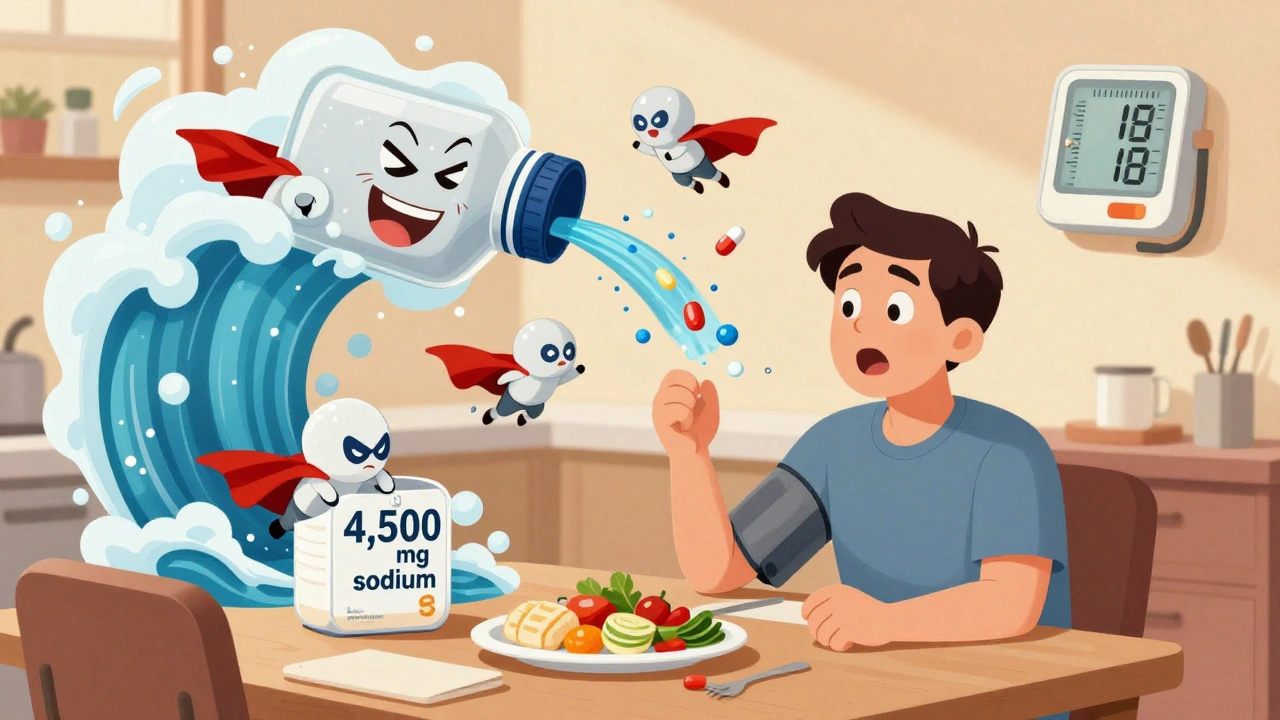
When you’re taking blood pressure medication, the salt on your dinner plate might be working against you - not just raising your numbers, but making your pills less effective. It’s not a myth. It’s not a suggestion. It’s science. And the latest research shows that cutting back on sodium doesn’t just help - it can boost your medication’s power by nearly half.
Why Salt Makes Your Blood Pressure Pills Work Less
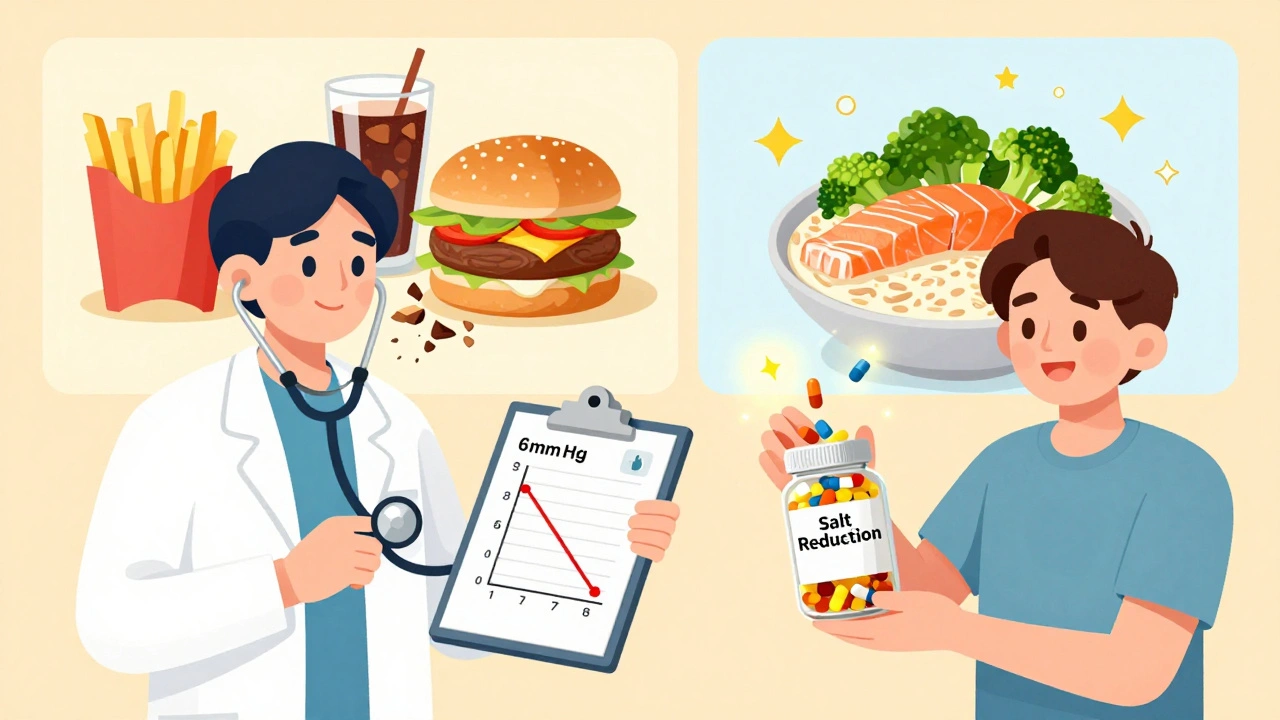
Your blood pressure medications - whether they’re ACE inhibitors, ARBs, diuretics, or calcium channel blockers - are designed to do one thing: lower pressure in your arteries. But if you’re eating too much salt, your body holds onto water. That extra fluid increases the volume in your blood vessels, which pushes pressure higher. No matter how well your drug is working, that extra volume fights back. A major 2023 study published in JAMA tracked 213 adults with high blood pressure, many on medication. When they cut sodium from an average of 4,500 mg per day down to just 500 mg, their systolic blood pressure dropped by 6 mm Hg - in just one week. That’s the same drop you’d see when starting a first-line blood pressure pill like lisinopril or losartan. And here’s the kicker: this drop happened even in people already taking medication. Salt wasn’t just adding to the problem - it was canceling out the medicine. Doctors call this “salt sensitivity.” About 46% of people with high blood pressure are salt-sensitive, meaning their pressure spikes when they eat sodium and drops sharply when they cut back. For them, reducing salt isn’t just helpful - it’s essential. Even if you’re not in that group, cutting sodium still helps. The study showed 73% of all participants saw a meaningful drop in pressure.How Much Salt Are You Really Eating?
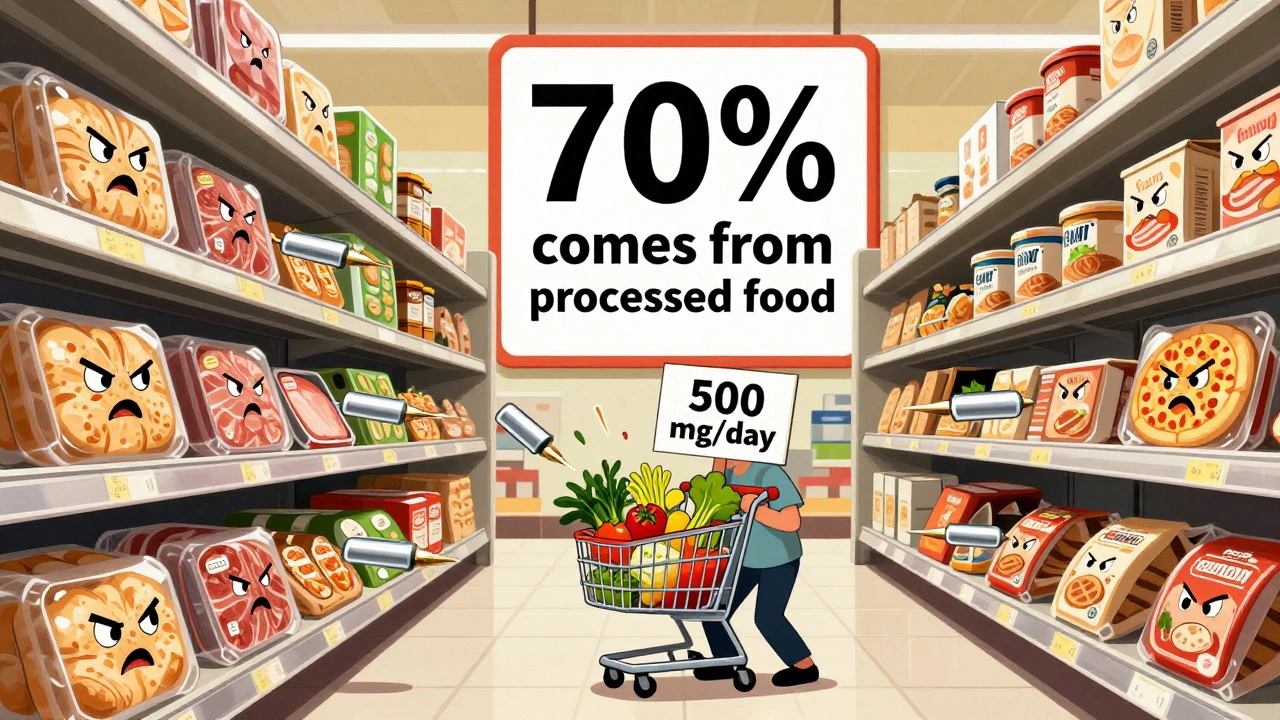
Most people think the salt shaker is the main culprit. It’s not. The FDA says about 70% of the sodium in your diet comes from packaged, processed, and restaurant foods. That’s your bread, canned soup, deli meat, frozen pizza, soy sauce, salad dressing, and even breakfast cereal. A single slice of store-bought bread can have 230 mg of sodium. Two slices? That’s 10% of your daily limit before you even start cooking. A cup of canned chicken noodle soup? Over 800 mg. A fast-food burger? Often 1,500 mg or more. That’s your entire day’s recommended limit in one meal. The American Heart Association recommends no more than 2,300 mg of sodium per day - and ideally, 1,500 mg for people with high blood pressure. But the average American eats 3,400 mg. That’s 1.5 teaspoons of salt. And if you’re on blood pressure meds, that extra 1,000-2,000 mg is directly undermining your treatment.Which Medications Are Most Affected?
Not all blood pressure drugs are impacted the same way. The strongest evidence shows that sodium reduction boosts the effect of three major classes:- ACE inhibitors (like lisinopril, enalapril): These relax blood vessels by blocking a hormone that narrows them. Too much salt makes your body produce more of that hormone, fighting the drug’s effect.
- ARBs (like losartan, valsartan): These work similarly to ACE inhibitors but block a different part of the same pathway. Salt interferes here too.
- Diuretics (like hydrochlorothiazide, furosemide): These are water pills - they help your kidneys flush out extra fluid. But if you keep eating salt, your body just holds onto more water, making the diuretic less effective. You might even need a higher dose.
What Happens When You Cut Salt - Fast Results
You don’t need to wait months to see a difference. The 2023 JAMA study showed measurable drops in blood pressure within seven days of switching to a low-sodium diet. Participants went from eating around 4,500 mg daily to just 500 mg - a drastic change, but one that’s possible with focused swaps. Here’s what a day on 500 mg of sodium might look like:- Breakfast: Oatmeal made with water, fresh berries, and a sprinkle of cinnamon (no salted butter or instant packets)
- Lunch: Grilled chicken salad with olive oil and vinegar, no canned beans or bottled dressing
- Dinner: Baked salmon with steamed broccoli and brown rice, seasoned with herbs, not soy sauce
- Snack: Apple with almond butter (check label - some brands add salt)
What About Salt Substitutes?
Many people turn to potassium chloride salt substitutes to reduce sodium. They can help - if you don’t have kidney disease or take certain medications. Potassium helps balance sodium in your body and can even lower blood pressure. But if you’re on ACE inhibitors, ARBs, or potassium-sparing diuretics (like spironolactone), adding extra potassium can be dangerous. High potassium levels can cause irregular heartbeats - even cardiac arrest. Always talk to your doctor before using salt substitutes. If you’re cleared to use them, look for products labeled “no sodium chloride” and check the potassium content. A quarter-teaspoon of potassium chloride can replace a full teaspoon of table salt - but only if your kidneys can handle it.How to Read Labels Like a Pro
You can’t avoid sodium by taste. You have to read labels. Here’s what to look for:- Goal: under 140 mg per serving - that’s the FDA’s definition of “low sodium.”
- Ignore “% Daily Value.” It’s based on 2,300 mg, which is too high for most people on meds.
- Check the serving size. A “low sodium” soup might say 140 mg - but if the can has two servings, you’re getting 280 mg just from one can.
- Watch for sneaky names: monosodium glutamate (MSG), baking soda, sodium nitrate, sodium benzoate, disodium phosphate.
- Buy fresh or frozen vegetables without sauce. Canned veggies are often packed in salt water.
Why This Matters Beyond Blood Pressure Numbers
Lowering sodium doesn’t just help your blood pressure. It protects your heart, kidneys, and blood vessels long-term. High salt intake increases protein in your urine - a sign your kidneys are under stress. That’s especially bad if you have diabetes or chronic kidney disease. Medications like ACE inhibitors and ARBs are often prescribed to protect your kidneys, but they work poorly if you’re still eating high-sodium meals. The American Heart Association estimates that if everyone in the U.S. cut sodium to 2,000 mg per day, we could prevent 280,000 to 500,000 heart attacks and strokes over the next decade. That’s not a guess. It’s based on CDC modeling.What If You Don’t See a Difference?
About 25-30% of people don’t see a big drop in blood pressure when they cut salt. That doesn’t mean it’s useless. Even if your pressure doesn’t budge, your arteries are under less strain. Your kidneys are working better. Your heart isn’t pumping as hard. The long-term damage from high sodium is still being avoided. And remember - the 2023 study showed that even in non-responders, sodium reduction didn’t cause harm. No side effects. No increased risk. Just a small group where the pressure didn’t drop as much. That’s why experts say: try it anyway. Everyone benefits in some way.The Bottom Line: Salt Is a Drug Interaction
Think of salt like another medication - one that’s counteracting your blood pressure pills. You wouldn’t take your statin with grapefruit juice. You wouldn’t take your antibiotics with alcohol. So why keep eating salt when you’re on hypertension meds? Cutting sodium isn’t about perfection. It’s about progress. Start by removing one high-sodium food per week. Swap canned soup for homemade. Choose fresh chicken instead of deli meat. Read one label before you buy. In a month, you’ll notice your blood pressure readings are more stable. Your doctor might even say you’re doing better than expected. This isn’t a lifestyle overhaul. It’s a simple, powerful adjustment - one that’s backed by the largest study of its kind, published in one of the world’s top medical journals. Your pills are working hard. Give them a chance to work better.Can I still eat salt if I’m on blood pressure medication?
Yes, but you need to limit it. Most people on blood pressure meds should aim for no more than 1,500 mg of sodium per day. Even 2,300 mg - the upper limit for healthy adults - can reduce how well your medication works. Cutting back helps your drugs do their job better.
How long does it take to see results after cutting salt?
You can see a drop in blood pressure within 7 days. A major 2023 study showed systolic pressure fell by 6 mm Hg in just one week after switching to a low-sodium diet. That’s faster than many people expect from lifestyle changes.
Do salt substitutes work for people on blood pressure meds?
They can help - but only if you don’t have kidney disease or take certain medications. Potassium chloride substitutes can raise potassium levels dangerously if you’re on ACE inhibitors, ARBs, or potassium-sparing diuretics. Always check with your doctor before using them.
Is it true that most sodium comes from the salt shaker?
No. About 70% of sodium comes from packaged, processed, and restaurant foods - not from adding salt while cooking or at the table. Bread, soup, deli meat, sauces, and frozen meals are the biggest sources. You have to read labels to control it.
Can reducing salt let me take less medication?
Yes, for many people. A 6 mm Hg drop in systolic pressure from lowering sodium is about half the effect of starting a new blood pressure pill. Some patients have been able to reduce their dosage or even stop one medication after cutting salt. But never change your dose without talking to your doctor.
I used to think salt was just for flavor. Turns out it's like adding a saboteur to my meds. Who knew? My BP dropped 8 points in 10 days after ditching processed food. No joke.
So let me get this straight... I've been paying for pills so my body can ignore them because I'm eating microwave ramen like it's a religion? Classic.
bro i was on losartan and kept eating soy sauce like it was water. turned out my bp wasnt responding because i was basically giving my arteries a salt bath. switched to no-salt tamari and my readings dropped like my ex's texts. 6mm Hg in a week? yep. mind blown.
I tried cutting salt for 3 days. I cried. I ate a whole bag of pretzels. I cried again. Then I cried over the fact that I'm 42 and my body is now a broken appliance that needs a manual. I'm not ready for this level of responsibility.
OMG YES!! 🙌 I switched to herbs + lemon + garlic and my BP is now LOWER than my anxiety levels 😭 I didn't even know I could feel this good without a pill pushing me down. You're not just saving your heart-you're saving your soul. 💪❤️
The real villain isn't salt it's the food industry they want you sick so you keep buying meds and their 'low sodium' products are just salt with a different name you think you're being smart but you're just giving them more money
The FDA's 'low sodium' label is a joke. 140mg per serving? That's like calling a 100-meter dash 'light exercise'. If you're on meds, you need under 70mg per serving. Period. Stop being fooled by marketing.
I didn't realize how much sodium was in my 'healthy' granola. I switched to plain oats and now I feel like I'm not fighting my own body anymore. Still a work in progress, but it's the first time my meds actually feel like they're helping.
Start small. Pick ONE thing: swap canned soup for homemade. Use herbs. Read ONE label. That’s your win. Progress > perfection. You don’t need to overhaul your life-just your pantry. And yes, your meds will thank you. You’ve got this.
They don't want you to know this. Salt is a control mechanism. The pharmaceutical-industrial complex needs you dependent. They market 'low sodium' products that still have 200mg per serving. They profit off your ignorance. I've been tracking my sodium since 2018. I'm not just healthier-I'm free.
I live in India, we use lots of salt, but also lots of turmeric and black pepper. My uncle had BP and he stopped all salt, started eating neem leaves and now he walks 10km daily. Maybe salt is not the problem? Maybe modern life is? Just saying.
I used to think salt was evil. Then I tried cutting it and felt dizzy. Turns out I was also low on potassium. Ate more bananas, spinach, sweet potatoes. Now I’m not on meds anymore. Not because I'm magic-because I listened to my body. Everyone’s different. Try, don't assume.
I read this whole thing. I'm still eating the same lunch. I'll just take an extra pill.
I mean, if you're not eating organic, artisanal, cold-pressed, Himalayan pink salt, then you're just a peasant with a broken heart and a bad BP reading. 💅
The study had 213 people for one week. That's not science. That's a trend. Your meds are still the real fix. Don't let a diet fad make you feel guilty.