
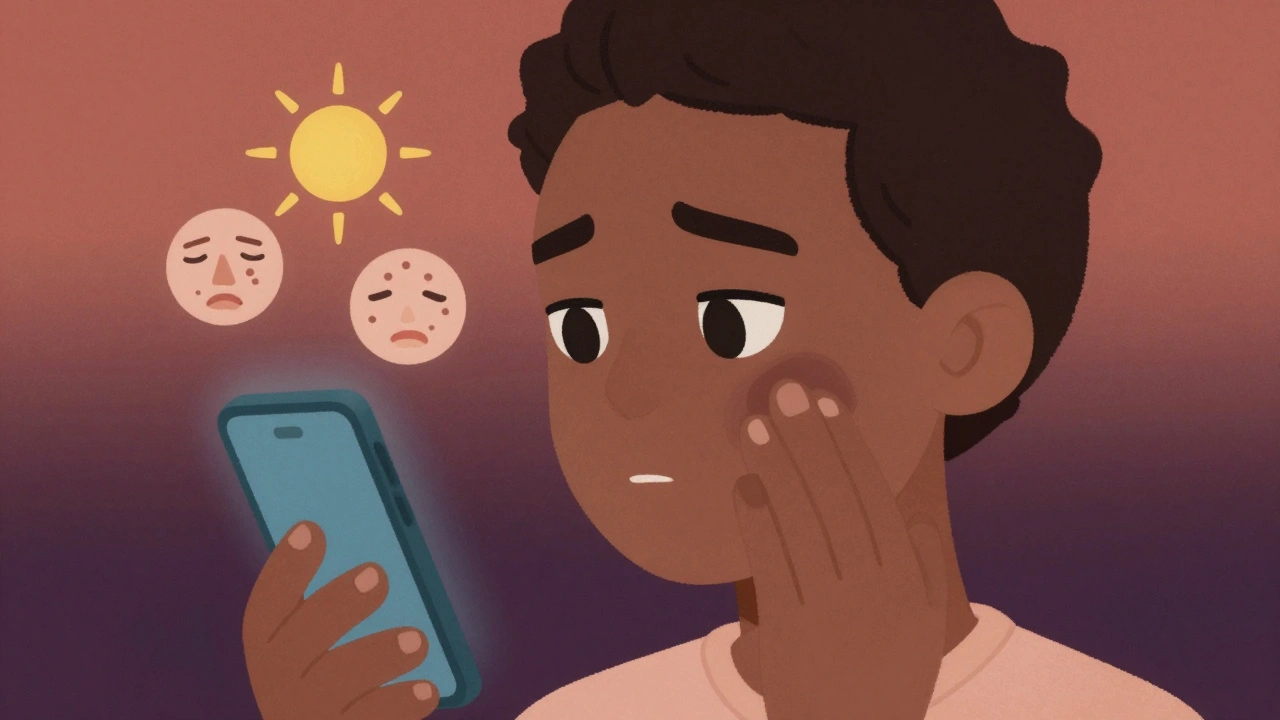
When you have darker skin, a pimple doesn’t just heal-it leaves a mark. That dark spot lingers for months, sometimes years, long after the acne is gone. Or maybe you got a cut, a burn, or even a bad hair removal session, and now there’s a patch of skin that won’t fade. This isn’t just cosmetic. It affects how you feel about yourself, how you dress, how you face the world. And if you’ve ever been told, “It’ll go away on its own,” you know that’s not true. For people with skin of color, hyperpigmentation is a common, persistent, and deeply personal issue.
What Is Hyperpigmentation in Skin of Color?
Hyperpigmentation happens when your skin makes too much melanin-the pigment that gives skin its color. In people with darker skin tones, melanocytes (the cells that make melanin) are more active and more easily triggered. That means even minor irritation-like acne, eczema, a scratch, or a razor burn-can cause the skin to darken in that spot. This is called post-inflammatory hyperpigmentation, or PIH. It’s not a scar. It’s not an infection. It’s your skin’s overreaction to injury. Unlike lighter skin tones, where redness fades quickly, darker skin turns brown, gray, or even purplish. These patches show up most often on the face, neck, arms, and legs. Melasma is another form, often called the “mask of pregnancy,” because it appears as large, blotchy brown patches on the cheeks, forehead, or upper lip. It’s more common in women, especially during hormonal shifts like pregnancy, birth control use, or menopause. The American Society for Dermatologic Surgery says hyperpigmentation isn’t just a skin issue-it’s emotional. People report feeling self-conscious, avoiding social events, covering up with makeup or clothing, even skipping job interviews. And it’s not rare. Studies show up to 65% of people with darker skin experience PIH at some point.Why Is It Worse in Skin of Color?
Darker skin has more melanin to begin with. That’s protective against UV damage-but it also means the melanin-producing system is more sensitive. A small bump, a little sun, even blue light from your phone screen can trigger a chain reaction. Melanocytes go into overdrive, dumping pigment into the surrounding skin. Sun exposure makes it worse. UV rays don’t just cause freckles-they activate melanin production across the board. That’s why even on cloudy days, if you’re not wearing sunscreen, those dark spots get darker. And here’s something many don’t realize: blue light from screens can also contribute. That’s why dermatologists now recommend tinted sunscreens with iron oxides-they block not just UVA and UVB, but also blue light, and they blend better with deeper skin tones. And it’s not just the sun. Certain medications, skincare products, and even some plants (like limes or celery) can cause a reaction called phytophotodermatitis. That’s when your skin reacts to a chemical + sunlight, leaving behind a dark, sometimes oddly shaped patch.How Is It Treated?
There’s no quick fix. Hyperpigmentation doesn’t vanish overnight. But it can fade-with the right plan. Treatment starts with two things: stopping the trigger and protecting the skin. First, treat what’s causing the inflammation. If you have acne, get it under control. If you have eczema, manage the flare-ups. If you’re on a medication that causes darkening (like some antibiotics or antimalarials), talk to your doctor about alternatives. Then, daily sunscreen is non-negotiable. Use a broad-spectrum SPF 30 or higher, reapplied every two hours if you’re outside. Tinted versions with iron oxides are ideal-they offer extra protection against blue light and help even out skin tone visually. Topical treatments are the next step. The most common ones include:- Hydroquinone: A gold-standard lightener that blocks melanin production. Used for short cycles (3-6 months) to avoid side effects.
- Tretinoin: A retinoid that speeds up skin turnover and helps fade dark spots. Often combined with hydroquinone.
- Azelaic acid: Gentle, anti-inflammatory, and safe for long-term use. Great for sensitive skin.
- Vitamin C: An antioxidant that brightens skin and blocks pigment formation.
- Kojic acid: A natural alternative that inhibits melanin. Works slowly but is less irritating.
What About Procedures Like Peels or Lasers?
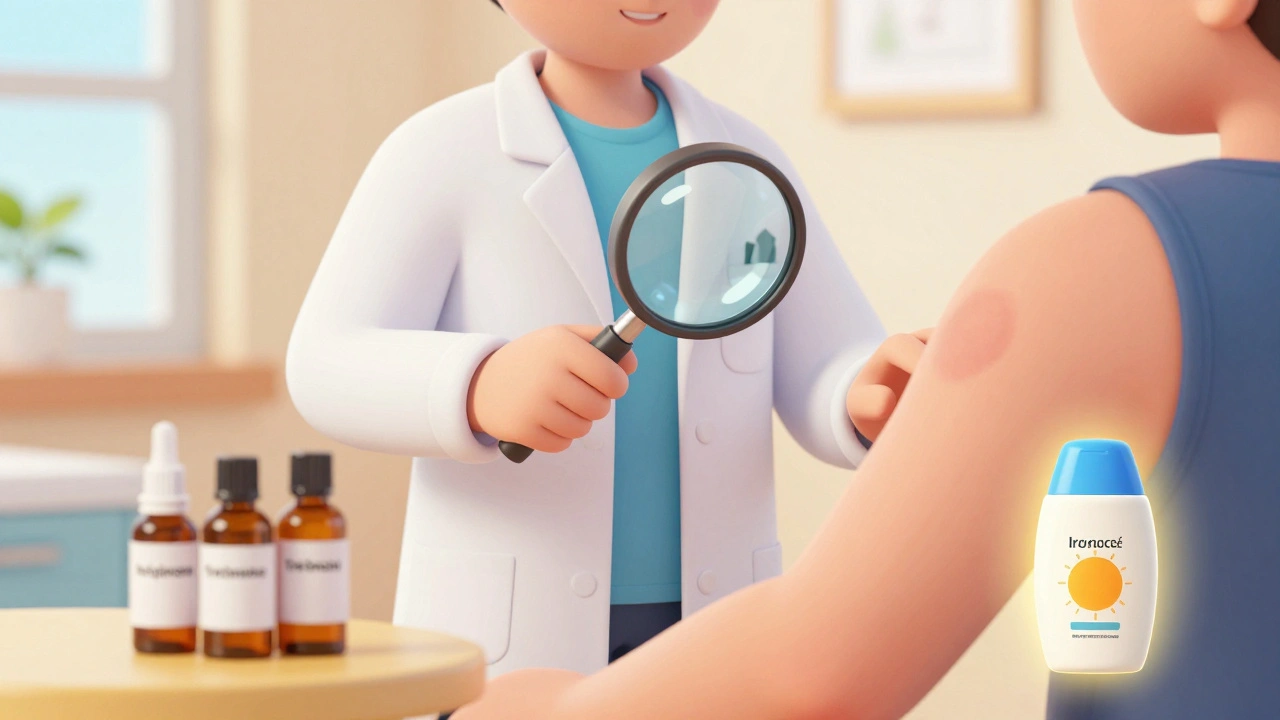
Chemical peels and laser treatments can help-but they’re risky in skin of color. If done wrong, they can cause more dark spots, scarring, or even permanent lightening. That’s why you need a dermatologist who specializes in skin of color. Light-based treatments like intense pulsed light (IPL) are often avoided because they can overheat melanin and trigger rebound pigmentation. But some lasers, like the low-fluence Q-switched Nd:YAG, are safer when used by experts. Chemical peels with glycolic or salicylic acid can be effective if kept mild and spaced out. The bottom line: Don’t go to a spa for a “brightening facial.” Go to a board-certified dermatologist who’s treated dozens of patients with your skin tone. Ask to see before-and-after photos of people with similar skin.What About Keloids?
While hyperpigmentation is about color, keloids are about texture. They’re raised, thick, rubbery scars that grow beyond the original wound. Think of a cut that heals-but instead of flattening, it keeps growing. Keloids can be itchy, painful, and emotionally crushing. They’re far more common in people with darker skin-up to 15-20 times more likely than in lighter skin tones. They often form after acne, piercings, surgeries, or even minor scratches. Some people develop them after chickenpox or vaccinations. Genetics play a big role. If your parent or sibling has keloids, you’re more likely to get them. Treatment is harder than for hyperpigmentation. Keloids don’t fade on their own. Standard treatments include:- Corticosteroid injections: The first-line option. Reduces size and itching over several sessions.
- Pressure therapy: Silicone sheets or compression garments worn for months can flatten keloids.
- Cryotherapy: Freezing the keloid with liquid nitrogen. Often combined with injections.
- Surgery: Cutting it out is risky-without follow-up treatment, it often comes back bigger.
- Laser therapy: Pulsed dye lasers can reduce redness and flatten keloids over time.

How to Prevent Both Conditions
Prevention is easier than correction. Here’s what works:- Never pick at acne or scabs. Let them heal naturally.
- Use gentle skincare. Avoid harsh scrubs, alcohol-based toners, or fragranced products.
- Wear sunscreen every day. Rain or shine. Indoors if you’re near windows.
- Get piercings and tattoos from licensed professionals. Poor technique increases keloid risk.
- Know your family history. If keloids run in your family, avoid unnecessary skin trauma.
- See a dermatologist regularly. Especially if you have acne, eczema, or a history of dark spots.
When to See a Dermatologist
You don’t have to live with dark spots or raised scars. If you’ve tried over-the-counter brighteners for 3 months with no change, it’s time to see a specialist. Same if a scar keeps growing after healing. Don’t wait until it’s worse. A good dermatologist will:- Check your skin type and history
- Rule out other conditions (like fungal infections or lupus)
- Create a personalized plan-no one-size-fits-all
- Monitor progress and adjust treatments
Can hyperpigmentation go away on its own?
Sometimes, but not always. Mild cases from acne or minor irritation may fade over 6-12 months. But deeper pigmentation, especially from melasma or repeated trauma, often sticks around without treatment. Waiting too long can make it harder to treat. Early intervention gives you the best chance.
Is hydroquinone safe for dark skin?
Yes, when used correctly. Hydroquinone is one of the most effective treatments for hyperpigmentation in skin of color. But it should be used in cycles-typically 3 to 6 months, then paused for a few months-to avoid ochronosis, a rare condition where skin turns blue-black. Always use it under a dermatologist’s supervision.
Can I use retinoids if I have sensitive skin?
Yes, but start slow. Use a low-strength tretinoin (0.025%) every other night, and always apply moisturizer before and after. Many dermatologists recommend combining it with azelaic acid or niacinamide to reduce irritation. Don’t rush-progress takes months, not weeks.
Why do keloids come back after surgery?
Because surgery itself is trauma. In people prone to keloids, the body overreacts to any skin injury-even a surgical cut. That’s why removing a keloid without follow-up treatment (like steroid injections or pressure dressings) often makes it worse. Surgery alone is rarely enough.
Do I need to wear sunscreen indoors?
If you’re near windows, yes. UVA rays penetrate glass and can trigger hyperpigmentation. Blue light from screens may also contribute. A tinted sunscreen with iron oxides is ideal-it protects against both and blends naturally with darker skin tones.
Been dealing with PIH since my acne days in college. Thought it'd fade, nah. Took me 3 years and a dermatologist who actually knew what melanin was to finally see progress. Sunscreen non-negotiable. Tinted SPF 50 every. single. day. Even indoors. My face looks like a different person now.
Thank you for writing this. As a woman of color, I’ve been told ‘it’s just pigmentation’ like it’s nothing. It’s not. It’s the reason I wore scarves in 90-degree weather. It’s the reason I avoided mirrors. This isn’t vanity-it’s survival. The fact that you included melasma and blue light? Huge. I’ve been using iron oxide tinted sunscreen for 8 months. My cheeks finally stopped looking like a bruise.
HYDROQUINONE IS A GAME CHANGER 🙌 But don’t go wild-3 months on, 3 months off. I went rogue once and my jawline turned gray. Not cute. Also, azelaic acid is the quiet hero no one talks about. Gentle. Works. No drama. 🌿
It’s fascinating how the biological mechanisms of hyperpigmentation in skin of color reflect an evolutionary adaptation that, in modern contexts, becomes a pathological response. The melanocyte’s hyper-reactivity to inflammatory stimuli-mediated through paracrine signaling pathways involving endothelin-1 and stem cell factor-creates a feedback loop that perpetuates pigment deposition. The clinical challenge lies in interrupting this cascade without inducing iatrogenic hypopigmentation or oxidative stress. The emerging use of cysteamine, which inhibits tyrosinase via thiol-mediated mechanisms, represents a paradigm shift from traditional depigmenting agents. Yet, the psychosocial burden remains under-addressed in dermatological literature.
I’ve been in the UK for 15 years and still can’t find a dermatologist here who understands how to treat PIH in darker skin. Most just hand you hydroquinone and say ‘use it sparingly.’ No follow-up. No monitoring. No discussion of blue light or iron oxides. I ended up flying to NYC for a consult. Worth every penny. If you’re outside the US and struggling-don’t settle. Travel if you have to. Your skin deserves better than guesswork.
Stop blaming the sun. It’s your diet. You eat too much sugar. That’s why your skin turns dark. I’ve seen it. Cut the bread, cut the soda, and your spots go away. No fancy creams needed.
Ugh. Another ‘skin of color’ post. Can we just get over it? Everyone gets dark spots. Stop making it a thing. Also, sunscreen? I don’t wear it. I’m not a vampire.
I’ve had keloids from ear piercings since I was 16. Got the steroid shots. They helped. But the real game-changer? Silicone sheets. Wore them 24/7 for 6 months. They’re ugly, they itch, but they flattened the worst one. No surgery. No lasers. Just patience and a weird-looking patch on my ear. Worth it. Don’t wait like I did.
It is imperative to note that the proliferation of unregulated ‘brightening’ treatments in the beauty-industrial complex constitutes a form of medical malpractice when applied to individuals with Fitzpatrick skin types IV–VI. The absence of standardized protocols, coupled with the commodification of dermatological care, results in iatrogenic hyperpigmentation at alarming rates. I implore all readers to consult only board-certified dermatologists with documented experience in ethnic skin. Do not be swayed by influencer testimonials.
Wait… so you’re telling me that blue light from my phone is causing my dark spots? And that sunscreen isn’t enough? And that the government doesn’t want us to know this? This is a big pharma cover-up! They’re selling hydroquinone to make us dependent, while hiding the real cure-vitamin D and apple cider vinegar rinses! I’ve been using this for 3 weeks and my skin is glowing! Why won’t the dermatologists tell you this?!!
my skin got dark after i popped a zit. i tried everything. finally i just started using cocoa butter and it helped a lil. sunscreen is overrated. i dont even use it. also hydroquinone sounds scary. why not just use lemon juice? its natural right?
Too long. Just say: sunscreen and don't pick.
I want to thank the author for writing this with such care. I’ve been a nurse for 18 years, and I’ve seen so many patients-especially young women-come in ashamed of their skin. They hide behind hats, avoid photos, skip dates. This isn’t just about pigment. It’s about dignity. I’ve started recommending the exact regimen you outlined: tinted sunscreen with iron oxide, azelaic acid at night, and a gentle cleanser. One patient, 22, told me she went to her first concert in 4 years last month-no foundation, no scarf. She cried. I cried. You’ve given people back their skin. And that’s everything.