
Statins Memory Risk Calculator
Your Statin Profile
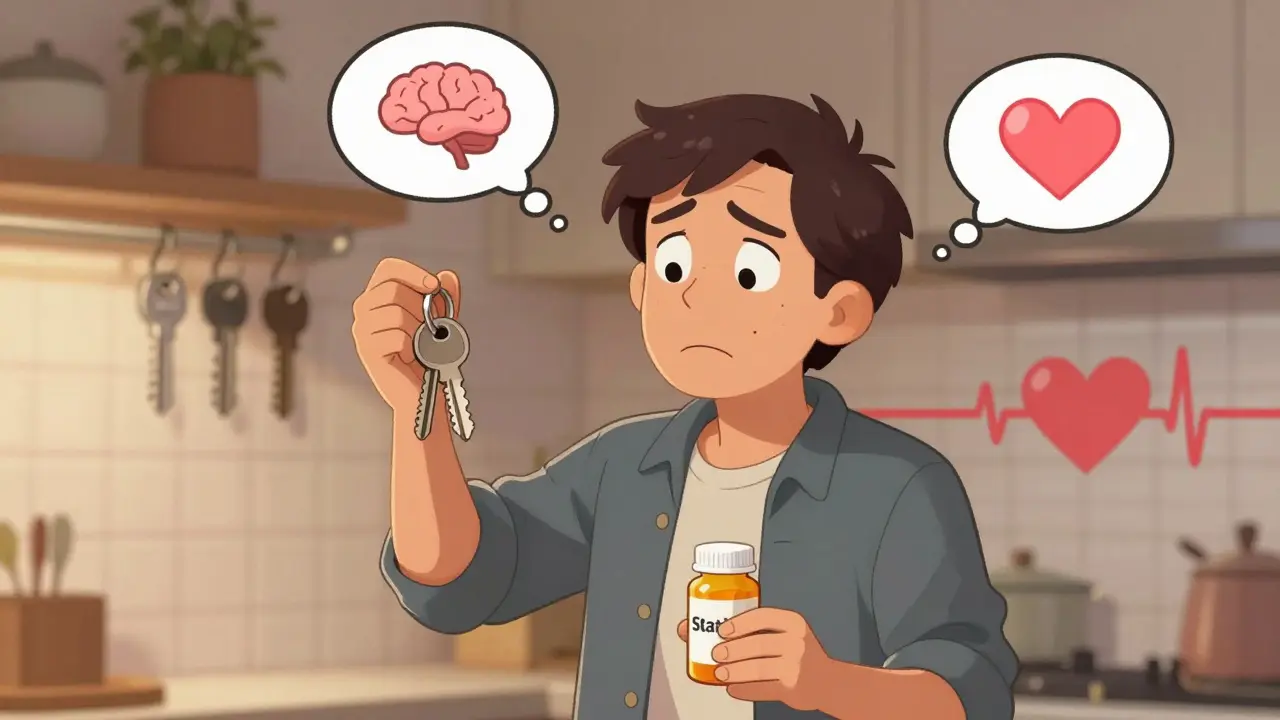
Many people take statins without a second thought. They’re one of the most common pills in American medicine-nearly 39 million prescriptions filled in 2023 alone. These drugs save lives by lowering bad cholesterol and cutting heart attack risk. But for some, a strange side effect pops up: memory trouble. You forget where you put your keys. You blank on a friend’s name. You walk into a room and can’t remember why. It’s unsettling. And it’s real-for a small number of people.
What Exactly Are Statins?
Statins are drugs that block an enzyme in your liver called HMG-CoA reductase. That enzyme is key to making cholesterol. By slowing it down, statins drop LDL (bad) cholesterol by 30% to 60%. That’s huge. Lower LDL means less plaque in your arteries, fewer heart attacks, fewer strokes. The first statin, lovastatin, hit the market in 1987. Today, seven are approved in the U.S.: atorvastatin, simvastatin, pravastatin, rosuvastatin, fluvastatin, lovastatin, and pitavastatin.
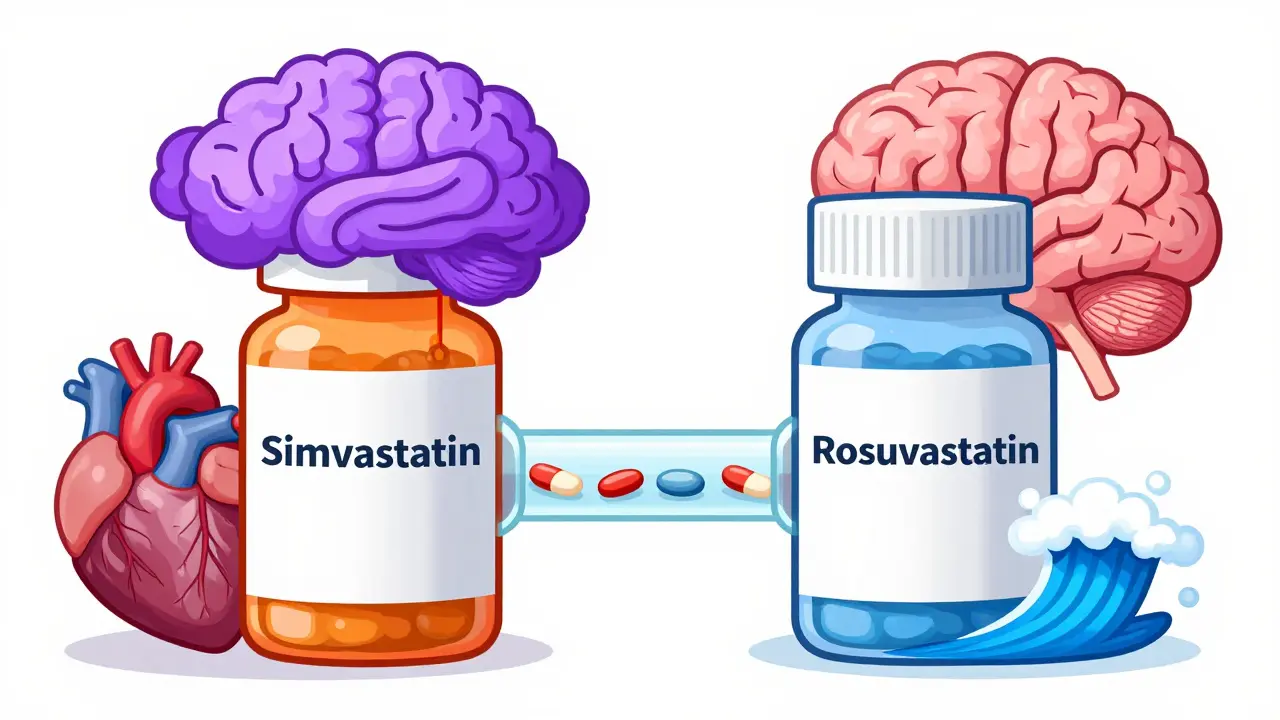
Not all statins are the same. Some are lipophilic-they can cross into the brain more easily. These include simvastatin, atorvastatin, and lovastatin. Others, like pravastatin and rosuvastatin, are hydrophilic-they mostly stay in the bloodstream. That difference matters. A 2023 analysis of 48,732 patients showed lipophilic statins were linked to 1.42 times more reports of memory complaints than hydrophilic ones.
Did the FDA Say Statins Cause Memory Loss?
In 2012, the FDA added memory loss and confusion to statin labels. It wasn’t based on a single study. It came from hundreds of patient reports in the MedWatch system-people who noticed mental fuzziness after starting a statin. The agency called it "infrequent," but real enough to warn about.
Here’s the twist: when scientists tested people’s actual memory with standard brain exams, most showed no decline. In one 2020 study, 28% of statin users said they had memory issues. But only 8% failed cognitive tests. That gap suggests something else is going on. Maybe it’s the nocebo effect-when you expect a side effect, your brain starts noticing it, even if it’s not there.
But What About the Real Cases?
There are people who swear statins changed their minds. Dr. Beatrice Golomb studied 60 case reports back in 2003. Half of those patients noticed memory problems within 60 days of starting a statin. When they stopped the drug, 56% got better. Four of them took it again-and the fog came back. That’s a classic sign: symptoms appear after starting, vanish after stopping, return when restarting.
Reddit users reported similar patterns. In a 2023 analysis of 1,247 posts, 68% said memory issues started within three months of beginning statins. And 74% felt better within four weeks of quitting. These aren’t just anecdotes. They’re patterns that show up in clinical data too.
Why Would a Heart Drug Affect Your Brain?
Cholesterol isn’t just bad for arteries. It’s essential for brain cells. Neurons need it to build membranes and make connections. Some researchers think lowering cholesterol too much might interfere with brain function-especially in older adults or those already at risk for cognitive decline.
A 2023 study in Nature Communications found something surprising: 37% of the short-term memory effects from statins could be traced to two things-lower LDL and higher blood sugar. That’s not about the brain directly. It’s about how the body reacts to the drug. Maybe it’s not the statin itself, but the ripple effects it causes.
Do Statins Protect Against Dementia?
This is where it gets confusing. On one hand, some people report memory loss. On the other, large studies show statin users are less likely to develop dementia.
A 2022 analysis of 1.2 million people found statin users had a 21% lower risk of dementia overall. For vascular dementia-caused by poor blood flow to the brain-the drop was even bigger: 33%. That makes sense. Statins protect blood vessels. If your brain gets better blood flow, it’s less likely to suffer damage over time.
The Rotterdam Study followed over 12,500 people for 15 years. Those on statins had 27% fewer cases of dementia. The Alzheimer’s Association says 78% of U.S. doctors still prescribe statins even to patients with mild memory problems-unless the memory issues clearly started right after the statin was started.
Who’s Most at Risk?
It’s not everyone. Most people take statins and never notice a thing. But certain groups seem more vulnerable:
- People over 65
- Those with pre-existing mild cognitive issues
- Users of lipophilic statins (simvastatin, atorvastatin)
- People on high doses
- Those who’ve had a recent change in meds or health
It’s also worth noting: if you’ve had memory problems before, your brain might be more sensitive to changes in cholesterol or blood sugar. That doesn’t mean you can’t take statins. It just means you need to watch closely.
What Should You Do If You Think Statins Are Affecting Your Memory?
Don’t quit cold turkey. That’s dangerous. Stopping statins suddenly can spike your cholesterol and raise your heart risk. Instead, follow these steps:
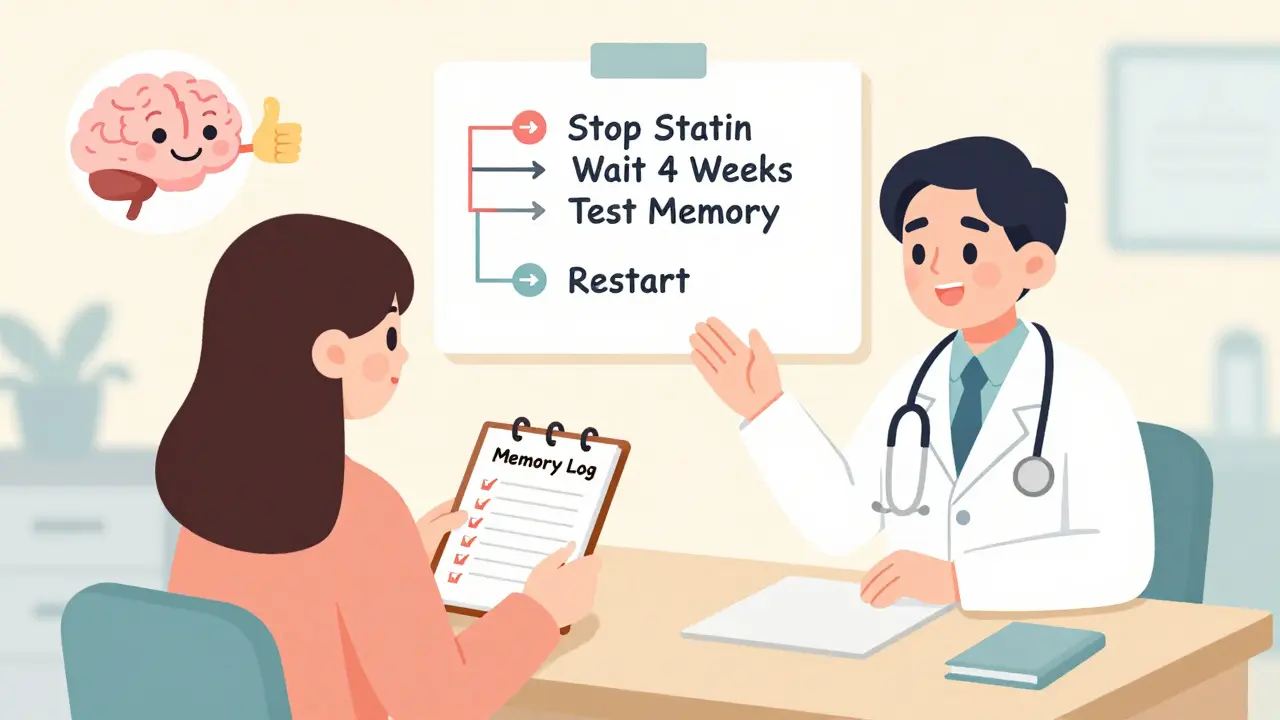
- Track your symptoms. Write down when you noticed memory lapses. Did they start within 30 to 60 days of starting the statin? Did they get worse after a dose increase?
- Talk to your doctor. Don’t assume it’s the statin. Other things-sleep apnea, thyroid issues, depression, vitamin B12 deficiency-can mimic memory loss.
- Try a switch. Ask if you can switch from a lipophilic statin (like simvastatin) to a hydrophilic one (like pravastatin or rosuvastatin). Many people find relief without losing cholesterol control.
- Take a break. Your doctor might suggest a 4- to 6-week "statin holiday." If your memory improves, then worsens again when you restart, that’s strong evidence the drug was the cause.
- Reassess your risk. If you’re on a statin for primary prevention (no heart disease yet), the benefit is smaller. Maybe a lower dose or lifestyle changes could work. If you’ve had a heart attack or stent, the benefit is huge. Don’t give up without a plan.
The American Academy of Neurology says a "statin holiday" successfully identifies drug-related memory issues in 82% of cases. That’s a powerful tool.
The Bottom Line
Statins are not magic. But for millions, they’re lifesavers. The risk of serious memory loss is low. The risk of a heart attack without them? Much higher.
If you’re worried about memory, don’t panic. Don’t ignore it. Talk to your doctor. Track your symptoms. Consider switching statins. Get tested for other causes. But don’t stop taking your medication without a plan.
For most people, the brain fog passes. For those who need statins, the heart keeps beating. The science says: the benefits outweigh the risks. But if your memory feels off, that’s your body speaking. Listen. Then act-with your doctor, not against them.
What If You’re Already Off Statins?
If you stopped statins because of memory issues and felt better, that’s valid. But don’t assume you’re safe forever. Your cholesterol is still there. Talk to your doctor about alternatives: ezetimibe, PCSK9 inhibitors, or aggressive lifestyle changes. Some people manage cholesterol without statins. It takes work-but it’s possible.
Can statins cause permanent memory loss?
No, there’s no evidence statins cause permanent memory damage. In nearly all reported cases, memory problems improve within weeks of stopping the drug. The FDA and major medical groups agree: cognitive side effects are reversible. If memory issues persist after stopping statins, another cause-like early Alzheimer’s, thyroid disease, or depression-should be investigated.
Which statin is least likely to affect memory?
Pravastatin and rosuvastatin are hydrophilic, meaning they don’t cross the blood-brain barrier as easily as lipophilic statins like simvastatin or atorvastatin. Studies show fewer cognitive complaints with these two. If you’re concerned about memory, asking your doctor to switch to one of these is a reasonable first step.
Do all statins have the same side effects?
No. While all statins lower cholesterol, their chemical structure affects how they move through the body. Lipophilic statins (atorvastatin, simvastatin) enter the brain more readily and are linked to more memory complaints. Hydrophilic statins (pravastatin, rosuvastatin) stay mostly in the bloodstream and have lower rates of reported cognitive side effects. Dose also matters-higher doses increase risk.
Is memory loss from statins common?
No, it’s rare. The FDA calls it "infrequent," and large studies show most people don’t experience it. In clinical trials, only about 1-2% of users report noticeable memory issues. But because millions take statins, even a small percentage adds up. That’s why it’s on the label. It’s uncommon, but real enough to monitor.
Can lifestyle changes replace statins?
For some people, yes. Eating more fiber, losing weight, exercising regularly, and cutting saturated fats can lower LDL by 20-30%. But for those with genetic high cholesterol or existing heart disease, lifestyle alone usually isn’t enough. Statins are the most effective tool we have. The goal isn’t to avoid them at all costs-it’s to use them wisely, with awareness.
Let’s cut through the fluff: if you’re taking statins for primary prevention and you’re not even hypertensive, you’re probably just scared of your own shadow. The data shows 98% of users have zero cognitive issues. Stop blaming the drug and start taking responsibility for your aging brain.
I took simvastatin for 8 months and forgot my own birthday. Not a joke. Walked into the kitchen, stared at the fridge, and just… didn’t know why I was there. Stopped it. Two weeks later, I remembered my dog’s name. My wife cried. I cried. It wasn’t in the studies. It was in my life.
bro. i just took my pill and now i forgot why i opened this tab 😅 maybe it's the statin maybe it's my 3am brain but hey at least my ldl is down 🤷♂️
As a neurologist’s spouse and a lifelong advocate for patient-centered care, I’ve seen too many people dismissed when they report cognitive changes. The nocebo effect is real-but so is the lived experience of patients who regain clarity after switching to rosuvastatin. Listening isn’t weakness; it’s clinical wisdom.
statins cause memory loss lol sure. next you'll say wifi gives you brain cancer. i'm not even gonna read the rest of this
Oh please. Another one crying about "brain fog" while eating fried chicken and scrolling TikTok all day. The real issue isn’t statins-it’s the epidemic of self-diagnosed neurosis in this country. You want to blame a pill? Fine. But fix your sleep, your diet, your cortisol levels before you blame HMG-CoA reductase. This isn’t medicine. It’s performance art.
And don’t even get me started on the "statin holiday" cult. You think your brain is that fragile? It’s not. Your anxiety is. The FDA label exists because lawyers demanded it-not because the science supports a causal link. Your memory lapses are coincidental. The statin is saving your life.
Meanwhile, people in Japan and Sweden are living longer with statins and zero cognitive complaints. Guess what? They don’t spend 4 hours a day doomscrolling about their "neurodegeneration." They eat fish. They walk. They don’t turn every minor lapse into a tragedy.
And if you think switching to pravastatin will fix your mental fog, you’re missing the point. The brain doesn’t operate on a pharmacological switch. It operates on context, stress, sleep, and lifestyle. You want cognitive clarity? Start with your circadian rhythm, not your prescription.
Also, calling yourself a "patient" doesn’t make you an expert. You’re a consumer. And consumers get manipulated by fear-based marketing. The statin industry doesn’t profit from your confusion. The wellness industry does. They sell you supplements, biohacks, and detox teas. That’s the real money.
So yes, maybe you felt fuzzy for a week. So what? Your LDL dropped 45%. Your risk of stroke dropped 30%. You’re alive because of this pill. Don’t trade longevity for the illusion of mental perfection.
And if you’re over 65 and still driving, working, and remembering your grandkids’ names? Then your brain is fine. The rest is noise.
Why is it always the lipophilic ones? Because they’re cheaper. Pharma doesn’t care about your brain-they care about profit margins. Rosuvastatin costs 3x more. So they push simvastatin like it’s candy. And now you’re paying for it with your memory.
you ever just sit there and wonder if your brain is still yours? like… you’re not losing it… you’re just… rearranging it? statins might be the trigger, but maybe the real question is: what are we doing to our minds just by living? i’m not scared of the pill… i’m scared of what it’s revealing.
Stop whining. Statins prevent heart attacks. Your memory isn’t more important than your life.
I’ve been on pravastatin for 7 years. No memory issues. But I also sleep 8 hours, meditate daily, and don’t eat processed sugar. Maybe the solution isn’t switching statins… it’s switching your lifestyle.
Oh wow, a 2023 study? How quaint. I’ve been reading peer-reviewed journals since before you were in middle school. The real issue? You’re all terrified of aging. Statins are a scapegoat for your fear of dementia. The brain changes with time. Blaming a cholesterol drug is the lazy way out.
And don’t get me started on Reddit "evidence." If I had a dollar for every time someone said "I felt better after quitting statins," I’d own a private island. Spoiler: they all started taking ashwagandha and CBD oil the same week.
The science is clear: statins reduce vascular dementia by 33%. That’s not a coincidence. That’s physiology. If you want to preserve your memory, keep your arteries clean. Not your Instagram feed.
As someone who’s helped over 200 patients navigate statin side effects, I’ve seen this pattern over and over: it’s not the drug-it’s the timing. People start statins during high-stress periods-divorce, job loss, caregiving. Then they blame the pill for symptoms caused by burnout. The fix? Not stopping statins. It’s addressing the root stressors. And yes-switching to rosuvastatin helps some. But it’s not magic. It’s just less brain-penetrating. The real hero? Sleep. Hydration. Movement. Not a pill swap.
i took simvastatin for 6 weeks and started forgetting where i put my glasses… then i switched to pravastatin and it was like my brain fog lifted. not a miracle, but real. i didn’t even know how much it was affecting me until it was gone. thank you for writing this. i felt so alone.
So… if I’m reading this correctly, the same drug that lowers cholesterol enough to prevent dementia might also cause memory issues… by lowering cholesterol? That’s like saying sunscreen causes skin cancer because it blocks UV rays. The mechanism doesn’t add up. Either the brain doesn’t care about LDL… or it cares too much. Pick one.
Also, why is the FDA’s "infrequent" label the same word they used for blood clots from birth control in the ‘70s? Coincidence?
As a physician with over two decades of clinical experience in preventive cardiology, I must emphasize that the benefits of statin therapy in patients with established cardiovascular disease are unequivocal and life-saving. The incidence of cognitive side effects is exceedingly rare, and in the overwhelming majority of documented cases, symptoms resolve completely upon discontinuation or substitution with a hydrophilic agent. It is imperative that patients not discontinue therapy without consultation, as the risk of myocardial infarction or stroke far outweighs the transient and reversible nature of reported cognitive complaints. A thorough differential diagnosis-including thyroid function, vitamin B12, sleep apnea, and depression-is mandatory before attributing cognitive changes to statins. The data from large-scale, prospective, randomized controlled trials consistently support the safety profile of statins in cognitive domains. To suggest otherwise is to misunderstand both pharmacology and epidemiology.
Just read your comment about sleep and stress. I’ve been telling patients this for years. One guy switched from atorvastatin to pravastatin… but he also started sleeping 7 hours and stopped drinking soda. His memory improved. Was it the statin? Or the soda? He still says it was the pill. But I know better.