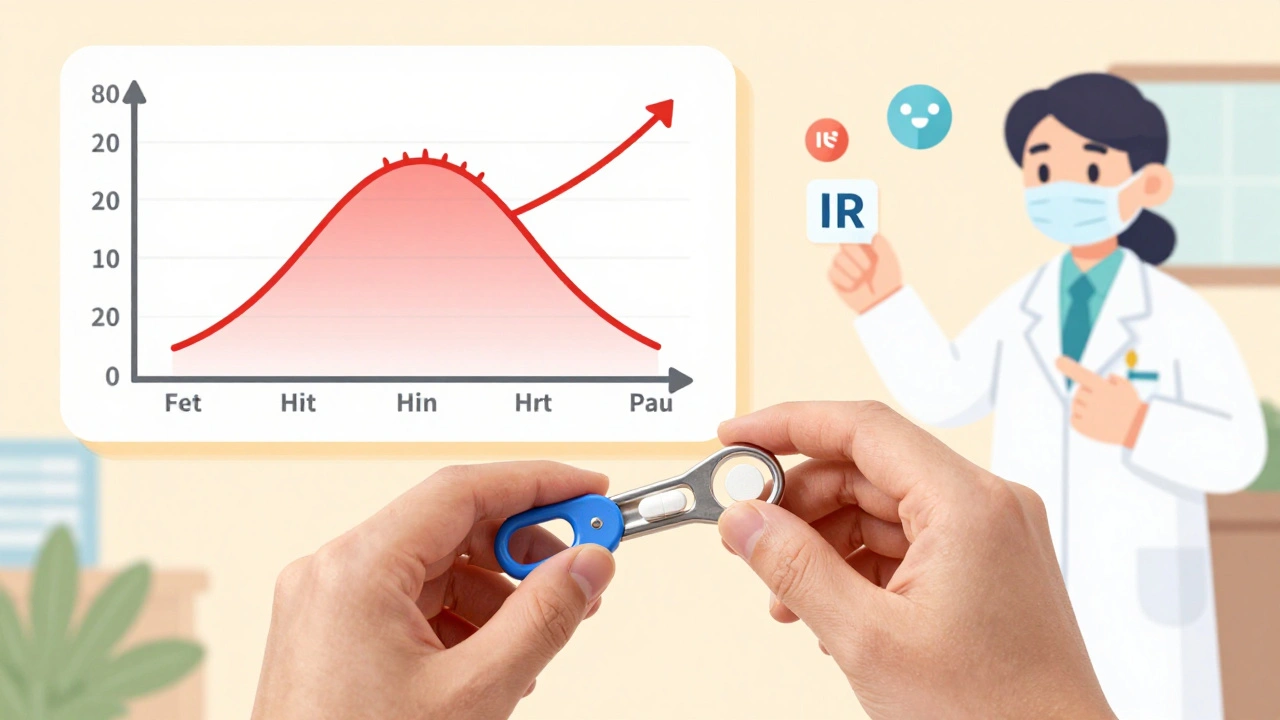
Dose Splitting: How to Safely Divide Pills for Better Medication Control
When you dose splitting, the practice of dividing a tablet or capsule into smaller portions to achieve a lower dose. Also known as pill splitting, it’s a common strategy used by people managing chronic conditions to cut costs or fine-tune their treatment. Not every pill can be split—and splitting the wrong one can be risky. Some medications are designed to release slowly over hours. Crush or split those, and you might get a dangerous spike in drug levels. Others have coatings that protect your stomach or mask bitter tastes. Breaking them can ruin the whole purpose.
Pill cutters, simple handheld devices designed to split tablets evenly, are the only safe tool for this job. Don’t use knives, scissors, or your fingers. A good pill cutter gives you clean, consistent halves or quarters. But even with the right tool, you need to know which pills are safe to split. Etodolac, a common NSAID used for arthritis pain, is often prescribed in 400 mg doses but can be safely split into 200 mg halves if your doctor approves. The same goes for prednisone, a corticosteroid often prescribed in 10 mg tablets, which many people split to taper off gradually. But never split extended-release versions like carbidopa-levodopa, a Parkinson’s medication with a timed release system—breaking it ruins how it works.
Dose splitting isn’t just about saving money. It’s also about precision. Some people need 37.5 mg of a medication, but it’s only available in 50 mg tablets. Splitting lets them get closer to the right dose without switching to a less effective or more expensive option. But it’s not a free-for-all. The FDA, the U.S. agency that regulates drug safety and manufacturing confirms that many generics are just as suitable for splitting as brand-name versions—if they’re scored and approved for it. Always check the label, ask your pharmacist, or look up the drug in the FDA’s database. And never split pills without your doctor’s okay, especially if you’re on blood thinners, antidepressants, or cancer drugs.
You’ll find real examples in the posts below: how splitting etodolac helps manage arthritis pain without overspending, why timing your meds matters even when you split them, and how generic drug quality controls make splitting safer than you think. Some posts warn you about dangerous mistakes—like splitting enteric-coated pills or ignoring lot recalls. Others show how small changes, like using a pill cutter and checking scores, can make your treatment more stable and affordable. This isn’t about cutting corners. It’s about working smarter with what you’ve got.
Splitting medication doses can reduce side effects by lowering peak blood levels, but only for certain drugs. Learn which medications are safe to split, the risks of tablet splitting, and how to do it safely with expert guidance.