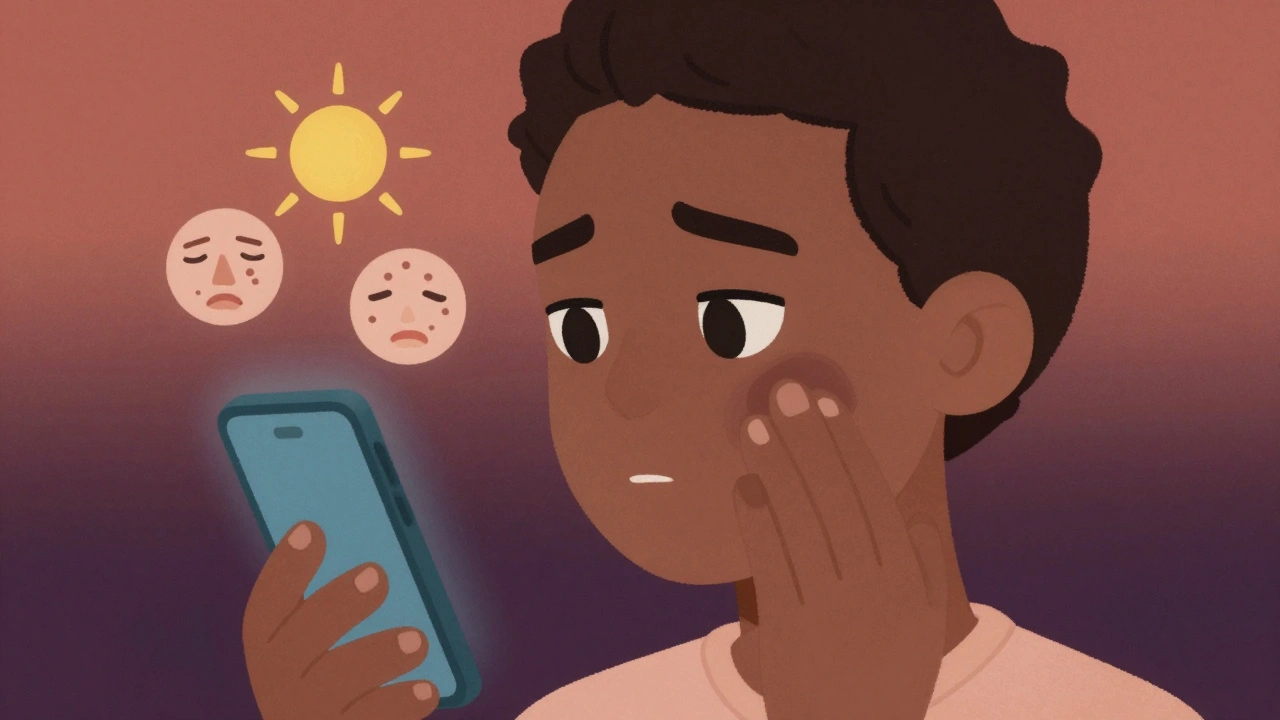
Melasma: Causes, Triggers, and How Medications Can Help
When your skin starts showing stubborn brown or gray-brown patches—usually on the face—it’s often melasma, a skin condition marked by uneven pigmentation, commonly triggered by sun exposure and hormonal shifts. Also known as chloasma, it’s not dangerous, but it can be frustrating, especially when it shows up on your cheeks, forehead, or upper lip. Unlike a simple tan, melasma doesn’t fade easily with time or sunscreen alone. It sticks around because it’s tied to how your skin’s pigment cells respond to hormones and UV light.
Many people with melasma are women, especially during pregnancy, on birth control, or going through hormone therapy. But men get it too, especially if they spend a lot of time in the sun without protection. The real villain here isn’t just the sun—it’s how your skin reacts to it. If you’re taking any medication that makes your skin more sensitive to UV rays, like certain antibiotics or acne treatments, you’re at higher risk. That’s why photosensitivity, an increased reaction of the skin to ultraviolet light due to medications or other factors is a key player in melasma flare-ups. Even a short walk outside without proper SPF can make dark spots worse.
Topical treatments like hydroquinone, tretinoin, or azelaic acid are common, but they don’t work unless you’re strict about sun protection. That means broad-spectrum SPF 30+ every single day, even when it’s cloudy. Hats with wide brims and UPF clothing help too. Some people see improvement with chemical peels or laser treatments, but those can backfire if your skin isn’t properly prepared. And if you’re on hormonal meds, talk to your doctor about alternatives—sometimes switching birth control or stopping hormone therapy can make a noticeable difference.
What you’ll find in the posts below isn’t just a list of treatments. It’s real advice from people who’ve dealt with this—how to spot early signs, which medications might be making it worse, and how to protect your skin without overdoing it. You’ll see how sun protection, the consistent use of UV-blocking measures to prevent skin damage and pigmentation ties into drug safety, how certain prescriptions affect your skin’s response to light, and why timing your meds matters even when you’re not thinking about your face. This isn’t about beauty routines. It’s about understanding your skin’s biology, what triggers it, and how to stop the cycle before it gets worse.
Hyperpigmentation and keloids are common, persistent skin conditions in people with darker skin tones. Learn what causes them, how to treat them safely, and how to prevent them from worsening over time.