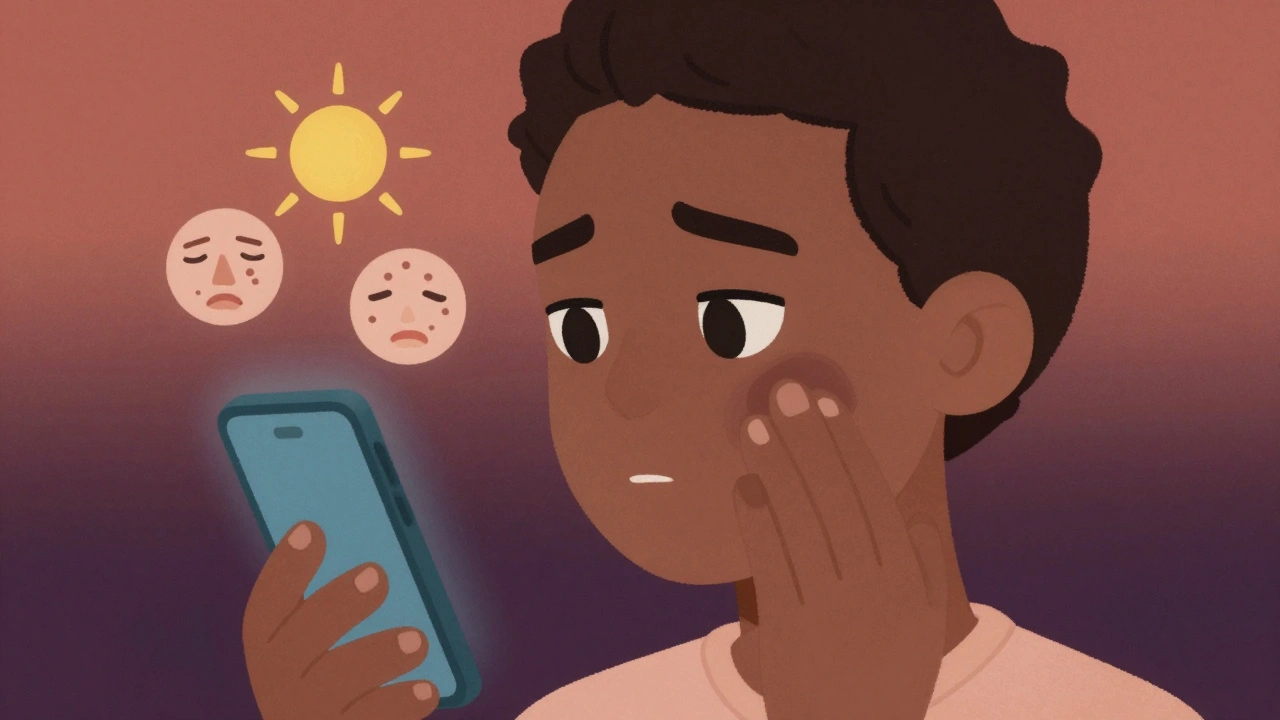
Post-Inflammatory Hyperpigmentation: Causes, Treatments, and What You Can Do
When your skin gets hurt—whether from acne, a cut, a burn, or even a harsh chemical peel—it doesn’t just heal cleanly. Sometimes, it leaves behind a dark patch that won’t fade. That’s post-inflammatory hyperpigmentation, a common skin condition where excess melanin is produced after inflammation or injury. Also known as PIH, it’s not dangerous, but it can be frustrating, especially when it sticks around for months or even years. This isn’t scarring. It’s your skin’s overreaction to damage, and it happens more often in people with darker skin tones, though anyone can get it.
What triggers it? acne, a major cause of PIH, especially when picked at or treated too aggressively. sun exposure, makes it worse by stimulating melanin production. Even minor irritation from shaving, eczema, or allergic reactions can trigger it. The darker the spot, the longer it takes to fade—and the more likely you are to reach for creams, lasers, or home remedies. But not all of them work. Some make it worse.
Here’s what actually helps: daily sunscreen. Not just any SPF—something broad-spectrum, SPF 30 or higher, reapplied every few hours if you’re outside. Sunscreen is the single most effective tool you have. Topical treatments like hydroquinone, azelaic acid, or niacinamide can lighten spots over time, but they take weeks to show results. Chemical peels and lasers? They can work, but only if done by someone who understands skin types. A bad laser session on darker skin can leave you with even darker patches.
You’ll notice most of the posts here focus on how medications and treatments affect the body—not just the disease, but the side effects. That’s the same principle here. PIH isn’t a disease you cure. It’s a reaction you manage. You can’t rush it. You can’t ignore the sun. And you can’t treat it like a quick fix. The articles below cover everything from how topical antifungals like clotrimazole affect skin sensitivity, to how steroids like prednisone can trigger or worsen pigmentation changes, to why timing and dosage matter even in skincare. You’ll find real advice on what works, what doesn’t, and how to avoid making your skin worse while trying to fix it.
Hyperpigmentation and keloids are common, persistent skin conditions in people with darker skin tones. Learn what causes them, how to treat them safely, and how to prevent them from worsening over time.