Salt and Blood Pressure: What You Need to Know About Sodium’s Impact on Your Heart
When we talk about salt and blood pressure, the link between dietary sodium and elevated blood pressure is one of the most studied and debated topics in public health. Also known as sodium intake, it’s not just about how much salt you add to your food—it’s about the hidden sodium in bread, canned soups, deli meats, and even breakfast cereal. For some people, cutting back on salt drops their blood pressure like a rock. For others, it barely moves the needle. That’s because your body’s response to sodium depends on genetics, age, kidney function, and how long you’ve been eating high-sodium foods.
High blood pressure, also called hypertension, is a silent threat—it doesn’t cause symptoms until it’s already damaging your heart, kidneys, or arteries. The American Heart Association says most adults should aim for less than 2,300 mg of sodium a day, and ideally under 1,500 mg if you’re at risk. But here’s the catch: most people eat over 3,400 mg daily without even trying. That’s because processed and restaurant food is loaded with sodium, not because you’re sprinkling extra salt on your steak. The real issue isn’t the salt shaker—it’s the packaged snacks, frozen meals, and fast food you grab because they’re convenient. And if you’re taking meds for blood pressure, sodium can make them less effective, even if you’re doing everything else right.
Dietary sodium, the form of salt your body absorbs from food, doesn’t act alone. It pulls water into your bloodstream, increasing volume and forcing your heart to pump harder. Over time, that extra strain stiffens your arteries and raises your risk of stroke, heart attack, and kidney disease. But reducing sodium doesn’t mean going salt-free. It means learning to read labels, choosing fresh foods, cooking at home more, and rinsing canned beans or vegetables to wash away up to 40% of the sodium. And while some studies suggest potassium-rich foods like bananas, spinach, and sweet potatoes can help balance out sodium’s effects, that’s not a license to keep eating chips. The goal is simple: less processed, more whole.
What you’ll find in the posts below isn’t just theory—it’s real, practical info from people who’ve dealt with medication timing, drug interactions, and how everyday choices affect their health. You’ll see how sodium fits into bigger picture issues like kidney function, medication effectiveness, and long-term heart risks. No fluff. No guesswork. Just clear, science-backed facts you can use today to take control of your blood pressure—and your future.
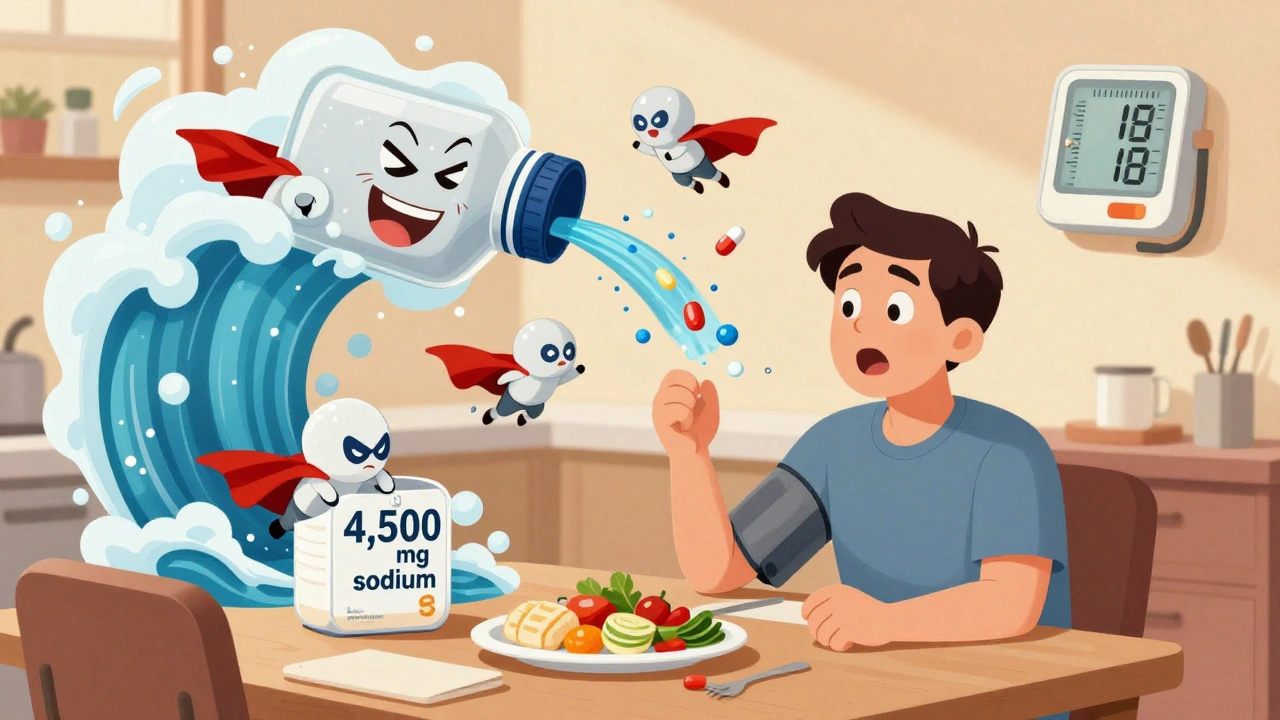
Cutting salt can boost the effectiveness of blood pressure meds by up to half, lowering pressure in as little as one week. Learn how sodium interferes with common drugs and what to eat instead.