Skin of Color: Understanding Drug Reactions, Sun Sensitivity, and Medication Risks
When you have skin of color, skin tones with higher melanin levels, including Black, Brown, Asian, and Indigenous populations. Also known as darker skin, it doesn't just change how you tan—it changes how your body reacts to medications, sunlight, and environmental triggers. Many people assume drug side effects look the same across all skin types, but that’s not true. Rashes, blisters, and discoloration can appear differently on melanin-rich skin, making early detection harder. What looks like a simple irritation on lighter skin might be the first sign of something serious like Stevens-Johnson Syndrome, a life-threatening skin reaction triggered by certain medications on darker skin—and it often gets missed until it’s too late.
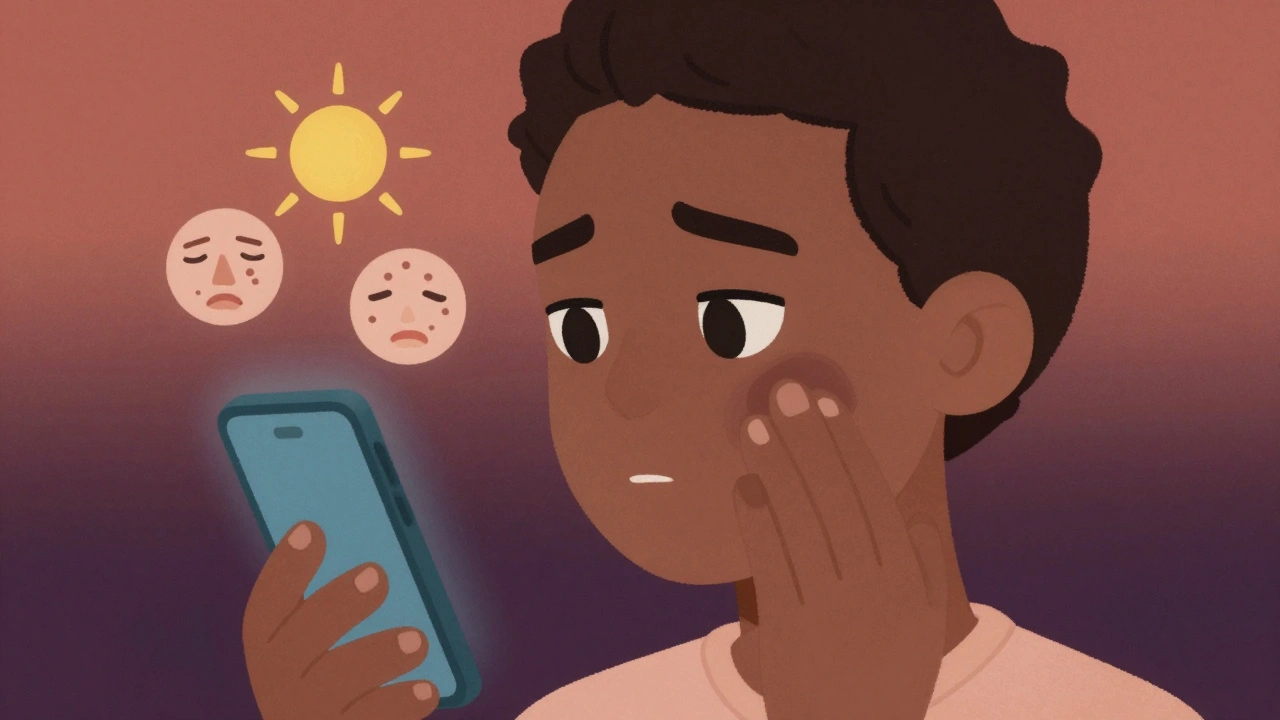
Photosensitivity, an abnormal reaction to UV light caused by certain drugs is another hidden risk. Medications like tetracyclines, NSAIDs, and even some antidepressants can make your skin hyper-reactive to the sun. On lighter skin, this shows up as a bright red burn. On skin of color, it often appears as dark patches, hyperpigmentation, or uneven tone—symptoms that get mistaken for acne scars or aging. This delay in recognition can lead to worse outcomes. And it’s not just about sunburn. The same drugs that cause these reactions can also trigger delayed hypersensitivity, like DRESS syndrome, a severe systemic reaction with skin involvement and organ damage, which is underdiagnosed in people of color due to misinterpretation of symptoms.
Here’s the hard truth: most drug safety studies still rely on data from lighter-skinned populations. That means the warnings on your prescription label might not fully apply to you. A rash that’s listed as "rare" in clinical trials might be more common than we think in people with skin of color. That’s why knowing your skin’s unique response to meds isn’t optional—it’s essential. You need to track changes closely: new dark spots, peeling, blistering, or unexplained itching after starting a new drug. If something feels off, don’t wait for it to get worse. Bring photos, note the timing, and ask your doctor: "Could this be a drug reaction?"
This collection of articles dives into exactly these risks—how medications affect skin differently based on melanin levels, how to spot early signs of dangerous reactions, and what steps to take before it escalates. You’ll find real-world advice on sun protection, recognizing hidden side effects, and how to talk to your provider when standard advice doesn’t fit your experience. These aren’t theoretical concerns. They’re daily realities for millions. And you deserve to be informed.
Hyperpigmentation and keloids are common, persistent skin conditions in people with darker skin tones. Learn what causes them, how to treat them safely, and how to prevent them from worsening over time.