Sodium Intake: How Too Much Salt Affects Your Health and What to Do About It
When you think about sodium intake, the amount of salt you consume daily through food and drinks. Also known as dietary sodium, it's not just about how salty your food tastes—it's about what’s hidden in packaged meals, canned soups, and even bread. Most men in the U.S. eat more than double the recommended amount, and it’s quietly raising their risk for high blood pressure, heart disease, and kidney damage.
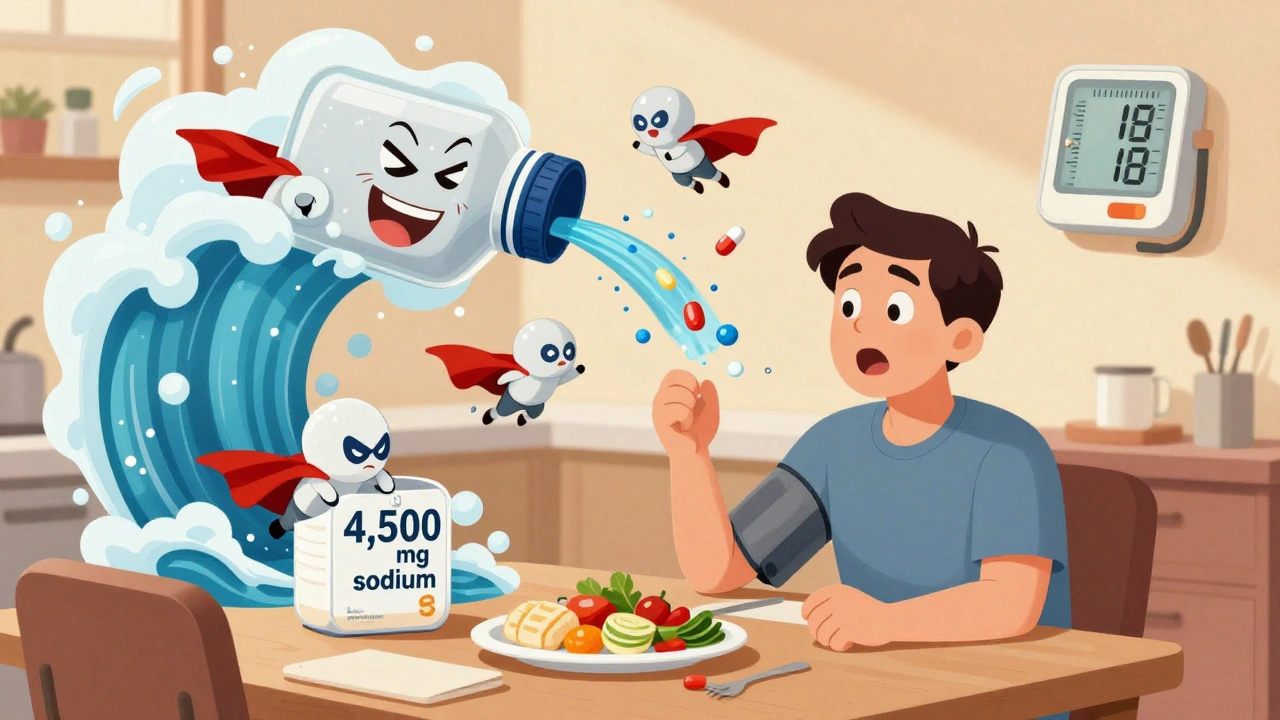
High blood pressure, a condition where force against artery walls is too high is the most direct result of too much sodium. Your body holds onto water to dilute the salt, which increases blood volume and forces your heart to work harder. Over time, that extra strain damages arteries and increases your chance of stroke or heart attack. Kidney function, how well your kidneys filter waste and balance fluids also suffers. Your kidneys can’t keep up when sodium levels stay high, leading to fluid buildup and long-term damage. And it’s not just older men—men in their 30s and 40s are seeing early signs because of daily processed food habits.
What’s surprising is that you don’t need to stop using salt entirely. The real issue is hidden sodium. A single serving of canned pasta sauce can have more sodium than a bag of chips. Restaurant meals, deli meats, frozen dinners, and even breakfast cereals add up fast. Cutting back doesn’t mean bland food—it means choosing fresh ingredients, reading labels, and cooking more at home. Studies show that reducing sodium intake by just 1,000 mg a day can lower systolic blood pressure by 5 to 6 points in people with high blood pressure.
You’ll find posts here that dig into how sodium interacts with medications—like how too much salt can make blood pressure drugs less effective, or how diuretics work harder when your sodium levels are out of balance. There’s also advice on how to read nutrition labels without getting overwhelmed, and what alternatives actually work (looking at you, sea salt and kosher salt—yes, they’re still sodium). Some posts cover how sodium affects men with existing conditions like heart failure or chronic kidney disease, and what steps to take before your next doctor visit.
This isn’t about fear. It’s about awareness. You don’t need to become a nutrition scientist. You just need to know where the hidden salt is, how it’s affecting your body, and what small changes make the biggest difference. The posts below give you clear, no-fluff guidance based on real health data—not trends or gimmicks. Whether you’re trying to lower your blood pressure, manage a condition, or just feel better every day, the answers are here.
Cutting salt can boost the effectiveness of blood pressure meds by up to half, lowering pressure in as little as one week. Learn how sodium interferes with common drugs and what to eat instead.