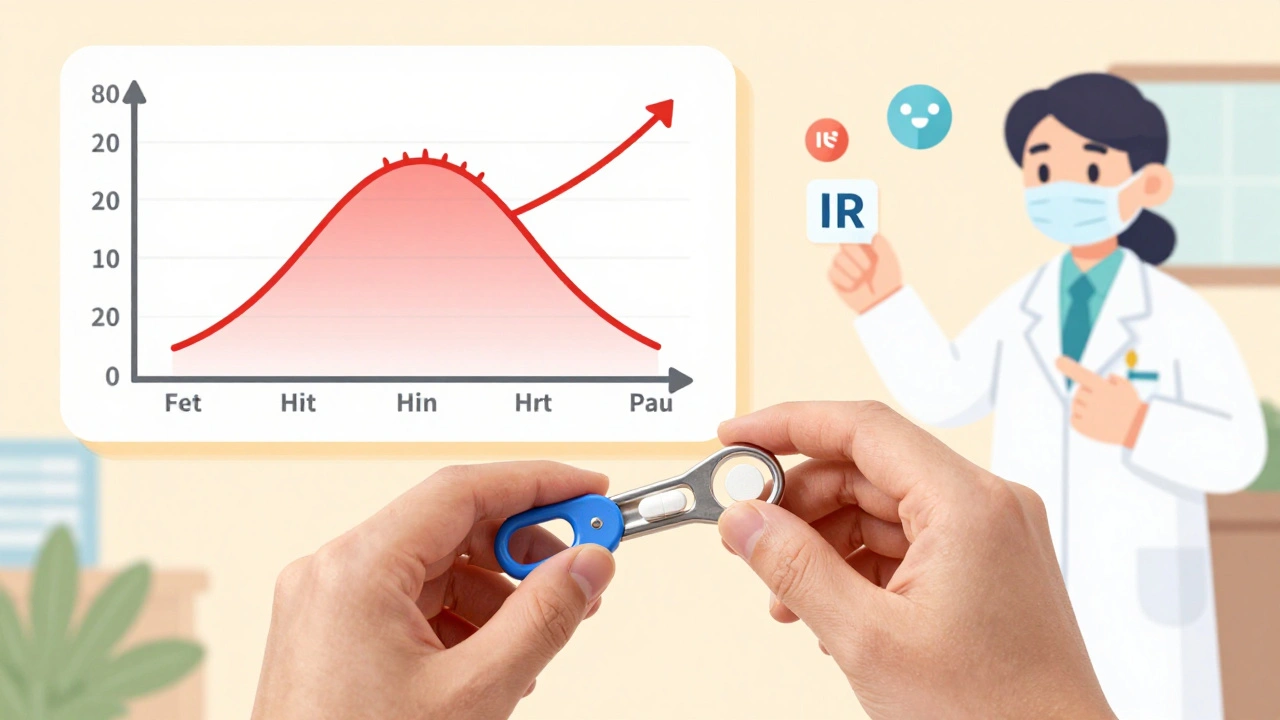
Tablet Splitting: What You Need to Know Before Cutting Your Pills
When you split a tablet, a solid oral medication designed to be swallowed whole. Also known as pill splitting, it’s a common practice to adjust dose or cut costs—but not all pills are meant to be cut. Some are coated to protect your stomach, others are timed to release slowly over hours. If you split those, you could get too much medicine all at once—or none at all.
Tablet splitting isn’t just a hack; it’s a medical decision. The FDA, the U.S. agency that regulates drugs and ensures they’re safe and effective says some tablets are safe to split if they have a score line and your doctor approves. But many aren’t. For example, extended-release versions of blood pressure meds or antidepressants can become dangerous if split. Even a small error in weight—like cutting a 10mg pill into uneven halves—can throw off your treatment. That’s why you should never split pills without checking with your pharmacist or doctor first.
There’s also the issue of drug stability, how well a medication holds up after being exposed to air, moisture, or light. Once you break a tablet, the exposed surface can degrade faster, especially if it’s hygroscopic (absorbs moisture). Some people split pills and leave them sitting out for days—this isn’t just ineffective, it’s risky. And if you’re splitting without a proper pill splitter, you’re likely getting uneven doses. A $5 plastic splitter from the pharmacy is far more accurate than using a knife or scissors.
Why do people split tablets? Mostly to save money. Brand-name drugs can cost hundreds of dollars a month, while generics are often half the price—and sometimes come in higher doses that can be split safely. For instance, a 50mg tablet of lisinopril might cost the same as two 25mg tablets. Splitting one 50mg pill gives you two 25mg doses, cutting your cost in half. But this only works if the pill is approved for splitting. Always ask: Is this pill scored? Is it extended-release? Is it safe to split? Your pharmacist can tell you in seconds.
Some medications are never safe to split: capsules, enteric-coated pills, chewables, or anything with a special coating. Even some generic versions of the same drug may not be safe to split if the formulation differs from the brand. And don’t assume that because one brand of a drug can be split, another can too. The active ingredient might be the same, but the way it’s built inside the pill isn’t.
Tablet splitting can be a smart move—if done right. But it’s not a free-for-all. The same people who split pills for cost savings often forget about accuracy, safety, and long-term effects. A study from the Journal of the American Pharmacists Association found that nearly 40% of people who split pills without guidance ended up with inconsistent doses. That’s not a risk worth taking.
Before you grab a knife or reach for that old pill splitter, ask yourself: Is this pill meant to be split? Do I have the right tool? Did my doctor or pharmacist say it’s okay? If you’re unsure, don’t guess. Your health isn’t worth the gamble. Below, you’ll find real-world advice from trusted sources on how to handle your medications safely—whether you’re splitting pills, timing doses, or just trying to avoid dangerous mix-ups.
Splitting medication doses can reduce side effects by lowering peak blood levels, but only for certain drugs. Learn which medications are safe to split, the risks of tablet splitting, and how to do it safely with expert guidance.