Medication-Induced Aplastic Anemia: Causes, Risks, and What You Need to Know
When your bone marrow stops making enough blood cells, it’s not just fatigue you feel—it’s a life-threatening drop in red cells, white cells, and platelets. This is medication-induced aplastic anemia, a rare but severe condition where certain drugs destroy the stem cells in your bone marrow. Also known as drug-induced bone marrow failure, it doesn’t happen to most people, but when it does, it strikes fast and hard. Unlike anemia from low iron or vitamin B12, this type comes from your body’s own defenses turning against its blood-making system—or from toxins in the medicine itself.
Some of the most common culprits include chloramphenicol, an old-school antibiotic no longer used widely but still linked to cases, phenylbutazone, a painkiller banned in many countries for this very reason, and immunosuppressants, like azathioprine or cyclosporine, used to treat autoimmune diseases. Even common drugs like methotrexate or carbamazepine have been tied to cases, especially when taken long-term or in high doses. It’s not about the drug being "bad"—it’s about how your body reacts to it. Some people have genetic quirks that make them far more vulnerable.
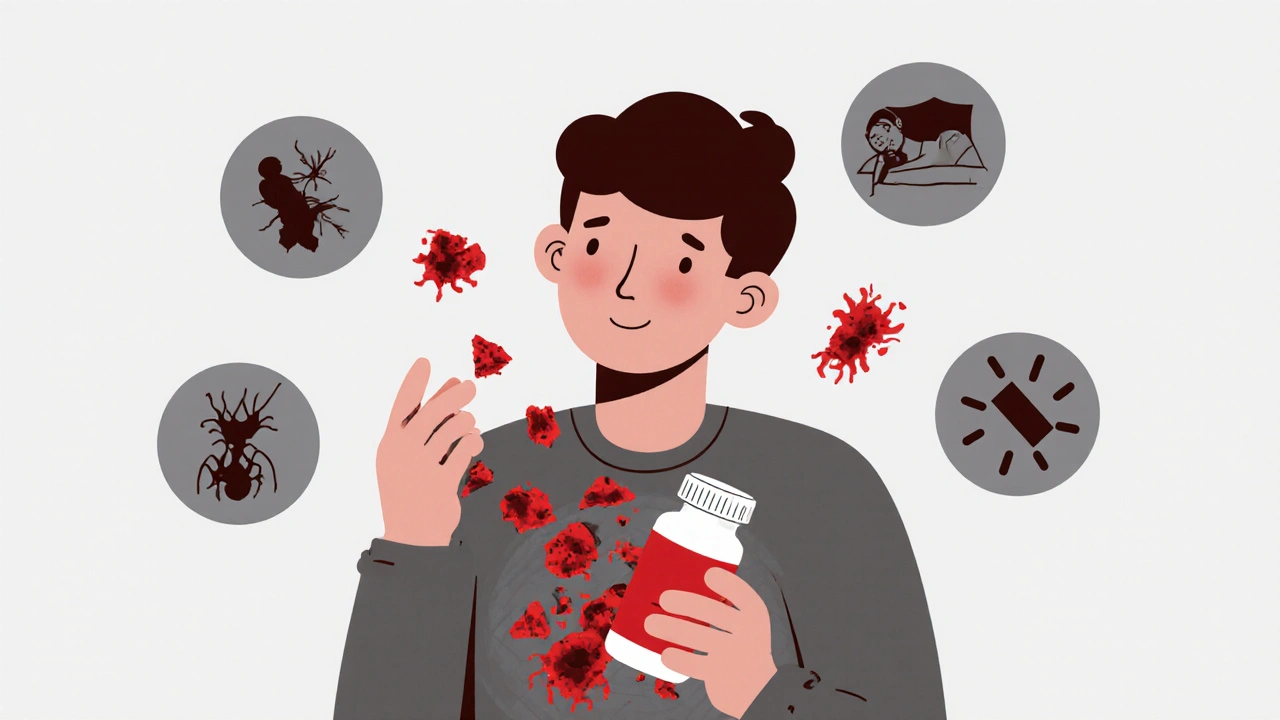
Early signs are easy to miss: constant tiredness, unexplained bruising, nosebleeds that won’t stop, or tiny red dots on your skin. These aren’t just "feeling off"—they’re your body screaming that it’s running out of blood cells. If you’re on any long-term medication and notice these symptoms, don’t wait. A simple blood test can catch this before it turns into a crisis. Many cases are caught early because patients and doctors pay attention to side effects, not just the main reason for taking the drug.
This isn’t just about avoiding dangerous drugs—it’s about understanding your own risk. If you’ve had a previous blood disorder, a family history of bone marrow issues, or you’re on multiple medications at once, your risk goes up. Regular blood work isn’t just a formality; it’s your early warning system. The posts below cover real-world stories, drug interactions, and red flags you might not know about. From how prednisone affects your blood counts to why vaccine timing matters when your immune system is already weakened, these guides give you the tools to spot trouble before it’s too late.
Medication-induced aplastic anemia is a rare but deadly side effect of certain drugs. Learn the early warning signs, which medications are most dangerous, and what urgent actions to take before it's too late.