Clotrimazole: What It Is, How It Works, and What You Need to Know
When you have a persistent white coating on your tongue or sore patches inside your mouth, it might not be just bad breath or stress—it could be clotrimazole, a targeted antifungal medication used to treat fungal infections like oral thrush. Also known as an azole antifungal, it works by stopping the growth of yeast, especially Candida, which thrives when your body’s natural balance gets thrown off. This isn’t just for people with weakened immune systems. Men on antibiotics, steroids, or with diabetes often develop oral thrush without realizing why. Clotrimazole doesn’t just mask symptoms—it attacks the root cause right where it lives.
Clotrimazole comes in several forms, but for mouth infections, clotrimazole lozenges, a slow-dissolving tablet that releases the drug directly in the mouth are the most common. They’re not like regular cough drops. You let them dissolve over 15–30 minutes so the medicine coats your tongue, cheeks, and throat. This direct delivery means faster relief than swallowing a pill. For skin issues like athlete’s foot or jock itch, clotrimazole cream or spray works the same way—targeted, localized, and effective. It’s not a cure-all, but when used correctly, it stops fungal overgrowth before it spreads.
What makes clotrimazole different from other antifungals? It’s not systemic. It doesn’t flood your whole body with medication. That’s why it’s safe for long-term use in the mouth or on the skin. But that also means you have to use it exactly as directed. Skip a dose? Let the lozenge dissolve too fast? The fungus can come back stronger. And while it’s available over the counter, many men don’t realize that recurring thrush could signal something deeper—like undiagnosed diabetes or low immunity. That’s why it’s not just about treating the spot—it’s about understanding why it showed up in the first place.
Clotrimazole is often paired with other treatments. If you’re on immunosuppressants or have chronic conditions, your doctor might check your blood sugar or adjust your meds before even prescribing it. And if you’ve tried clotrimazole before and it didn’t work, that doesn’t mean you’re immune—it could mean the strain is resistant, or you’re not using it right. Many men rush through the lozenge routine, or stop too soon when symptoms fade. But fungal infections hide deep in tissue. You need the full 7–14 days to kill every last spore.
Below, you’ll find real-world guides on how clotrimazole lozenges work, what to expect when you start using them, how they compare to other antifungals, and when you should walk away from OTC solutions and see a doctor. These aren’t generic advice posts. They’re based on actual patient experiences, clinical data, and the kinds of questions men ask when they’re tired of dealing with the same infection over and over again.
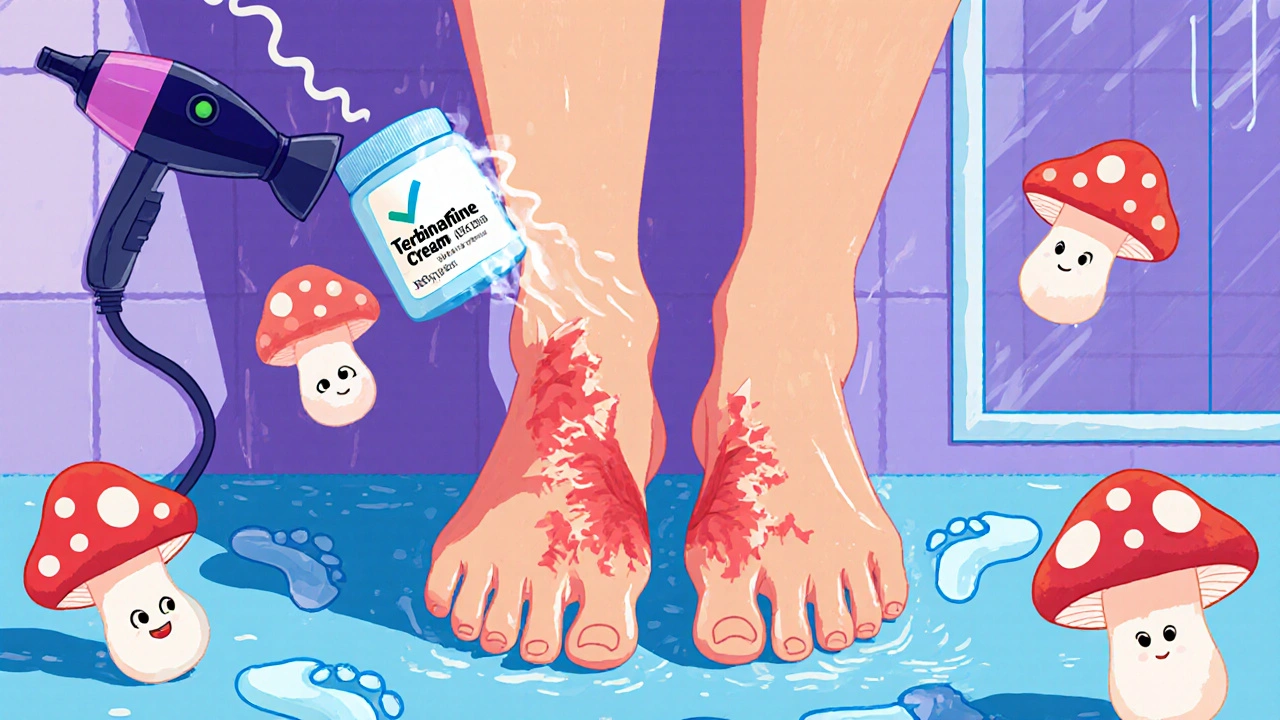
Learn how to safely and effectively use OTC athlete's foot treatments like terbinafine, clotrimazole, and tolnaftate. Get expert-backed tips on application, prevention, and when to see a doctor.