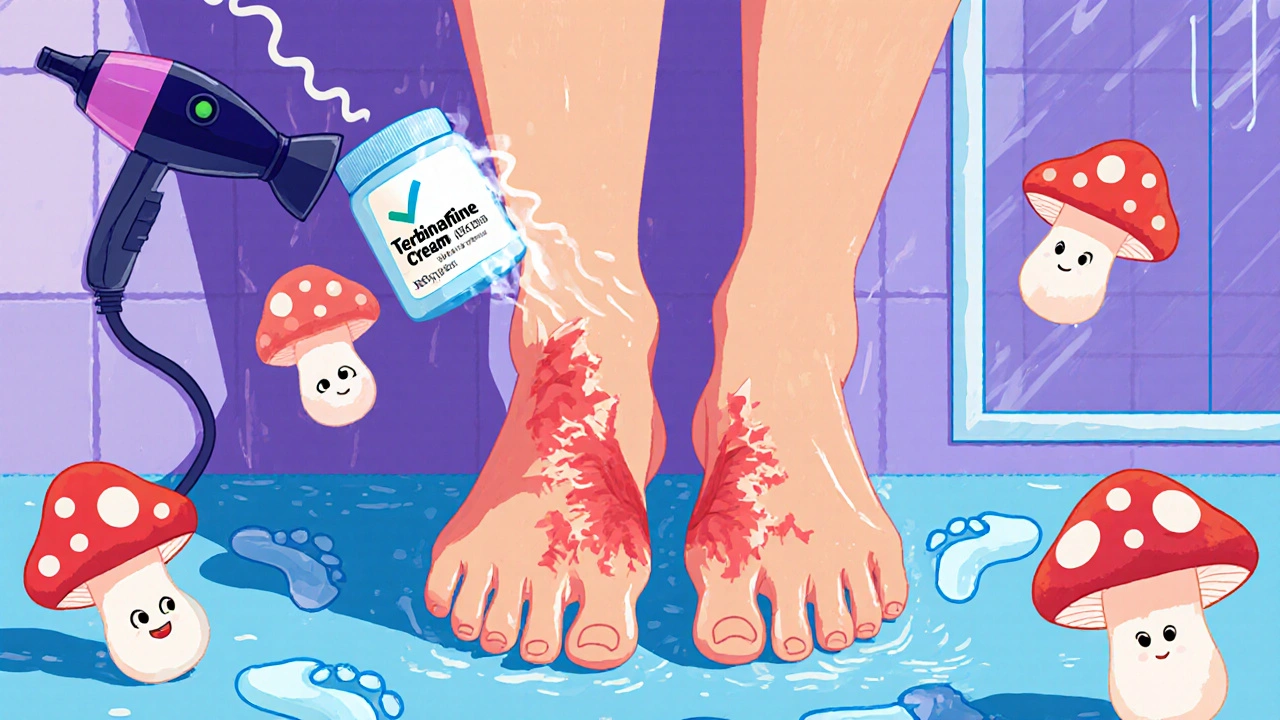
Terbinafine: What It Is, How It Works, and What You Need to Know
When you’re dealing with a stubborn nail infection or a rash that won’t quit, terbinafine, a targeted antifungal medication used to kill fungi causing infections in skin and nails. Also known as Lamisil, it’s one of the most prescribed drugs for fungal nail disease and athlete’s foot because it doesn’t just mask symptoms—it goes after the root cause. Unlike some antifungals that just slow fungi down, terbinafine actually kills them by breaking down their cell walls. That’s why it works faster and often requires a shorter course—usually 6 to 12 weeks for toenail fungus, compared to months with older treatments.
It’s not just for nails. Terbinafine also clears up ringworm, jock itch, and other fungal skin infections when used as a cream or spray. But most people know it as the oral tablet version—taken daily, often with food to help absorption. What you might not know is that it’s not a one-size-fits-all fix. Some people get great results with no side effects, while others deal with headaches, upset stomach, or changes in taste. In rare cases, it can affect the liver, which is why doctors often check liver enzymes before and during treatment. If you’re on other meds—especially antidepressants or blood pressure drugs—terbinafine can interact, so always tell your pharmacist what else you’re taking.
What conditions does terbinafine actually treat?
It’s used for fungal nail infections, a common condition where fungi invade the nail bed, causing thickening, discoloration, and brittleness, which affects up to 10% of adults. It’s also effective against dermatophytosis, a group of skin infections caused by fungi that thrive in warm, moist areas like between the toes or under the groin. But it won’t work on yeast infections like oral thrush—that’s where clotrimazole or nystatin come in. And it doesn’t touch viral or bacterial issues. Knowing the difference matters because misusing antifungals can lead to resistance or wasted time.
Many people assume if a pill works for one fungal problem, it’ll work for all. But terbinafine’s strength lies in its specificity. It’s built to target dermatophytes—the fungi that cause most nail and skin infections. That’s why it’s often the first choice, even over cheaper generics. And while some folks try home remedies like tea tree oil or vinegar soaks, studies show terbinafine clears nail fungus more reliably than anything you can buy at the grocery store.
If you’ve been told you have a fungal infection and your doctor handed you terbinafine, you’re not alone. Millions use it every year. But it’s not just about popping a pill. Success means sticking with the full course—even if your nail looks better after 4 weeks. Fungi hide deep in the nail bed, and stopping early means they’ll come back. And while side effects are usually mild, don’t ignore signs like dark urine, yellowing skin, or persistent nausea. Those aren’t normal. They’re your body’s way of saying it’s time to check in with your doctor.
What you’ll find in the posts below are real stories and facts about how terbinafine fits into the bigger picture of drug safety, side effects, and how to use antifungals correctly. You’ll see how it compares to other treatments, what to watch for when taking it long-term, and why some people respond better than others. No fluff. Just what you need to know to use terbinafine safely—and get real results.
Learn how to safely and effectively use OTC athlete's foot treatments like terbinafine, clotrimazole, and tolnaftate. Get expert-backed tips on application, prevention, and when to see a doctor.