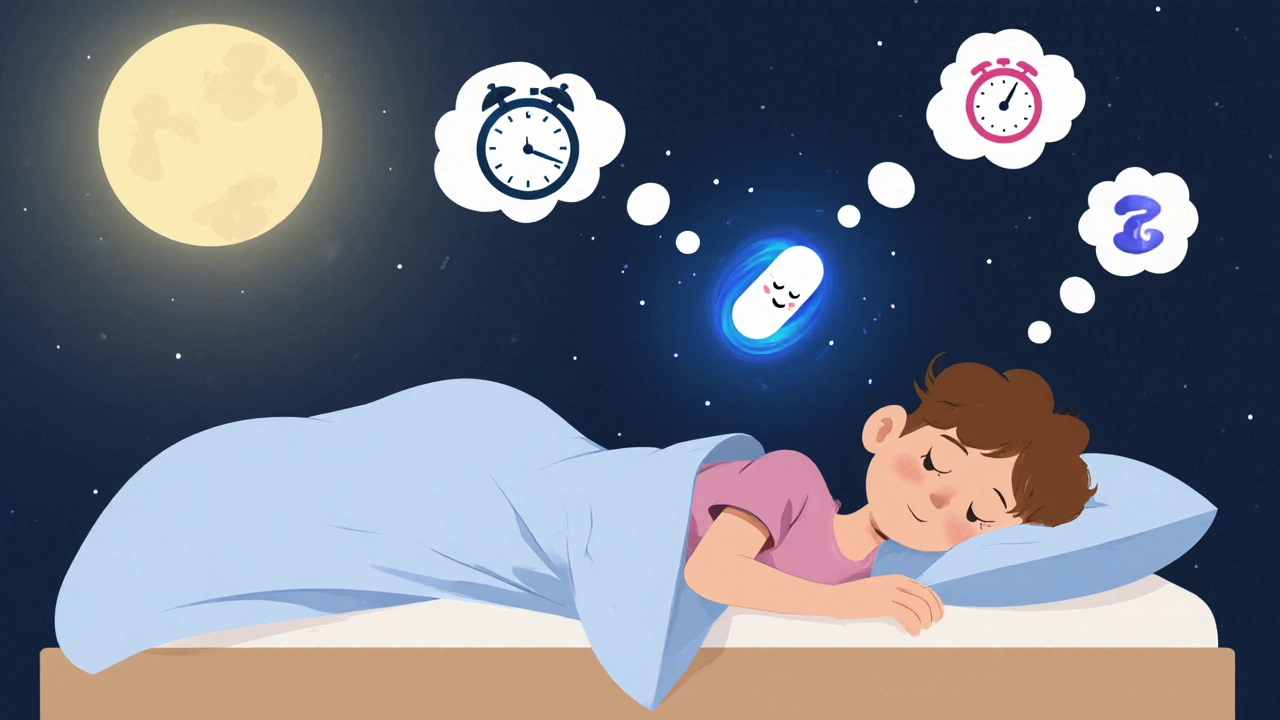
Trazodone for Insomnia: What Works, What Doesn't, and What You Need to Know
When trazodone for insomnia, a serotonin antagonist and reuptake inhibitor originally approved for depression. Also known as a sedating antidepressant, it's one of the most frequently prescribed off-label sleep aids for men who struggle to fall or stay asleep. Many doctors reach for it because it doesn’t carry the same addiction risks as benzodiazepines or z-drugs. But it’s not a magic pill—how well it works depends on your body, your sleep habits, and whether you’re taking it the right way.
People often confuse trazodone dosage, the amount taken to treat sleep issues, which is usually much lower than for depression with the dose used for depression. For sleep, most men start at 25 to 50 mg at bedtime. That’s a fraction of the 150 mg or more used for mood disorders. Taking too much can leave you groggy the next day, or worse—cause dizziness, low blood pressure, or even a rare but serious heart rhythm issue. It’s not a quick fix either. Some feel sleepy the first night, but for others, it takes a week or two to notice real changes in sleep quality.
What makes trazodone different from other sleep meds is that it doesn’t just knock you out. It works by boosting serotonin in the brain, which helps regulate sleep cycles. That’s why it’s often used for men who have both depression and insomnia, or those who wake up too early and can’t fall back asleep. But if your insomnia is caused by sleep apnea, chronic pain, or anxiety that isn’t treated, trazodone alone won’t fix it. That’s why doctors often pair it with insomnia treatment, a broader approach that includes sleep hygiene, cognitive behavioral therapy, or addressing underlying conditions. Skipping those basics while relying only on trazodone is like putting a bandage on a broken bone.
You’ll also hear about antidepressant for sleep, a category that includes drugs like mirtazapine or doxepin, which are also used off-label for sleep. Trazodone stands out because it’s cheaper, widely available as a generic, and has decades of real-world use behind it. But it’s not the only option. Some men respond better to non-drug approaches—like fixing their bedtime routine, cutting caffeine after noon, or using light therapy. Others need something stronger or more targeted. The key is knowing why you’re sleeping poorly in the first place.
Side effects are usually mild—dry mouth, dizziness, headache—but they add up over time. And if you’re on other meds, especially for blood pressure or heart conditions, trazodone can interact in dangerous ways. That’s why you never start or stop it without talking to your doctor. It’s not something you should grab from a friend’s medicine cabinet or order online without a prescription.
Below, you’ll find real stories and science-backed advice on how trazodone fits into actual sleep routines, what doses work best for different men, how long it takes to see results, and when to walk away from it. You’ll also see what other treatments work better for specific cases—because treating insomnia isn’t about finding the right pill. It’s about finding the right plan.
Learn how adding a second medication - not switching - can fix common antidepressant side effects like insomnia, sexual dysfunction, and weight gain. Evidence-based strategies that actually work.