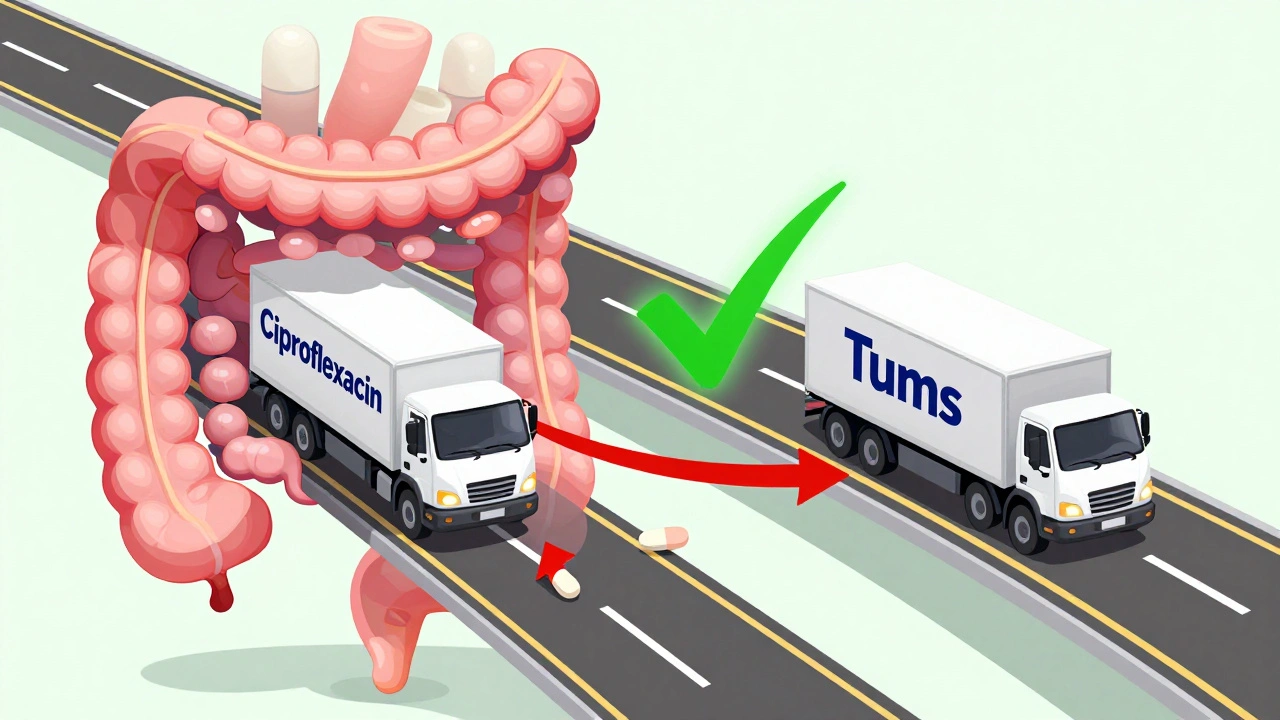
Drug Absorption: How Your Body Takes in Medication and Why It Matters
When you swallow a pill, the real work hasn’t even started yet. Drug absorption, the process by which a medication enters your bloodstream from its site of administration. Also known as bioavailability, it’s the make-or-break step that decides whether a drug will work at all. A drug might be perfectly formulated, but if your body doesn’t absorb it properly, it’s just wasted money—and possibly a missed chance to feel better.
Not all drugs absorb the same way. Some need an empty stomach to get through the gut lining fast, like levothyroxine. Others, like NSAIDs, are easier on your stomach when taken with food, even if it slows absorption a bit. Then there are drugs that only work when their peak concentration—called Cmax—is kept low to avoid side effects, which is why splitting doses can help. And the total amount that ends up in your blood over time? That’s AUC, a key number used by the FDA to prove generics work just like brand names.
Drug absorption isn’t just about pills. It’s affected by your gut health, age, other meds you’re taking, and even your genetics. A drug that works great for one person might do nothing for another, not because it’s weak—but because their body absorbs it differently. That’s why some people get side effects from a low dose, while others need to double it just to feel anything. It’s not about tolerance. It’s about absorption.
When a generic drug is approved, the FDA doesn’t just check the ingredients. They measure its drug absorption—how fast it enters your blood, and how much gets in. If Cmax and AUC fall within strict ranges compared to the brand, it’s considered bioequivalent. That’s why you can trust a generic. But if you’re switching between brands or generics, and suddenly feel off, it might not be your body changing—it’s your absorption changing.
And here’s the thing: timing matters. Taking a pill with coffee, milk, or grapefruit juice can block or boost absorption. Some meds need to be taken hours apart from others because they compete for the same absorption pathways. That’s why confusing instructions can be dangerous. You’re not just taking a pill—you’re managing a chemical handshake between your body and the drug.
Below, you’ll find real-world guides on how food affects your meds, why dose splitting helps some people, how generics are tested for absorption, and what to do when a drug just doesn’t seem to work. These aren’t theory pages. They’re what people actually need to know to take their meds right—and get the results they’re counting on.
Learn how to space out your medications to avoid dangerous interactions, improve absorption, and prevent side effects. Simple timing changes can make your drugs work better - without switching prescriptions.