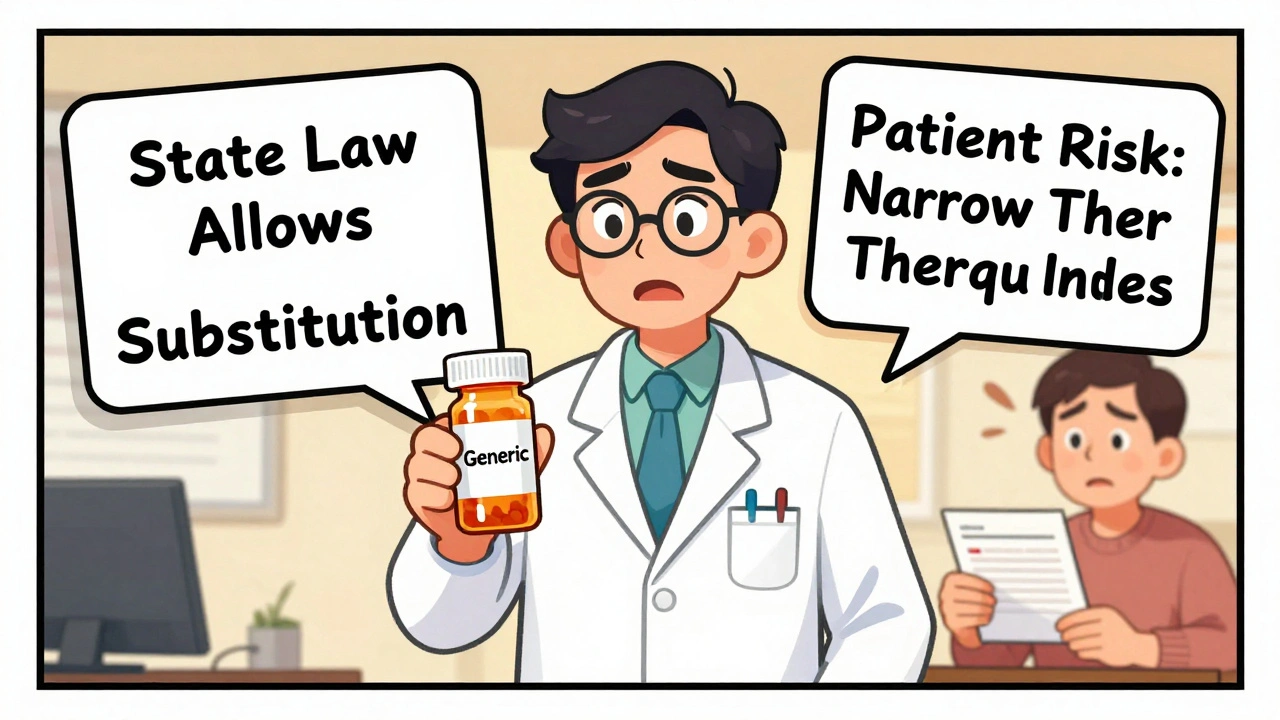
Drug Substitution Laws: What You Need to Know About Generic Swaps and Legal Rules
When your pharmacist hands you a different pill than what your doctor prescribed, drug substitution laws, rules that govern when and how pharmacies can replace brand-name drugs with generics. Also known as generic substitution laws, it's not just about saving money—it’s about making sure the switch won’t hurt you. These laws vary by state, but they all rest on one core idea: a generic drug must be just as safe and effective as the brand-name version. That’s not guesswork. It’s science.
The FDA, the U.S. agency that ensures drugs meet strict quality and performance standards. Also known as Food and Drug Administration, it doesn’t just approve generics—it demands proof. Every generic must match the brand in strength, dosage form, and how your body absorbs it. Two key numbers—Cmax, the highest concentration of a drug in your bloodstream and AUC, the total amount of drug your body is exposed to over time—must fall within tight limits. If they don’t, the generic gets rejected. This isn’t theoretical. It’s backed by real testing, inspections, and post-market monitoring through systems like FAERS, the FDA’s database for tracking adverse drug reactions reported by patients and doctors.
But here’s the catch: not all substitutions are automatic. Some states require your doctor to check a box saying "dispense as written." Others let pharmacists swap unless you say no. And even if a generic passes FDA standards, some patients still report differences—maybe a pill feels less effective, or side effects change. That’s why medication safety, the practice of using drugs in ways that minimize harm and maximize benefit isn’t just about laws—it’s about communication. If you notice a change after a switch, talk to your pharmacist. Ask if the new pill has the same inactive ingredients. Check the lot number. Look up recalls. Your body might react to a dye, filler, or coating that’s different, even if the active drug is identical.
Drug substitution laws exist to balance cost and safety. They help millions save money on prescriptions every year. But they also demand awareness. You don’t have to accept a swap blindly. You have the right to ask questions, request the brand, or ask for a different generic. And if you’re on a drug where small changes matter—like blood thinners, thyroid meds, or epilepsy treatments—knowing your rights can prevent serious problems. The posts below dive into real cases: how generics are monitored after they hit shelves, why some patients react differently to the same drug, how bioequivalence is tested, and what to do when a substitution goes wrong. This isn’t just policy. It’s personal. And you deserve to understand it.
Generic substitution saves money but creates legal risks for pharmacists. Learn how state laws, federal preemption, and high-risk drugs affect liability-and what steps you can take to protect yourself and your patients.