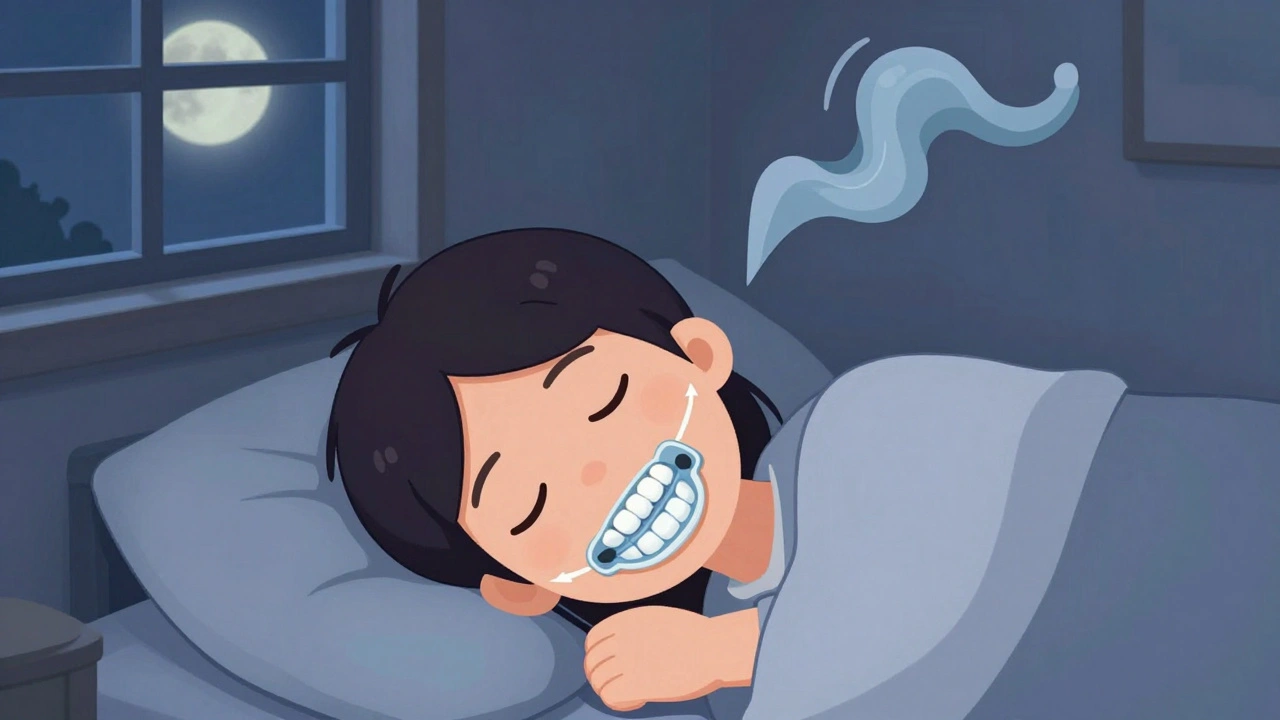
Mandibular Advancement Device: What It Is and How It Helps Sleep Apnea
When you hear mandibular advancement device, a custom-fitted oral appliance worn during sleep to treat obstructive sleep apnea by holding the lower jaw slightly forward. Also known as oral appliance therapy, it's a proven alternative to CPAP for people who can't tolerate the mask or find it too noisy. This isn’t just a snoring gadget—it’s a medically recognized treatment backed by sleep clinics and the American Academy of Sleep Medicine.
It works by preventing your tongue and soft tissues from collapsing into your airway when you sleep. Think of it like gently pulling your jaw forward so your throat stays open. That’s why it’s so effective for mild to moderate obstructive sleep apnea. People who use it regularly report fewer awakenings, less daytime fatigue, and quieter nights for their partners. It’s not for everyone—those with severe sleep apnea or no teeth may need other options—but for many, it’s the missing piece in their sleep health puzzle.
Related tools like oral appliance therapy, a category of dental devices designed to improve airflow during sleep include tongue-retaining devices and hybrid models, but the mandibular advancement device remains the most common. It’s made by dentists who specialize in sleep medicine, not bought off a TV infomercial. Proper fit matters: a poorly made device can cause jaw pain, tooth movement, or even worsen your bite. That’s why you need professional evaluation, not a boil-and-bite product.
It also ties into broader topics like sleep apnea treatment, the range of medical and behavioral approaches used to manage breathing disruptions during sleep, which includes weight loss, positional therapy, and surgery. But for those who want something quiet, portable, and easy to use, the mandibular advancement device often hits the sweet spot. You don’t need to live with choking gasps at night. You don’t need to hate your CPAP machine. There’s a middle ground—and it starts with your jaw.
Below, you’ll find real-world insights from men who’ve tried this therapy, learned how to adjust to it, and found relief without surgery or masks. You’ll also see how it connects to medication timing, drug side effects, and even how certain prescriptions can worsen sleep apnea. This isn’t just about a plastic mouthpiece—it’s about reclaiming rest, health, and control over your body.
Oral appliance therapy with mandibular advancement devices offers a proven, non-invasive solution for snoring. Learn how they work, who benefits most, their effectiveness compared to CPAP, costs, risks, and what to expect before and after use.