Pharmacist Liability: What You Need to Know About Legal Risks and Patient Safety
When a pharmacist liability, the legal responsibility a pharmacist holds for errors in dispensing or advising on medications. It's not just about filling prescriptions—it's about catching mistakes before they hurt someone. Every time a pharmacist hands over a bottle of pills, they’re taking on real legal risk. A single wrong dose, a missed interaction, or a poorly explained label can lead to serious harm—and lawsuits. This isn’t rare. Studies show that medication errors involving pharmacists contribute to over 7,000 deaths in the U.S. each year. That’s why pharmacies are held to strict standards: they’re the last line of defense between a patient and a dangerous drug.
Pharmacist liability doesn’t just come from dispensing errors. It also includes failing to warn patients about side effects, not checking for drug interactions, or ignoring red flags like duplicate prescriptions. For example, if a patient is on blood thinners and gets prescribed a new NSAID without the pharmacist catching the risk of internal bleeding, that’s liability. Or if someone gets the wrong strength of a high-risk drug like insulin or warfarin, and no one double-checked, the pharmacist can be held accountable—even if the doctor wrote the script. medication errors, mistakes in prescribing, dispensing, or taking drugs that lead to harm are the core issue here. And they’re often preventable. Pharmacists use checklists, barcode scans, and clinical alerts for a reason: to stop these errors before they happen.
It’s not just about the pharmacist, either. pharmacy oversight, the system of regulations, audits, and inspections that ensure pharmacies follow safety rules plays a big role. State boards, the FDA, and accreditation groups like the Joint Commission all keep an eye on pharmacies. If a pattern of mistakes shows up—like repeated wrong dosages or ignored allergy alerts—the whole operation can be fined, suspended, or shut down. That’s why most pharmacies now require two pharmacists to verify high-risk prescriptions. It’s not bureaucracy. It’s protection—for the patient, and for the pharmacist.
And it’s not just about legal trouble. Pharmacist liability affects real lives. A patient might end up in the hospital because a drug interaction wasn’t caught. A senior might take the wrong pill because the label was unclear. These aren’t hypotheticals. They happen every day. That’s why knowing how to spot risks, asking questions, and double-checking instructions matters. If you’re on multiple medications, don’t assume the pharmacist caught everything. Bring a list. Ask: "Is this safe with my other drugs?" "What are the real risks?" "What should I watch for?" You’re not being difficult—you’re helping prevent a mistake.
Below, you’ll find real-world examples of how medication errors happen, how systems try to stop them, and what you can do to protect yourself. From FDA monitoring of generics to how timing pills can avoid dangerous reactions, these posts show the hidden layers of safety that keep you alive. You won’t find fluff here—just clear, practical truths about how drugs are handled, who’s responsible when things go wrong, and how to make sure you’re not the next statistic.
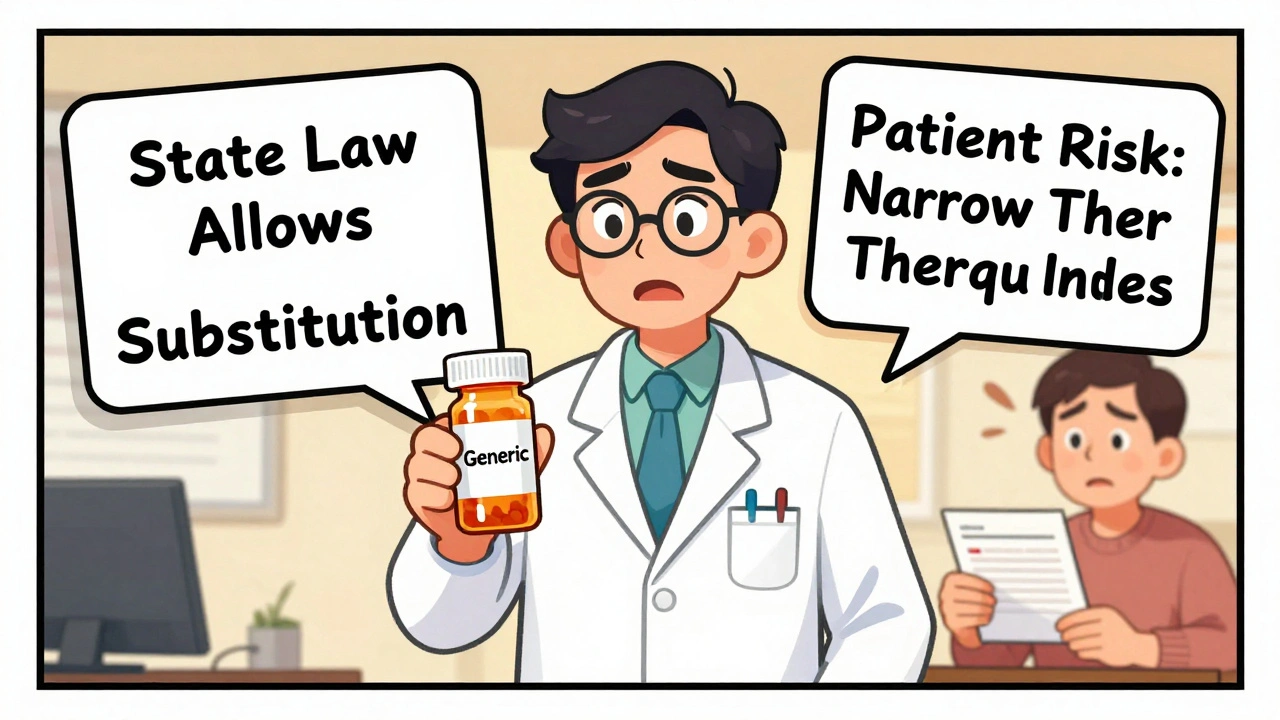
Generic substitution saves money but creates legal risks for pharmacists. Learn how state laws, federal preemption, and high-risk drugs affect liability-and what steps you can take to protect yourself and your patients.