Rifampin Side Effects: What You Need to Know Before Taking It
When you're prescribed rifampin, a powerful antibiotic used to treat tuberculosis and other bacterial infections. It's known for working fast, but it doesn't play nice with other drugs or your body's natural systems. Many people notice their urine, sweat, or tears turn orange—this isn't dangerous, but it can scare you if you don't expect it. That’s just rifampin doing its thing. The real concerns come from what’s happening inside your body.
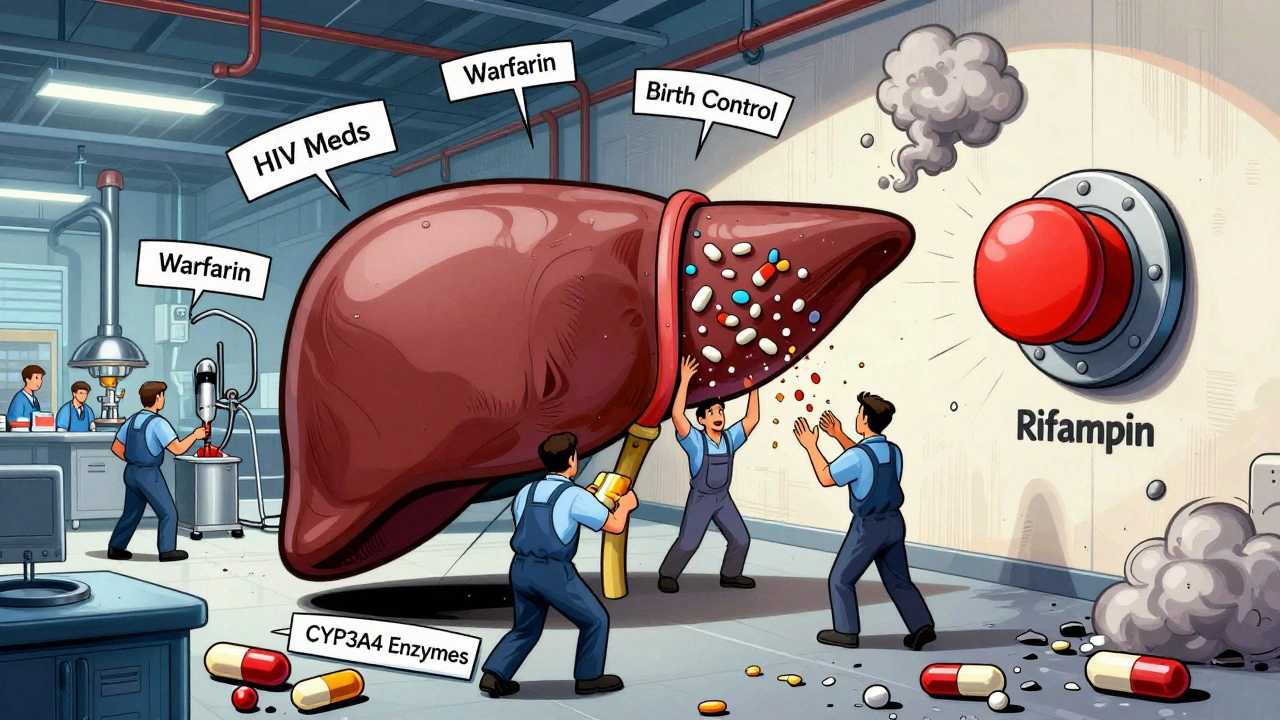
Liver damage, a serious risk with long-term rifampin use is why doctors order regular blood tests. If you start feeling unusually tired, your skin or eyes turn yellow, or you lose your appetite, stop taking it and call your doctor. Rifampin also interacts with dozens of other medications, including birth control pills, blood thinners, and HIV drugs. It speeds up how fast your liver breaks them down, which can make them useless—or worse, dangerous. If you’re on any regular meds, talk to your pharmacist before starting rifampin. Don’t assume your doctor knows every pill you take.
Some side effects are less obvious but still important. Rifampin can cause stomach upset, nausea, or dizziness—especially when you first start. Taking it on an empty stomach helps absorption, but if your stomach rebels, ask if you can take it with a light snack. It’s also linked to rare but severe skin reactions like Stevens-Johnson Syndrome, a life-threatening condition that starts with flu-like symptoms and a spreading rash. If you get a fever, blistering skin, or mouth sores, get help immediately.
And don’t forget: rifampin doesn’t just affect you—it affects how other drugs work for you. Birth control? Less effective. Warfarin? Risk of clots or bleeding. Antidepressants? Might not work right. Even over-the-counter stuff like antacids can interfere. That’s why tracking your meds matters. Keep a list. Show it to every new provider. And if you’re ever unsure, ask: "Could this interact with rifampin?" It’s a simple question that could save your life.
Most people tolerate rifampin fine if they’re monitored. But the risks aren’t theoretical—they’re documented, common, and avoidable with the right info. The posts below break down real cases, how to spot trouble early, what to do if you’re on multiple drugs, and why your body reacts the way it does. You’re not just reading about side effects—you’re learning how to stay safe while taking a drug that saves lives but demands respect.
Rifampin is essential for treating tuberculosis but causes dangerous drug interactions by boosting liver enzymes. Learn how it affects birth control, blood thinners, HIV meds, and more-and what you can do to stay safe.