Snoring Treatment: Effective Solutions for Better Sleep and Health
When you or your partner snore, it’s not just a nuisance—it’s a sign your body is struggling to breathe while you sleep. Snoring treatment, any method used to reduce or stop the vibration of throat tissues during sleep. Also known as sleep apnea therapy, it’s not about silence alone—it’s about restoring healthy oxygen flow and protecting your heart, brain, and overall well-being. Snoring isn’t normal, even if you’ve heard it your whole life. Studies show that chronic snoring raises your risk for high blood pressure, heart disease, and stroke. The good news? Most cases can be fixed without surgery.
There are several key approaches to snoring treatment, and the right one depends on what’s causing it. For many, nasal strips, adhesive bands that open nasal passages to improve airflow help if the problem starts in the nose. If your tongue or throat muscles relax too much, CPAP machines, devices that deliver steady air pressure to keep airways open are the gold standard—used by millions with proven results. Lifestyle changes like losing weight, avoiding alcohol before bed, or sleeping on your side can cut snoring by half or more. And for some, sleep apnea, a serious condition where breathing stops repeatedly during sleep is the real culprit, requiring medical evaluation.
You won’t find one-size-fits-all fixes here. What works for a 45-year-old man with mild snoring might do nothing for someone with obstructive sleep apnea. That’s why the posts below cover real-world options: how to use a CPAP correctly, why nasal strips sometimes fail, what foods make snoring worse, and how to tell if your snoring is more than just loud breathing. You’ll also find advice on medications that can worsen snoring, how to talk to your doctor about testing, and why weight loss often helps more than any gadget. This isn’t theory—it’s what people have actually tried, failed at, and finally got working. Whatever your situation, you’ll find something here that applies to you.
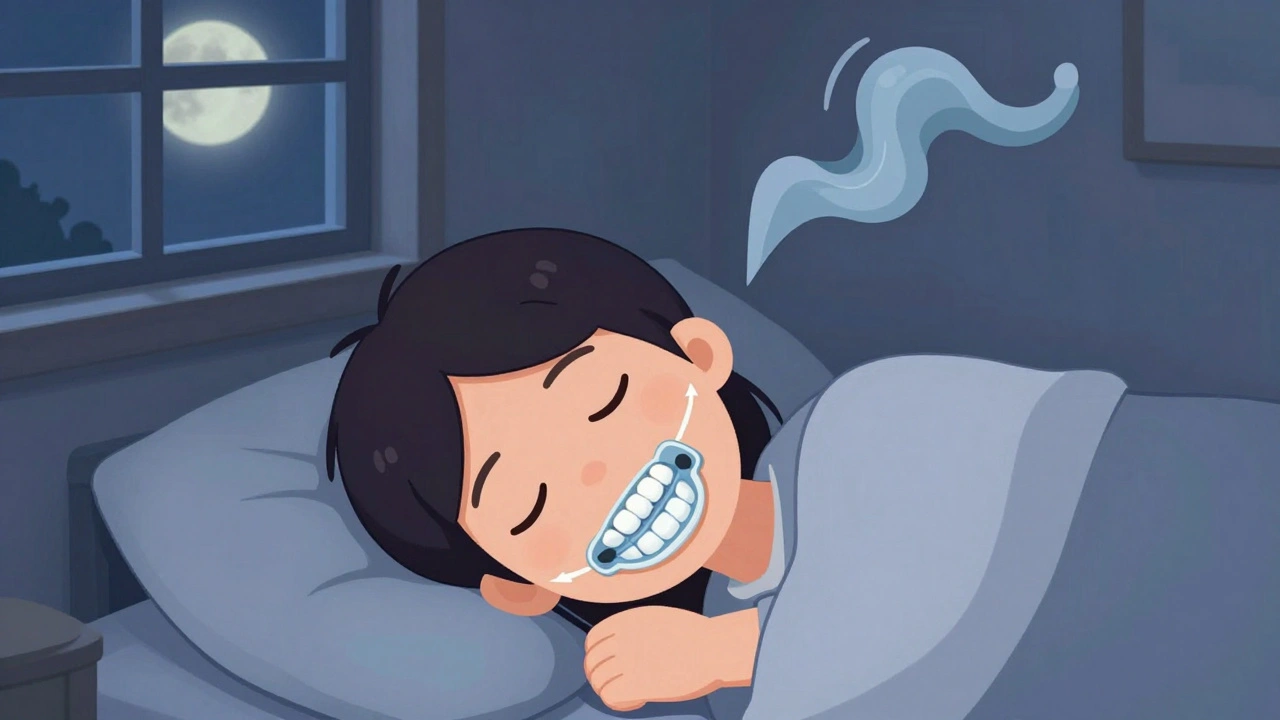
Oral appliance therapy with mandibular advancement devices offers a proven, non-invasive solution for snoring. Learn how they work, who benefits most, their effectiveness compared to CPAP, costs, risks, and what to expect before and after use.